
Understanding California's Home Purchase Foundation
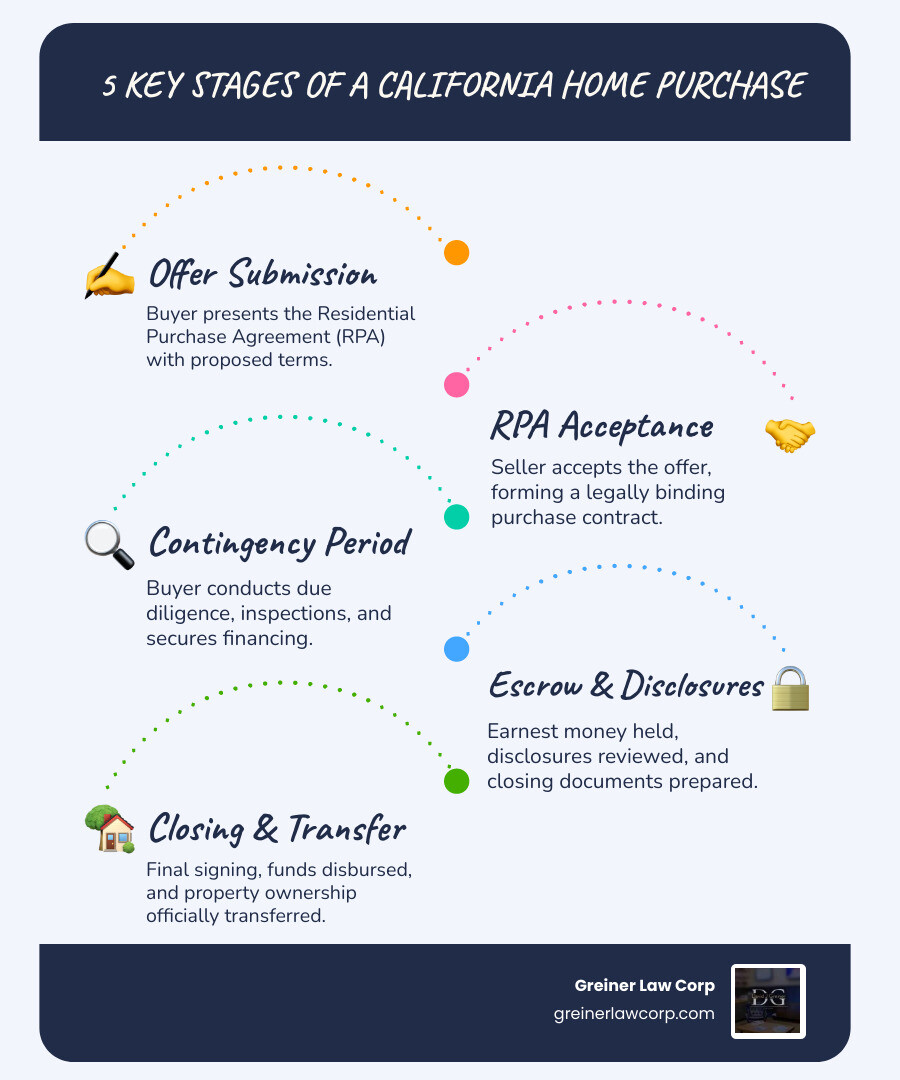
A residential purchase agreement california is the legally binding contract between a buyer and seller, establishing all terms of a real estate transaction. It acts as both the purchase contract and escrow instructions, covering the price, contingencies, timelines, and costs.
Key components of a California Residential Purchase Agreement include:
- Purchase Price & Earnest Money: The sale price and good faith deposit.
- Financing & Contingencies: Loan terms and conditions like inspections and appraisal (typically 17 days).
- Disclosures: Legally required seller disclosures (TDS, NHD).
- Closing Date & Cancellation Rights: The ownership transfer date and buyer protections.
Over 90% of California transactions use the standardized California Association of REALTORS® (C.A.R.) form, a comprehensive 16+ page document ensuring legal compliance and buyer protection. California's buyer-friendly laws are reflected in the agreement's detailed contingencies and disclosure rules. Missing a deadline can cost you your deposit or the home.
I'm David Greiner, Esq., founder of Greiner Law Corp. I specialize in reviewing and drafting residential purchase agreement california documents, using a business-focused approach to help clients manage risk and achieve their real estate goals.
Decoding the California Residential Purchase Agreement (RPA)
The residential purchase agreement california—or RPA—is the foundation of nearly every home sale in the state. The most common version, C.A.R. Form RPA-CA, has grown from one page to over 16, reflecting California's complex real estate laws. Over 90% of transactions use this standardized form because it's a refined California Real Estate Contract that functions as a bilateral contract, creating binding promises for both buyer and seller.

What is a California RPA and Why is it Important?
The RPA is the master blueprint for your home purchase. It's a legally binding contract that serves a dual role: it's the primary purchase agreement and the joint escrow instructions. This means it tells the escrow holder how to handle funds and documents, from the initial deposit to the final title transfer. The RPA details every critical term, including price, financing, timelines, and costs, creating a clear Real Estate Purchase Agreement that prevents misunderstandings.
Key Elements of a residential purchase agreement california
The RPA is built around several core elements that define the transaction:
- Offer Price & Earnest Money Deposit: The proposed price and the buyer's good faith deposit (typically 1-3%).
- Financing Terms: How the buyer will pay, including loan amount and type.
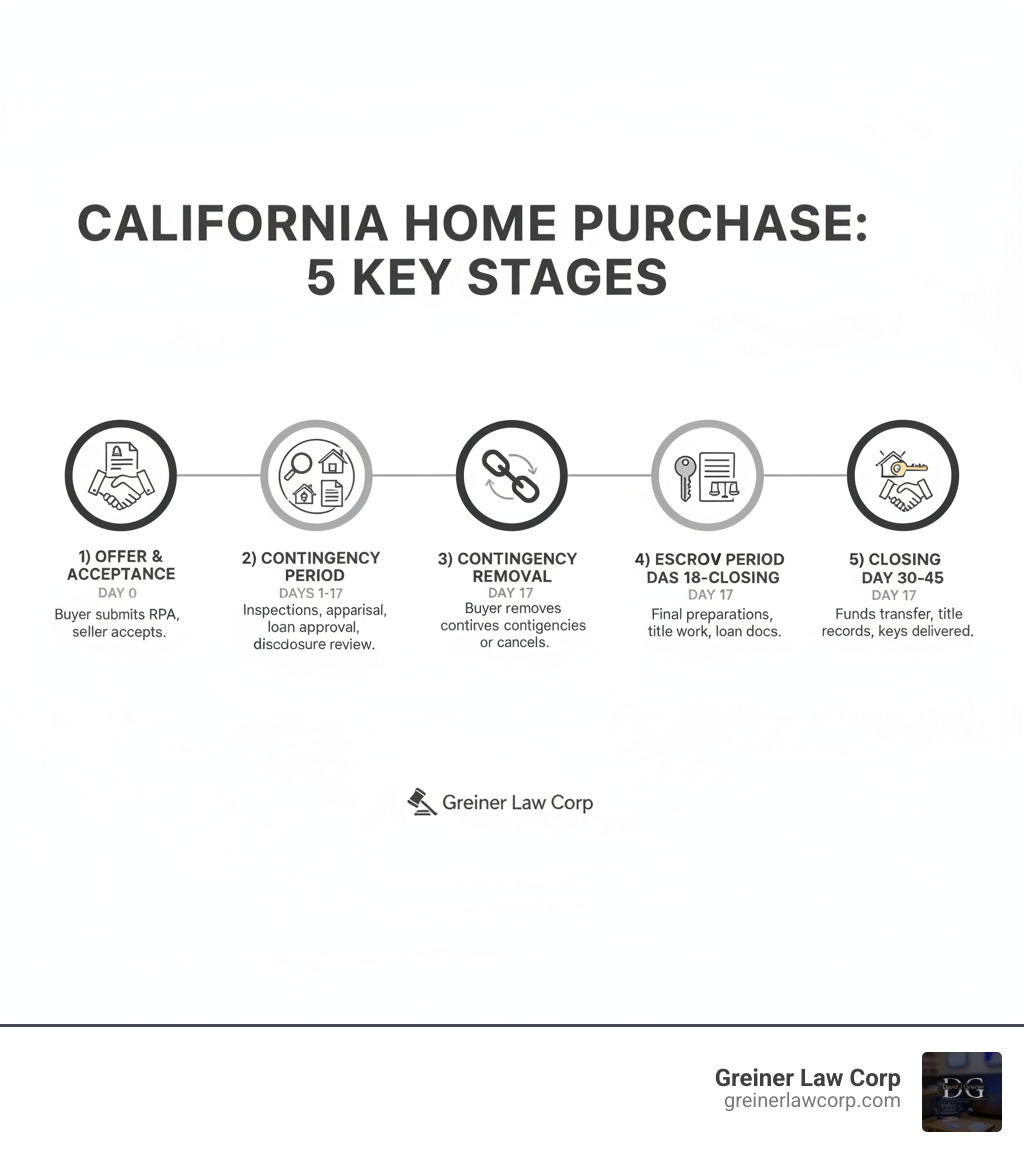
- Closing Date: The target date for ownership transfer, usually 30-45 days from acceptance.
- Property Description: The precise legal identification of the property being sold.
- Items Included/Excluded: Specifies which personal property (like appliances) stays or goes.
- Allocation of Costs: Determines who pays for escrow fees, title insurance, transfer taxes, etc.
These elements form a comprehensive Purchase and Sale Agreement that minimizes ambiguity.
Key Parties and Their Roles
A real estate deal involves a team of professionals:
- Buyer and Seller: The primary parties making and accepting the offer.
- Real Estate Agents: The buyer's and seller's agents represent their respective client's interests. A dual agent represents both, which requires strict neutrality and disclosure. Understanding the Real Estate Agency Relationship is crucial.
- Escrow Holder: A neutral third party that holds funds and documents until all conditions are met.
- Lender: The institution providing the loan to fund the purchase.
- Inspectors: Professionals who assess the property's condition during the due diligence period.
Navigating Contingencies, Timelines, and Earnest Money
The journey from an accepted offer to closing is guided by the contingencies and timelines in the residential purchase agreement california. These are your safety nets, allowing for thorough investigation without risking your deposit. This Due Diligence Real Estate process typically takes 30-45 days to complete.
Common Contingencies and How They Work
Contingencies are conditions that must be met for the sale to proceed. If a condition isn't met, the buyer can often cancel and recover their deposit. The default period is 17 days, though this is negotiable. Common contingencies include:
- Inspection Contingency: Allows the buyer to assess the property's physical condition.
- Appraisal Contingency: Protects the buyer if the property appraises for less than the purchase price.
- Loan/Financing Contingency: Makes the sale conditional on securing loan approval.
- Title Review & HOA Document Review: Gives the buyer time to review the title report, CC&Rs, and HOA financials.
These contingencies provide Valid Reasons to Back Out of Buying a House.
The Role of Earnest Money
Earnest money is a good faith deposit (1-3% of the price) showing the buyer's commitment. It's held in escrow and applied to the down payment at closing. The RPA's "liquidated damages" clause, if initialed, allows the seller to keep the deposit (capped at 3% for owner-occupied homes) if the buyer defaults without a valid reason. Understanding when the Seller Keeps Earnest Money is critical, as it depends on whether you're canceling within your rights or defaulting on the contract.
Typical Timelines, Deadlines, and the 'Time is of the Essence' Clause
The RPA's "time is of the essence" clause means all deadlines are strict. Missing one can be a breach of contract. The timeline starts on the acceptance date (Day 0). Key deadlines include:
- Earnest money deposit: Due within 3 business days.
- Seller disclosures: Due within 7 days.
- Buyer contingency period: Typically 17 days for inspections, appraisal, and loan approval.
By the end of the contingency period, the buyer must remove contingencies in writing or cancel. If a buyer misses a deadline, the seller can issue a Notice to Perform (NBP), giving the buyer 2 days to comply before the seller can cancel. This Real Estate Closing Process requires careful management.
The Critical Role of Disclosures in a residential purchase agreement california
California law mandates extensive seller disclosures. This buyer-friendly approach ensures you know what you're purchasing. For sellers, transparency is a legal requirement, and failure to comply can have serious consequences. If a Seller Failed to Disclose a material fact, they can be held liable long after the sale.

Essential Disclosures Required in California
Sellers must provide a stack of disclosure documents. The most important include:
- Transfer Disclosure Statement (TDS): The cornerstone document where sellers detail everything they know about the property's condition, from defects to malfunctions.
- Natural Hazard Disclosure (NHD): Identifies if the property is in a flood zone, fire hazard area, or near an earthquake fault.
- Lead-Based Paint Disclosure: Required for homes built before 1978.
- Megan's Law Disclosure: Informs buyers about the statewide database of registered sex offenders.
- Death on Premises Disclosure: Requires disclosure of any death on the property within the last three years, with privacy protections for AIDS-related deaths.
Sellers also provide pamphlets like the Environmental Hazards Pamphlet and the Homeowner's Guide to Earthquake Safety, and must confirm that water heaters are strapped and smoke detectors are installed.
Disclosure Timelines and Buyer's Review Period
Timing is critical. The RPA gives sellers 7 days after acceptance to deliver all disclosures. Once the buyer receives them, they have a 3-day review period (5 days if mailed) to cancel the contract for any reason and receive a full deposit refund. This powerful right applies even if other contingencies have been removed. If a new or amended disclosure is provided late, it restarts this cancellation clock. This protection in California Real Estate Law and Buyers Purchase Agreement ensures buyers can make a fully informed decision.
Rights, Remedies, and Avoiding Common Pitfalls
Even with a well-drafted residential purchase agreement california, problems can arise. Understanding your rights and remedies is key to protecting your interests, especially when disputes lead to Real Estate Litigation Los Angeles.
Aspect Buyer's Rights Seller's Rights During Contingencies Cancel and receive deposit refund if contingencies not met or waived. Cancel if buyer fails to remove contingencies after "Notice to Perform." After Contingencies Limited cancellation rights (e.g., new material disclosures). Risk of losing deposit. Cancel if buyer defaults (e.g., fails to close escrow). May retain liquidated damages. Mutual Agreement Can mutually agree to cancel at any stage, often with deposit released to buyer. Can mutually agree to cancel at any stage, often with deposit released to buyer.Buyer's and Seller's Cancellation Rights in a residential purchase agreement california
Both parties can cancel under specific circumstances.
- Buyer's Rights: Buyers have strong cancellation rights during the contingency period. If an inspection reveals issues, the appraisal is low, or financing fails, they can usually cancel and get their deposit back. They also have a 3-day right to cancel (5 if mailed) after receiving disclosures.
- Seller's Rights: Sellers can cancel if the buyer fails to perform. If a buyer misses a deadline, the seller can issue a "Notice to Perform." If the buyer doesn't comply within the given timeframe (usually 2 days), the seller may cancel.
Both parties can always mutually agree to cancel. Navigating a Breaking a Real Estate Contract situation requires understanding these nuances, whether you are a Breaking a Real Estate Contract Buyer or Breaking a Real Estate Contract Seller.
Remedies for Default
When a party defaults without a legal reason, it's a Breach of Contract Real Estate. The non-breaching party has remedies:
- Liquidated Damages: The most common remedy for a buyer default. If initialed in the RPA, the seller can keep the earnest money deposit (up to 3% of the price) as their sole compensation.
- Specific Performance: A lawsuit to force the defaulting party to complete the sale. This is used when a property is unique and monetary damages are insufficient.
- Mediation and Arbitration: The RPA requires parties to attempt mediation (non-binding) and often arbitration (binding) before litigation, which is typically faster and less costly than court.
Common Mistakes to Avoid
Avoid these common pitfalls:
- Missing Initials/Signatures: An incomplete contract can invalidate key clauses.
- Relying on Verbal Agreements: Real estate contracts must be in writing to be enforceable.
- Vague Terms: Be specific about repairs, credits, and timelines to avoid disputes.
- Improper Earnest Money Handling: The deposit must be on time and held by a neutral escrow holder.
- Ignoring Timelines: The "time is of the essence" clause makes every deadline mandatory.
- Not Reading the Fine Print: Skimming the 16+ page RPA is risky. Professional review is vital.
- Failing to Track Deliveries: Keep a paper trail for all notices and disclosures.
These issues are similar to the Common Mistakes Homebuyers Make During the Mortgage Process and can be avoided with careful attention.
Frequently Asked Questions about the California Residential Purchase Agreement
After years of helping clients with residential purchase agreement california transactions, I've noticed the same questions come up time and again. Let me walk you through the most common ones.
Where can I find a blank California Residential Purchase Agreement form?
The official C.A.R. Form RPA-CA is provided by the California Association of REALTORS® to its members. If you're working with a licensed real estate agent, they will provide the current version. Using an outdated or generic form found online is risky, as it may lack critical legal updates and protections specific to California law. For guidance on obtaining the correct document, see our page on the Blank California Residential Purchase Agreement.
What is the difference between a blank RPA and a filled sample RPA?
A blank RPA is the empty, official template with all the legal clauses. A filled sample RPA is an educational tool, completed with hypothetical data to show you what a finished agreement looks like. A sample is for learning only and cannot be used for an actual transaction.
Can I cancel if I don't get all disclosures on time?
Yes. This is one of California's strongest buyer protections. If a seller is late in providing required disclosures, you gain a 3-day review period (or 5 days if mailed) starting from the moment you receive them. During this window, you can cancel the contract and receive a full refund of your earnest money. This right applies even if you've already removed other contingencies, giving you a final chance to back out based on the new information. It's a clear reason to Cancel Real Estate Contract if needed.
Conclusion
The residential purchase agreement california is the cornerstone of your real estate transaction—a comprehensive roadmap that guides you from offer to closing. It's both your purchase contract and your escrow instructions rolled into one, which is why every detail matters.
We know that navigating this 16+ page document can feel overwhelming. However, understanding how this agreement works is what empowers you to protect yourself and make smart, confident decisions. California has some of the most buyer-friendly real estate laws in the country, and those protections are woven throughout the RPA—but only if you know how to use them.
That's where having the right guidance makes all the difference. At Greiner Law Corp, our business-minded approach means we're focused on your goals, whether that's closing on your dream home or simply making sure you're not taking on unnecessary risk.
Real estate transactions are high-stakes. A missed deadline, an overlooked disclosure, or a vague term can cost you thousands of dollars. You don't have to go it alone. Navigate California real estate law with confidence by working with experienced legal professionals who understand both the law and your objectives.
Whether you're buying your first home or selling an investment property, having knowledgeable counsel in your corner can transform a complex legal document into a clear path forward. Let's make sure your real estate journey is a successful one.