Understanding When You Can Legally Withdraw From a Home Purchase
Valid reasons to back out of buying a house include failed inspections, financing issues, low appraisals, title problems, and unmet contingencies. Here are the most common legitimate grounds for withdrawal:
Contingency-Based Reasons:
- Home inspection reveals major defects (foundation, electrical, structural issues)
- Mortgage financing falls through or is denied
- Property appraises below purchase price
- Buyer’s current home fails to sell (home sale contingency)
- Title issues like liens or ownership disputes
Property Issues:
- Undisclosed damage or safety hazards
- Environmental problems (mold, radon, contamination)
- Unpermitted additions or renovations
- Boundary line disputes
Financial Changes:
- Job loss or income reduction
- Unable to secure homeowner’s insurance
- Interest rates increase beyond affordability
The key is having proper contingency clauses in your purchase agreement that protect your earnest money deposit when you withdraw for valid reasons.
Buying a home represents one of life’s biggest financial decisions, yet many buyers don’t fully understand their legal right to withdraw from a purchase agreement. The home buying process involves multiple checkpoints where legitimate concerns can arise – from inspection red flags to financing complications. Understanding these exit points can save you from costly mistakes and protect your financial future.
As David Greiner, Esq., I’ve guided countless clients through complex real estate transactions during my years in transactional law practice, helping them understand their contractual rights including valid reasons to back out of buying a house. My business-focused approach prioritizes protecting clients’ interests while ensuring they achieve their real estate goals through proper legal procedures.
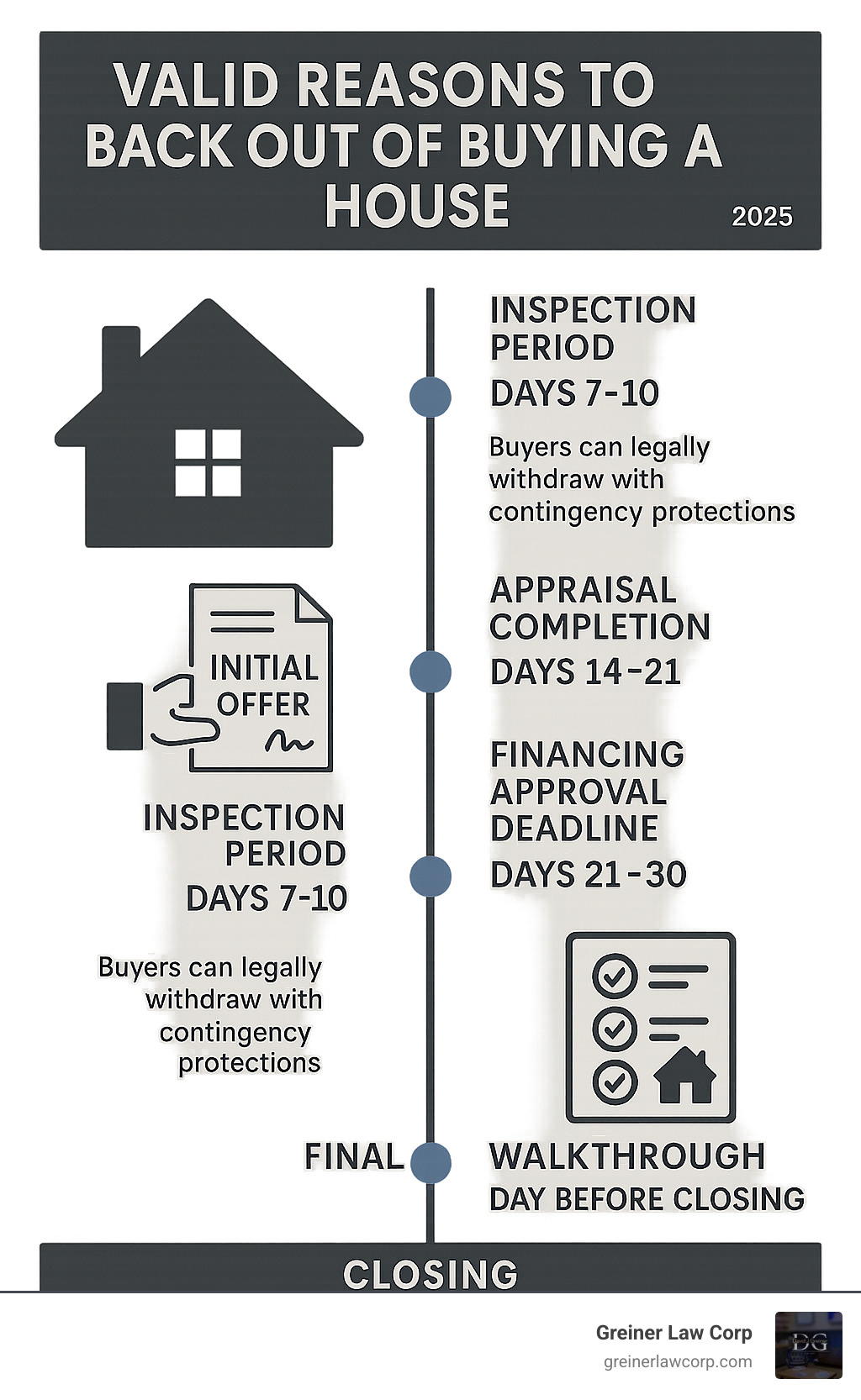
Valid reasons to back out of buying a house terms to know:
The Most Common Valid Reasons to Back Out of Buying a House
When your offer gets accepted, it feels exciting – but it also means you’ve entered a legally binding agreement. The good news? Your purchase contract likely includes protective clauses called contingencies that give you valid reasons to back out of buying a house without losing your earnest money deposit (typically 1-3% of the home’s purchase price).
Recent data from HomeLight reveals what’s really happening out there: 42% of buyers back out due to major inspection issues, making this the top reason deals fall through. Rising interest rates caused 41% of buyers to withdraw, while 8% walked away due to appraisal problems. Another 5% couldn’t secure their next home in time, and 4% faced unresolved title or lien issues.
Understanding these statistics helps, but knowing your specific contractual protections is what really matters when you’re facing a tough decision.
Contingency Clauses: Your Contractual Safety Net
Think of contingencies as your safety net – conditions written into your purchase agreement that must be met before the sale can proceed. Without these protective clauses, you could find yourself legally bound to buy a property that doesn’t meet your needs or has serious hidden problems.
The inspection contingency stands out as your most important protection. This clause gives you a specific timeframe (usually 7-14 days) to thoroughly examine the property and withdraw or request repairs if major issues surface. Given that inspection problems cause nearly half of all contract cancellations, this contingency often proves invaluable.
Your financing contingency protects you if your mortgage falls through. Even with pre-approval, final loan approval isn’t guaranteed until closing. If your financial situation changes or your lender denies the loan for any reason, this clause lets you walk away with your earnest money intact.
The appraisal contingency becomes crucial when the home’s appraised value comes in below your offer price. Your lender won’t loan more than the appraised value, leaving you to either negotiate a lower price, pay the difference in cash, or use this contingency to exit the contract.
For buyers who need to sell their current home first, the home sale contingency makes your purchase dependent on successfully selling your existing property by a certain date. If your home doesn’t sell in time, you can withdraw without penalty.
The title contingency ensures a clear title search reveals no liens, ownership disputes, or other claims against the property. If unresolvable title issues emerge, you have grounds to back out.
An insurance contingency is becoming increasingly important, especially in areas prone to natural disasters. If you can’t secure homeowner’s insurance at a reasonable rate, this clause provides an exit strategy.
For more detailed information about these protections, you can find more info about real estate contracts on our website.
Property-Related Valid Reasons to Back Out of Buying a House
The home inspection often reveals the harsh truth about a property’s condition. As one experienced agent colorfully put it, you want to avoid properties that have just had “lipstick on a pig” renovations – cosmetic fixes that hide serious underlying problems.

Foundation damage represents one of the most serious red flags. Look for large cracks in basement walls (especially if you can fit your fingers inside them), long horizontal cracks, or cracks appearing in upstairs walls over windows and doors. Foundation repairs can cost anywhere from $5,000 to over $20,000, and accurately estimating the full scope of work often proves difficult.
Outdated electrical systems pose genuine safety hazards. Old knob-and-tube wiring or aluminum wiring creates fire risks and typically doesn’t meet current building codes. A 60-amp electrical service limits your ability to run modern appliances. Upgrading electrical systems costs between $200 to $2,300, with circuit breaker box replacements averaging $1,150 – plus additional costs for wall repairs and repainting.
Roof problems go beyond simple repairs when you’re dealing with structural sagging. A roof that can’t support its load, especially under snow, represents a major safety concern. Roof replacement costs range from $5,600 to $11,830, depending on materials and scope. Flat roofs require particular scrutiny due to their shorter lifespans and ongoing maintenance requirements.
Mold issues create both health hazards and expensive remediation costs. Professional mold removal ranges from $500 for minor issues to over $20,000 for major infestations. The key challenge involves addressing the underlying moisture problem, not just cleaning visible mold.
Pest infestations can range from merely unpleasant to genuinely shocking. Severe roach infestations or finding snake nests in crawlspaces represent legitimate reasons to flee. While termite treatment typically costs $220-$935, the structural damage these pests cause often far exceeds treatment expenses.
Environmental contamination in older homes might include asbestos, lead-based paint, or radon gas. Radon, the leading cause of lung cancer among non-smokers, requires mitigation systems costing around $1,000. Faulty septic systems can contaminate drinking water, creating serious health risks.
Undisclosed issues and unpermitted work create ongoing problems. Sellers must disclose known material defects, so finding undisclosed flood damage or fire history affects both resale value and insurance coverage. Unpermitted additions or renovations can result in fines, costly remediation, and future resale complications.
Low appraisals force difficult financial decisions. When a home appraises significantly below your offer, you’ll need to negotiate a lower price, pay the difference in cash, or use your appraisal contingency to withdraw.
Title defects, liens, and boundary disputes can halt transactions entirely. Missing heirs, illegal deeds, or unpaid debts against the property sometimes take years and significant legal expenses to resolve. Land surveys might reveal boundary disputes or encroaching structures that represent valid reasons to back out of buying a house.
Personal and Financial Valid Reasons to Back Out of Buying a House
Sometimes life throws curveballs that make proceeding with a home purchase impossible or financially irresponsible. These personal circumstances represent legitimate grounds for withdrawal when protected by appropriate contingencies.
Job loss or significant income reduction immediately impacts your ability to secure financing. Lenders will reassess your financial eligibility, and if your debt-to-income ratio exceeds acceptable levels (most lenders prefer 43% or lower), your pre-approval can disappear. Taking on new debt or accumulating credit card balances after pre-approval often leads to financing denial at closing.
Financing denial can occur even after pre-approval. Final loan approval isn’t guaranteed until you actually close, and changes in your financial situation or market conditions can result in last-minute loan rejection. Your financing contingency protects you in these situations.
Rising interest rates can transform an affordable monthly payment into an unmanageable burden. Even if you were pre-approved at a lower rate, significant rate increases can make the home unaffordable. This scenario contributed to 41% of buyers backing out in recent surveys.
Inability to secure homeowner’s insurance has become increasingly problematic in areas prone to natural disasters. Some insurance companies now deny coverage entirely in high-risk zones for wildfires or floods. Without affordable insurance, proceeding with the purchase becomes impossible.
For more information about managing your finances during a home purchase, you can learn about what is a debt-to-income ratio? The insurance landscape is also changing rapidly – you can read about why insurance is getting harder to find to understand these broader market challenges.
The Process and Consequences of Withdrawing Your Offer
Making the decision to walk away from a home purchase can feel overwhelming, especially when you’re already emotionally invested. But sometimes it’s the smartest financial move you can make. The key is knowing how to do it right and understanding what happens if you don’t follow proper procedures.
How to Properly Back Out of a Home Purchase
When you’ve identified valid reasons to back out of buying a house, taking the right steps protects both your earnest money and your legal standing. Think of this process like following a recipe – skip a step, and the whole thing can fall apart.

Start by reviewing your contract thoroughly. This document is your roadmap out of the deal. Every purchase agreement has unique contingency terms and deadlines, and understanding these details can mean the difference between keeping your earnest money and losing it. Don’t just skim through – really dig into the fine print.
All communication must be in writing. This isn’t the time for phone calls or casual conversations. Your real estate agent will typically draft a formal notice of cancellation, creating a clear paper trail that protects you legally. Verbal agreements or handshake deals won’t hold up if things get contentious later.
Timing is absolutely critical. Contingency deadlines aren’t suggestions – they’re hard stops. Miss your inspection deadline by even one day, and you could forfeit your right to back out without penalty. The moment you decide to withdraw, act quickly and decisively.
Work closely with your real estate agent throughout this process. They understand the local market dynamics and can communicate effectively with the seller’s agent. However, don’t rely solely on their guidance for complex situations.
Consider consulting a real estate attorney, especially if you’re unsure about contract terms or if the situation becomes complicated. An attorney can review your specific circumstances, identify all available exit strategies, and ensure you follow proper legal procedures. At Greiner Law Corp, we’ve helped many clients steer these challenging situations while protecting their interests.
For detailed guidance on the formal withdrawal process, you can learn more about how to cancel a real estate contract on our website.
What Happens if You Back Out Without a Valid Reason?
Here’s where things get expensive – and potentially messy. If you don’t have contractual grounds for withdrawal or miss important deadlines, you’re likely in breach of contract territory. The consequences can be significant and long-lasting.
Losing your earnest money deposit is almost guaranteed in this scenario. That 1-3% of the home’s purchase price you put down? The seller typically gets to keep it. On a $500,000 home, that could mean kissing $15,000 goodbye.
Potential lawsuits are a real possibility. Sellers who feel wronged don’t always just take the earnest money and move on. They might decide to pursue legal action, which means you could face costly attorney fees, court costs, and months of legal stress.
Specific performance is a particularly tough remedy in real estate cases. A judge could actually force you to complete the purchase, even if you no longer want the house. Imagine being legally required to buy a home you’ve decided you can’t afford or don’t want – it’s not a pleasant situation.
The seller’s actual damages can extend far beyond your earnest money. If they have to sell to another buyer for less money, you could be responsible for that difference. Add in carrying costs like mortgage payments, utilities, and property taxes while the house sits back on the market, plus the costs of relisting, and the financial impact can be substantial.
Understanding what is a breach of contract? can help you grasp the full scope of potential consequences before making any moves that could put you in legal jeopardy.
The bottom line? Following proper procedures isn’t just good practice – it’s essential protection for your financial future.
Alternatives and Professional Guidance
Before you decide to walk away from your dream home, take a deep breath. Sometimes what feels like a deal-breaker can actually be resolved through smart negotiation and creative problem-solving.
Not every issue that comes up during the home buying process has to end with you packing up your earnest money and heading for the hills. Many valid reasons to back out of buying a house can actually become opportunities to save money or improve the property before you move in.
Is Backing Out Your Only Option?
When problems surface during your home purchase, backing out might seem like the easiest solution. But experienced buyers know that negotiation often leads to better outcomes than walking away entirely.

Negotiating repairs is often the first path forward when inspection issues arise. Let’s say your inspector finds a leaky roof or outdated electrical work. Rather than abandoning the purchase, you can ask the seller to fix these problems before closing. This approach works particularly well when sellers are motivated to close quickly or when the local market favors buyers.
Asking for seller credits gives you more control over the repair process. Instead of trusting the seller to hire contractors and oversee work, you receive money at closing to handle repairs yourself. This way, you can choose your own contractors, ensure quality work, and sometimes even pocket savings if you find good deals on materials or labor.
Renegotiating the purchase price becomes your best friend when appraisals come in low or when significant issues emerge. If your dream home appraises for $10,000 less than your offer, you might negotiate the price down rather than making up the difference in cash. Similarly, if inspection reveals $5,000 worth of necessary repairs, you could ask for a price reduction instead of repair credits.
Sometimes life throws curveballs that don’t fit neatly into standard contingencies. Job transfers, family emergencies, or health issues might leave you unable to proceed. In these situations, a mutual cancellation agreement can be your lifeline. While you might still lose your earnest money, you avoid potential lawsuits and can move forward without the stress of legal complications.
The key is approaching these conversations with flexibility and creativity. Sellers who truly want to close will often work with reasonable requests, especially when the alternative is starting over with a new buyer.
The Role of a Real Estate Attorney
Real estate contracts can feel like they’re written in a foreign language, and the stakes are too high to guess at your rights and obligations. This is where having an experienced real estate attorney becomes invaluable.
At Greiner Law Corp, we’ve been helping California buyers steer complex real estate transactions since 2003. Our approach is straightforward: we prioritize your goals and help you manage risk according to your comfort level. Whether you’re dealing with inspection issues, financing problems, or considering withdrawal, we provide the legal guidance you need to make informed decisions.
Contract review forms the foundation of our service. We examine your purchase agreement with fresh eyes, identifying contingency deadlines, escape clauses, and potential pitfalls you might have missed. Every contract is unique, and understanding these nuances can mean the difference between losing your earnest money and walking away clean.
Risk assessment helps you understand what you’re really facing. We explain the potential consequences of different actions, whether that’s proceeding with the purchase, negotiating repairs, or backing out entirely. Our goal is to give you clear information so you can make decisions that align with your financial situation and risk tolerance.
When problems arise, negotiation support can save your deal. We help draft repair requests, credit negotiations, and price reduction proposals. Having legal backing often encourages sellers to take your requests seriously and can lead to more favorable outcomes.
Ensuring proper procedure protects you from costly mistakes. Missing a contingency deadline by even one day can forfeit your right to withdraw without penalty. We make sure all paperwork is filed correctly and on time, following California real estate law to the letter.
Most importantly, protecting your interests remains our primary focus throughout the entire process. We serve clients across California from our offices in Victorville, Riverside, San Bernardino, and Los Angeles, bringing decades of experience to every transaction.
Real estate law moves quickly, and small oversights can have big consequences. Having professional guidance ensures you understand all your options before making decisions that could cost thousands of dollars or trap you in an unwanted purchase.
Frequently Asked Questions about Backing Out of a House Purchase
Let’s address the most common concerns buyers have when considering whether to withdraw from a home purchase. These questions come up frequently in my practice, and understanding the answers can help you make informed decisions about your real estate transaction.
Can I back out simply because I have ‘buyer’s remorse’?
I wish I could tell you that getting cold feet is enough, but unfortunately, buyer’s remorse alone is not a valid reason to back out of buying a house without facing penalties. We’ve all been there – that moment when the magnitude of the purchase hits you, and you start second-guessing everything. It’s completely normal to feel overwhelmed.
However, if your change of heart isn’t tied to a specific contingency in your contract, you’re likely looking at forfeiting your earnest money deposit. The contract you signed is legally binding, and emotions, while understandable, don’t typically hold up in court.
That said, if your buyer’s remorse stems from finding something specific about the property or your financial situation that you hadn’t considered before, we might be able to find a valid reason to back out of buying a house within your contract terms. This is where reviewing your agreement with a real estate attorney becomes invaluable.
When is it officially too late to back out without penalty?
Timing is everything in real estate contracts. The window for backing out without penalty typically closes once your contingency periods expire. Think of contingencies as your safety net – but they have expiration dates.
For example, if your inspection contingency gives you 10 days to complete the inspection and raise concerns, day 11 is too late to cite inspection issues as grounds for withdrawal. The same applies to your financing contingency – once that deadline passes and you haven’t formally withdrawn, you’re committed regardless of any loan complications that arise later.
The absolute point of no return is at closing when you sign all the final documents and receive the keys. At that point, you own the home, and there’s no backing out. Some buyers also find themselves in a tough spot after their mortgage receives final approval – backing out at this stage without an unexpired contingency will almost certainly result in penalties.
The key lesson here? Act quickly when you identify problems. Don’t let contingency deadlines slip by while you’re still deciding what to do.
Can a seller sue me for backing out?
Yes, sellers can absolutely sue buyers who back out without proper legal grounds. It’s not just about losing your earnest money – though that’s usually the first consequence you’ll face.
When you breach a real estate contract, sellers have several legal remedies available. They might seek specific performance, which means a court could actually force you to complete the purchase even if you no longer want the home. Alternatively, they could sue for damages, seeking compensation for their financial losses caused by your withdrawal.
These damages can add up quickly. If the seller has to relist the property and ultimately accepts a lower offer, you could be responsible for that difference. They might also seek reimbursement for carrying costs like mortgage payments, utilities, and property taxes while the home sits back on the market.
However, if you have legitimate valid reasons to back out of buying a house that are covered by your contract contingencies, and you follow the proper procedures within the specified timeframes, you’re generally protected from legal action.
This is exactly why I always recommend having a real estate attorney review your situation before making any moves. At Greiner Law Corp, we help clients understand their contractual obligations and identify the safest path forward, whether that’s negotiating with the seller or properly exercising their right to withdraw.
Conclusion: Making an Informed Decision for Your Future
Buying a home should be one of life’s most exciting milestones, but it can quickly become overwhelming when unexpected issues surface. The good news? You’re not powerless in this process. Understanding the valid reasons to back out of buying a house gives you confidence to steer even the most challenging situations.
Throughout this journey, due diligence is your best friend. Take time to thoroughly understand every clause in your purchase agreement before signing. Those contingency clauses we discussed aren’t just legal jargon – they’re your financial lifelines when things don’t go according to plan.
The statistics tell the story: 42% of buyers back out due to inspection issues, while 41% withdraw because of rising interest rates. These aren’t signs of weak buyers – they’re smart consumers protecting their financial futures. Whether you find foundation cracks that could cost tens of thousands to repair, face a sudden job loss that changes your debt-to-income ratio, or encounter title issues that could take years to resolve, having the right contractual protections makes all the difference.
Managing risk effectively means knowing when to negotiate and when to walk away. Sometimes a leaky roof can be resolved with seller credits, while other times major structural damage signals it’s time to exercise your inspection contingency. The key is acting decisively within your contractual timeframes and always communicating in writing.
If you’re facing a difficult decision about your home purchase, you don’t have to steer it alone. Real estate contracts can be complex, and the stakes are high. At Greiner Law Corp, we’ve been helping California buyers understand their rights and protect their interests since 2003. Our business-minded approach ensures you can make decisions that align with your risk tolerance and financial goals.
With offices in Victorville, Riverside, San Bernardino, and Los Angeles, we’re here to review your contract, assess your situation, and guide you through the proper procedures – whether that means negotiating repairs or formally withdrawing from the purchase.
Contact us for real estate law guidance today, and let’s make sure your home buying journey ends with keys in your hand and peace of mind in your heart.


