Why Due Diligence Real Estate Investigation Protects Your Investment
Due diligence real estate is the critical investigation period that occurs after a seller accepts your offer but before you finalize the purchase. This process gives buyers time to thoroughly examine a property’s condition, legal status, and financial aspects to ensure they’re making a sound investment.
What Due Diligence Real Estate Includes:
- Property inspections – structural, electrical, plumbing, HVAC systems
- Title search – verifying ownership and identifying liens or encumbrances
- Financial review – appraisals, tax records, operating expenses
- Legal verification – zoning compliance, permits, HOA rules
- Market analysis – neighborhood trends, comparable sales
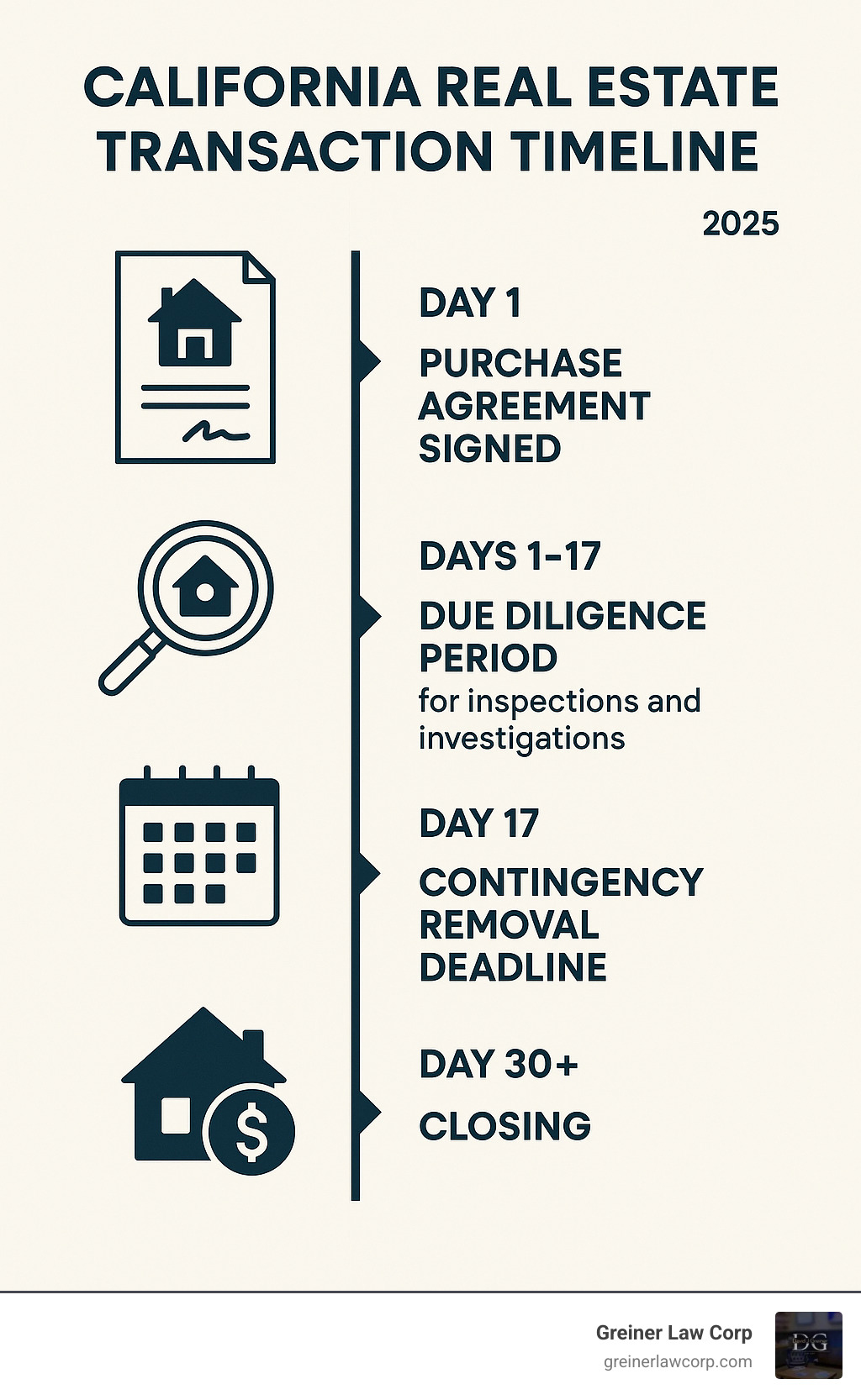
In California, buyers typically have an average of 17 days for residential due diligence, though this can be negotiated. Commercial properties often allow 30-90 days due to their complexity.
Think of due diligence as your “homework period” – it’s your chance to uncover any issues before you’re legally committed to the purchase. As one industry expert noted, this process is like “academic homework with a deadline for completion,” but the stakes are much higher than a grade.
The risks of skipping due diligence are severe. Without proper investigation, buyers can face unexpected repair costs, legal disputes over ownership, environmental cleanup liabilities, or find they’ve overpaid for a property. More than 80% of real estate professionals now increase their technology budgets to support thorough due diligence processes.
I’m David Greiner, Esq., and through my years of transactional law practice, I’ve guided countless clients through complex due diligence real estate investigations, ensuring they achieve their investment goals while minimizing risk. My business-focused approach prioritizes your objectives over billable hours, making certain you have the information needed to make confident decisions.
The California Due Diligence Period: What to Expect
Once your offer is accepted, the clock starts ticking on your due diligence real estate period. Think of this as your official “investigation window” – a critical time designed specifically for your protection, allowing you to confirm every aspect of the property before you’re fully committed.
In California, residential properties typically offer a swift 17-day average for due diligence, though this timeline can be negotiated based on your specific situation and the complexity of the transaction. For commercial real estate clients, the due diligence period often stretches from 30 to 90 days, sometimes even longer for particularly complex acquisitions. Commercial properties require deeper dives into income statements, tenant leases, and regulatory compliance – there’s simply more to investigate.
Who’s on your team during this crucial phase?
You, the buyer, bear the ultimate responsibility for thorough due diligence. After all, you’re making the investment, so your active participation and understanding of the process are paramount. You can’t delegate this responsibility entirely – stay engaged and ask questions.
Your real estate agent or broker becomes your frontline guide and facilitator during this period. They’ll provide critical market insights, recommend trusted professionals like inspectors and surveyors, coordinate property access for various examinations, help you understand complex documents, monitor deadlines to ensure you meet contingency requirements, and communicate with the seller’s team on your behalf. A good agent makes the logistics manageable.
A real estate attorney – like our team at Greiner Law Corp – isn’t always mandatory, but proves invaluable for complex transactions or when issues arise. We help you understand the legal intricacies of your purchase agreement, identify potential liabilities that others might miss, review title reports for hidden claims or easements, advise on zoning and regulatory compliance, and assist in negotiating terms if problems surface. Our business-minded approach ensures your risk preferences are managed effectively, protecting your investment from legal pitfalls.
Due Diligence Money vs. Earnest Money: Understanding the Difference
When making an offer, you’ll encounter two types of upfront payments that often confuse buyers: due diligence money and earnest money. While both demonstrate your commitment to the purchase, their purposes and refundability differ significantly.
| Feature | Due Diligence Money | Earnest Money (Good Faith Deposit) |
|---|---|---|
| Purpose | Payment for the right to investigate the property | Shows serious intent to purchase |
| Refundability | Generally non-refundable once paid | Refundable if contingencies aren’t met |
| Timing | Paid upfront with offer acceptance | Held in escrow until closing |
| Amount | Typically smaller ($500-$2,000) | Usually 1-3% of purchase price |
| California Usage | Less common, but can be negotiated | Standard practice in most transactions |
In California, while “due diligence money” isn’t as common a distinct payment as in some other states, the concept of non-refundable fees can be negotiated into your purchase agreement. Understanding this distinction protects you from unexpected financial commitments.
Earnest money, also called a good faith deposit, goes into escrow and gets applied to your down payment at closing. If you back out for reasons covered by your contingencies – like failed inspections or financing issues – you typically get this money back. However, if you simply change your mind without a valid contractual reason, you may forfeit it.
The escrow process begins once your offer is accepted. A neutral third party holds your earnest money and coordinates the various steps leading to closing. This protects both buyer and seller, ensuring all conditions are met before money and property change hands.
For more details on how these payments work within your purchase agreement, review our guide on Real Estate Contracts Explained. Understanding your contractual obligations from day one prevents costly surprises later in the process.
Your Comprehensive Due Diligence Real Estate Checklist

Now that you understand the timeline, let’s roll up our sleeves and dive into the actual work. Think of this due diligence real estate checklist as your treasure map – except instead of hunting for gold, you’re hunting for potential problems before they become expensive surprises.
I’ve walked hundreds of clients through this process, and I can tell you that thoroughness here saves headaches (and money) later. Let’s break this down into three main areas that need your attention.
Physical & Environmental Inspections
This is where we get our hands dirty – sometimes literally. You’re not just buying a pretty facade; you’re buying all the hidden systems, the foundation, and everything that keeps the lights on and the roof over your head.
Property inspection is your first line of defense. A licensed home inspector will crawl through every accessible inch of the property. They’ll check the structural integrity – looking for foundation cracks, settling issues, or framing problems that could cost tens of thousands to fix. The HVAC systems get a thorough workout to ensure you won’t be shivering through your first winter or sweating through summer.
Electrical and plumbing inspections are crucial, especially in older homes. Outdated wiring isn’t just inconvenient – it’s a fire hazard. Similarly, old plumbing can lead to costly water damage. The roof condition gets special attention because roof repairs can easily run into five figures.
Don’t skip the pest and termite inspection. I’ve seen buyers find thousands of dollars in termite damage that turned their dream home into a nightmare. Mold and asbestos testing is essential in older properties, and if your home was built before 1978, lead-based paint testing protects your family’s health.
Property survey work might seem boring, but it’s your protection against boundary disputes. The survey reveals exact boundary lines – and you’d be amazed how often that fence isn’t actually on the property line. Easements can affect your privacy and future building plans, while encroachments from neighboring structures can create legal headaches.
For properties with any industrial history, Environmental Site Assessments become critical. A Phase I ESA reviews historical records and visually assesses potential contamination risks. If concerns arise, a Phase II ESA involves actual soil and water testing. Environmental cleanup costs can be staggering, and liability often follows the property regardless of who caused the problem. Understanding ESA reports can save you from inheriting someone else’s mess.
Legal & Regulatory Verification
This is where my legal background really comes in handy. We’re digging into the paperwork that defines what you actually own and what you can do with it.
Title search is absolutely fundamental to your due diligence real estate process. We’re confirming the seller actually owns the property and has the right to sell it to you. More importantly, we’re hunting for any liens and encumbrances that could affect your ownership. Unpaid contractor bills, tax liens, or judgments can become your problem if not finded beforehand.
Property tax records need thorough review. Unpaid taxes can result in liens or even tax sales that complicate your ownership. We verify that all current and past taxes are properly paid.
Zoning laws and ordinances determine how you can use your property. Want to run a home business? Planning an addition? Zoning rules will either support or crush those dreams. We also investigate building permits for all past work. Unpermitted additions or renovations can create legal and financial nightmares when you try to sell or refinance.
Certificate of Occupancy verification ensures the property is legally habitable. For commercial properties, ADA compliance checking protects you from expensive lawsuits and mandatory retrofits.
If there’s a Homeowners Association, their rules become your rules. The Covenants, Conditions & Restrictions (CC&Rs) might dictate everything from your paint color to whether you can rent out the property. HOA fees and potential special assessments affect your ongoing costs, while the association’s financial health impacts future fee increases.
Understanding these legal complexities is why many clients find value in having an experienced attorney guide them through California Real Estate Law.
Financial & Market Analysis
Numbers don’t lie, but they can be misleading if you don’t know how to read them. This section ensures the property’s value justifies its price and fits your financial goals.
Property appraisal provides an independent assessment of fair market value. If the appraisal comes in low, you have leverage to renegotiate or walk away if you have an appraisal contingency.
Seller disclosures require careful scrutiny. Sellers must disclose known defects, but the key word is “known.” We review these disclosures for red flags and determine if additional investigation is warranted.
For investment properties, rent roll analysis becomes crucial. We verify current rents, lease terms, and tenant payment histories. High vacancy rates or frequent late payments signal underlying problems that affect your investment returns.
Analyzing operating expenses involves reviewing historical utility bills, maintenance costs, insurance premiums, and management fees. This data helps project your actual costs of ownership.
Homeowners insurance review ensures you understand coverage requirements and costs. California properties often need special consideration for earthquake or wildfire coverage.
Neighborhood analysis extends beyond the property lines. School districts affect both family life and resale values. Crime rates impact safety and insurance costs. Proximity to amenities influences daily convenience and long-term property values.
Smart buyers also do informal research – driving by at different times of day, talking to neighbors, and getting a feel for the community’s character.
To ensure you’re financially prepared for the entire process, make sure you avoid common homebuyer mortgage mistakes that can derail even the most thorough due diligence.
Navigating Challenges and Finalizing the Deal

So you’ve done your homework. You’ve inspected every corner, dug into the legal history, and crunched all the numbers. But what happens when your due diligence real estate investigation uncovers a problem? Take a deep breath – this is exactly why we do due diligence in the first place.
Finding Issues and What Comes Next
Finding an issue during due diligence isn’t the end of the world. In fact, it’s often just the beginning of a negotiation. The purchase agreement you signed likely includes contingencies that protect you when certain conditions aren’t met. Think of these as your safety nets.
When problems surface, you typically have several paths forward. Requesting repairs is often the first approach – ask the seller to fix that leaky roof or faulty electrical work before closing. If you prefer more control, you might request credits at closing instead, giving you the cash to handle repairs yourself after you own the property.
Price adjustments are another powerful tool. If the inspection reveals $10,000 in needed repairs, you can negotiate to reduce the purchase price accordingly. Sometimes sellers prefer this route because it’s cleaner than coordinating multiple contractors.
If you’re satisfied with your findings or the seller agrees to your terms, you’ll waive your contingencies in writing. This signals your commitment to move forward, and your earnest money typically becomes non-refundable at this point.
But what if the issues are too significant or the seller won’t budge? Your contingencies allow you to back out of the deal legally, usually without losing your earnest money. This protection is invaluable when you find major structural problems or environmental contamination. For a deeper look at when you can legally exit a purchase, check out Valid Reasons to Back Out of Buying a House.
Common Pitfalls to Avoid
Even with the best intentions, buyers can stumble during due diligence real estate investigations. Relying solely on seller information is one of the biggest mistakes we see. While seller disclosures are legally required, they only cover known issues. Always verify everything independently through your own inspections and reports.
Ignoring zoning restrictions has crushed many dreams. That home office or rental unit you’re planning might violate local zoning laws. We always recommend checking with planning departments before you get too attached to your renovation ideas.
Rushing the process is another common trap. Yes, California’s typical 17-day due diligence period creates pressure, but don’t let deadlines force hasty decisions. If you need more time, negotiate for it upfront. As we like to say, “Better to spend an extra week investigating than a lifetime regretting.”
Leveraging Technology in Due Diligence
Today’s real estate market increasingly relies on technology to streamline investigations. Virtual data rooms have become game-changers, especially for complex transactions. These secure online platforms let sellers upload all relevant documents – leases, financial records, inspection reports, permits – into one organized, encrypted location.
The benefits are clear: secure data storage with strict access controls, easy document sharing among all parties, and streamlined collaboration between buyers, agents, attorneys, and inspectors. Documents get organized into logical folders with clear labeling, and version control ensures everyone works with the latest information.
According to JLL’s 2023 Global Real Estate Technology Survey, more than 80% of real estate professionals are increasing their technology budgets, and over 90% are willing to pay extra for secure, tech-enabled spaces.
But remember – technology makes the process more efficient, not foolproof. You still need expert analysis and a careful eye to spot potential problems. Think of technology as your assistant, not your replacement for thorough investigation.
The goal isn’t to find the perfect property – it’s to understand exactly what you’re buying so you can make an informed decision. Whether you move forward, negotiate changes, or walk away, you’ll do so with confidence knowing you’ve done your homework properly.
Frequently Asked Questions about Due Diligence in California
I get these questions all the time from clients who are diving into their first due diligence real estate investigation. Let me share the answers that have helped hundreds of buyers steer this crucial process with confidence.
What are the key differences in due diligence for residential versus commercial real estate?
Think of it this way: buying a house is like getting a thorough physical exam, while buying commercial property is like performing open-heart surgery. Both require care and expertise, but the complexity levels are worlds apart.
Residential properties keep things relatively straightforward. You’re mainly concerned with whether the home is structurally sound, the systems work properly, and you’re not overpaying. The focus stays on livability and basic financial considerations.
Commercial properties, however, are entirely different beasts. Here, we’re not just looking at bricks and mortar – we’re analyzing a business. Every lease agreement matters. Every tenant’s creditworthiness affects your investment. The environmental history becomes critical because industrial activities can leave expensive surprises buried in the ground.
Timeline differences reflect this complexity gap. While California residential buyers typically work within that tight 17-day window, commercial buyers usually negotiate 30 to 90 days – sometimes even longer for complex acquisitions. You simply can’t rush through analyzing years of financial statements, lease agreements, and environmental assessments.
The scope of investigation expands dramatically in commercial deals. Instead of checking if the furnace works, we’re validating income projections, reviewing tenant lease terms, assessing ADA compliance, and evaluating the property’s income-generating potential for years to come.
Environmental assessments become much more rigorous too. That cute little house might need a basic check, but a former manufacturing site requires extensive soil and groundwater testing. The liability exposure is simply too great to take shortcuts.
For those considering commercial acquisitions, I recommend consulting specialized resources like the Ultimate Due Diligence Guide for Commercial Real Estate Acquisitions to understand the full scope of what you’re taking on.
What are the biggest risks of an inadequate due diligence real estate investigation?
I’ve seen too many clients learn this lesson the hard way. Cutting corners on due diligence real estate is like buying a car without looking under the hood – you might get lucky, but you’re probably heading for expensive surprises.
Financial risks hit hardest and fastest. Overpaying happens when you don’t uncover hidden defects that affect the property’s true value. I’ve watched clients pay market price for homes that immediately needed $30,000 roof replacements or foundation repairs. Unexpected repair costs can devastate your budget and turn a dream investment into a financial nightmare.
Your lender might even refuse financing if major issues surface after your offer is accepted but before closing. Imagine explaining to your family why you lost your dream home because you skipped the inspection to save a few hundred dollars.
Legal risks can be even more devastating. Title disputes can tie up your property in court for years if we don’t properly verify ownership and clear any hidden claims. Zoning violations might prevent you from using the property as intended – I’ve seen buyers purchase homes planning to run businesses, only to find the zoning doesn’t permit commercial activities.
Environmental risks represent some of the scariest potential liabilities. As the new owner, you could inherit responsibility for cleanup costs from previous contamination, even if you had nothing to do with causing it. We’re talking potentially millions of dollars for environmental remediation.
Health hazards like unfinded mold, asbestos, or radon don’t just threaten your wallet – they threaten your family’s wellbeing. These issues are often invisible but can cause serious long-term health problems.
The legal complexities can multiply quickly. For a deeper understanding of how contract issues can spiral out of control, read about Breach of Contract in Real Estate.
What happens if I find a major problem during the due diligence real estate period?
Here’s the good news: finding a major problem during due diligence real estate means the system is working exactly as designed. This findy period exists specifically to give you options and leverage before you’re legally committed.
Your contingencies are your safety net. That purchase agreement you signed should include several protective clauses. The inspection contingency lets you renegotiate or walk away based on what your inspector finds. The appraisal contingency protects you if the property doesn’t appraise for your offer price. Financing contingencies give you an out if you can’t secure your loan.
Negotiation becomes your primary tool. When we find that foundation crack or outdated electrical system, we don’t panic – we negotiate. You can request a price reduction to cover repair costs, ask the seller to handle repairs before closing, or negotiate for closing credits that let you manage the fixes yourself after taking ownership.
Timing is everything. As long as you’re within your due diligence period and acting according to your contingencies, you can cancel the contract and typically recover your earnest money. The seller keeps the property, you keep your deposit, and everyone moves on.
But here’s the critical part: after your due diligence period expires, your options become much more limited. Try to back out without valid cause, and you’ll likely forfeit your earnest money to the seller. This is why we watch those deadlines like hawks.
Legal guidance can be invaluable when problems arise. Complex issues or difficult negotiations benefit from professional legal advice. We can help interpret contract language, protect your rights, and ensure any amendments or cancellation notices are properly drafted.
The key is remembering that problems found during due diligence aren’t disasters – they’re opportunities to make informed decisions with full knowledge of what you’re buying. For more details on when you can legally exit a transaction, check out Valid Reasons to Back Out of Buying a House.
Conclusion: Protecting Your Investment with Thorough Due Diligence

Congratulations! You’ve made it through the comprehensive world of due diligence real estate. If your head is spinning a bit from all the details, that’s completely normal. The truth is, buying property is one of the biggest financial decisions you’ll ever make, and it deserves this level of careful attention.
Think of due diligence real estate as your insurance policy against nasty surprises. It’s the difference between walking into your new home with confidence and lying awake at night wondering what expensive problems might be lurking behind the walls. We’ve walked you through California’s unique timeline requirements, helped you understand who does what during this critical period, and given you a roadmap for investigating everything from foundation cracks to zoning restrictions.
The beauty of thorough due diligence isn’t finding a perfect property – because honestly, they don’t exist. Instead, it’s about understanding exactly what you’re buying. When you know about that quirky electrical panel or the HOA’s strict pet policy upfront, you can factor these realities into your decision and your budget. No surprises, no regrets.
Remember those key steps we covered: physical inspections that reveal the property’s true condition, legal verification that confirms clean ownership and proper permits, and financial analysis that ensures you’re paying a fair price. Each step builds on the others, creating a complete picture of your potential investment.
When challenges arise – and they often do – you’re prepared. Whether it’s negotiating repairs, adjusting the purchase price, or even walking away from a deal that’s not right for you, your due diligence period gives you options and leverage. The key is using this time wisely and not rushing through it just to meet deadlines.
At Greiner Law Corp, we’ve guided countless clients through this process across Victorville, Riverside, San Bernardino, and Los Angeles. Our business-minded approach means we focus on your goals, not our billable hours. We want you to feel confident and informed every step of the way, because your success is our success.
Your real estate journey doesn’t end when you sign the purchase agreement – it’s just beginning. By embracing a detailed due diligence process, you’re setting yourself up for years of satisfaction with your investment. Whether you’re buying your first home or your tenth rental property, the principles remain the same: investigate thoroughly, ask hard questions, and never assume anything.
Ready to take the next step? Make sure you fully Understand Your California Real Estate Purchase Agreement before you dive into due diligence. After all, knowledge is power, and in real estate, power protects your investment.


