Why Understanding Seller Disclosure Failures Matters in Real Estate
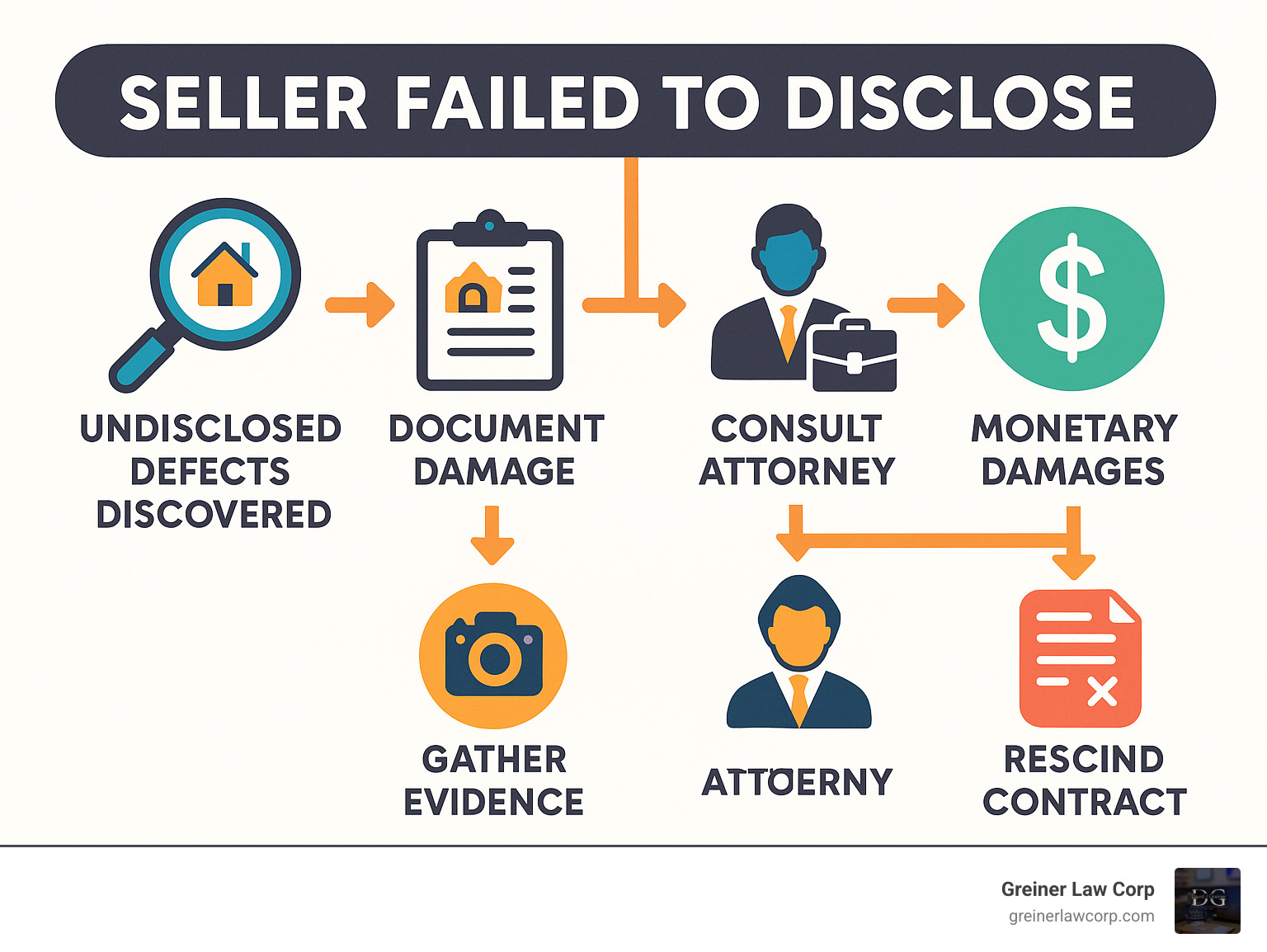
When a seller failed to disclose known property defects, buyers can face thousands of dollars in unexpected repairs and significant legal headaches. Understanding your rights is the first step toward a resolution.
Immediate Consequences & Legal Options:
- Financial Burden: Unexpected repair costs fall on you, the buyer.
- Legal Action: The seller may face claims for breach of contract or misrepresentation.
- Remedies: You may be entitled to monetary damages or even rescission of the sale.
- Time Limits: You have a limited window to take legal action.
The statistics are sobering: 95% of homebuyers find issues after closing, according to a study from Cinch Home Services, and 60% of sellers admit to not disclosing a known problem. This means buyers often find expensive problems they were never told about, while sellers risk lawsuits for failing to meet their legal disclosure obligations.
As David Greiner, Esq., I’ve spent years helping clients steer complex real estate transactions. My experience in business and real estate law has shown me how critical it is for buyers to understand their options when a seller failed to disclose material defects.
Common seller failed to disclose vocab:
- breach of contract real estate
- can you back out of buying a house before closing
- what is a breach of contract
Understanding the Seller’s Duty to Disclose
When you buy a home, you are entitled to know what the seller knows about its condition. Seller disclosure laws are legal requirements that protect buyers from finding major problems after closing. Most states, including California, have strict laws requiring sellers to share known defects and material facts that could affect a buyer’s decision.
A material fact is any information that would cause a reasonable buyer to reconsider the purchase or the price they’re willing to pay. This includes not only obvious issues but also latent defects—hidden problems like a slow leak behind a wall that a seller is aware of.
In California, the California Civil Code requires most residential sellers to complete a Transfer Disclosure Statement (TDS). This comprehensive document covers everything from the foundation to the roof, as well as environmental hazards and neighborhood issues. The goal is to prevent buyers from being blindsided by problems the previous owner knew about. When a seller failed to disclose these issues, buyers have legal options.

For more detailed information, check out What is a Material Fact? from real estate professionals.
What Constitutes a ‘Material Fact’ in Real Estate?
A fact is “material” if knowing it would change your mind about buying or affect the price. The test is whether the information would matter to a reasonable buyer.
- Structural and Safety Issues: Foundation cracks, roof leaks, faulty wiring, and plumbing problems are all material because they are expensive to fix and impact safety.
- Environmental Hazards: Asbestos, lead paint, mold, or radon gas pose health risks and require costly remediation.
- Legal and Financial Complications: Easements, code violations, zoning issues, boundary disputes, unpermitted additions, and significant HOA issues (like pending assessments) must be disclosed.
- Neighborhood Nuisances: A constant, significant nuisance (like extreme noise) that affects the property’s value may also need to be disclosed.
The California Department of Real Estate guidelines advise sellers to disclose when in doubt to avoid a future lawsuit.
How State Laws Impact Disclosure Requirements
Disclosure laws vary by state. Some still follow the old “caveat emptor” (buyer beware) model, but most, including California, are mandatory disclosure states. Sellers must proactively inform buyers about known defects, typically using standardized forms.
California law is especially protective of buyers. In addition to the TDS, sellers must provide a Natural Hazard Disclosure (NHD), which identifies if the property is in a flood, fire, or earthquake zone. These forms create a clear record of what was disclosed, which is vital if a dispute arises. When a seller failed to disclose required information, this documentation makes it easier to prove a legal violation. Because state statutes differ, it’s crucial to work with a local attorney who understands your state’s specific rules.
When a Seller Failed to Disclose: Common Issues and Legal Claims
You’ve just moved into your dream home, only to find a massive water stain hidden behind a bookshelf. This scenario is all too common. When a seller failed to disclose a known problem, buyers face financial hardship and the stress of feeling deceived, whether the issue was intentionally hidden or conveniently “forgotten.”

Common undisclosed issues include water damage, foundation problems, pest infestations, unpermitted work, and environmental hazards like mold or asbestos. These problems can lead to expensive repairs and potential health risks.
Here are the top 10 most commonly undisclosed property defects:
- Water intrusion (roof, basement, pipes)
- Foundation issues (cracks, settling)
- Pest infestations (termites, rodents)
- Mold growth
- Unpermitted additions or renovations
- HVAC or plumbing system failures
- Electrical system defects
- Environmental hazards (asbestos, lead, radon)
- Boundary disputes or encroachments
- Known noise nuisances or neighborhood issues
Common Types of Defects a Seller Must Disclose
The law requires sellers to disclose anything that materially affects the property’s value or a buyer’s decision. This includes:
- Structural Issues: Foundation problems, damaged support beams, or significant cracks.
- Roof and Plumbing Problems: Any history of leaks, chronic plumbing issues, or failing systems.
- Electrical System Faults: Outdated wiring or non-functioning systems that pose a safety hazard.
- Environmental Hazards: Asbestos, lead paint, radon gas, or contaminated soil.
- Property Line and Use Issues: Boundary disputes, easements, or significant HOA problems like pending litigation or special assessments.
- Previous Major Repairs: The history of repairs for events like fires or floods can be a material fact.
Legal Claims You Can Pursue if a Seller Failed to Disclose
If a seller failed to disclose a material defect, you have several legal options:
- Breach of Contract: This claim arises when the seller fails to meet the disclosure obligations in the purchase agreement, such as providing an inaccurate Transfer Disclosure Statement.
- Negligent Misrepresentation: This applies if the seller made a false statement they should have known was untrue, even if they didn’t intend to deceive.
- Fraudulent Misrepresentation: This is the most serious claim and requires proving the seller intentionally concealed a known defect. This can lead to punitive damages in addition to repair costs.
- Statutory Non-Disclosure Claims: California law provides specific causes of action when sellers violate their disclosure duties, which can streamline the process of seeking compensation.
Real estate agents also have a duty to disclose and can be held liable. Failure to disclose is the top claim against agents. The key to any claim is proving the seller knew about the defect and failed to disclose it.
Building Your Case: Evidence and the ‘As-Is’ Clause
If you suspect a seller failed to disclose a defect, your case depends on proving the seller knew about it. This is the biggest challenge, as sellers often claim ignorance. You must show the seller must have known about the problem, not just that they should have known.
Proving knowledge requires concrete evidence that the seller was aware of the defect before the sale. This can include witness testimony from neighbors, repair invoices, or expert reports showing the problem’s age. Before-and-after photos that reveal intentional concealment can be particularly powerful.

Gathering Evidence to Prove Your Claim
Methodical evidence collection is key to building a strong case. Think like a detective to piece together what the seller knew and when.
- Home Inspection Reports: Your report serves as a baseline. If the inspector missed the defect, it helps prove it was hidden. If they noted a related issue, it can support your claim.
- Contractor Estimates: These quantify your damages and provide expert opinions on how long the problem likely existed.
- Neighbor Statements: Neighbors often see things sellers try to hide, like frequent repair trucks or efforts to dry a wet basement. Their testimony can be invaluable.
- Seller’s Disclosures: Inconsistencies or outright denials on the disclosure forms are powerful evidence.
- Communications: Emails and texts from the transaction may contain admissions or contradictions.
- Previous Listings & Utility Bills: Old property listings might mention problems that were supposedly fixed, and high utility bills can indicate issues like a water leak.
How an ‘As-Is’ Clause Affects a Seller’s Duty
Many sellers mistakenly believe an “as-is” clause lets them hide known problems. This is a major misconception about ‘as-is’ sales.
An “as-is” clause means you buy the property in its current condition, but it does not waive the seller’s legal disclosure obligations. The clause protects sellers from unknown defects or issues a reasonable inspection would find. It does not protect them from fraud or active concealment.
In California, the fraud exception is clear: no contract clause can shield a seller from liability for intentionally hiding known defects. If a seller paints over water stains from a leaky roof, the “as-is” clause won’t protect them in a lawsuit. The clause essentially says, “what you see is what you get,” but the seller can’t actively prevent you from seeing the full picture.
For more guidance on these complex issues, see our resources on real estate law.
Potential Outcomes: Damages, Rescission, and Resolutions
When a seller failed to disclose a material defect, you have legal recourse. The available remedies range from financial compensation to canceling the entire sale, depending on the defect’s severity and your goals.
What Damages Can a Buyer Seek?
The primary goal of seeking damages is to make you financially whole.
- Compensatory Damages: This is the most common remedy and covers your direct losses, such as the cost of repairs or the diminished property value caused by the defect.
- Consequential Damages: These cover indirect losses resulting from the non-disclosure, like temporary housing costs during repairs.
- Punitive Damages: Awarded only in rare cases of intentional fraud, these are meant to punish the seller for malicious conduct.
- Attorney’s Fees: Your purchase agreement or a finding of fraud may allow you to recover legal fees from the seller.
Rescission of the Contract vs. Monetary Damages
In severe cases, you may be able to pursue rescission of the contract. This remedy cancels the sale, requiring the seller to return your purchase price in exchange for the property. Rescission is typically reserved for fundamental defects that make the property substantially different from what you agreed to buy, such as a home that is structurally unsound.
Choosing the right remedy is a strategic decision.
| Feature | Rescission | Monetary Damages |
|---|---|---|
| Outcome | Contract canceled, parties return to original state | Buyer receives financial compensation |
| Goal | Undo the sale, eliminate obligation to property | Compensate for losses, keep the property |
| Severity | Typically for severe, fundamental defects | For any material defect causing financial loss |
| Complexity | Often more complex, can be harder to achieve | Can be simpler, focuses on quantifiable costs |
| Timeframe | Potentially longer legal process | Varies, but often faster than full contract unwinding |
Resolving Disputes Outside of Court
Litigation is costly and time-consuming, so many disputes are resolved through other means.
- Demand Letters: A formal letter from an attorney outlining the defect and demanding a resolution is often the first step and can lead to a quick settlement.
- Mediation: A neutral mediator helps both parties negotiate a mutually agreeable solution. This process is confidential and highly effective.
- Arbitration: If your contract requires it, a neutral arbitrator will hear the case and issue a legally binding decision, similar to a judge but in a less formal setting.
- Settlement Negotiations: At any point, the parties can negotiate directly to reach a settlement, which typically involves the seller paying the buyer to cover damages.
Frequently Asked Questions about Seller Disclosure Failures
Clients facing a seller failed to disclose situation often have similar questions. Here are answers to the most common ones.
Can a seller be held liable for defects they were unaware of?
Generally, no. The legal standard is based on the seller’s “actual knowledge.” Sellers are not liable for problems they genuinely did not know about.
However, a court can sometimes infer knowledge based on the circumstances. For example, evidence of a recent, shoddy cover-up of a major crack could be used to argue the seller must have known about the problem, despite their claims. The burden is on the buyer to prove the seller’s knowledge.
What is the role of a home inspection in a failure-to-disclose case?
A home inspection is crucial. It serves as your best tool for due diligence and can become powerful evidence later.
- As Protection: A good inspector can identify red flags the seller failed to mention, allowing you to address them before closing.
- As Evidence: An inspection report documents the property’s condition at the time of sale. If an inspector missed a defect, it helps show the problem was hidden. If they noted a related issue, it can support your claim that the seller was not truthful.
Warning: Waiving an inspection is extremely risky. It weakens your ability to hold a seller accountable if you later find that a seller failed to disclose a major problem.
What are the consequences for real estate agents involved in non-disclosure?
Real estate agents have an independent legal duty to disclose material facts. In California, they must conduct a visual inspection and disclose anything they find or know about, even if the seller objects.
If an agent fails in this duty, they can face:
- Civil Lawsuits: Buyers can sue agents for misrepresentation, and they may be held liable for damages.
- Professional Discipline: The California Department of Real Estate can impose fines or even suspend or revoke an agent’s license.
An agent cannot hide behind a seller’s instructions to conceal a problem. Their duty to disclose is independent and mandatory.
Conclusion
Finding that a seller failed to disclose a serious defect in your new home is a frustrating and costly experience. The financial burden is significant, but the feeling of being deceived is often worse.
Fortunately, you have rights. As a buyer, you are protected by laws that require sellers to disclose known material facts. When they fail to do so, you have options. Your path to resolution starts with gathering evidence to prove the seller’s knowledge and understanding that an “as-is” clause does not protect a seller from fraud.
You can seek resolution through a demand letter, mediation, or, if necessary, litigation. Potential outcomes include monetary damages to cover repairs and other losses or, in severe cases, rescission of the contract. The key is to act quickly, as strict time limits apply to these claims.
Due diligence is your best defense. Always get a home inspection, read disclosures carefully, and ask questions.
At Greiner Law Corp, we have helped California homeowners steer these situations since 2003. We serve clients in Victorville, Riverside, San Bernardino, and Los Angeles, offering a business-minded approach to real estate law that prioritizes your goals and risk tolerance. Your home is a major investment, and we are here to help you protect it.
Don’t let a seller’s failure to disclose derail your homeownership journey. Protect your real estate investment with expert legal guidance. We can help you fight for the resolution you deserve.


