Breaking a real estate contract buyer is a process fraught with both emotion and potential legal ramifications. Key Points to Consider:
– Buyer’s Remorse: A natural feeling but not a valid legal reason to exit a contract without consequences.
– Contingencies: Use them wisely—financing, inspections, or document review are potential out-clause opportunities.
– Legal Consequences: Be prepared to forfeit earnest money or face lawsuits if you breach the contract without adequate legal grounds.
Buying a house is a major decision, and it’s crucial for buyers to understand that changing their minds post-signing can lead to significant consequences. Real estate contracts are legal documents binding the buyer to the purchase unless specific conditions allow otherwise. Whether it’s due to a poor inspection outcome or an inability to secure financing, understanding the terms of these contracts can save a lot of stress and money.
I’m David Greiner, Esq., and my experience in transactional law includes navigating the intricacies of real estate contracts and helping clients address scenarios related to breaking a real estate contract buyer. My goal is to help you make informed decisions and avoid common pitfalls in real estate transactions.
Key breaking a real estate contract buyer vocabulary:
– cancellation of agency agreement
– cancelling a property sale agreement
– cancel real estate contract
Understanding Real Estate Contracts
Real estate contracts might seem overwhelming, but understanding their core elements can make all the difference. Let’s break down the essentials.
Legal Binding
Once you sign a real estate contract, it becomes legally binding. This means both parties—buyer and seller—must fulfill their obligations as outlined. If not, either party can face legal action. This legal framework ensures everyone sticks to their promises, providing a safety net for both sides.
Key Contract Components
Every real estate contract includes several vital components:
Parties Involved: Full legal names and contact information of both the buyer and seller.
Property Details: A detailed description of the property, including its address and legal description.
Price and Terms: The agreed purchase price and payment terms, including any deposits.
Dates: Important dates like the offer date, acceptance deadline, and closing date.
Signatures: Legal signatures from all parties involved, making the contract official.
These components ensure clarity and help prevent misunderstandings. They lay out what each party can expect and what is expected of them.
Contingencies
Contingencies are conditions that must be met for the sale to proceed. They offer buyers and sellers a way out if something goes wrong. Common contingencies include:
Inspection Contingency: Allows the buyer to back out if a home inspection reveals significant issues.
Financing Contingency: Protects the buyer if they can’t secure a loan.
Appraisal Contingency: Ensures the property appraises at or above the sale price.
Contingencies are like safety nets. They protect buyers from unforeseen problems and give sellers certain assurances. For example, if a buyer can’t secure financing, a financing contingency allows them to exit the contract without penalty.
Understanding these elements is crucial when entering a real estate transaction. It can save you from unexpected surprises and ensure a smoother process.

Next, we’ll explore common reasons why buyers might break a contract and how to handle such situations legally.
Breaking a Real Estate Contract as a Buyer
When a real estate deal doesn’t feel right, breaking a real estate contract might be your only option. This section will guide you through the key aspects of doing so, focusing on earnest money, breach of contract, and liquidated damages.
Earnest Money
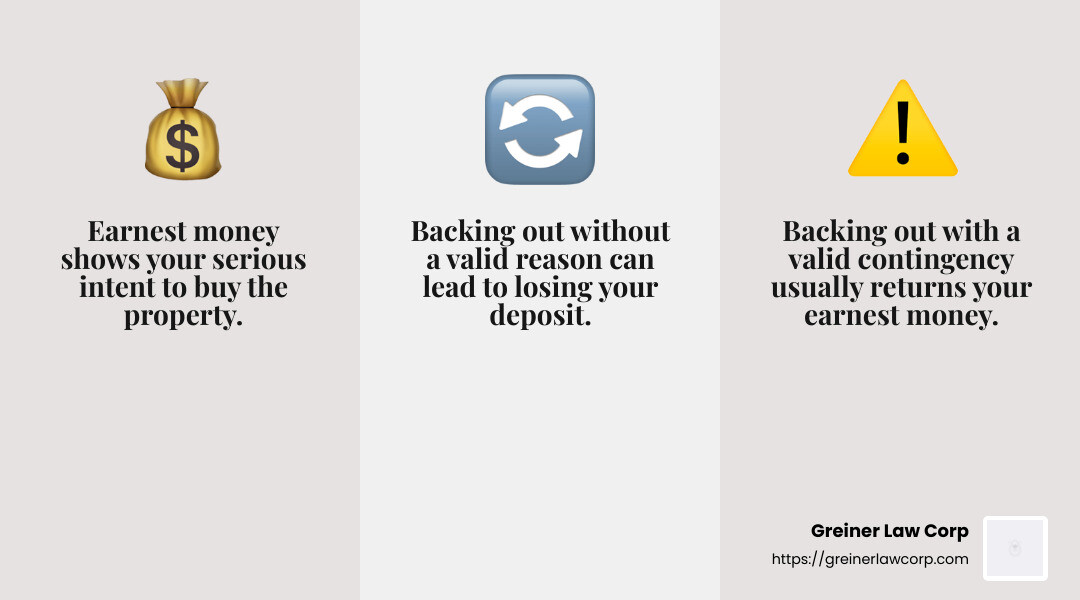
When you make an offer on a home, you’re usually required to put down an earnest money deposit. This deposit shows that you’re serious about buying the property. Think of it as a good-faith gesture to the seller.
But what happens if you decide to back out? If you cancel the contract within the terms of a contingency, like a financing or inspection contingency, you often get your earnest money back. However, if you back out without a valid reason, you risk losing this deposit.
Breach of Contract
A breach of contract occurs when one party doesn’t fulfill their obligations as outlined in the agreement. For buyers, this might mean failing to close on the property without a valid contingency. Breaching a contract can have serious consequences.
If you breach the contract, the seller may choose to keep your earnest money as compensation. In some cases, the seller might even sue you for additional damages or losses they’ve incurred because of your decision.
Liquidated Damages
Some contracts include a liquidated damages clause. This clause specifies a predetermined amount that the seller can keep if the buyer breaches the contract. It’s designed to simplify the process and avoid lengthy legal battles. However, it’s crucial to understand the terms of this clause before signing the contract.
For example, if your contract states that the seller can keep the entire earnest money deposit as liquidated damages, you could lose that money if you back out without a contingency.
In rare cases, a seller might sue for “specific performance,” which means a court could order you to follow through with the purchase. This is uncommon, as most disputes are settled or the seller finds another buyer.
Understanding these aspects of breaking a real estate contract is vital. It helps you make informed decisions and minimizes potential financial losses. Next, we’ll explore common reasons buyers might break a contract and how to steer these situations legally.
Common Reasons Buyers Break Contracts
Breaking a real estate contract as a buyer isn’t usually the plan, but sometimes circumstances change, prompting a rethink. Let’s explore the common reasons why buyers might decide to back out.
Financing Issues
One of the top reasons buyers back out is due to financing problems. Securing a mortgage can be tricky, especially during times of high interest rates. If the financing falls through, it can make the purchase impossible. Luckily, many contracts include a financing contingency. This allows buyers to cancel the deal without losing their earnest money if they can’t secure a loan.
Inspection Findings
The home inspection process often reveals issues that weren’t apparent during the initial visit. These findings can range from minor repairs to major structural problems. If significant issues are uncovered, buyers might choose to walk away, especially if the seller is unwilling to make necessary repairs or lower the price. An inspection contingency protects buyers in these cases, allowing them to exit the contract without financial penalty.
Personal Circumstances
Life is unpredictable, and sometimes personal situations change. This might include a job loss, a family emergency, or a change in financial status. Such changes can make it difficult to proceed with a home purchase. While these reasons are valid, they don’t always offer legal protection. It’s crucial to have contingencies in the contract that can provide an exit strategy if personal circumstances change.
Understanding these common reasons can help buyers be prepared and protected when entering a real estate contract. It ensures that if they need to break the contract, they can do so with minimal financial and legal repercussions.
Legal Grounds for Contract Cancellation
When it comes to breaking a real estate contract as a buyer, it’s crucial to know your legal options. Understanding the grounds for cancellation can help you steer this tricky situation.
Contingencies
Contingencies are your safety net in a real estate contract. They are specific conditions that must be met for the deal to proceed. If these conditions aren’t fulfilled, you can back out without penalty. Common contingencies include:
- Financing Contingency: If you can’t get a mortgage, this clause allows you to cancel the contract without losing your earnest money.
- Inspection Contingency: This gives you the right to walk away if a home inspection reveals serious problems and the seller won’t address them.
- Appraisal Contingency: If the property appraises for less than the agreed price, you can back out or renegotiate.
These contingencies are like lifeboats, ensuring you’re not stuck in a deal that doesn’t meet your expectations or financial capabilities.
Rescission Rights
Rescission rights allow a contract to be undone, returning all parties to their pre-agreement state. This can happen if there’s been a misrepresentation or fraud. For example, if the seller lied about the condition of the property or omitted crucial information, you might have grounds for rescission. It’s like hitting the reset button on the deal, making it as if the contract never existed.
Breach of Contract
If the seller fails to fulfill their obligations, you might have grounds to cancel the contract. This is known as a breach of contract. For instance, if the seller agreed to make certain repairs before closing and doesn’t, you could potentially exit the deal. Breach of contract protects you from being tied to a seller who doesn’t hold up their end of the bargain.
Knowing these legal grounds for cancellation can give you peace of mind and a clear path forward if things go south. Always consult with a real estate attorney to ensure your rights are protected and the process is handled correctly. Up next, we’ll explore the steps you need to take to legally break a real estate contract.
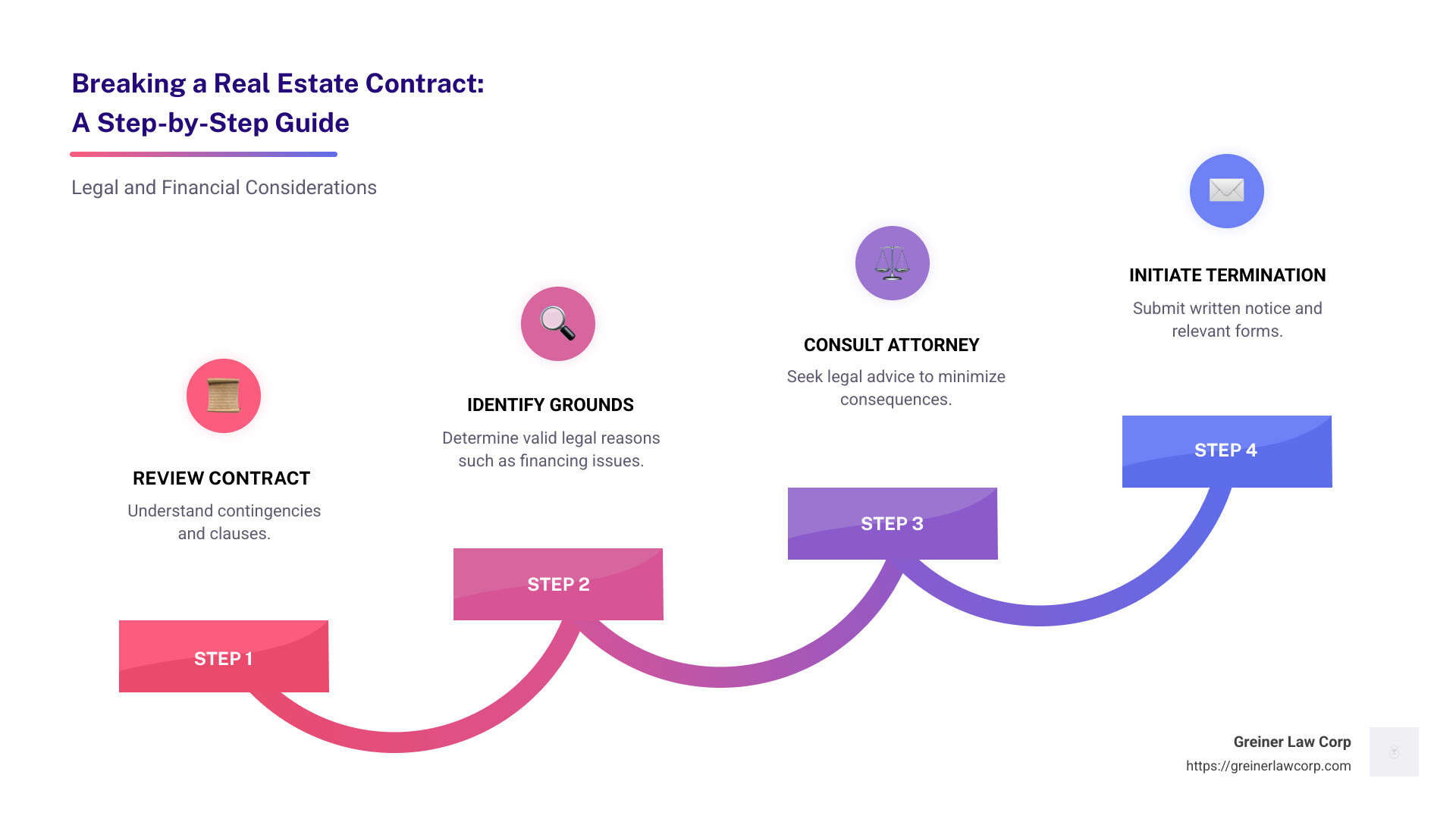
Steps to Break a Real Estate Contract Legally
When breaking a real estate contract as a buyer, following the right steps is crucial to avoid unnecessary penalties and legal headaches. Here’s how you can do it properly:
1. Written Notice
The first step is to notify all parties involved in writing. This isn’t just a courtesy—it’s a legal necessity. Your written notice should clearly state your intention to cancel the contract and the reasons for doing so. Be sure to include:
- The date the contract was drafted
- The property address
- The date of cancellation
- Specific reasons for the cancellation
Make sure to follow any notification procedures outlined in your contract to avoid any legal complications.
2. Legal Forms
Depending on where you live, there might be specific forms you need to fill out to officially cancel the contract. For instance, some states require a cancellation form to be submitted. Check with your real estate agent or attorney to ensure you have all the necessary paperwork. Proper documentation is key, as it serves as evidence in case of disputes.
3. Attorney Consultation
Consulting a real estate attorney is perhaps the most important step. An attorney can help you:
- Review your contract for any cancellation clauses or contingencies
- Advise on the legality of your cancellation
- Draft and send necessary legal notices to ensure compliance with state laws
Real estate contracts are complex, and having an expert guide you can make all the difference. A skilled attorney can also represent your interests if the situation escalates to legal disputes.
By following these steps, you can steer the cancellation process with confidence and minimize potential risks. Next, let’s address some frequently asked questions about breaking a real estate contract.
Frequently Asked Questions about Breaking a Real Estate Contract
Can a buyer back out after inspection?
Yes, a buyer can back out after an inspection, thanks to the inspection contingency. This clause allows buyers to cancel the contract if the inspection reveals significant issues with the property. Common problems include structural defects, plumbing issues, or pest infestations. If substantial issues are found, the buyer can either renegotiate the terms with the seller or walk away from the deal without penalties.
What happens to the earnest money?
The earnest money deposit is a show of good faith when making an offer on a home. If you cancel the contract for a valid reason—like unmet contingencies—you’re typically entitled to a refund of this deposit. However, if you break the contract without a valid reason or after removing contingencies, you risk losing the earnest money. Always review your contract to understand the specific refund conditions.
Are there penalties for breaking a contract?
Yes, there can be financial penalties and legal consequences for breaking a real estate contract without valid grounds. You might forfeit your earnest money deposit, and the seller could potentially sue for breach of contract. Some contracts include a “liquidated damages” clause, which limits the seller’s compensation to the earnest money. However, understanding your contract and consulting an attorney can help you steer these risks effectively.
Conclusion
Navigating the complexities of real estate contracts can be daunting, especially when the deal doesn’t feel right. That’s where we at Greiner Law Corp come in. Our expertise in real estate law ensures you have the legal support you need to make informed decisions.
Why Choose Greiner Law Corp?
- Client-Focused Approach: We prioritize your goals and tailor our advice to meet your specific needs.
- Expert Legal Guidance: Our team is well-versed in the intricacies of real estate contracts, helping you understand your rights and obligations.
- Risk Management: We help you identify potential pitfalls and strategize effectively to protect your interests.
Breaking a real estate contract as a buyer involves understanding your contract, the contingencies, and the legal grounds for cancellation. Whether it’s dealing with earnest money, potential penalties, or other legal implications, having a knowledgeable attorney by your side can make all the difference.
If you’re considering canceling a real estate contract, don’t steer this complex process alone. Contact Greiner Law Corp today to ensure your decisions are strategic, compliant, and backed by expert legal support. With us, you’re not just getting legal advice; you’re gaining a strategic partner committed to your success.


