Why California Commercial Real Estate Forms Are Your Key to Success
Commercial real estate forms california are the foundation of every property transaction in the Golden State. For seasoned investors and first-time buyers alike, using the right forms is critical, as a missing disclosure or poorly drafted agreement can derail a deal and lead to significant financial loss.
Quick Answer: Where to Get Commercial Real Estate Forms in California
- AIR CRE Contracts: Industry-standard forms available via subscription.
- Realty Publications Inc. (RPI): Over 400 free forms for professional use.
- California Association of REALTORS®: Commercial contracts available to members via zipForm.
- California DRE: Official state regulatory forms at dre.ca.gov/forms.
California’s complex regulations regarding disclosures, environmental issues, and tenant rights make proper documentation essential. Relying on proven, legally compliant forms is the smart way to ensure all parties are protected and the transaction proceeds smoothly.
I’m David Greiner, Esq., and my experience as both a real estate attorney and business owner has shown me how vital the right paperwork is for protecting deals and preventing disputes. My firm’s business-focused approach prioritizes your goals while ensuring every legal detail is properly addressed.
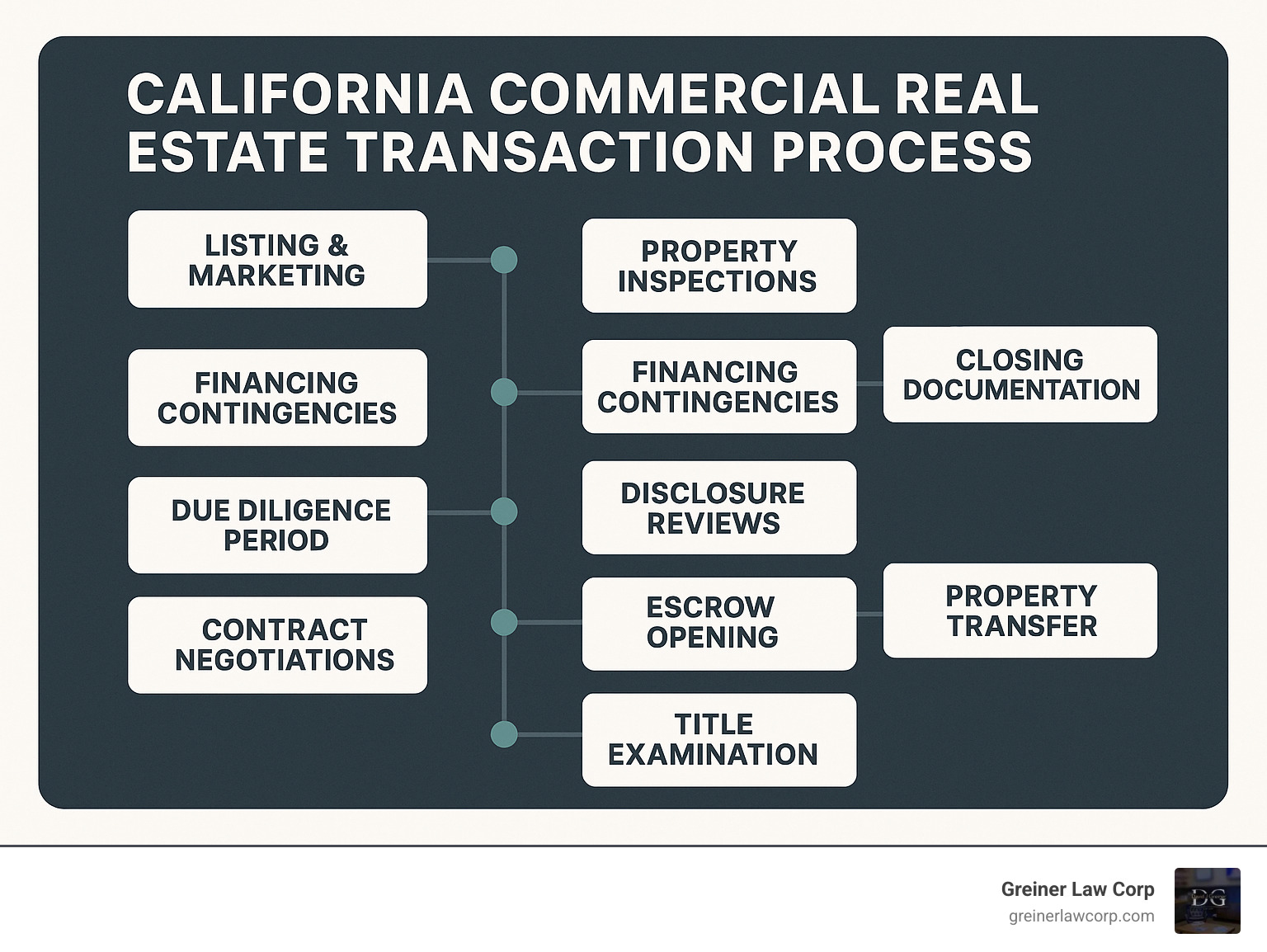
Find more about commercial real estate forms california:
Where to Find Commercial Real Estate Forms in California
Knowing where to find reliable, legally compliant commercial real estate forms california is the first step toward a successful transaction. Professionals in California trust several key sources for their documentation needs.

Official Government Sources
While most transactional forms come from industry providers, government agencies issue certain foundational documents. The California Department of Real Estate (DRE) provides official forms related to licensing, audits, and subdivisions, which are essential for regulatory compliance. You can find these at the DRE Forms directory. For online submissions, visit the eLicensing for online submission options portal.
Standardized Industry Form Providers
For day-to-day transactions, professionals rely on industry associations. AIR CRE Contracts is considered the industry standard in California, offering over 50 contracts drafted to be fair and reduce negotiation time. They are typically accessed via a software subscription that includes features like e-signatures and automatic updates. You can Get the software for contracts. The California Association of REALTORS® (C.A.R.) partners with AIR CRE, providing its members access to these commercial forms through the zipForm platform.
Free vs. Paid Form Libraries
You will encounter both free and paid options for commercial real estate forms california. Paid libraries like AIR CRE offer an integrated software experience with continuous updates and support. Free libraries, such as the one from Realty Publications, Inc. (RPI), provide a valuable alternative. RPI offers over 400 forms for free, designed with simple, concise language to reduce litigation risk for brokers and agents.
Here’s a comparison to help you choose:
| Feature | Paid Software-Based Forms (e.g., AIR CRE, C.A.R./zipForm) | Free Downloadable Forms (e.g., RPI) |
|---|---|---|
| Cost | Monthly or annual subscription fees | Free |
| Features | Software integration, e-signatures, auto-updates, version control, smart data entry, template-based | PDF downloads, require external software (e.g., Adobe Reader) for fillable features |
| Ease of Use | Streamlined workflow within dedicated software | Requires manual management of files, printing, or separate PDF editing tools |
| Legal Philosophy | Often “fair to all parties,” industry-standard, widely accepted | “Engineered simple,” focus on litigation risk reduction for brokers |
| Support | Dedicated customer service, training resources, legal hotlines (C.A.R.) | Limited direct support for form usage, often relies on guides |
| Updates | Automatic updates pushed to software | Users must manually check for and download updated versions |
Regardless of your choice, we recommend using Adobe Reader for fillable PDF forms. You can Download Adobe Reader for free to use forms. For more insights, you can find More info about using free forms.
The Anatomy of a California Commercial Real Estate Transaction: Essential Forms
Every commercial real estate deal relies on a series of essential forms that outline the rights and responsibilities of all parties. Understanding their purpose is crucial for protecting your interests.

Purchase and Sale Agreements
The Purchase and Sale Agreement is the central contract for acquiring commercial property. This legally binding document details all terms, including the purchase price, financing contingencies, due diligence period, seller disclosures, and closing conditions. It provides a clear framework for the entire transaction. For more details, see the California Real Estate Forms Purchase Agreement and the Real Estate Purchase Contract California.
Commercial Lease Agreements
A Commercial Lease Agreement defines the landlord-tenant relationship. Unlike residential leases, these are often highly customized. Key terms include the property description, lease term, rent structure, maintenance responsibilities, and insurance requirements. Common types include:
- Gross Lease: Tenant pays a fixed rent; landlord covers most expenses.
- Net Lease: Tenant pays base rent plus a portion of operating costs (e.g., taxes, insurance).
- Triple Net (NNN) Lease: Tenant pays base rent plus all property taxes, insurance, and maintenance. This is common for single-tenant properties.
Learn more about the Commercial Real Estate Lease Contract and the Lease Contract For Commercial Space.
Listing and Agency Agreements
Before a property is sold or leased, a Listing Agreement is established between the property owner and a broker. This form defines the broker’s duties, scope of representation, and compensation. A key component is the Agency Disclosure, which clarifies the broker’s role (representing the seller, buyer, or both) and obtains consent from all parties. You can find more details on these agreements from the California Association Of Realtors Forms.
Mandatory Disclosures and Addenda
California has strict disclosure laws to ensure transparency and protect buyers. Failing to provide required disclosures can lead to serious legal consequences. Here is a LIST of Common California Disclosures:
- Natural Hazard Disclosure (NHD): Identifies if the property is in a flood, fire, or earthquake zone.
- Seller’s Mandatory Disclosure Statement: Reveals known property conditions, including hazardous materials or mold.
- Certified Access Specialist (CASp) Report: States whether the property has been inspected for disability access compliance.
- Agency Law Disclosure: Discloses the agent’s relationship with the parties in the transaction.
- Agricultural Land Disclosure: Informs if the property is within one mile of agricultural land.
- Asbestos Disclosure: Required for buildings constructed before 1979 containing asbestos.
- Disclosure of Hazardous Substances: Landlords must inform tenants of any known hazardous materials.
- Energy Disclosure: For large commercial buildings, energy usage data must be disclosed.
- Methamphetamine or Fentanyl Contamination Disclosure: Required if the property was a former drug manufacturing site.
- Proposition 65 Warning: A warning about chemicals known to cause cancer or reproductive harm. See the Proposition 65 Warning List.
The Strategic Advantage of Using Standardized Forms
Using standardized commercial real estate forms california is a strategic move that shields your business and your deals. These forms are powerful tools designed to protect you, improve efficiency, and save money.

Ensuring Legal Compliance and Mitigating Risk
Standardized forms are developed by legal experts who continuously monitor California’s complex real estate laws, providing a legally compliant foundation for your transaction. They use clear language to define responsibilities, which reduces misunderstandings that can lead to costly disputes. Many forms also include dispute resolution clauses, such as requiring mediation before litigation, to resolve issues efficiently. Understanding Relevant California Real Estate Laws is key, and our insights on Real Estate Contracts Explained can help.
Streamlining Transactions and Saving Costs
Standardized forms eliminate the need to draft contracts from scratch, saving significant time and legal fees. This efficiency leads to direct cost savings by reducing negotiation time, providing clarity for all parties, and preventing disputes through well-defined terms. This allows professionals to focus on the deal itself, not the administrative burden.
Providing a Fair and Balanced Framework
Unlike custom contracts that may be biased, high-quality standardized forms are designed to be balanced. They use industry-vetted language to create a neutral framework that protects the legitimate interests of both buyers and sellers, or landlords and tenants. This builds trust and facilitates smoother negotiations for everyone involved. For more on this, you can explore More info on the legality and protection of forms.
Navigating the Nuances of Commercial Real Estate Forms California
While standardized forms are advantageous, successfully using commercial real estate forms california means understanding their nuances, knowing when to customize, and seeking expert legal review.

Choosing the Right Form Source for Your Needs
As we’ve explored, different sources for commercial real estate forms california suit different needs. Your choice depends on transaction volume, budget, and desired features.
| Feature | Paid Software-Based (e.g., AIR CRE Contracts) | Free Downloadable (e.g., RPI Forms) |
|---|---|---|
| Cost | Subscription fee (e.g., $90/month, $937/year or $229/year for C.A.R. members) | Free |
| Features | Integrated software, auto-updates, e-signatures, smart data entry, version control | PDF downloads, manual updates, requires external PDF editor |
| Ease of Use | Streamlined workflow, designed for frequent use in a digital environment | Simple for occasional use, but managing many PDFs can be cumbersome |
| Legal Philosophy | “Fair to all parties,” industry standard, comprehensive | “Engineered simple,” focus on litigation risk reduction for brokers |
| Support | Comprehensive (customer service, training, legal hotlines for C.A.R. members) | Limited (guides, FAQs) |
| Best For | High-volume users, those valuing integrated tech, legal certainty, and efficiency | Lower-volume users, budget-conscious, those comfortable with manual updates |
The right choice is the one that best supports your business and risk preferences.
The Importance of Customization and Legal Review
Standard forms are a starting point, not the final word. Every deal is unique and may require addenda or custom clauses to address specific terms. This is where an experienced real estate attorney is invaluable. A lawyer can review the agreement, identify gaps, draft custom language, and negotiate on your behalf. Our role is to provide a business-minded approach to Real Estate Law, ensuring your unique goals are met while leveraging the efficiency of standard forms.
Understanding Key Disclosures in commercial real estate forms california
A deep understanding of California’s disclosures is vital. These are not just formalities; they reveal critical information about a property’s value and potential liabilities.
- Certified Access Specialist (CASp) Reports: A CASp report indicates if a property has been inspected for compliance with disability access laws. If a report exists, it must be provided to a commercial tenant, who can then assess any potential remediation responsibilities.
- Environmental Disclosures: Sellers and landlords must disclose known hazardous materials. Due diligence often includes professional environmental site assessments to investigate these risks.
- Energy Use Disclosures: For commercial buildings over 50,000 square feet, California requires disclosure of energy consumption data, allowing buyers or tenants to assess efficiency and utility costs.
- Agricultural Land Proximity: This disclosure informs a buyer or tenant if the property is near agricultural lands, which may be subject to nuisances like noise or dust. You can verify locations using California Important Farmland Maps.
Frequently Asked Questions about California Commercial Real Estate Forms
Here are answers to some of the most common questions we receive about commercial real estate forms california.
Are downloaded commercial real estate forms legal to use in California?
Yes, forms from reputable publishers like AIR CRE, RPI, and C.A.R. are legal for professional use in California. However, it is crucial to use the most current version of any form and ensure it is properly customized to reflect the specific details of your transaction. Using an outdated or improperly filled-out form can create legal risks.
What is the difference between a commercial lease and a purchase agreement?
The key difference is ownership. A Commercial Lease Agreement grants a tenant the right to use a property for a set term in exchange for rent, while the landlord retains ownership. A Purchase Agreement is a contract to transfer ownership of the property from a seller to a buyer. In short, a lease is for using a property, while a purchase agreement is for owning it.
Do I still need a lawyer if I use a standard form?
Yes, absolutely. Standard forms are powerful tools, but they are not a substitute for legal advice. An experienced real estate attorney is essential for several reasons:
- Risk Assessment: We help you understand the risks and liabilities within standard clauses.
- Negotiation: We can negotiate favorable terms and draft effective counter-offers.
- Customization: We tailor the agreement by adding or modifying clauses to fit your unique deal.
- Protection: While forms aim to be fair, our primary job is to ensure your interests are fully protected.
Using a standard commercial real estate forms california document is a smart first step. Partnering with legal counsel ensures your transaction is not just compliant, but strategically advantageous.
Conclusion: Securing Your Commercial Real Estate Success
Mastering commercial real estate forms california is the secret to successful property deals in the Golden State. These documents are your roadmap, ensuring legal compliance, mitigating risk, and creating a fair framework for all parties. From a purchase agreement to a commercial lease and mandatory disclosures, each form is a vital safeguard for your investment.
Excellent resources from AIR CRE, RPI, and C.A.R. empower professionals to steer California’s complex legal landscape. However, the key is not just having the forms, but understanding them, knowing when to customize, and recognizing when to seek expert legal guidance.
At Greiner Law Corp, we understand that every commercial real estate venture is a significant investment. Our business-minded approach prioritizes your goals, helping you manage risk effectively. We ensure your documentation is handled with impeccable care so you can focus on the big-picture strategy of your deal with peace of mind.
Ready to build a solid legal foundation for your next commercial real estate success? Let’s ensure your journey is smooth and secure. Learn more about crafting the perfect Real Estate Purchase Agreement and find how our expertise can benefit you.


