Finding trust and estate lawyers near me can be a daunting task. You want an attorney who not only understands the complexities of trusts, estates, and estate planning but also has the local expertise to guide you through California’s specific legal landscape.
Quick Tips for Finding a Trust and Estate Lawyer Near You:
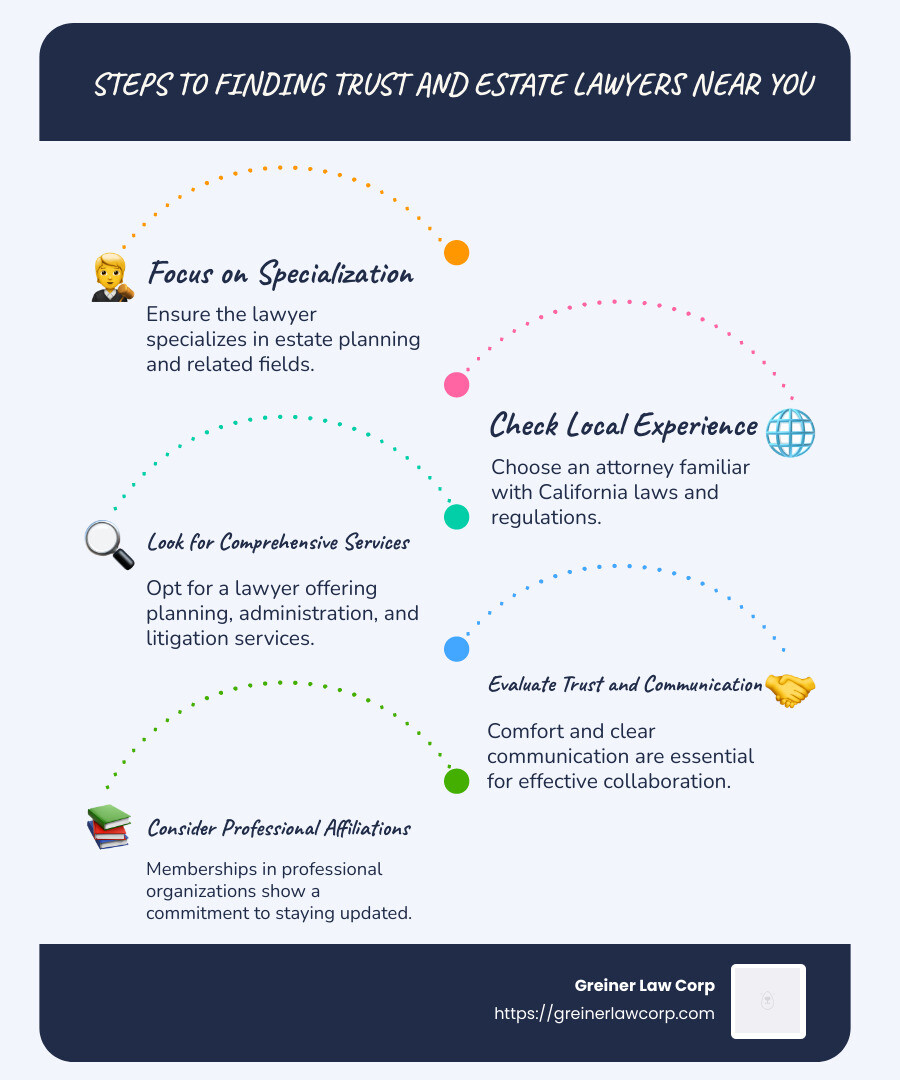
- Focus on Specialization: Ensure the lawyer specializes in estate planning.
- Check Local Experience: Choose someone familiar with California laws.
- Look for Comprehensive Services: They should offer planning, administration, and litigation.
- Evaluate Trust and Communication: Comfort and clarity are keys to effective partnership.
- Consider Professional Affiliations: Memberships can indicate a commitment to staying updated.
As an expert in business law and estate planning, and having been involved in one of the area’s largest family-owned businesses, I know the importance of a well-crafted estate plan. My focus has always been on achieving client goals while navigating the challenges of planning and managing trusts and estates. Let’s explore how you can make the right choice in selecting a seasoned trust and estate lawyer near me.
Basic trust and estate lawyers near me terms:
– estate planning
– estate planning lawyer
Understanding Trusts and Estates
When it comes to managing your assets and ensuring they are passed on as you wish, understanding trusts and estates is crucial. These are the building blocks of effective estate planning.
What is a Trust?
A trust is a legal arrangement where one party, known as the trustor, transfers property to another party, the trustee, to manage for the benefit of a third party, the beneficiary. This setup allows you to specify how and when your assets will be distributed, offering control and protection even after you’re gone.
Benefits of a Trust:
- Avoid Probate: Trusts bypass the often lengthy and costly probate process, allowing for quicker distribution of assets.
- Privacy: Unlike wills, trusts do not become public record, keeping your financial affairs private.
- Asset Protection: Trusts can protect your assets from creditors and legal claims.
What Constitutes an Estate?
An estate encompasses everything you own—your home, car, bank accounts, investments, and personal belongings. When you pass away, your estate needs to be managed and distributed according to your wishes or state laws if you haven’t left instructions.
Asset Transfer: The Core of Estate Planning
The primary goal of estate planning is to ensure your assets are transferred to your beneficiaries smoothly and efficiently. This involves creating a comprehensive plan that includes:
- Wills: Legal documents that outline how your assets should be distributed. They can also specify guardianship for minor children.
- Trusts: As mentioned, they help manage and distribute assets according to your wishes.
- Powers of Attorney: These allow someone you trust to make financial or healthcare decisions on your behalf if you’re unable to do so.
By understanding these elements, you can work with a trust and estate lawyer near me to craft a plan that meets your needs and protects your legacy. This ensures that your wishes are honored and your loved ones are provided for, without unnecessary legal problems.

In the next section, we’ll dig into the key differences between wills and estate planning, helping you make informed decisions about your future.
Key Differences Between Wills and Estate Planning
When planning for the future, it’s important to understand the distinction between wills and estate planning. While they both play roles in asset distribution, they serve different purposes and involve various legal documents.
What is a Will?
A will is a legal document that outlines how your assets will be distributed after your death. It can also appoint guardians for minor children and specify wishes for funeral arrangements. Wills are straightforward but come with certain limitations:
- Probate Process: Wills must go through probate, a legal process that validates the will and oversees the distribution of assets. This can be time-consuming and costly, as probate is a public procedure.
- Limited Control During Lifetime: Wills only take effect after death, offering no control over your assets while you are alive.
What is Estate Planning?
Estate planning is a broader concept that includes a variety of strategies and legal documents to manage and distribute your assets. It aims to ensure your wishes are honored both during your life and after your death. Key elements of estate planning include:
- Trusts: These provide control over asset distribution and can help avoid probate. Trusts can be revocable or irrevocable, each with different benefits, such as tax savings or asset protection.
- Powers of Attorney: This allows someone you trust to make decisions on your behalf if you become incapacitated, ensuring your affairs are managed according to your wishes.
- Healthcare Directives: These outline your medical care preferences, ensuring your healthcare choices are respected if you’re unable to communicate them.
Comparing Wills and Estate Planning
| Feature | Will | Estate Planning |
|---|---|---|
| Timing | Takes effect after death | Includes plans for during life and after death |
| Probate | Subject to probate | Trusts can avoid probate |
| Privacy | Public record | Trusts offer more privacy |
| Control | Limited to post-death asset distribution | Offers control over assets during lifetime |
Understanding these differences is crucial when working with a trust and estate lawyer near me. They can guide you through the process, helping you choose the right combination of tools to protect your assets and fulfill your wishes.
In the next section, we’ll explore how to choose the right trust and estate lawyer, focusing on specialization, expertise, and local knowledge.
How to Choose the Right Trust and Estate Lawyer
Choosing the right trust and estate lawyer near me can make all the difference in effectively planning your estate. Here’s what you need to consider:
Specialization
First and foremost, look for a lawyer who specializes in trusts and estates. A specialist will have a deep understanding of the complexities involved in estate planning, including the latest laws and tax implications. This expertise ensures that your estate plan is both legally sound and custom to your specific needs.
- Why specialization matters: A general practice lawyer might not be up-to-date on the nuances of estate tax laws or the latest strategies for asset protection.
Expertise
Experience is key. Seek out lawyers who have a proven track record in estate planning. You want someone who has successfully steerd similar situations to yours and has faced challenges from courts or tax authorities.
- Questions to ask: How long have you been practicing estate law? Can you provide examples of complex estate plans you’ve handled?
Local Knowledge
Estate laws can vary significantly by state and even by county. Therefore, it’s crucial to choose a lawyer who is well-versed in the local laws and regulations of your area. A local lawyer will also have valuable connections with local accountants and financial planners, which can be beneficial in crafting a comprehensive estate plan.
- Benefits of local expertise: A lawyer familiar with local probate courts and regulations can streamline the process and avoid unnecessary delays.
Building a Relationship
Estate planning is a personal process. You’ll want an attorney who is not only knowledgeable but also someone you feel comfortable with. Look for a lawyer who communicates clearly and listens to your concerns. This will help build a trust-based relationship, essential for discussing sensitive issues about your assets and family.
- Consider the communication style: Does the lawyer explain complex concepts in simple terms? Are they responsive to your questions and concerns?
Professional Development
The field of estate planning is dynamic, with laws and strategies constantly evolving. Choose a lawyer who is committed to ongoing professional development. This ensures they are up-to-date with the latest legal trends and best practices.
- Indicators of commitment: Participation in seminars, workshops, or continuing education courses related to estate law.
By focusing on these factors, you can find a trust and estate lawyer near me who will guide you through the intricacies of estate planning, ensuring your assets are protected and your wishes are honored.
In the next section, we’ll dig into what to look for in local trust and estate lawyers, emphasizing the importance of local expertise and strong client relationships.
Trust and Estate Lawyers Near Me: What to Look For
When searching for a trust and estate lawyer near me, there are key attributes to prioritize: local expertise, strong client relationships, and a commitment to professional development.
Local Expertise
Local knowledge is invaluable when dealing with trusts and estates. Laws can differ widely between states and even counties. A lawyer familiar with the specific regulations in your area can steer these differences more effectively. This ensures smoother transactions and fewer legal hiccups.
- Why it matters: A local attorney will have insights into the intricacies of regional probate courts and common practices, which can expedite the process and help avoid unnecessary complications.
Building Strong Client Relationships
Estate planning is deeply personal. You need a lawyer who not only understands the law but also understands you. Building a strong, trust-based relationship is crucial.
Key traits to look for: Communication is essential. Your lawyer should be able to explain complex legal concepts in simple, understandable terms. They should also be attentive and responsive, ensuring your concerns are heard and addressed.
Client testimonials: Look for reviews or testimonials that speak to the lawyer’s ability to maintain strong client relationships. This can offer insight into their communication style and reliability.
Commitment to Professional Development
The legal landscape for trusts and estates is constantly evolving. Lawyers committed to professional development stay at the forefront of these changes, ensuring they provide the best advice and strategies.
- What to look for: Participation in seminars, legal workshops, and continuing education courses are good indicators that a lawyer is dedicated to staying updated. This ongoing learning helps them apply the most current and effective solutions to your estate planning needs.
By focusing on these attributes, you can confidently choose a trust and estate lawyer near me who will expertly manage your estate planning needs. Next, we’ll answer some frequently asked questions about trust and estate lawyers, helping you further understand their role and how they can assist you.
Frequently Asked Questions about Trust and Estate Lawyers
What is the difference between a trust and an estate?
A trust is a legal arrangement where one party, known as the grantor, transfers assets to a trustee. The trustee manages these assets for the benefit of designated beneficiaries. Trusts can be designed to operate during the grantor’s lifetime or after their death, providing flexibility in how and when assets are distributed.
An estate, on the other hand, encompasses all the assets and liabilities a person leaves behind at death. Estate planning involves making decisions about how these assets will be distributed, either through a will or a trust. It’s crucial to understand these distinctions to make informed decisions about how to manage and distribute your assets effectively.
What type of lawyer is best for wills?
When it comes to drafting and managing wills, you’ll want to seek out a will attorney or a probate attorney. A will attorney specializes in creating wills and ensuring they meet legal requirements. They help you articulate your wishes clearly to avoid any future disputes.
A probate attorney, meanwhile, is essential for navigating the probate process after someone has passed away. They assist with validating the will, settling debts, and distributing the estate’s assets according to the deceased’s wishes. These lawyers ensure the process is smooth and adheres to legal standards, providing peace of mind during a challenging time.
What is the average cost of making a will?
The cost of making a will can vary significantly based on complexity and location. In California, for example, a simple will prepared by an attorney might cost between $500 and $1,000. For more complex estate planning, including trusts and tax planning, fees can range much higher.
Some lawyers offer flat fees for standard services, while others may charge hourly rates for more involved tasks. It’s important to discuss fees upfront with your attorney to understand the costs involved and ensure there are no surprises later on.
By addressing these common questions, you can better understand the roles of trust and estate lawyers and how they can assist you in effectively managing your assets.
Conclusion
At Greiner Law Corp, our primary mission is to help you achieve your personal and financial goals. We bring a business-minded approach to estate planning, ensuring that your assets are managed and transferred in the most efficient way possible. This means not only protecting your wealth but also maximizing the benefits for you and your loved ones.
Our team understands that every client has unique needs and preferences. That’s why we prioritize client goals above all else. Whether you’re looking to establish a trust, draft a will, or steer the complexities of probate, we tailor our services to meet your specific requirements. Our experienced attorneys are committed to providing clear, actionable guidance every step of the way.
By choosing Greiner Law Corp, you’re not just hiring a lawyer; you’re partnering with a team dedicated to your success. We believe in building strong relationships with our clients, grounded in trust and transparency. Our local expertise in California ensures that we are well-versed in the state’s specific legal landscape, allowing us to offer the most relevant and effective solutions.
If you’re ready to take control of your estate planning, contact us today to learn how we can help you secure your future and provide peace of mind for you and your family.


