Probate and estate issues can seem daunting, but with the right guidance, you can steer these waters smoothly. Probate is the legal process that handles the distribution of a deceased person’s assets, while estate administration involves managing these assets according to a will or under state law if there isn’t one. Here are the essentials:
- Probate ensures a deceased person’s wishes are followed if there’s a will, or distributes assets according to the law if there isn’t.
- Estate administration involves managing and distributing the deceased’s assets, which can include filing necessary documents, paying off debts, and ensuring beneficiaries receive what’s designated to them.
Understanding these basic definitions can save time, avoid extra costs, and prevent family disputes. Probate and estate planning is crucial for ensuring your assets are handled according to your wishes and provides a framework that can reduce the emotional and financial stress on your loved ones.
I’m David Greiner, Esq., and with over a decade in the legal field, I’ve helped many clients steer the complexities of probate and estate matters. My goal is to make these processes straightforward and stress-free.
Simple guide to probate and estate:
– what is probate sale
– how do probate real estate sales work
– what happens to a house during probate
What is Probate?
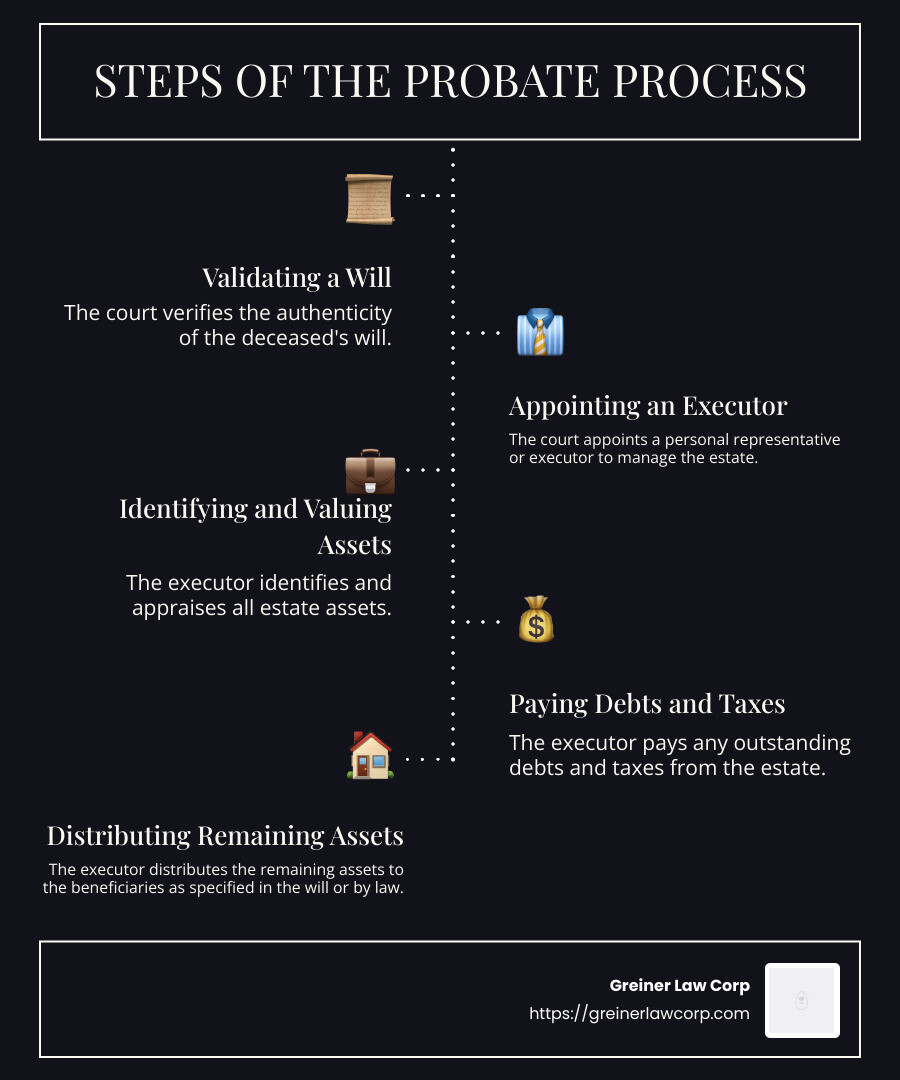
Probate is the legal process that occurs after someone passes away. It involves proving the validity of the deceased person’s will, identifying their assets, paying off debts, and distributing the remaining assets to the rightful beneficiaries. This process ensures that the deceased’s wishes are honored and that their estate is managed according to the law.
Types of Probate
Formal Administration: This is the standard probate process for larger estates or when there are complications, such as disputes among heirs. It involves a court-supervised administration where an executor (or personal representative) is appointed to manage the estate.
Summary Administration: This is a simplified process for smaller estates or when the decedent has been deceased for more than two years. It’s quicker and involves less court supervision, making it less costly and time-consuming.
Ancillary Administration: This type of probate is required when the decedent owned property in another state. It involves an additional probate process in the state where the property is located, often complicating the estate administration.
Probate Court
Jurisdiction: Probate courts have the authority to oversee the probate process. They ensure that wills are validated, debts are paid, and assets are distributed correctly. Each state has its own probate laws and procedures, so the process can vary depending on where the decedent lived and owned property.
Probate Judge: The probate judge plays a crucial role in overseeing the probate process. They review the will, appoint the executor, and resolve any disputes that arise. The judge’s role is to ensure that the probate process is conducted fairly and according to the law.
Court Orders: Throughout the probate process, the court may issue various orders to facilitate the administration of the estate. These can include orders to sell property, pay debts, or distribute assets to beneficiaries. The executor must comply with these orders to ensure the estate is managed properly.

In summary, probate is an essential legal process that ensures a deceased person’s assets are distributed according to their wishes or state law. Understanding the different types of probate and the role of the probate court can help you steer this complex process more effectively.
Next, we will dive into what constitutes an estate, including the types of assets involved and how they are managed.
What is an Estate?
An estate consists of everything a person owns at the time of their death. This includes their assets and liabilities. When someone passes away, their estate must be managed and distributed according to their will or state law if no will exists.
Types of Estate Assets
Estate assets can be broadly categorized into probate and non-probate assets. Understanding the difference is crucial for estate planning and administration.
Probate Assets:
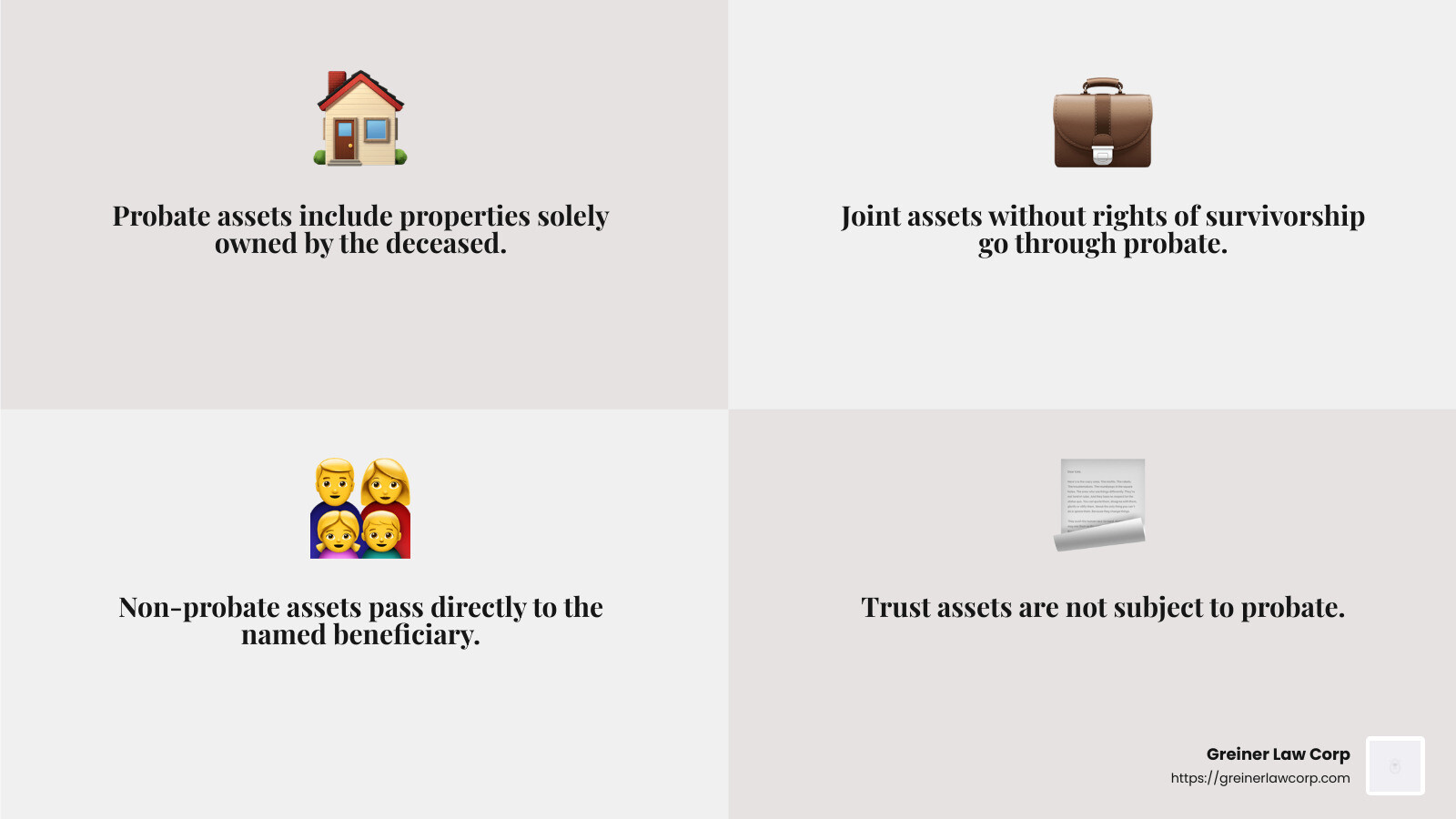
- Single Ownership Assets: These include properties solely owned by the deceased, like bank accounts, real estate, and personal belongings.
- Assets Without a Named Beneficiary: If there is no designated beneficiary for accounts like life insurance or retirement accounts, they become part of the probate estate.
- Shared Assets Without Rights of Survivorship: Assets co-owned without rights of survivorship must go through probate to determine the deceased’s share.
Non-Probate Assets:
- Joint Ownership with Rights of Survivorship: Property owned jointly with rights of survivorship, such as a home or a bank account, automatically passes to the surviving owner.
- Beneficiary Designations: Accounts with a named beneficiary, such as life insurance policies and retirement accounts, bypass probate and go directly to the beneficiary.
- Trust Assets: Assets placed in a living trust are not subject to probate and are distributed according to the terms of the trust.
Estate Administration
Estate Administration involves managing and distributing the deceased’s estate. This process is overseen by a personal representative, also known as an executor if named in the will, or an administrator if there is no will.
Duties of the Personal Representative:
- Filing the Will: The personal representative must file the will with the probate court to initiate the probate process.
- Identifying and Collecting Assets: They must locate and take control of the deceased’s assets, including bank accounts, real estate, and personal property.
- Valuing Assets: Assets must be appraised to determine their value at the time of death.
- Paying Debts and Liabilities: The personal representative uses estate assets to pay any valid debts and taxes owed by the estate.
- Distributing Assets: After debts are settled, the remaining assets are distributed to the beneficiaries according to the will or state law.
Legal Obligations:
The personal representative must act in the best interest of the estate and its beneficiaries. They must keep accurate records, follow court orders, and handle the estate’s affairs diligently. Failure to do so can result in legal consequences.
Joint Ownership and Beneficiary Designations
Joint Ownership and beneficiary designations are effective ways to manage estate assets and avoid probate.
- Joint Tenancy with Right of Survivorship: This arrangement allows property to pass directly to the surviving owner without going through probate.
- Beneficiary Designations: Naming beneficiaries on accounts like IRAs, 401(k)s, and life insurance policies ensures that these assets transfer directly to the designated individuals, bypassing probate.
By understanding the types of estate assets and the responsibilities involved in estate administration, you can better steer the complexities of managing and distributing a deceased person’s estate.
Next, we will explore the steps involved in the probate process, from filing a petition to distributing assets to beneficiaries.
The Probate Process
The probate process involves several steps to ensure that a deceased person’s assets are properly managed and distributed. Let’s break it down:
Initiating Probate
Filing a Petition: The first step in the probate process is to file a petition with the probate court. This petition requests the court to open the estate and appoint a personal representative (executor or administrator) to manage it. The petition is usually filed in the county where the deceased lived.
Appointing a Personal Representative: Once the petition is filed, the court appoints a personal representative. If there is a will, the executor named in the will is usually appointed. If there is no will, the court appoints an administrator based on state laws.
Notice to Creditors: The personal representative must notify all known creditors of the deceased’s death. This can be done through direct contact or by publishing a notice in a local newspaper. Creditors typically have a limited time to file claims against the estate.
Managing the Estate
Identifying Assets: The personal representative must locate and identify all assets belonging to the deceased. This includes bank accounts, real estate, investments, and personal property.
Valuing Assets: Once identified, the assets must be appraised to determine their value at the time of death. This is important for tax purposes and to ensure fair distribution to beneficiaries.
Safeguarding Assets: The personal representative is responsible for safeguarding the estate’s assets. This may involve securing property, managing investments, and ensuring that insurance policies remain in force.
Distributing Assets
Paying Debts: Before any assets can be distributed to beneficiaries, the personal representative must use the estate’s assets to pay any valid debts and expenses. This includes funeral costs, taxes, and legal fees.
Distributing to Beneficiaries: After debts and expenses are paid, the remaining assets are distributed to the beneficiaries as specified in the will or according to state law if there is no will. This can involve transferring property titles, distributing funds from bank accounts, and handing over personal belongings.
Closing the Estate: Once all assets have been distributed and all debts paid, the personal representative must file a final accounting with the court. This document details all actions taken during the probate process. If the court approves the accounting, the estate can be officially closed.
Understanding these steps can help you steer the probate and estate process more smoothly. Next, we will explore ways to avoid probate, including common strategies and their pros and cons.
Avoiding Probate
Avoiding probate can save time, reduce costs, and maintain privacy. Let’s explore common methods and their pros and cons.
Common Methods
Living Trusts: A living trust allows you to transfer ownership of your assets into a trust while you’re still alive. You retain control as the trustee and can manage the assets. Upon your death, the trust passes to your beneficiaries without going through probate.
Joint Ownership: Holding assets jointly with rights of survivorship means that when one owner dies, the surviving owner automatically inherits the deceased’s share. This is common with bank accounts and real estate.
Beneficiary Designations: Designating beneficiaries on accounts like life insurance policies, retirement accounts, and bank accounts ensures that these assets pass directly to the named individuals, bypassing probate.
Pros and Cons
Pros
Avoiding Costs: Probate can be expensive, with fees for court proceedings, attorneys, and appraisers. By avoiding probate, you save these costs, leaving more for your beneficiaries.
Maintaining Privacy: Probate proceedings are public, meaning anyone can access details about your assets and debts. Avoiding probate keeps this information private.
Expedited Transfer: Probate can take months or even years. Avoiding it means a quicker transfer of assets to your beneficiaries, which can be crucial if they rely on these assets for financial security.
Reducing Family Conflicts: Probate can lead to disputes among family members. Clear beneficiary designations and trusts can reduce the likelihood of conflicts.
Cons
Complex Setup: Setting up trusts and ensuring all assets are properly titled can be complex and may require professional assistance.
Potential for Errors: If not all assets are properly transferred into a trust or designated with beneficiaries, they may still go through probate, defeating the purpose.
Costs of Trusts: While avoiding probate can save money, setting up a trust involves legal fees. However, these are often less than probate costs.
Limited Creditor Protection: Some probate avoidance methods, like joint ownership, do not protect assets from creditors. Trusts can offer better protection but are still not foolproof.
Understanding these strategies and their pros and cons can help you make informed decisions about your estate planning. Next, we’ll answer some frequently asked questions about probate and estate.
Frequently Asked Questions about Probate and Estate
What are the disadvantages of probate?
Probate can be a challenging process for several reasons:
Time-Consuming: Probate can take a long time to complete. It typically takes 6-9 months for a simple estate, but it can stretch to years if there are complications like disputes among beneficiaries or issues with creditors.
High Costs: Probate can be expensive. Costs include court fees, attorney fees, and other administrative expenses. Probate costs can range from $2,000 to $6,000 for simple cases, but complex cases can cost much more.
Lack of Privacy: Probate proceedings are public, meaning anyone can access details about the decedent’s assets, debts, and beneficiaries. This lack of privacy can be uncomfortable for families.
Family Conflict: Disagreements among family members can arise during probate, especially if the will is unclear or perceived as unfair. These conflicts can delay the process and increase costs.
How long does it take to settle an estate?
The time it takes to settle an estate varies:
Summary Administration: This simpler process can take around 8 weeks if uncontested. It’s available for smaller estates.
Formal Administration: This more involved process usually takes around 4-6 weeks to appoint a personal representative and about 1 year to close the estate. However, this can extend if there are complications like creditor claims or disputes among beneficiaries.
Creditor’s Period: Law requires a period for creditors to make claims against the estate, which can also affect the timeline. This period is generally 3 months from the date of first publication of the notice to creditors.
Can a bank release funds without probate?
Yes, a bank can release funds without probate in certain situations:
Named Beneficiary: If the decedent named a beneficiary on the account, the funds can be transferred directly to that person without going through probate. This is often done using a “payable on death” (POD) designation.
Joint Ownership: If the account was held in joint ownership with rights of survivorship, the surviving owner automatically inherits the funds, bypassing probate.
Small Estates: For very small estates, banks might release funds without probate, but this depends on the bank’s policies and the specific circumstances.
Understanding these aspects can help you steer the probate process more smoothly. For more detailed guidance, consult with a probate attorney.
Conclusion
Probate and estate management can seem overwhelming, but understanding the basics can make the process smoother and less stressful for everyone involved. Let’s summarize the key points:
Summary of Key Takeaways:
- Probate is a legal process to distribute a deceased person’s assets and settle their debts. It involves court supervision and can be time-consuming and costly.
- There are different types of probate, such as formal administration and summary administration, each with its own procedures and timelines.
- Estates consist of all assets and liabilities left by the deceased. These can include probate assets (like solely owned bank accounts) and non-probate assets (like life insurance with designated beneficiaries).
- Effective estate planning, such as creating living trusts or joint ownership, can help avoid the probate process, saving time and money.
At Greiner Law Corp, we specialize in guiding you through the complexities of probate and estate planning. Founded by David Greiner in 2003, our firm prioritizes your goals with a business-minded approach. This ensures you can manage your risk preferences effectively and achieve a smooth, stress-free probate process.
Client Goals and Business-Minded Approach:
Our mission is to make the probate process as painless as possible. We understand the emotional and financial challenges that come with losing a loved one. Our team is dedicated to providing clear, straightforward advice and support every step of the way. Whether you’re dealing with probate administration, real estate transactions, or estate planning, we’re here to help.
Ready to take the next step? Visit our probate services page to learn more about how we can assist you.
Navigating probate and estate matters doesn’t have to be daunting. With the right guidance and planning, you can ensure your assets are distributed according to your wishes and minimize complications for your loved ones. Contact us today to get started.


