What is probate sale? A probate sale in real estate is the court-supervised process of selling a deceased person’s property when there is no will specifying who should inherit it. This typically happens to pay off remaining debts and distribute any leftover funds to heirs.
Here is a quick breakdown:
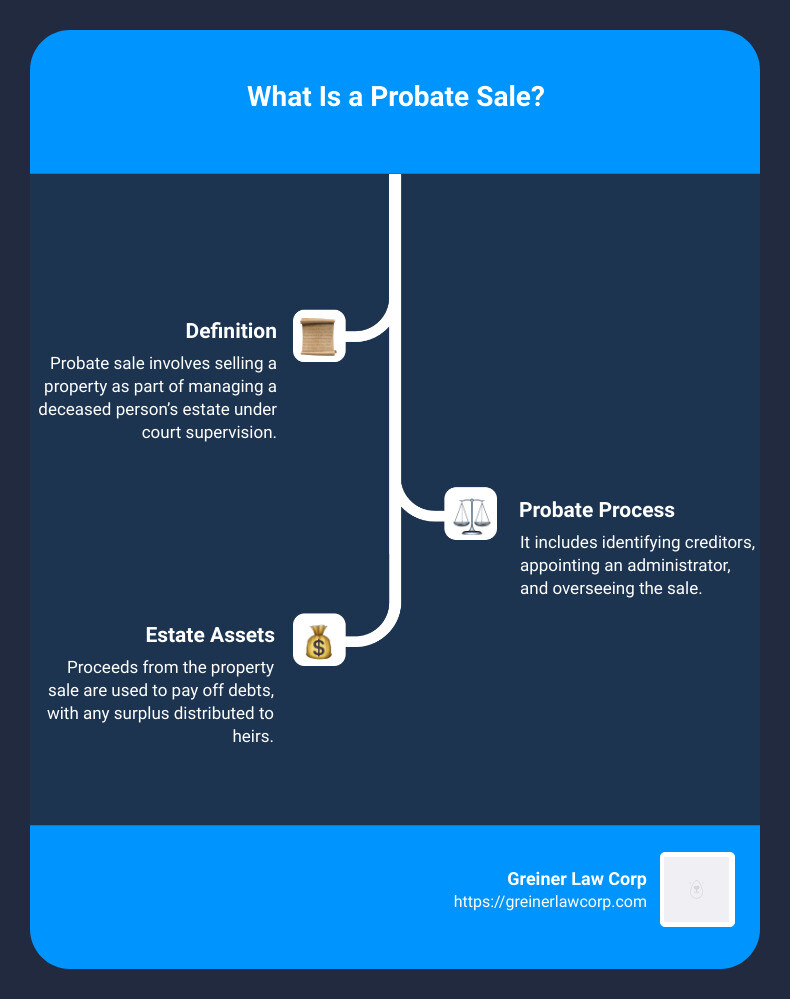
- Definition: Probate sale involves selling a property as part of managing a deceased person’s estate under court supervision.
- Probate Process: It includes identifying creditors, appointing an administrator, and overseeing the sale.
- Estate Assets: The proceeds from the property sale are used to pay off debts, with any surplus distributed to heirs.
Buying a house through probate can be complex but offers unique opportunities for savvy buyers.
I’m David Greiner, Esq. With years of experience in both real estate and probate law, I help clients steer the intricate process of probate sales. Let’s dive deeper to understand how this works.
What Is a Probate Sale?
In real estate, a probate sale is a court-supervised process that occurs when a deceased person’s property needs to be sold to settle debts or distribute assets to heirs. This often happens when the deceased did not leave a will, or the will’s terms are unclear.
When Does a Probate Sale Occur?
Probate sales typically happen under these circumstances:
- Intestate Situations: When someone dies without a will, known as dying intestate, their estate enters probate. The court oversees the sale of any real estate to ensure debts are paid and remaining assets are fairly distributed.
- Unclear Wills: If a will exists but its terms are ambiguous or disputed, the court steps in to manage the sale and distribution of assets.
- Debt Settlement: If the deceased owed more money than they had in cash savings, the property might be sold to cover these debts.
Key Players in a Probate Sale
Several key players are involved in a probate sale, each with specific roles and responsibilities:
- Executor or Administrator: If the deceased left a will, it typically names an executor to manage the estate. If there’s no will, the court appoints an administrator. Both roles involve collecting assets, paying debts, and distributing the remaining assets to heirs.
- Probate Court: The court supervises the entire process, from appointing an administrator to approving the final sale. This ensures the property is sold fairly and debts are settled before distributing any remaining assets.
- Creditors: Before the property is listed for sale, creditors are identified and prioritized. This includes mortgage lenders, contractors, and credit card companies. They must be paid from the estate’s proceeds before any distribution to heirs.

Understanding the roles and timing of these key players can help you steer the probate sale process more effectively.
Next, let’s look at how a probate sale actually works, from listing the property to final court approval.
How Does a Probate Sale Work?
Identifying Creditors
The first step in a probate sale is identifying all creditors owed by the deceased. Creditors can include mortgage lenders, contractors, and credit card companies. The probate court ensures these debts are settled before any assets are distributed to the heirs.
Appointing an Administrator
If there is no will, the court appoints an administrator to handle the estate. If a will exists, the named person is called the executor. Both roles are responsible for collecting assets, paying debts, and distributing any remaining assets to heirs. This court-appointed representative is crucial in managing the probate sale.
Listing and Marketing the Property
Once the administrator or executor is appointed, the property can be listed for sale. Here’s how it works:
- Hiring a Real Estate Agent: The administrator or executor collaborates with a real estate agent experienced in probate sales.
- Setting a Listing Price: The property is appraised to determine its fair market value, which helps set the listing price.
- Marketing the Property: The real estate agent markets the property, conducting open houses and showings to attract potential buyers.
Reviewing Offers and Court Approval
After the property is listed, offers start coming in. Here’s what happens next:
- Offer Submission: Buyers submit their offers, often accompanied by a 10% deposit.
- Court Hearing: The court reviews the offers to ensure they meet legal requirements. Sometimes, a court hearing is held where other buyers can place higher bids.
- Bidding Process: At the court hearing, the first overbid must be at least 105% of the original offer plus $500. This ensures the estate gets a fair price.
- Final Approval: Once the highest bid is accepted, the court finalizes the sale. This includes handling paperwork, transferring the title, and using the sale proceeds to pay off estate debts. Any leftover money is then distributed to the heirs.
Navigating these steps can be complex, but understanding them makes the probate sale process smoother.
Next, let’s explore the differences between probate sales and regular home sales.
Differences Between Probate Sales and Regular Home Sales
Properties Sold As-Is
In a probate sale, properties are sold as-is. This means the property is sold in its current condition, with no repairs or upgrades by the seller. Unlike regular real estate transactions, where buyers can negotiate for repairs based on home inspections, probate properties come with no such contingencies.
Home Condition: The home may need significant repairs, which can be costly. Buyers must understand what they are getting into.
Home Inspection: It’s crucial to get a home inspection to evaluate the property’s condition. This helps in estimating potential repair costs. The deceased owner can’t provide insight into the home’s history or issues.
Extended Timeline
Court Involvement: Probate sales are supervised by the court, making the process much longer. The court must approve each step, from appointing an executor to finalizing the sale. This oversight ensures fairness but adds time.
Multiple Parties: Several parties are involved, including the probate court, estate administrators, and creditors. Each party has its own interests and legal requirements, which can cause delays.
Potential Delays: The involvement of multiple parties and legal steps can extend the process. It’s not uncommon for probate sales to take six months to over a year to complete.
Understanding these differences can help you steer the complexities of probate sales more effectively. Next, we’ll look at the pros and cons of buying through a probate sale.
Pros and Cons of Buying Through a Probate Sale
When considering a probate sale, it’s important to weigh the pros and cons. Let’s break it down:
Pros
Reduced Price: One of the biggest attractions of a probate sale is the lower price. Properties are often sold below market value because they are listed as-is. This can be a great opportunity for buyers looking for a bargain.
Investment Potential: For real estate investors, probate sales can be a goldmine. The below-market pricing allows for significant profit margins, especially if the property only needs minor repairs. Many investors target probate sales for this reason, seeing them as a way to acquire properties that can yield high returns.
Less Competition: Probate sales can be intimidating due to their complexity and legal requirements. This often results in fewer buyers, making it easier for those who do participate to secure a property without facing intense bidding wars.
Cons
Property Condition: Since probate properties are sold as-is, they can come with a host of issues. Buyers are not allowed to request repairs, so it’s crucial to conduct a thorough inspection before making an offer. Be prepared for potential hidden costs associated with fixing up the property.
Lengthy Process: The extended length of a probate sale can discourage buyers, particularly because transaction times are so hard to predict with the court. It’s not uncommon for the process to take six months to over a year to complete.
Legal Formalities: The involvement of the court adds a layer of legal complexity to probate sales. Buyers may need to appear in court to confirm the sale, and there are specific legal formalities that must be followed. This can be overwhelming for those unfamiliar with the process.
Buying through a probate sale can offer great deals but comes with its own set of challenges. If you’re considering this route, it’s crucial to be well-prepared and understand the potential pitfalls.
Next, we’ll guide you through the steps on how to buy probate real estate.
How to Buy Probate Real Estate
Buying a home through a probate sale can be a great opportunity, but it requires a bit more work than a regular home purchase. Here’s a step-by-step guide to help you steer the process.
Finding Probate Listings
Finding probate properties can be a bit tricky since they often aren’t listed in the usual places. Here are some ways to locate them:
- Local Newspapers: Check the classifieds for notices of probate sales. These are often listed under legal notices.
- Obituaries: Though it may seem morbid, scanning obituaries can help you identify properties that may soon enter probate.
- Court Records: County probate court records are a goldmine. They list estates going through probate, including any real estate.
- Real Estate Agents: Some agents specialize in probate sales. They can help you find listings that aren’t widely advertised.
Touring and Inspecting the Property
Once you’ve found a probate property, the next step is to tour it. These homes are sold “as-is,” so a thorough inspection is crucial.
- Home Inspection: Hire a reliable home inspector to check the property. Look for structural issues, outdated systems, and any other potential problems.
- Property Condition: Be prepared for the home to need repairs. The previous owner may have been unable to maintain the property.
- Potential Repairs: Make a list of necessary repairs and get estimates. This will help you budget and decide if the property is worth the investment.
Researching Comparable Properties
Before making an offer, you need to know the property’s market value. This involves researching comparable properties, or “comps.”
- Real Estate Comps: Look for homes in the same neighborhood that are similar in size, age, and condition.
- Neighborhood Analysis: Pay attention to the overall market trends in the area. Is it a buyer’s market or a seller’s market?
- Fair House Price: Use the comps to determine a fair price for the property. This will help you make a competitive yet reasonable offer.
Making an Offer
Making an offer on a probate property is a bit different from a regular home purchase. Here are the steps involved:
- Court Appearance: In many cases, you’ll need to appear in court to make your offer. Be prepared for this step.
- 10% Deposit: Typically, you’ll need to provide a deposit of at least 10% of the sale price. This is usually in the form of a cashier’s check.
- Bidding Process: If multiple offers are made, a bidding process may ensue. The highest bid usually wins, but the court must approve the sale.
Buying a probate property can be a rewarding experience if you know what to expect and how to steer the process. Next, we’ll tackle some frequently asked questions about probate sales.
Frequently Asked Questions about Probate Sales
How Long Does a Probate Sale Take?
Probate sales can be quite lengthy. On average, they take 6 to 12 months to complete. This extended timeline is largely due to court involvement and the need for multiple approvals.
Potential delays can occur at various stages, including:
- Court approvals: Each step, from listing the property to finalizing the sale, usually requires court authorization.
- Creditor claims: Creditors may need to be paid off before the sale can proceed.
- Heir objections: Disputes among heirs can also slow down the process.
Be prepared for a long wait, and factor this into your planning.
Are Probate Sales Cash-Only?
No, probate sales are not necessarily cash-only. However, cash offers are often more appealing to sellers because they eliminate the risk of financing falling through.
Key points to consider:
- Deposit Requirement: Typically, you’ll need to put down a 10% deposit in the form of a cashier’s check.
- Why Cash is Preferred: Cash offers can speed up the process and provide more certainty to the seller.
While cash offers can simplify the transaction, financing a probate sale is still possible but comes with its own set of challenges.
Can You Finance a Probate Sale?
Yes, you can finance a probate sale, but it’s more complicated than a regular home purchase.
Challenges include:
- Mortgage Difficulties: Securing a mortgage for a probate sale can be tricky. The uncertain final price makes loan approval difficult.
- No Contingencies: Sellers in probate sales are not obligated to wait for you to secure financing. This means you’ll need to act quickly.
- Loan Amount Risks: If the property goes to court, you won’t know the final sale price upfront. This uncertainty can make it hard to get a loan that matches the final price.
Advice: If you plan to finance, get pre-approved and be ready to move fast. Consulting with a real estate attorney experienced in probate sales can also help steer you through these challenges.
Conclusion
Navigating a probate sale can be complex and time-consuming, but you don’t have to do it alone. At Greiner Law Corp, we specialize in probate and real estate law, ensuring that your experience is as smooth and stress-free as possible.
Our Probate Expertise
Our team has extensive knowledge of both probate and real estate law. This dual expertise is crucial because probate sales sit at the intersection of these two complex fields. We understand the legal requirements and the real estate market, so we can handle any challenges that arise during the probate sale process. From court approvals to real estate transactions, we’ve got you covered.
Client Goals
We prioritize your needs and work closely with you to achieve the best possible outcome. Whether you’re an executor, a beneficiary, or a potential buyer, we provide personalized guidance custom to your unique situation. Our commitment to clear communication means you’ll always be informed about the status of your case and understand your options at each step.
Business-Minded Approach
We approach probate sales with a business mindset, focusing on efficiency and effectiveness. We proactively identify and mitigate risks, ensuring all legal requirements are met and conducting thorough due diligence. This approach helps prevent future disputes and surprises, protecting your interests throughout the process.
If you’re considering a probate sale or need assistance with any aspect of probate real estate, contact us at Greiner Law Corp. Let us be your trusted partner in navigating the complexities of probate real estate.


