
Decoding Probate Sales: Cash Only or Flexible Payment Options?
Are probate sales cash only? This is a common question when navigating the complexities of buying a home through the probate process. The answer, in short, is no, probate sales are not exclusively cash-only. However, cash offers can be more appealing:
- Faster transactions: Cash sales can speed up the often-lengthy probate process.
- Fewer contingencies: Cash offers reduce the risks of financing falling through.
- Higher appeal: Sellers often prefer cash offers due to their simplicity.
Non-cash offers can still be considered, but they may come with certain challenges and stipulations that require careful navigation.
My name is David Greiner, Esq., and as a seasoned lawyer with experience in probate sales and real estate transactions, I've seen the advantages and complications of cash versus financed offers. Let's dig further into what you need to know about payment options in probate sales.
What is a Probate Sale?
When someone passes away, their assets, including real estate, often need to be managed and distributed. This process is called probate. A probate sale in real estate occurs when a property is sold under the supervision of a probate court. This usually happens when the deceased did not leave a clear will, or when the will’s terms are unclear or disputed.
Deceased Estate
When a person dies, they leave behind an estate that includes everything they owned: cash, investments, and real property like homes and land. The assets within this estate need to be distributed to heirs or sold to pay off any debts. This is where the probate court comes in.
Probate Court
The probate court oversees the entire process of managing and distributing the deceased's estate. The court ensures that the property is sold fairly and that the proceeds are distributed according to the deceased’s wishes or state law if there’s no will.

Executor
If the deceased left a will, they usually name an executor. This person is responsible for managing the estate, which includes handling the sale of any real property. If there’s no will, the court appoints an administrator to take on these duties. The executor or administrator must get the court's approval before making any significant decisions, including selling real estate.
Real Property
Real property refers to land and anything permanently attached to it, like houses or buildings. In a probate sale, real property owned by the deceased is sold to settle debts or distribute assets to heirs. This sale is often more complex than a regular real estate transaction because the court must approve every step.
Intestate
When someone dies intestate, it means they didn’t leave a will. In these cases, the probate court gets even more involved. The court will appoint an administrator to manage the estate and ensure that the property is sold and the proceeds are distributed according to state laws. These laws typically prioritize spouses, children, and other close relatives.

Understanding these key concepts can help you steer the probate sale process more effectively. Now let’s explore whether probate sales are cash-only transactions or if there are flexible payment options available.
Are Probate Sales Cash Only?
Are probate sales cash only? This is a common question for those interested in buying probate properties. Let’s break down the payment options available in probate sales.
Cash-Only Transactions in Probate Sales
Probate sales often lean towards cash-only transactions for several reasons:
-
Court Confirmation: Probate sales usually require court approval. This means the sale process is more rigid and buyers need to be ready to move quickly. Cash offers are less likely to face delays.
-
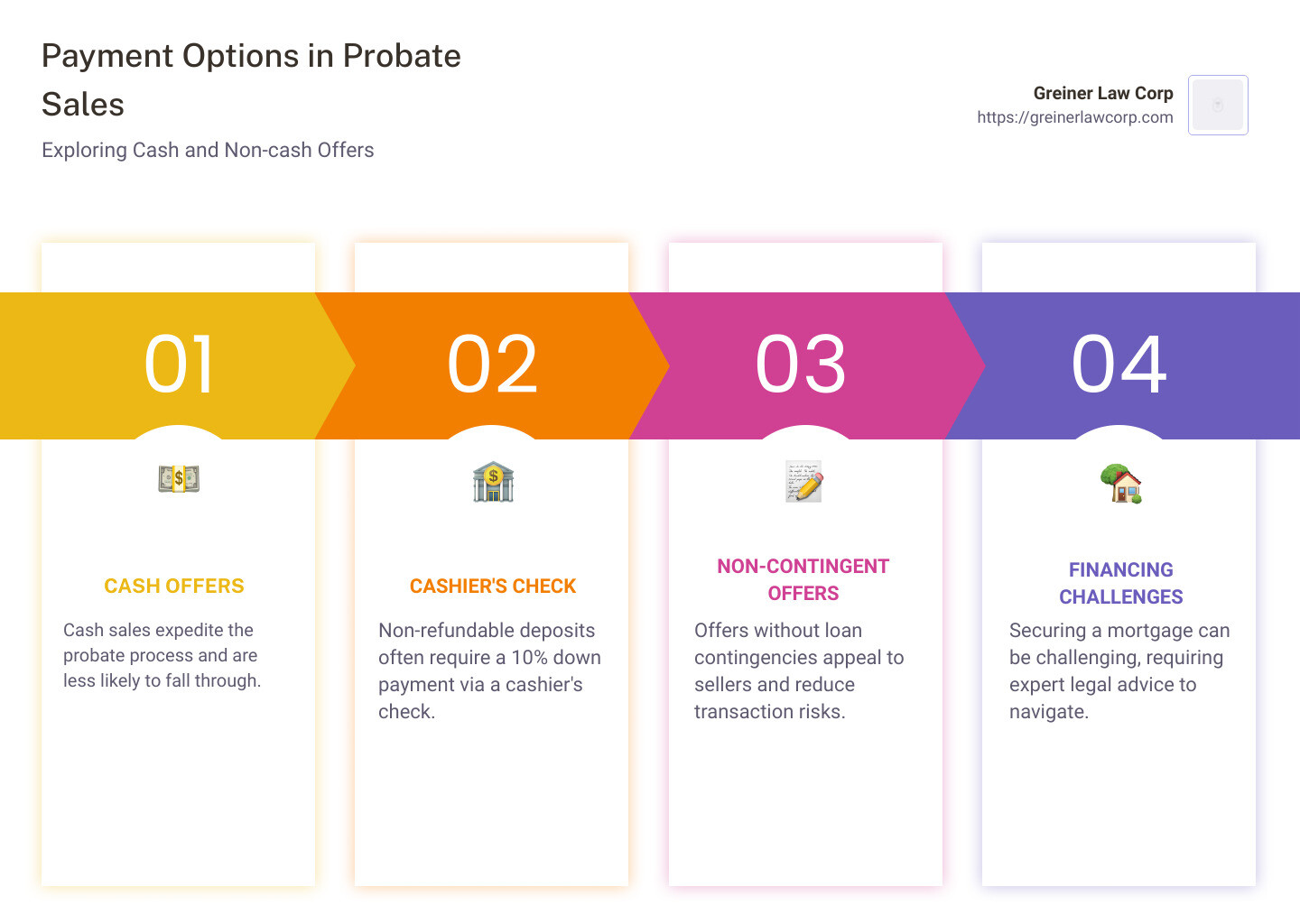
10% Deposit: Typically, a 10% deposit in the form of a cashier's check is required when the offer is made. This deposit is often non-refundable, adding an extra layer of commitment.
-
Non-Contingent Offers: In probate sales, offers are typically non-contingent. This means buyers can't back out if they fail to secure financing. Cash offers eliminate this risk, making them more attractive to sellers.
-
Auction-Style Bidding: Many probate sales involve auction-style bidding, where the highest offer wins. Cash buyers have a significant advantage here since they can immediately fulfill their payment obligations.
Flexible Payment Options in Probate Sales
While cash offers are common, probate sales are not strictly cash-only. There are flexible payment options, but they come with challenges:
-
Financing Options: Buyers can use mortgages to finance probate sales. However, it's more complicated than traditional home purchases. Lenders may be hesitant due to the property's condition or the lengthy sale process.
-
Mortgage Difficulties: Financing a probate sale is tricky because sellers aren’t obligated to wait for buyers to secure a loan. Additionally, the final sale price might be uncertain if the property goes to court, complicating loan approval.
-
Loan Contingencies: Since probate sales are typically non-contingent, buyers must be prepared to act quickly. This means having a pre-approved loan and being ready to cover any financing gaps.
-
Probate Attorney Advice: Consulting with a probate attorney can help steer these challenges. They can offer guidance on securing financing and meeting court requirements.
Understanding these options can help you decide the best approach for purchasing a probate property. Whether you go for a cash offer or explore financing, knowing the pros and cons will prepare you for the process ahead.
The Probate Sale Process
Navigating a probate sale involves several steps, each with its own set of legal obligations and procedures. Understanding these steps can help you manage expectations and streamline the process.
Steps in the Probate Sale Process
-
Court Authorization: Before anything can happen, the probate court must authorize the sale. This ensures that the property is sold legally and fairly.
-
Listing Price: The estate representative, often an executor or administrator, works with a real estate agent to set a fair listing price. This price is usually based on a professional appraisal.
-
Home Appraisal: An independent appraiser determines the property's market value. This appraisal is crucial because most probate courts require the property to sell for at least 90% of its appraised value.
-
Petition to Begin the Sale: The executor files a petition with the probate court, including the appraisal and a plan for selling the property. Once the petition is approved, the property can be listed for sale.
-
Listing the Property: The property is marketed just like any other real estate listing. The executor may use a real estate agent to attract potential buyers.
-
Confirmation Hearing: After receiving an offer, a court hearing is scheduled to confirm the sale. This hearing allows other interested buyers to submit higher bids, ensuring the estate gets the best possible price.
-
Overbidding: At the court hearing, additional buyers can place higher bids. The first overbid must be at least 105% of the original offer plus $500. This process continues until the highest bid is accepted.
-
Court Approval: Once the highest bid is accepted, the court reviews all documents and approves the sale. The estate representative then completes the paperwork to transfer the title to the new owner.
-
Notification to Heirs: The heirs must be notified about the sale. If any heir objects, the process may be delayed or even halted.
Timeline for Probate Sales
The timeline for probate sales can vary significantly, often taking months to years. Here are some factors that influence the timeline:
-
Court Scheduling: Court dates for hearings and approvals can be delayed due to the court's schedule. This is often a significant factor in the overall timeline.
-
Delays and Objections: Any objections from heirs or other interested parties can cause delays. These objections must be resolved before the sale can proceed.
-
Final Sale Price Determination: The final sale price is determined at the confirmation hearing. If overbidding occurs, this can extend the timeline but ensures a fair market value for the property.
Understanding these steps and potential delays can help you prepare for the probate sale process. Whether you are an executor handling the sale or a buyer interested in a probate property, knowing what to expect can make the process smoother.
Next, we'll look at the pros and cons of buying probate properties, highlighting both the opportunities and risks involved.
Pros and Cons of Buying Probate Properties
Benefits of Probate Sales
Lower Property Prices: One of the most attractive aspects of probate sales is the potential for reduced prices. Since these properties are often sold as-is, they can be priced below market value. This can be a great opportunity for buyers looking for a bargain.
Investment Opportunities: Probate sales can be a goldmine for real estate investors. The below-market pricing allows for significant profit margins, especially if the property only needs minor repairs. Many investors target probate sales for this reason, seeing them as a way to acquire properties that can yield high returns.
Less Competition: Probate sales can be intimidating due to their complexity and legal requirements. This often results in fewer buyers, making it easier for those who do participate to secure a property without facing intense bidding wars.
Risks of Probate Sales
Property Condition: Since probate properties are sold as-is, they can come with a host of issues. Buyers are not allowed to request repairs, so it’s crucial to conduct a thorough inspection before making an offer. Be prepared for potential hidden costs associated with fixing up the property.
Court Involvement: The involvement of the court adds a layer of legal complexity to probate sales. Buyers may need to appear in court to confirm the sale, and there are specific legal formalities that must be followed. This can be overwhelming for those unfamiliar with the process.
Delays: Probate sales are known for their lengthy timelines. The process can take months or even over a year to complete due to the various legal and bureaucratic steps involved. This extended timeframe can be frustrating for buyers who need to move quickly.
Limited Disclosure: Unlike regular home sales, probate sales often come with fewer disclosures about the property’s condition. The deceased homeowner cannot provide information about potential issues, so buyers need to be extra cautious.
Understanding these pros and cons can help you make an informed decision about whether a probate sale is right for you. Next, we'll address some frequently asked questions about probate sales to further clarify the process.
Frequently Asked Questions about Probate Sales
How long does a probate sale take?
Probate sales can be lengthy. It's not unusual for the process to take several months to over a year.
Why so long? Court approvals, creditor claims, and potential objections from heirs can cause delays. For example, if a bidding war happens or court procedures aren’t met, the timeline can extend even further.
Tip: Be prepared for a long wait and factor this into your planning.
Can I finance a probate sale?
Yes, but it’s tricky. Financing a probate sale is more complicated than a regular home purchase.
Challenges:
- No contingencies: Sellers aren’t obligated to wait for you to secure financing.
- Uncertain final price: If the property goes to court, you won’t know the final sale price, making loan approval difficult.
Advice: If you plan to finance, get pre-approved and be ready to act quickly. Consulting with a real estate attorney experienced in probate sales can also help steer these problems.
Are probate sales cash-only?
Not necessarily. While cash offers are more appealing and can speed up the process, probate sales are not always cash-only.
Deposit Requirement: Typically, you’ll need to put down a 10% deposit, often in the form of a cashier’s check.
Why cash is preferred: Cash offers eliminate the risk of financing falling through, which can be a concern in probate sales.
Next, we’ll dive into the detailed steps and timeline involved in the probate sale process to give you a clearer picture of what to expect.
Conclusion
Navigating a probate sale can be complex, but you don't have to do it alone. At Greiner Law Corp, we specialize in probate and real estate law, ensuring that all legal requirements are met and that the sale proceeds smoothly.
Our experienced probate attorneys are dedicated to helping you achieve your goals. Whether you're an executor looking to sell a property quickly or a beneficiary aiming to maximize your inheritance, we provide custom advice to meet your unique needs.
We understand that dealing with the legal intricacies of probate can be emotionally taxing. That's why we take a business-minded approach, focusing on clear communication and efficient processes to make the experience as stress-free as possible.
Client Goals: Our top priority is to understand and achieve your objectives. We listen carefully and offer personalized guidance, ensuring you feel supported every step of the way.
Business-Minded Approach: We aim to make the probate sale process as straightforward as possible. From managing court approvals to handling real estate transactions, our expertise helps mitigate risks and streamline the sale.
If you're facing the challenges of a probate sale and need expert guidance, contact us today. Let Greiner Law Corp be your trusted partner in navigating the complexities of probate real estate.