When it comes to securing your future, an estate planning lawyer can be an invaluable asset. These professionals help you steer the complex legal landscape of estate planning, ensuring your assets are distributed according to your wishes and that your loved ones are taken care of after you’re gone. Why is this important?
- Asset Distribution: Decide who gets what after your passing.
- Legal Protection: Minimize taxes and legal challenges.
- Peace of Mind: Know your loved ones are taken care of.
Estate planning isn’t just for the wealthy. It’s a smart move for anyone who wants to ensure their wishes are honored and their family is provided for.
I’m David Greiner, Esq. With a background in business law and estate planning, I’ve worked alongside some of the most reputable businesses and handled numerous complex legal matters. My focus is on achieving your goals, not just clocking billable hours. Let’s dive deeper into what makes estate planning essential for your future.
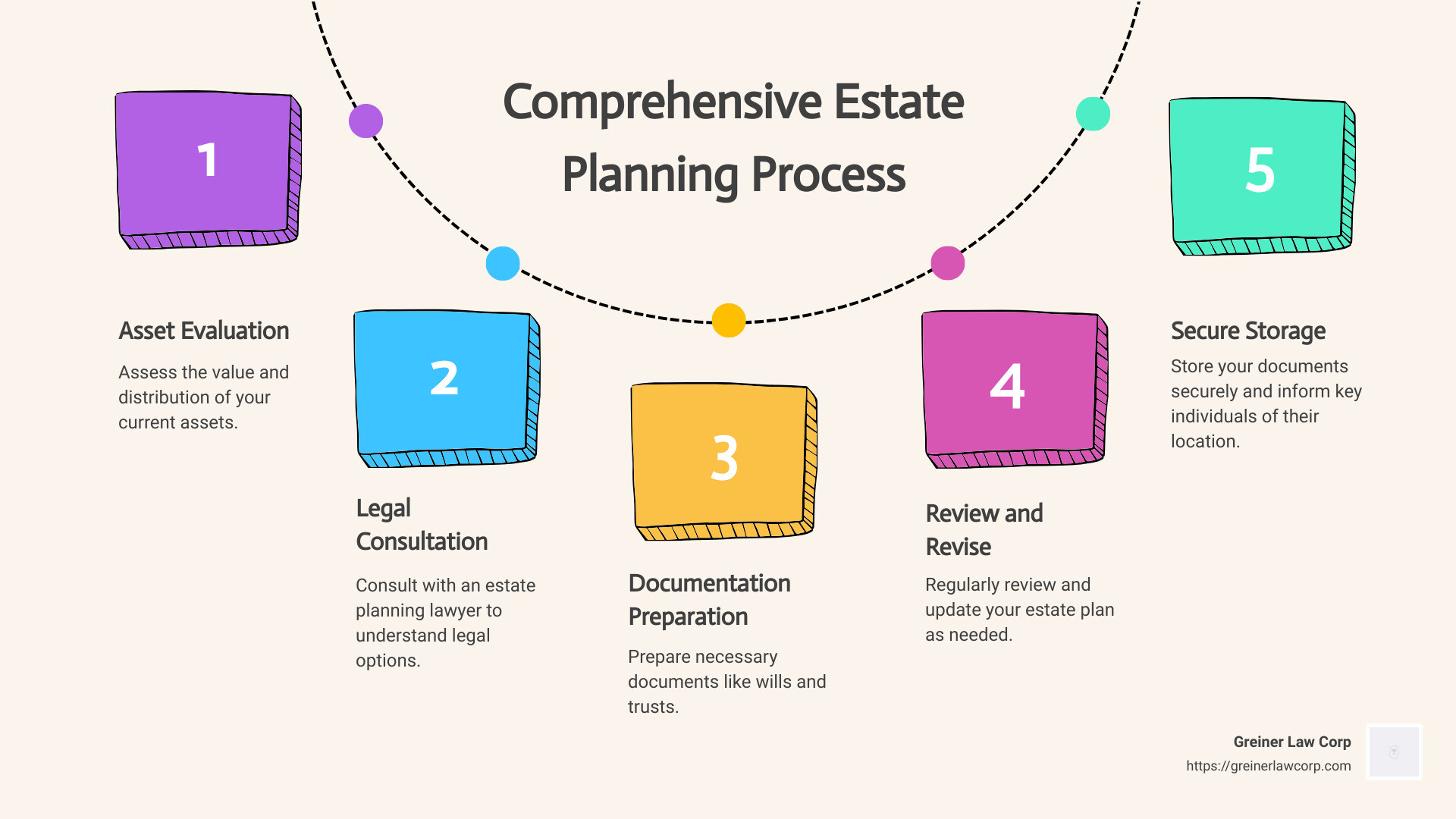
Understanding Estate Planning
Estate planning is about making sure your assets are managed and distributed according to your wishes after you’re gone. It’s not just for the wealthy; it’s for anyone who wants to protect their loved ones and ensure their intentions are honored.
Key Components of Estate Planning
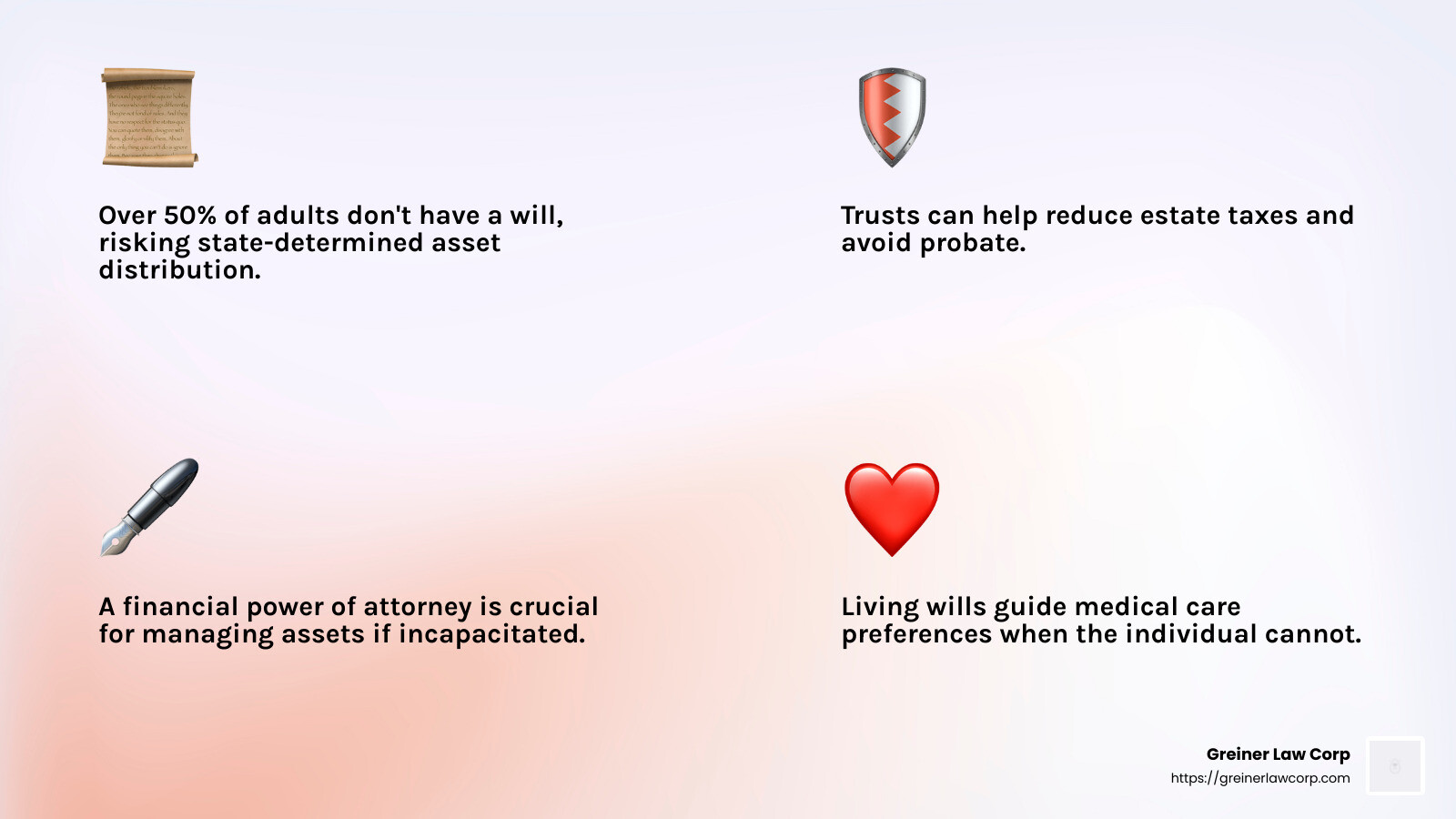
Wills: A will is a legal document that outlines how your assets should be distributed after your death. It can also specify guardians for minor children. Without a will, the court decides what happens to your estate, which might not align with your wishes.
Trusts: Trusts are arrangements where a trustee manages assets on behalf of beneficiaries. Trusts can help minimize estate taxes, avoid probate, and protect assets. They can be custom to fit specific needs, like providing for a child with special needs or managing assets for minors until they reach adulthood.
Powers of Attorney: This document allows someone to make decisions on your behalf if you’re unable to do so. There are different types, like a financial power of attorney for managing financial affairs and a healthcare power of attorney for medical decisions.
Living Wills: Also known as an advance directive, a living will outlines your wishes for medical care if you become incapacitated. It specifies treatments you do or do not want, helping to guide healthcare providers and loved ones during difficult times.
Why These Components Matter
- Control and Security: You maintain control over who inherits your assets and how they’re used.
- Tax Efficiency: Proper planning can reduce the taxes your estate owes, leaving more for your beneficiaries.
- Avoiding Legal Disputes: Clear instructions reduce the chances of family disagreements and legal battles.
Estate planning is about more than just making a will. It involves creating a comprehensive plan that addresses all aspects of your life and legacy. By understanding these key components, you’re taking an essential step toward securing your future and protecting your loved ones.
The Role of an Estate Planning Lawyer
An estate planning lawyer is your guide through the maze of legal documents, asset management, inheritance, and tax minimization. They ensure your wishes are clearly documented and legally binding, so your loved ones face less stress and confusion when you’re gone.
Legal Documents and Asset Management
Estate planning involves numerous legal documents: wills, trusts, powers of attorney, and living wills. Each serves a specific purpose. For instance, a will decides who gets what, while a trust can help manage assets and minimize taxes. An estate planning lawyer helps you choose the right mix of documents to meet your goals.
Case in Point: Imagine you have a valuable art collection. Without proper documentation, your heirs might face challenges in dividing it. A lawyer can set up a trust to manage the collection, ensuring it remains intact or is sold according to your wishes.
Inheritance and Tax Minimization
Inheritance can be a tricky area, especially with taxes looming over large estates. Estate planning lawyers specialize in strategies that minimize these taxes, ensuring more of your wealth goes to your beneficiaries.
Did You Know? Setting up a trust can help reduce estate taxes. By transferring assets into a trust, you can lower the taxable value of your estate, leaving more for your loved ones.
Why an Estate Planning Lawyer Matters
- Expertise: They know the ins and outs of estate law, so you don’t have to.
- Customization: They tailor your estate plan to fit your unique situation.
- Peace of Mind: Knowing your affairs are in order gives you and your family peace of mind.
An estate planning lawyer is your partner in crafting a secure future for your family. They help steer complex legal waters, ensuring your legacy is protected and your wishes are honored.
Steps in the Estate Planning Process
Planning your estate might seem overwhelming, but breaking it down into steps can simplify the journey. Here’s a straightforward guide to help you get started.
1. Take Inventory
First, list out all your assets. This includes everything from your home and car to bank accounts and personal belongings. Don’t forget investments, life insurance policies, and even digital assets like online accounts. Knowing what you have is the foundation of a solid estate plan.
2. Set a Will
A will is a legal document that spells out your wishes for distributing your assets. It’s essential to ensure your possessions go to the right people. Without a will, state laws will decide how your assets are divided, which might not align with your wishes.
3. Form a Trust
Trusts can offer more control over how your assets are distributed. They can help manage your estate, reduce taxes, and even protect your assets from creditors. There are different types of trusts, so it’s wise to discuss your options with an estate planning lawyer.
4. Healthcare Options
Consider setting up an advance care directive or a living will. These documents outline your healthcare preferences if you’re unable to make decisions yourself. It’s a way to ensure your medical wishes are known and respected.
5. Life Insurance
Life insurance can provide financial support to your loved ones after you’re gone. It’s a safety net that can cover expenses like funeral costs, debts, or even future education for your children. Review your policy to ensure it aligns with your current needs.
6. Document Storage
Store your estate planning documents in a safe and accessible place. Consider digital copies as backups. Cloud storage can be a secure option, ensuring your documents are available when needed.
7. Hire an Attorney
Finally, work with an estate planning lawyer. They can guide you through the complexities of estate law, helping you make informed decisions. An attorney ensures your documents are legally sound and reflect your wishes accurately.
By following these steps, you can create an estate plan that protects your assets and provides peace of mind for you and your loved ones.
Essential Estate Planning Documents
Creating a comprehensive estate plan involves several key documents. Each serves a unique purpose in ensuring your wishes are honored and your assets are managed effectively. Let’s explore the four essential documents you need: financial power of attorney, advance care directive, living trust, and last will.
Financial Power of Attorney
A financial power of attorney (POA) designates someone you trust to handle your financial matters if you’re unable to do so yourself. This person, known as your agent, can manage tasks like paying bills, handling investments, and filing taxes on your behalf.
Having a POA means you’ve got someone ready to step in and act in your best interests, ensuring your financial life runs smoothly even if you can’t oversee it personally.
Advance Care Directive
An advance care directive—sometimes called a living will—outlines your medical care preferences if you’re unable to communicate them. It covers decisions about life-sustaining treatments, resuscitation, and other critical medical interventions.
This document ensures your healthcare wishes are clear to your loved ones and medical professionals, reducing stress and confusion during challenging times.
Living Trust
A living trust is a versatile tool that helps manage your assets during your lifetime and after your death. Unlike a will, a living trust can help avoid the probate process, allowing for a more private and efficient distribution of your assets.
There are two main types: revocable trusts, which you can change or cancel during your lifetime, and irrevocable trusts, which are more rigid but offer stronger protection against estate taxes and creditors.
Last Will
Your last will is a legal document that details how you want your assets distributed after you pass away. It can also include important decisions like naming guardians for minor children.
Without a will, the state decides how your assets are divided, which might not align with your wishes. A well-drafted will ensures your possessions go to the right people and helps prevent family disputes.
By incorporating these essential documents into your estate plan, you can ensure that your financial and personal wishes are respected, providing peace of mind for you and your loved ones.
Choosing the Right Estate Planning Lawyer
Selecting the right estate planning lawyer is crucial for crafting a plan that truly reflects your wishes and protects your assets. Here’s how to find the best fit for your needs:
Specialization
When looking for an estate planning lawyer, specialization is key. Lawyers who focus on estate planning are more likely to be up-to-date on the latest laws and strategies. They can provide custom advice on complex issues like tax minimization and asset management. It’s important to ensure your lawyer has a deep understanding of estate planning, rather than just a general legal background.
Board Certification
In some states, lawyers can earn board certification in estate planning. This certification indicates that the lawyer has passed rigorous testing and has demonstrated a high level of expertise in the field. For instance, in California, board certification in wills, trusts, and estates is a mark of a lawyer’s commitment to the specialty. Look for this credential as a sign of quality and dedication.
Referrals
Personal referrals can be invaluable. Ask friends, family, or colleagues if they know a trustworthy estate planning lawyer. If you’ve worked with a lawyer for other matters, like real estate or family law, they might also recommend someone skilled in estate planning. Referrals provide insights into a lawyer’s approach and effectiveness.
Interview Process
Before settling on a lawyer, conduct interviews to get a sense of their style and expertise. Many lawyers offer a free initial consultation. Use this time to ask questions about their experience, approach to estate planning, and how they can address your specific needs. Pay attention to whether they communicate clearly and make you feel comfortable. Estate planning is personal, and you need a lawyer who respects your concerns and communicates openly.
Lawyer Rating Services
Online lawyer rating services can be a useful tool in your search. Services like Martindale-Hubbell provide peer-reviewed ratings and client testimonials, offering insight into a lawyer’s reputation and track record. However, take these ratings with a grain of caution, as they might not always reflect the full picture. It’s best to use them in conjunction with other methods, like referrals and interviews.
Choosing the right estate planning lawyer involves careful consideration of their specialization, credentials, and reputation. By taking these steps, you can find a lawyer who will help create a secure and effective estate plan custom to your needs.
Frequently Asked Questions about Estate Planning
What is the difference between a will and estate planning?
A will is a legal document that outlines how you want your assets distributed after your death. It’s a crucial part of estate planning but just one piece of the puzzle. Estate planning encompasses a broader range of preparations. It includes creating wills, but also involves setting up trusts, designating powers of attorney, and establishing healthcare directives. Estate planning ensures that your wishes are respected not only after you pass away but also if you become incapacitated.
What type of lawyer is best for wills?
For drafting a will, you typically want a will attorney or a probate attorney. These lawyers specialize in estate law and have the expertise to ensure your will is legally sound and comprehensive. A probate attorney can also assist with the probate process, which is the court-supervised procedure for distributing a deceased person’s estate. Their knowledge helps avoid potential legal pitfalls and ensures your assets are distributed according to your wishes.
What are the most important estate planning documents?
Several key documents are essential in estate planning:
- Last Will: Specifies how you want your assets distributed and can designate guardians for minor children.
- Living Trust: Allows you to transfer assets into a trust for ease of management and to potentially avoid probate.
- Financial Power of Attorney: Appoints someone to manage your financial affairs if you’re unable to do so.
- Advance Care Directive: Also known as a living will, this document outlines your healthcare preferences in case you cannot communicate them yourself.
These documents work together to provide a comprehensive plan that covers both financial and healthcare aspects of your life, ensuring your wishes are followed during your lifetime and after.
Conclusion
At Greiner Law Corp, we understand that estate planning is more than just a legal necessity—it’s about securing a tomorrow that aligns with your goals and values. Our team, based in California, is dedicated to crafting estate plans that not only protect your assets but also reflect your unique wishes and priorities.
Estate planning is essential for ensuring that your loved ones are cared for and your assets are distributed according to your desires. It involves creating a comprehensive strategy that includes wills, trusts, and other critical documents. This process helps minimize taxes and avoid potential legal disputes, giving you peace of mind knowing that your affairs are in order.
Our business-minded approach sets us apart. We focus on understanding your objectives and providing custom advice that considers both legal and financial implications. This ensures that your estate plan is not only legally sound but also strategically advantageous.
Whether you’re starting from scratch or revising an existing plan, our experienced team is here to guide you every step of the way. We prioritize your goals, offering clear, straightforward advice to help you make informed decisions.
Let’s secure your tomorrow together. Contact Greiner Law Corp today to discuss how we can support you in creating a robust and effective estate plan. Our commitment is to help you steer this complex process with confidence and ease, ensuring that your legacy is protected for generations to come.


