Understanding the Cost of Legal Representation at Closing
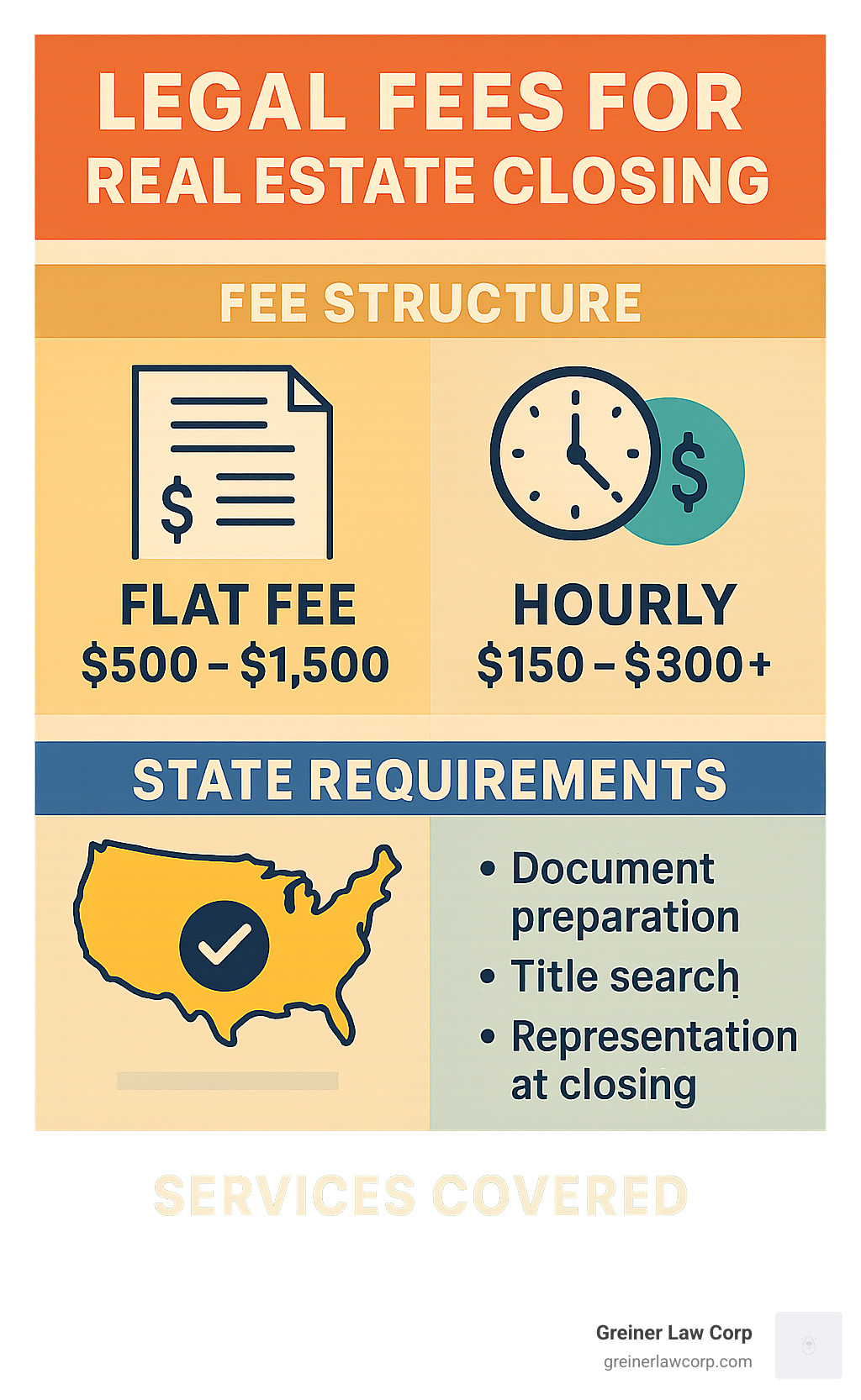
Legal fees for real estate closing typically range from $500 to $1,500 for residential transactions, with variations based on location, complexity, and attorney experience.
| Type of Fee | Typical Cost | What It Covers |
|---|---|---|
| Flat Fee | $500-$2,000 | All closing services, document review, title examination |
| Hourly Rate | $150-$600/hour | Billed time for services rendered |
| Percentage Fee | 0.5-1% of purchase price | More common in commercial transactions |
Real estate closing costs can be confusing and overwhelming, especially when you’re already juggling the excitement and stress of buying or selling property. The last thing anyone wants is a surprise expense at the final hurdle of their transaction. Whether you’re a first-time homebuyer or a seasoned investor, understanding what you’ll pay for legal representation at closing is crucial for proper budgeting and peace of mind.
Attorney fees are just one component of your overall closing costs, but they’re an important one that can vary widely depending on several factors. While some states legally require attorney involvement in real estate transactions, others leave it optional—but even when not mandatory, having legal expertise can protect your investment and prevent costly mistakes.
As a business owner navigating real estate transactions, you need clarity on these costs to make informed decisions. Let me guide you through what to expect when it comes to legal fees at closing, how they’re structured, and what strategies might help you manage them effectively.
I’m David Greiner, Esq., with extensive experience handling real estate transactions and legal fees for real estate closing as both an attorney and former business owner who understands the importance of practical, goal-focused legal solutions. My approach combines legal expertise with business acumen to ensure your closing process is smooth and cost-effective.
Key terms for legal fees for real estate closing:
– how much does a lawyer charge to transfer a deed
– how much does it cost for a lawyer
Real Estate Attorney Fees Explained: Services at Closing
When you’re approaching the closing table, it’s important to understand exactly what services you’re receiving for the legal fees for real estate closing that appear on your settlement statement. A real estate attorney’s role extends far beyond simply showing up on closing day with paperwork in hand.
As Jack Duffley, a real estate expert, puts it: “Real estate attorneys are like your translator through the deal and someone who can protect you from unnecessary risks.” This insight highlights the dual role attorneys play as both interpreters of complex legal language and guardians of your financial interests.
At Greiner Law Corp, our attorneys handle several critical functions during the closing process. We thoroughly review and negotiate contracts to ensure your interests are protected and terms are fair. We conduct comprehensive title searches to confirm the seller has clear ownership rights. We identify and resolve any outstanding liens against the property. We prepare and review detailed settlement statements accounting for all transaction costs. And we coordinate the secure transfer of funds and documents between parties through escrow.
For more comprehensive information about how contracts work in real estate transactions, you can visit our page on Real Estate Contracts Explained.
What Your Attorney Actually Does
The work of a real estate attorney begins well before the closing date and continues even after you’ve received your keys or proceeds. Behind the scenes, we’re busy with document drafting and review – preparing or reviewing the deed that transfers ownership, creating custom riders to address specific concerns, drafting powers of attorney when needed, and making sure mortgage documents match what was promised.
Due diligence is another crucial part of our job. We examine title commitments with a fine-tooth comb, review HOA documents and restrictions, verify property tax status, and ensure all required disclosures have been properly made.
As David Reischer, real estate attorney and CEO of LegalAdvice.com, notes: “While a real estate agent may be able to do some tasks of an attorney, such as preparing home contracts, only an attorney can offer legal advice to a client about the specifics of the transactions.”

Added Value Beyond the Paperwork
The true value of an attorney often becomes apparent when complications arise. I recently worked with a buyer who was days away from closing when our title search uncovered an old lien that neither the real estate agent nor the title company had found. Without this findy, my client would have inherited someone else’s debt along with their dream home.
At Greiner Law Corp, we believe legal representation provides two key benefits beyond basic document handling. First, there’s risk mitigation – we identify potential legal issues before they become problems, ensure proper insurance coverage for unique situations, advise on tax implications, and protect against fraud and misrepresentation.
Second, we focus on dispute prevention. We create clear records of all agreements, address boundary issues proactively, document property condition expectations, and establish remedies if either party fails to perform.
These services demonstrate why legal fees for real estate closing should be viewed as an investment rather than just another expense. As one satisfied client put it: “The small one-time investment in legal fees often pays for itself many times over by preventing expensive problems.”
When you consider what’s at stake in a real estate transaction – often hundreds of thousands or even millions of dollars – having a knowledgeable legal advocate in your corner provides invaluable peace of mind. We’re not just paper-pushers; we’re your protection against the unexpected complications that can turn your dream purchase into a nightmare.
Legal Fees for Real Estate Closing: Rates, Models & Average Costs
When budgeting for your real estate transaction, understanding the structure and range of legal fees for real estate closing is essential. These fees can vary significantly based on several factors, including your location, the complexity of your transaction, and the fee model your attorney uses.
According to our research, the national average for residential real estate attorney fees falls between $750 and $1,250, though this can vary widely from as low as $500 to as high as $2,000 depending on where you live and the unique aspects of your property purchase or sale.

Hourly vs. Flat Fees in legal fees for real estate closing
Most attorneys structure their closing fees in one of two ways, and understanding the difference can help you budget more effectively.
With hourly rates, you’re paying for the actual time your attorney spends working on your transaction. Entry-level attorneys might charge between $150-$300 per hour, while experienced attorneys typically range from $300-$500 per hour. For particularly complex deals or in high-cost areas, rates can exceed $500 hourly.
The hourly approach works well for straightforward transactions, but can quickly add up if complications arise. I once had a client whose seemingly simple home purchase revealed three generations of undocumented easements—their hourly bill nearly doubled from what we initially discussed.
Flat fees offer more predictability. For simple residential closings, expect to pay around $500-$1,000, while standard transactions typically range from $750-$1,500. More complex residential deals might cost between $1,500-$3,000. The beauty of flat fees is knowing your costs upfront, regardless of how many hours your attorney ultimately spends resolving issues.
At Greiner Law Corp, we often recommend flat fees for standard residential transactions because we’ve found our clients sleep better knowing exactly what they’ll pay at closing.
For a broader perspective on legal costs beyond real estate, check out our comprehensive guide on How Much Does a Lawyer Cost?
Typical Residential & Commercial Ranges
There’s a significant cost difference between closing on your family home versus a commercial property, and it helps to understand why.
For residential transactions, most attorneys charge between $500-$1,500 nationwide. Here in California, the average typically falls between $800-$1,200, though in premium markets like Los Angeles or San Francisco, expect to pay closer to $1,000-$2,000. These fees generally cover standard document review, title examination, and closing representation.
Commercial transactions command substantially higher fees due to their complexity and increased risk. Small commercial properties might cost $1,500-$2,500 in legal fees, mid-size deals typically range from $3,000-$5,000, and large commercial transactions can easily exceed $5,000-$10,000 or more.
One of my clients initially questioned the $7,500 fee for his multi-family property acquisition in San Diego. However, when we finded and resolved a zoning issue that would have cost him well over $100,000 in renovations and penalties, he later told me it was “the best money I’ve ever spent on professional services.”
Commercial deals involve additional layers of complexity—environmental concerns, zoning compliance, tenant issues, and more sophisticated financing arrangements all require additional attorney time and expertise.
Retainers, Disbursements & Unexpected Extras
Your base legal fee isn’t the only cost you’ll encounter. Understanding these additional expenses helps prevent sticker shock at closing.
A retainer is essentially a good-faith deposit against which your attorney bills their time. For real estate transactions, you might pay between $500-$2,000 upfront depending on the anticipated complexity. The good news? Any unused portion should be refunded after closing.
Disbursements and expenses are the actual costs your attorney incurs while handling your transaction. These typically include title search fees ($75-$200), courier and overnight delivery charges ($30-$100), recording fees that vary by county ($50-$200), and wire transfer fees ($25-$50 per transfer).
Then there are those potential unexpected costs that no one likes to talk about, but everyone should prepare for. Title curative work might add $200-$500 if issues are finded. Complex title problems requiring additional research could cost $300-$800. Unusual circumstances requiring special document preparation might add another $200-$400.
At Greiner Law Corp, we believe transparency about legal fees for real estate closing builds trust. That’s why we provide a detailed breakdown of all anticipated costs before you commit to our services. We’d rather you be pleasantly surprised by paying less than expected, rather than shocked by unexpected fees at the closing table.
For more specific information about attorney fees related to real estate transactions, you might find this Investopedia article helpful in understanding average attorney fees for real estate transactions nationwide.
Key Cost Drivers & Money-Saving Strategies
Understanding what drives the cost of legal fees for real estate closing can help you make informed decisions and potentially save money. Several factors influence what you’ll pay for legal representation during your real estate transaction.

Factors You Can’t Control
Some elements affecting legal fees are simply beyond your control, and it’s best to be aware of them upfront so you can plan accordingly.
State Mandates and Requirements vary widely across the country. Some states legally require attorney involvement in closings, while others leave it optional. I’ve seen clients move from one state to another and be surprised by these differences. Each state also has its own documentation requirements that can increase complexity and cost.
Geographic Location plays a huge role in what you’ll pay. Just like real estate itself, attorney fees follow the “location, location, location” rule. Here in California, you’ll typically pay more in Los Angeles or San Francisco than you would in Riverside or San Bernardino for the same services. The difference can be substantial – sometimes as much as 30-40% higher in major metropolitan areas.
Market Conditions shift legal fees too. During hot real estate markets, attorneys often charge premium rates simply because they can – their calendars are full, and demand is high. I’ve noticed that during particularly busy seasons, some attorneys in California raise their rates by 10-15%. Conversely, during slower periods, you might find more room to negotiate favorable rates.
As research indicates, these regional variations can make all the difference in your final bill. A straightforward residential closing might cost $500 in one state and triple that in another, simply due to location and local requirements.
For California-specific information about real estate legal matters, our page on Real Estate Legal Advice California provides deeper insights custom to our state’s unique legal landscape.
Factors You Can Control
The good news is that several cost drivers are within your control, giving you opportunities to manage expenses without sacrificing quality representation.
Attorney Selection matters tremendously. Experience levels significantly impact rates – newer attorneys often charge less, but may take longer to complete the same work. At Greiner Law Corp, we strike a balance between experience and value. Boutique firms like ours typically offer more competitive rates than large firms with massive overhead costs. And specialists in real estate generally work more efficiently than general practitioners who might need extra time to research unfamiliar issues.
Fee Structure Negotiation is something many clients don’t realize is an option. Don’t be afraid to ask for flat fees instead of hourly billing for more predictable costs. One of our clients recently saved over $800 by requesting a flat fee for a transaction that ended up having some unexpected complications. You can also negotiate fee caps on hourly arrangements to limit your exposure, or discuss limited-scope representation for specific aspects of the closing.
Timing Considerations can save you money too. I often advise clients to schedule closings mid-month rather than at month-end when we’re swamped with transactions. Providing ample lead time rather than requesting rush service not only reduces stress but often costs less. And if possible, avoid holiday periods when staffing may be limited and rush fees might apply.
Proven Ways to Reduce Your Bill
Based on our experience at Greiner Law Corp and industry best practices, here are practical strategies to manage your legal fees for real estate closing without compromising quality:
Ask for caps on billable hours if your attorney charges hourly. This gives you budget certainty while protecting the attorney’s time. Compare multiple quotes from different attorneys – knowledge is power when negotiating fees. Consider bundling services if you need multiple legal solutions; many attorneys offer package pricing that can save 15-20% compared to à la carte services.
Thorough preparation on your part makes a huge difference. I’ve seen clients save hundreds simply by organizing their documents and responding promptly to information requests. This reduces the time I spend tracking down information, which directly affects your bottom line.
The timing of your closing can impact costs too. One of our clients shared this experience: “Scheduling my closing for March 6 instead of March 29 saved me on prepaid interest and allowed my attorney to give me a 10% discount during their slower period.” This kind of strategic planning can lead to significant savings.
Always request transparent billing with detailed invoices that clearly explain what you’re paying for. At Greiner Law Corp, we provide itemized statements so you never wonder where your money went. And don’t forget to inquire about discounts – many attorneys offer reduced rates for repeat clients, referrals, or certain professions, but won’t volunteer this information unless asked.
At Greiner Law Corp, we understand that legal fees are an investment in protecting your real estate transaction. We’re committed to providing value-based pricing that balances proper legal protection with practical cost considerations. After all, our business-minded approach means we care about your bottom line as much as we care about your legal protection.
Buyer vs. Seller Responsibilities & State-Specific Rules
One of the most common questions we receive about legal fees for real estate closing is: “Who pays?” The answer isn’t always straightforward and depends on several factors that can vary significantly depending on where you’re buying or selling property.

Who Pays legal fees for real estate closing in 2024?
When it comes to determining who foots the bill for legal representation at closing, several factors come into play:
Your purchase agreement typically spells out who’s responsible for which closing costs, including attorney fees. These terms aren’t set in stone – they’re negotiable points that can shift based on market conditions. In a buyer’s market, for instance, I’ve seen many sellers offer to cover some or all of the buyer’s legal fees as an incentive to close the deal.
Regional customs also play a significant role in who pays what. Here in California, it’s typically expected that each party pays for their own attorney, while in places like New York, sellers often shoulder more of these legal costs. These “unwritten rules” can be just as influential as what’s in your contract.
If you’re getting a mortgage, your lender might have specific requirements about who pays for certain legal services. For example, some lenders insist that you, as the buyer, pay for the attorney who reviews your loan documents – regardless of local customs.
According to Investopedia, closing costs (which include legal fees) typically range from 2% to 5% of the loan amount, with buyers usually covering most of these expenses. That said, in buyer-friendly markets, sellers may contribute up to 6% of the sale price toward the buyer’s closing costs on FHA loans, or between 3-9% on conventional loans depending on the down payment.
I recently worked with a client in Riverside who was surprised to learn that what was standard practice in her previous home state of Georgia wasn’t the norm in California. These regional differences can catch even experienced homebuyers off guard.
States Where Attorneys Are Mandatory
While we don’t legally require attorney involvement for real estate closings here in California, several states do mandate attorney participation:
In Connecticut, Delaware, Georgia, Massachusetts, New York, North Carolina, South Carolina, and West Virginia, having an attorney handle your closing isn’t optional – it’s required by law. This requirement naturally affects the legal fees for real estate closing in these states.
Take New York, for instance, where attorney fees for residential transactions typically range from $1,000 to $3,000. These higher fees reflect both the mandatory nature of legal representation and the complexity of real estate transactions in that market.
Even though California doesn’t require attorney involvement, I’ve found that many clients in Victorville, Riverside, San Bernardino, and Los Angeles still benefit from legal oversight, especially with complex transactions or commercial deals. At Greiner Law Corp, we provide this peace of mind even when it’s not mandated by state law.
As one client told me after closing on a property with unexpected easement issues: “Having an attorney review my documents was optional in California, but it saved me from a situation that would have cost thousands to fix later.”
Understanding Retainer Refunds at Closing
If you’ve paid a retainer to your attorney, you’ll want to understand how refunds work once your transaction closes:
For hourly billing arrangements, your attorney tracks time spent on your transaction against your retainer amount. Any unused funds should be returned to you after closing. Conversely, if the time spent exceeds your retainer, you might receive an additional bill. This is why it’s important to discuss expectations upfront.
With flat fee arrangements, which we often recommend at Greiner Law Corp for straightforward transactions, the fee is typically earned upon completion of specified milestones. If your transaction falls through for some reason, you may receive a prorated refund based on the work completed. Any services beyond the agreed-upon scope will incur additional charges.
Most reputable law firms process retainer refunds within 14-30 days after closing. This window allows time to ensure all expenses have been accounted for and no additional work is needed. At Greiner Law Corp, we aim for the shorter end of this timeframe because we understand you may need those funds for moving expenses or home improvements.
I remember a client who was pleasantly surprised when we returned $800 of her $2,000 retainer after her closing went more smoothly than anticipated. She later told me, “The detailed statement showing exactly how my money was used gave me complete confidence in the billing process – something I hadn’t experienced with attorneys before.”
Understanding who pays for what and how retainers work can help you budget more effectively for your real estate transaction and avoid unpleasant surprises at the closing table.
Frequently Asked Questions about legal fees for real estate closing
Are attorney fees included in closing costs?
Yes, attorney fees are typically bundled into your overall closing costs. When you receive your Closing Disclosure (formerly called the HUD-1 settlement statement), you’ll see these fees listed alongside other expenses like title insurance, recording fees, and transfer taxes.
Based on our research at Greiner Law Corp, buyers can expect closing costs to run between 3% and 6% of their loan amount. For perspective, if you’re purchasing a $300,000 home, your total closing costs might range from $9,000 to $18,000, with legal fees for real estate closing typically accounting for $500-$1,500 of that total.
You might notice attorney fees listed separately from title services or escrow fees on your closing statement, depending on your location and how your closing is structured. We always make sure our fees are clearly identified so there’s no confusion about what you’re paying for.
Can I negotiate my real estate attorney’s fee?
You absolutely can—and probably should! Legal fees for real estate closing often have room for negotiation, especially in certain situations.
If you’re a returning client, many attorneys (including our team at Greiner Law Corp) are happy to offer loyalty discounts. Similarly, if your transaction is straightforward with standard financing and clear title, there’s often justification for a lower flat fee. Market timing matters too—during slower periods, attorneys may be more flexible with their rates.
One of our clients recently shared their success story: “I explained that I had a straightforward transaction with standard financing, and the attorney agreed to reduce their flat fee from $1,200 to $950.” This kind of outcome isn’t unusual when you approach the conversation thoughtfully.
Effective strategies include getting multiple quotes to understand the competitive landscape, asking about discounted flat fees for uncomplicated transactions, discussing fee caps for hourly billing, or exploring limited-scope representation that focuses only on the most critical aspects of your closing.
Is it ever mandatory to hire an attorney for closing?
In several states, you don’t have a choice—attorney involvement is legally required for real estate closings. Connecticut, Delaware, Georgia, Massachusetts, New York, North Carolina, South Carolina, and West Virginia all mandate attorney participation in residential real estate transactions.
Even here in California where attorneys aren’t legally required, there are plenty of situations where having one in your corner makes good sense:
Complex transactions like commercial properties or multi-family dwellings benefit from legal oversight. If you’re handling a For Sale By Owner (FSBO) deal without real estate agents, the legal guidance becomes even more valuable. Short sales or foreclosures come with additional legal complexities that attorneys are trained to steer.
When purchasing investment properties, especially through business entities, legal expertise can prevent costly mistakes. Properties with known title issues such as boundary disputes or easement concerns absolutely warrant attorney review. And if you’re selling during divorce proceedings, proper legal handling of joint assets is crucial.
One client told us: “Even though California doesn’t require an attorney, having one saved me from accepting a property with significant undisclosed easement issues that would have restricted my planned renovations.” This kind of protection against unforeseen problems is exactly why legal representation matters, mandatory or not.
Conclusion
Understanding legal fees for real estate closing doesn’t have to feel overwhelming. With proper knowledge and preparation, you can budget effectively while ensuring your transaction receives the legal protection it deserves.
Residential legal fees typically range from $500-$1,500, while commercial deals generally cost more. You’ll encounter different fee structures—hourly rates between $150-$600 per hour or flat fees from $500-$2,000—each with their own advantages. Your geographic location significantly impacts these costs, with urban areas and certain states commanding premium rates.
The good news? You can control some factors through strategic timing, careful attorney selection, and thoughtful negotiation. Even in states where attorney involvement is optional, their expertise often proves invaluable for complex transactions.
At Greiner Law Corp, we believe in transparent, value-based pricing. Our business-minded approach means we understand both the legal requirements and practical business considerations of your real estate transaction. We work to keep your fees predictable while ensuring your investment receives proper protection.
For more information about how we can assist with your real estate transaction or other legal needs, please visit our page on probate and real estate guidance. With offices in Victorville, Riverside, San Bernardino, and Los Angeles, we’re well-positioned to serve clients throughout Southern California.
The right legal representation isn’t just about checking a box—it’s about protection, peace of mind, and preventing future headaches. When viewed as an investment rather than merely an expense, legal fees for real estate closing represent one of the wisest ways to allocate your transaction budget.


