Why Your Trust Isn’t Set in Stone
Keeping your estate plan current is crucial, and understanding the cost to amend trust documents helps you do so without overspending. Here’s a quick overview:
Quick Cost Overview:
- Simple amendments: $300-$500 (changing beneficiaries, trustees)
- Major changes/restatement: $2,000+ (complete trust overhaul)
- Additional costs: Notary fees ($5-15), filing fees (varies by state)
Life changes like marriage, new children, or business growth mean your trust needs updates. Fortunately, amending a trust doesn’t have to drain your bank account.
As research shows, “Amending your trust can take multiple steps. You will first need to have a clear understanding of your trust, as well as the legal, statutory and financial factors that could weigh on the costs of making these changes.”
Key factors that influence amendment costs include:
- Number and complexity of changes
- Age of your original trust
- Type of trust (revocable vs. irrevocable)
- Your location and local attorney rates
I’m David Greiner, Esq. My transactional law practice focuses on helping clients manage trust amendments efficiently. We prioritize your goals and keep the cost to amend trust documents reasonable, focusing on achievement, not billable hours.
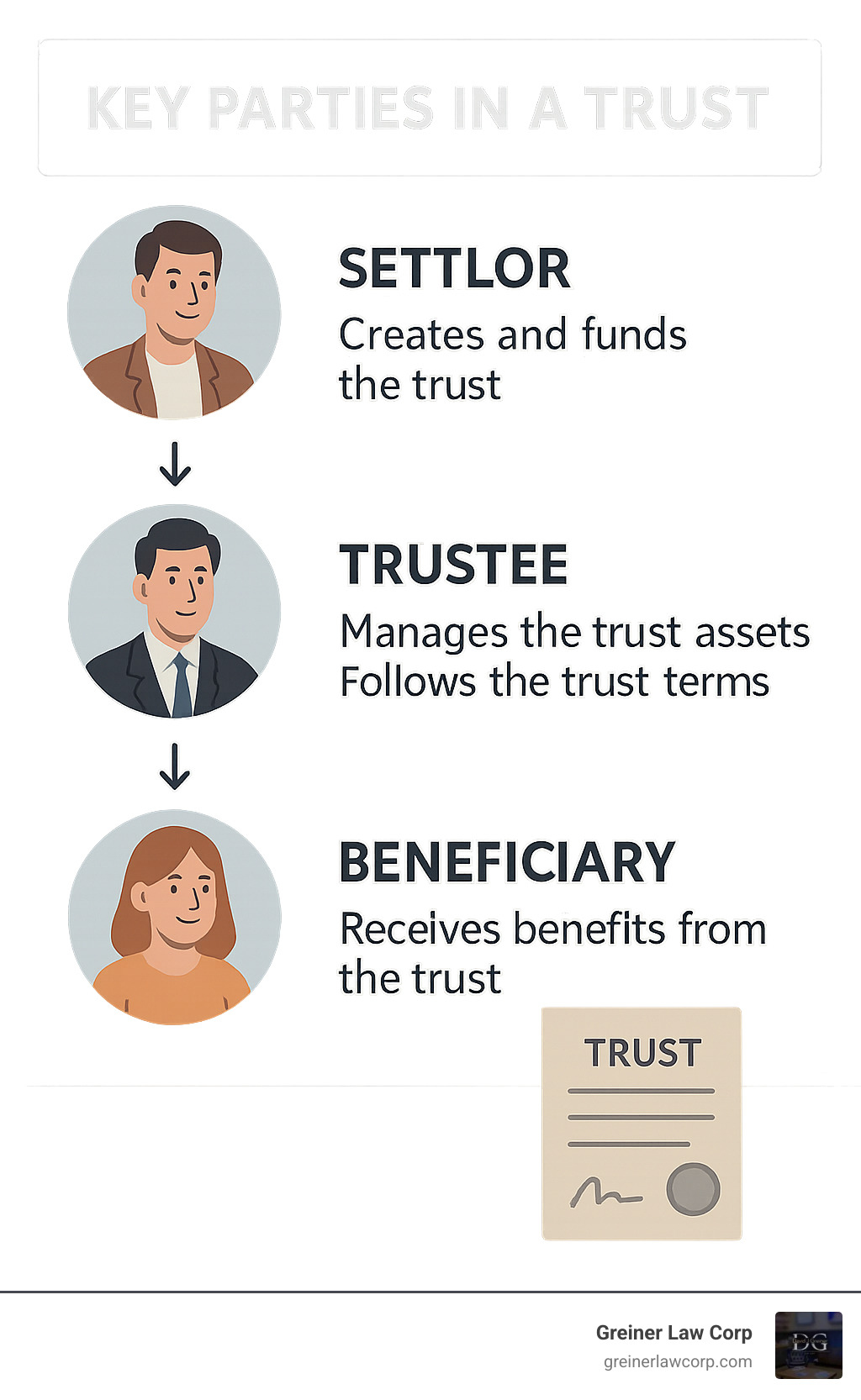
Cost to amend trust vocab to learn:
Understanding the Basics: Can You Change Your Trust?
The short answer? It depends on the type of trust you have. Before exploring the cost to amend trust documents, let’s cover the basics.
Think of your trust as a recipe for your assets. You (the “settlor”) create it, a “trustee” follows it, and “beneficiaries” benefit. As your life evolves, this recipe may need updates.

Whether you can change your trust depends on a few factors. You need legal capacity (being of sound mind and not under duress), your original trust must allow for changes, and any modifications must follow state law. The good news is that most trusts can be modified; the real question is how complex and expensive the process will be.
Revocable vs. Irrevocable Trusts: A Tale of Two Flexibilities
Here’s where trust types matter most.
Revocable trusts (or living trusts) are like writing in pencil—easy to change. As long as you’re alive and mentally competent, you can modify or dissolve your revocable trust. This flexibility makes them popular for estate planning. The cost to amend trust documents is typically lower for revocable trusts because the process is straightforward.
Irrevocable trusts are more like carving in stone. Once created, changes are trickier and more expensive. These trusts offer benefits like asset protection and tax advantages but come with less flexibility. To modify an irrevocable trust, you often need all beneficiaries to agree and may need court approval. California’s Probate Code has specific rules (like sections 15403 and 15409) that outline how these changes can happen.
If you’re curious about the full scope of irrevocable trust costs, check out More info about Irrevocable Trusts.
The “Who, What, and How” of Trust Amendments
Making a valid trust amendment requires following specific rules to avoid future problems. You must have legal capacity (be of sound mind and free from undue influence). All amendments must be written properly—never by marking up the original document. While not always required in California, notarization is highly recommended to prevent fraud and challenges. Your original trust document may have its own rules for amendments; if so, you must follow them. Otherwise, California law generally allows changes via a signed writing delivered to your trustee. Finally, notifying your trustee of any changes is crucial for smooth administration.
The bottom line? Understanding these basics helps you steer the process efficiently and keeps your cost to amend trust documents reasonable.
The Real Deal: What is the Average Cost to Amend a Trust?
So, how much does it cost to amend a trust? While the answer is “it depends,” we can provide solid ranges based on the complexity of your changes.

Updating your trust is like home maintenance—a small repair now prevents a major renovation later. The cost to amend trust documents varies based on whether you need a simple tweak or a complete overhaul.
Simple Fixes: The Cost for Minor Trust Amendments
For straightforward changes that don’t alter your overall estate plan, you’re looking at the most budget-friendly option. These are the “quick fixes” that keep your trust current without requiring a complete overhaul.
For these simple amendments, you can expect to pay between $300 to $500. This covers the attorney time needed to draft the amendment properly, ensure it complies with California law, and guide you through the execution process.
Common simple changes include changing a beneficiary, updating a successor trustee, or modifying personal details like addresses or names. These amendments are “add-ons” to your existing trust, leaving its core provisions and name intact. You typically won’t need to re-title property already in the trust, which keeps costs down.
Major Overhauls: The Cost for a Full Trust Restatement
When facing significant alterations, or if multiple prior amendments have made your trust confusing, a complete restatement is often the best choice. A full trust restatement will typically cost $2,000 or more. While this seems steep, it’s often the most cost-effective approach for substantial changes.
A restatement is necessary if your trust uses outdated legal language or if you’re essentially rewriting the entire trust to reflect major life changes like a second marriage or different family circumstances. A restatement provides clarity that multiple amendments cannot match.
Think of it this way: a simple amendment is like adding a room to your house, while a restatement is like renovating the entire interior. It creates one clean, comprehensive document that your trustee can easily understand, potentially saving your family from confusion or disputes.
While this process might seem like creating a brand new trust, it preserves the original trust’s identity and date. If you’re curious about the costs involved in creating a new trust from scratch, you can find more info on creating a trust.
Comparing Amendment vs. Restatement
Here’s a breakdown of the key differences:
| Feature | Amendment | Restatement |
|---|---|---|
| Cost | Lower ($300-$500) | Higher ($2,000+) |
| When to Use | Minor, isolated changes (new beneficiary, successor trustee) | Multiple significant changes; outdated trust; confusing prior amendments |
| Complexity | Simple “add-on” to existing document | Replaces entire trust text; comprehensive overhaul |
| Legal Process | Draft, sign, notarize, attach to original trust | Draft new document, sign, notarize; original identity preserved |
The cost to amend trust documents ultimately depends on your specific needs. Investing in the right approach upfront—whether a simple amendment or a comprehensive restatement—saves money and family harmony in the long run.
Key Factors That Drive Up (or Down) Your Amendment Costs
What makes one trust amendment cost $300 while another costs $3,000? Like home renovations, the scope of work is key. The cost to amend trust documents can vary dramatically based on several factors.

Complexity and Scope of Your Changes
The biggest cost driver is the complexity of your changes. A simple name change is quick, but restructuring asset distribution with specific conditions takes more time and legal expertise.
Simple changes that keep costs low include updating a successor trustee, adding a new beneficiary, or correcting personal information. These don’t alter the trust’s core purpose.
Complex changes that drive up costs involve reworking asset distribution, adding detailed conditions (e.g., for education expenses), or restructuring business interests. The more specific your requirements, the more careful legal drafting is needed.
Multiple changes in one amendment also increase costs. If you’re updating several items at once, a full restatement may be more cost-effective.
The Age and Type of Your Original Trust
Your original trust document is like a house’s foundation; if it’s old or outdated, you might need more extensive work.
Older trust documents often use outdated legal language or fail to account for changes in state or federal law. A trust from the 1990s might need significant updates just to comply with current standards.
Trust type matters enormously. Revocable trusts are generally straightforward to amend. Irrevocable trusts can be much more expensive to modify, often requiring beneficiary consent or court approval. Specialized trusts, like special needs trusts, have unique legal requirements that make changes more complex.
For more information about different trust types, visit our More info on Trusts page.
Attorney Fees and Geographic Location
Where you live and which attorney you choose significantly impact your cost to amend trust documents. It’s about making an informed decision, not just finding the cheapest option.
Attorney experience and approach play a huge role. Some attorneys charge flat fees for standard amendments, while others use hourly rates for complex changes. In California, estate planning attorney rates typically range from $150 to $400 per hour.
Geographic location creates cost differences. Legal services in major cities like Los Angeles generally cost more than in smaller cities. Our offices in Victorville, Riverside, San Bernardino, and Los Angeles allow us to serve clients across Southern California while understanding local market conditions.
Additional costs can include notary fees ($5-15 per signature) and filing fees if documents need recording.
The key is finding an attorney who understands your needs and can work efficiently. For more details on estate planning attorney costs, check out our More info on attorney costs page.
A Practical Guide to Amending Your Trust in California
Amending a trust in California follows a straightforward path, but the details are critical. This guide simplifies the process, but professional guidance is recommended to avoid costly mistakes.
Step 1: Review Your Existing Trust Document
Start by thoroughly reviewing your original trust document. You need to understand what you’re working with.
- Look for the amendment clause. Many trusts include specific instructions on how changes can be made. Ignoring these could make your amendment legally ineffective.
- Understand your current terms. Familiarize yourself with the sections you plan to change and how they connect to the rest of the document.
- Identify the specific sections that need modification. Being precise saves time and money.
Step 2: Draft the Trust Amendment Document
This step requires careful legal writing. Ambiguity can lead to expensive disputes, so clarity is crucial.
- Use clear, unambiguous language. The amendment must reference your original trust by its full legal name and date.
- Reference your original trust explicitly. The amendment should clearly state it is modifying a specific trust, not creating a new one.
- State your changes precisely. Specify exactly which paragraphs or sections are being modified, added, or removed.
Step 3: Execute the Amendment Correctly
Making your amendment legally binding requires following specific procedures. In California, every step matters.
- Signatures are essential. The settlor (the person who created the trust) must sign the amendment. For joint trusts, both settlors typically need to sign.
- Date the amendment to prevent confusion about when changes took effect.
- Notarization adds crucial protection. We strongly recommend having your signature notarized to authenticate your identity and prevent fraud. The small cost to amend trust documents with notarization is worth the peace of mind.
- Witnesses are generally not needed for trust amendments in California, but if your original trust requires them, you must follow that rule.
Step 4: Notify Key Parties and Store Securely
Once your amendment is executed, a few final steps ensure your changes will be implemented.
- Inform your trustee. They need to know about changes that affect their duties.
- Provide copies to affected beneficiaries. Transparency can prevent family disputes later.
- Attach the amendment securely to your original trust document. Never write directly on the original.
- Store safely. Keep your original trust and all amendments in a secure, fireproof location, and make sure your successor trustee knows where to find them.
Frequently Asked Questions about the Cost to Amend a Trust
Let’s tackle the most common questions about trust amendments to help you make informed decisions.
Why would I need to amend my trust?
Your trust may become outdated due to life events. Common reasons for amendments include:
- Family Changes: Marriage, divorce, the birth of a child or grandchild, or the death of a beneficiary.
- Financial Changes: Acquiring significant new assets, such as a business or real estate.
- Legal Changes: Updates to federal or California tax laws can impact your estate plan.
- Personal Wishes: Your intentions may change over time regarding charities or family members.
Your trust should always reflect your current wishes.
Can I amend a trust myself to save money?
While the DIY approach to save on the cost to amend trust documents is tempting, it usually backfires. The risks are substantial.
Trust law is complex. A simple name change might require updates to multiple sections to maintain consistency. Missing small details in California’s execution requirements can invalidate your changes.
The potential costs of errors are enormous. A poorly drafted amendment can lead to family disputes and court battles with legal fees that dwarf the cost of professional help. For example, a DIY amendment could accidentally disinherit a child or create ambiguity that requires litigation to resolve.
For anything involving beneficiaries, asset distribution, or trustee powers, professional guidance is essential. Think of it as insurance for your family’s future.
How often should I review my trust?
This is a critical question. Regular reviews can actually reduce your long-term cost to amend trust documents.
A review every 3-5 years is a good baseline, even if nothing major has changed. Laws and your financial situation evolve.
After any major life event, review your trust immediately. This includes marriage, divorce, births, deaths, or significant asset changes. The sooner you address these changes, the simpler and less expensive the amendments tend to be.
Proactive reviews save you money by avoiding the need for expensive, comprehensive restatements later. It’s like car maintenance—regular oil changes prevent engine rebuilds. Your estate plan deserves the same attention.
Conclusion: Protecting Your Legacy with a Smart Approach
Your trust needs to evolve with your life, and the cost to amend trust documents is manageable when you understand the key factors. We’ve seen that simple amendments typically cost $300-$500, while comprehensive restatements for major overhauls can exceed $2,000.
The factors influencing your costs—the complexity of changes, the trust’s age and type, and your choice of legal counsel—are all manageable with proper planning. Regular reviews every 3-5 years or after major life events can save you money by preventing the need for costly emergency fixes.
From my experience, the cost to amend trust documents is nearly always less than the cost of litigation arising from an outdated trust. A simple amendment can prevent tens of thousands in legal fees.
At Greiner Law Corp, we’ve built our practice on a business-minded approach that focuses on achievement, not billable hours. Since 2003, I’ve helped countless clients with probate, real estate, business, and contract law across California. Our goal is to help you reach your objectives with clarity and cost-effectiveness.
Your legacy deserves protection. Don’t let an outdated trust become a burden for your loved ones when an amendment can solve the problem today.
Contact our Trust and Will Lawyers for guidance and let’s make sure your trust continues to serve your family’s future exactly as you envision it.


