How much does it cost to create a trust? This is a pivotal question for anyone dipping their toes into estate planning. The cost of creating a trust can vary, depending on several factors:
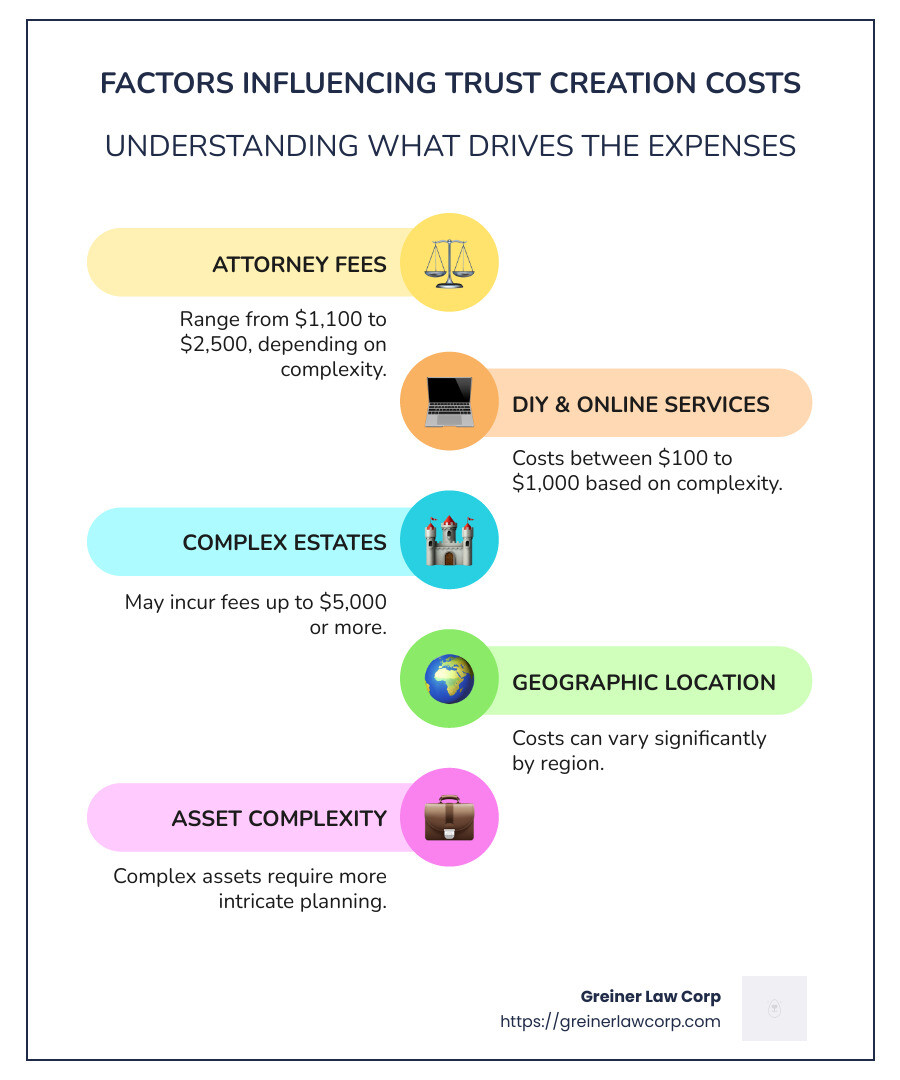
- Attorney fees: Typically range from $1,100 to $1,500 for individuals and $1,700 to $2,500 for couples.
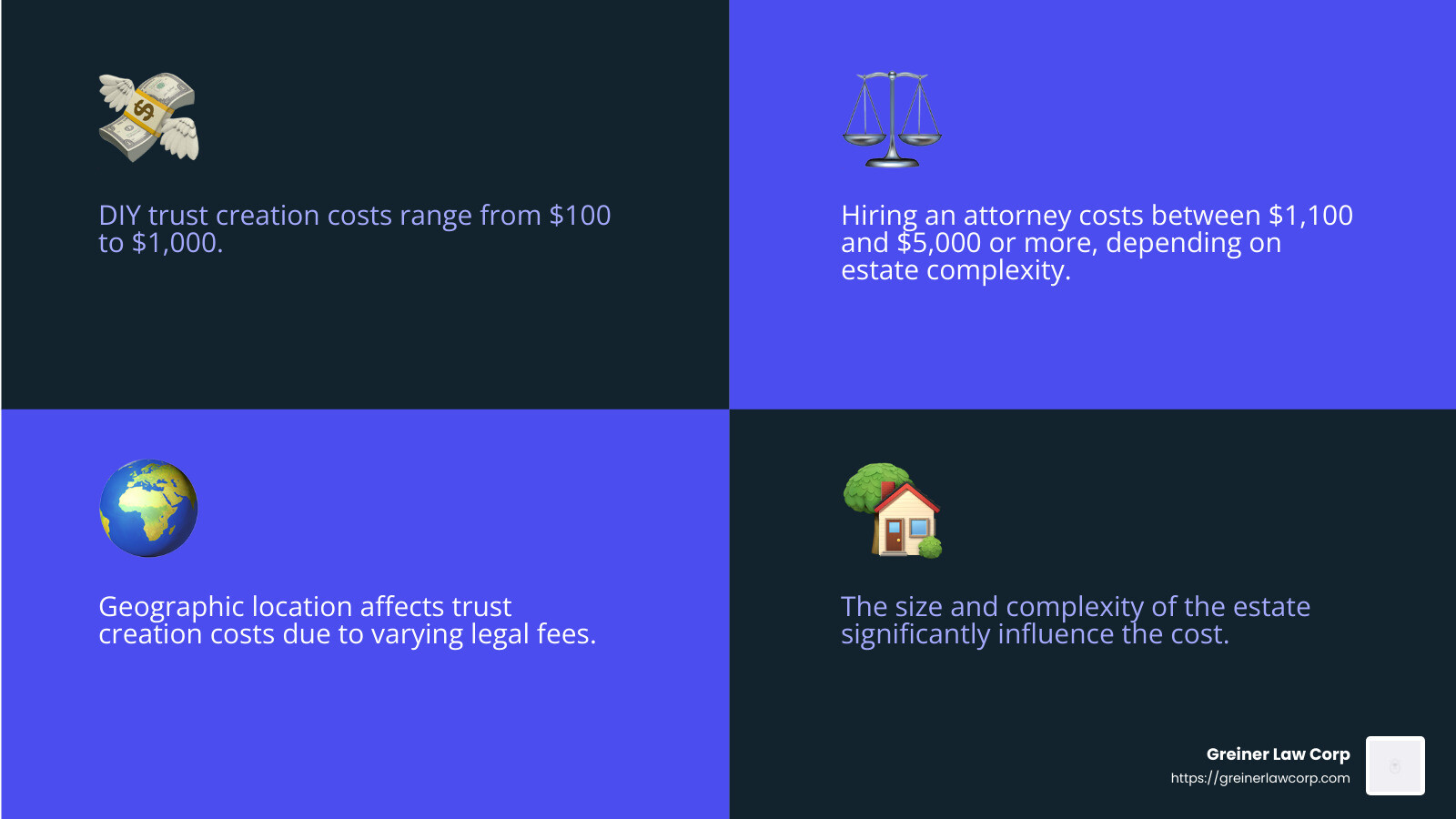
- DIY and Online Services: Cost between $100 to $1,000, depending on complexity.
- Complex Estates: Fees may reach up to $5,000 or more.
Creating a trust is not just about cost; it’s about smartly planning for your future while safeguarding your assets in the way you intend. A trust allows for seamless asset distribution upon your passing and provides benefits like avoiding probate and maintaining privacy.
I’m David Greiner, Esq. I bring my extensive expertise from both legal and business sectors, honed as a transactional lawyer since 2015. My focus has always been on client goals and efficiency. Exploring how much does it cost to create a trust is essential, and I dedicate myself to illuminating this critical aspect of estate planning for informed decision-making.
How Much Does It Cost to Create a Trust?
Creating a trust is an important step in estate planning. But how much does it cost to create a trust? The answer depends on several factors, including whether you choose a DIY approach or hire professional services.
DIY vs. Professional Services
DIY and Online Platforms
If you have a straightforward estate, using a DIY or online platform might be the way to go. Services like these typically range from $100 to $1,000. They’re ideal for simpler estates and can be a cost-effective solution if you’re comfortable handling the process yourself. These platforms provide templates and guidance but may not cover complex situations or offer personalized advice.
Attorney Services
For those with more complex estates or who want custom advice, hiring an attorney is often the best choice. Attorney fees generally range from $1,100 to $1,500 for individuals and $1,700 to $2,500 for couples. Complex estates can push these fees up to $5,000 or more. Attorneys offer the benefit of personalized service, ensuring all legal requirements are met and that your trust is crafted to your specific needs.
Factors Influencing Trust Costs
Several factors can influence the cost of creating a trust:
Estate Size and Complexity
Larger and more complex estates typically incur higher costs. This is because they often involve more assets, require additional documents, and need more detailed planning. For example, if you have multiple properties or investments, these need to be carefully managed within the trust.Geographic Location
Costs can vary significantly depending on where you live. For instance, fees in California might differ from those in other states due to varying legal requirements and living costs. It’s essential to consider local factors when budgeting for your trust.Asset Complexity
Different types of assets require different approaches to be funded into a trust. Transferring real estate might involve fees at the local town clerk’s office, while business interests might need more complex arrangements. These nuances can add to the overall cost.
Creating a trust is an investment in your future and your beneficiaries’ well-being. By understanding the costs involved, whether through DIY methods or professional services, you can make informed decisions that align with your estate planning goals.
Next, we’ll dig deeper into the different types of trusts and their associated costs.
Types of Trusts and Their Costs
When considering how much does it cost to create a trust, it’s crucial to understand the differences between types of trusts. Each type has its own benefits and costs, and knowing these can help you choose the best option for your needs.
Revocable vs. Irrevocable Trusts
Revocable Trusts
Revocable trusts, also known as living trusts, offer flexibility. You can change or cancel them anytime while you’re alive. This means you maintain control over your assets. If your family grows or your financial situation changes, you can adjust the trust accordingly.
A revocable trust helps avoid probate, saving time and money for your beneficiaries. However, it doesn’t provide tax benefits during your lifetime. You’ll still pay taxes on income generated by the trust assets.
Irrevocable Trusts
An irrevocable trust is more rigid. Once you create it, you can’t easily change it. This might sound restrictive, but it offers significant tax advantages. Assets in an irrevocable trust are removed from your taxable estate, potentially reducing estate taxes.
This type of trust also protects your assets from creditors and lawsuits. It’s a solid choice if you want to safeguard your wealth for future generations. But remember, you give up control over the assets once they’re in the trust.
Living Trusts
Living trusts are a popular choice for those who want to manage their assets during their lifetime and ensure a smooth transfer to beneficiaries after death. They help avoid probate, ensuring privacy and speedier distribution of assets.
Creating a living trust involves some costs, but it can save money in the long run by avoiding probate fees. It’s also a great tool for asset management, especially if you become incapacitated. A successor trustee can step in and manage your affairs without court intervention.
In summary, understanding the differences between revocable and irrevocable trusts is key to deciding which is right for you. Revocable trusts offer flexibility and control, while irrevocable trusts provide tax benefits and asset protection. Living trusts help in probate avoidance and asset management.
In the next section, we’ll explore the ongoing maintenance costs associated with trusts.
Ongoing Maintenance Costs
Creating a trust is just the beginning. Once it’s up and running, there are ongoing costs to consider. These can add up, so it’s important to understand what you’re getting into.
What Affects Maintenance Costs?
Trustee Fees
The trustee is the person or institution responsible for managing the trust. If you appoint a professional trustee, like a bank or a trust company, expect to pay them for their services. These fees can vary widely, but they often range from 1% to 2% of the trust’s assets annually. If you choose a family member or friend, they might not charge a fee, but they will still have responsibilities.
Administrative Expenses
Running a trust involves day-to-day management tasks. This includes distributing assets, maintaining records, and ensuring compliance with legal requirements. These tasks often require hiring professionals, such as accountants and lawyers, which can increase costs. Administrative expenses can vary depending on the complexity of the trust and the state laws where the trust is established.
Tax Preparation
Trusts may need to file their own tax returns. This means hiring a tax professional to prepare and file these returns, which adds to the overall cost. The complexity of the trust’s financial activities can affect how much this costs. For example, a trust with multiple income sources and deductions will require more work than a simpler one.
Asset Volume and Trust Complexity
The more assets a trust holds, the more work it requires to manage. Trusts with diverse assets, like real estate, stocks, and businesses, will incur higher maintenance costs. Complex trusts with detailed distribution plans or multiple beneficiaries also require more administrative work, driving up costs.
Professional Services
Sometimes, trusts need expert advice. Whether it’s legal counsel for interpreting trust terms or financial advice for managing investments, hiring professionals can be costly. It’s important to budget for these services, as they ensure the trust is managed effectively and in compliance with the law.
In summary, ongoing maintenance costs for a trust can be influenced by several factors. Trustee fees, administrative expenses, tax preparation, asset volume, trust complexity, and professional services all play a role. Understanding these costs will help you plan and manage your trust effectively.
In the next section, we’ll address some frequently asked questions about trust costs.
Frequently Asked Questions about Trust Costs
Creating a trust involves several costs, and it’s natural to have questions. Let’s address some of the most common ones.
What is the average cost of a living trust?
The cost of creating a living trust can vary widely. If you choose to work with an attorney, expect to pay between $1,000 and $3,000. This range can go up to $5,000 or more for complex estates. Lawyers often charge a flat fee or by the hour, with rates ranging from $150 to $500 per hour.
Alternatively, online legal services offer a more budget-friendly option, with prices typically between $100 and $1,000. These platforms provide templates and guidance, but lack personalized advice. For the DIY enthusiasts, kits are available for $50 to $100, requiring a solid understanding of estate planning laws to avoid mistakes.
Are there hidden costs in trust creation?
While the initial setup costs are clear, several hidden expenses can arise:
- Funding Assets: Transferring assets into the trust may involve fees, especially for real estate and financial accounts.
- Amendments: Changes to the trust, such as updating beneficiaries or terms, will incur additional legal fees.
- Professional Services: Ongoing advice from lawyers or financial advisors can add to the cost.
- Dispute Resolution: If conflicts arise, mediation or legal fees may be necessary to resolve them.
It’s crucial to understand these potential costs upfront to avoid surprises later.
How can I reduce the cost of creating a trust?
Here are some strategies to keep costs down:
- Plan Ahead: Clearly define your goals and gather all necessary documents before meeting with a professional. This reduces the time and cost involved.
- Choose the Right Service: For simple estates, consider using online platforms or DIY kits. For complex situations, investing in an experienced attorney might save money in the long run.
- Bundle Services: Some professionals offer package deals that include wills, powers of attorney, and trusts, which can be more cost-effective.
- Review Regularly: Regularly review your trust to make necessary updates in one go, minimizing amendment costs.
By understanding the costs involved and planning accordingly, you can create a trust that meets your needs without breaking the bank.
In the next section, we’ll dig into the different types of trusts and their specific costs.
Conclusion
At Greiner Law Corp, we understand that creating a trust is more than just a legal process—it’s about securing your family’s future and ensuring peace of mind. Our client-focused, business-minded approach means we prioritize your goals and tailor our services to fit your unique needs.
Why Choose Greiner Law Corp?
Client-Centric Approach: We listen to your goals and work with you to create a trust that aligns with your vision. Whether it’s protecting assets, minimizing taxes, or planning for future generations, we ensure your needs come first.
Business-Minded Strategy: Founded by David Greiner in 2003, our firm combines legal expertise with a business-savvy perspective. We help you manage risks effectively, ensuring your trust serves as a robust tool for estate planning.
Comprehensive Support: From our offices in Victorville, Riverside, San Bernardino, and Los Angeles, we offer personalized guidance every step of the way. Our team is here to answer your questions and provide ongoing support, ensuring your trust remains effective as your circumstances evolve.
Creating a trust doesn’t have to be daunting or overly expensive. By choosing the right partner, you can steer the complexities of estate planning with confidence. At Greiner Law Corp, we’re committed to making the process as smooth and cost-effective as possible.
If you’re ready to start planning your estate with a trust, explore our pricing options and see how we can help secure your family’s future. Let’s build something great together.


