Buying a house in probate can seem like a daunting process, but it can be a worthwhile investment if you know what to expect. Here’s a quick glance at the steps involved:
- Start Looking For Listings – Search for probate property listings or consult a real estate agent who specializes in probate sales.
- Tour The Property – Inspect the home thoroughly to assess its condition.
- Research Comps – Determine the property’s market value by looking at comparable sales.
- Make An Offer – Bid on the property and be prepared to place a deposit, typically 10% of the sale price.
- Await Court Approval – The sale is finalized after court confirmation and potential additional hearings.
Investing in probate real estate provides unique opportunities but also involves legal complexities and an extended timeline. Greiner Law Corp specializes in helping individuals steer these intricacies, ensuring a smooth transaction.
As David Greiner, Esq., I have experience in real estate law, business transactions, and navigating the probate process efficiently. My practical approach ensures your goals are prioritized, making your venture into buying a house in probate as seamless as possible.

Buying a house in probate vocab explained:
– how do probate real estate sales work
– what happens to a house during probate
– what is a probate listing
What is Probate Real Estate?
Probate real estate refers to properties that are part of a deceased person’s estate and are sold under the probate process. This legal procedure ensures the proper distribution of the deceased’s assets, including real estate, to heirs or creditors. Let’s break down the key elements:
Legal Process
When someone passes away, their assets need to be managed and distributed. This is where probate comes in. Probate is a court-supervised process that authenticates the deceased’s will (if there is one) and appoints an executor or administrator to oversee the estate.
Deceased Person’s Assets
The deceased’s assets can include various items like cash, investments, personal property, and real estate. Real estate is often the most valuable asset in an estate, making its proper management crucial.
Probate Court
The probate court plays a central role in this process. It ensures that the estate is administered according to the law and the deceased’s wishes. The court:
- Validates the will (if present)
- Appoints an executor or administrator
- Oversees the inventory and appraisal of assets
- Ensures debts and taxes are paid
- Approves the final distribution of assets
Estate Administration
Estate administration involves several steps:
Inventory and Appraisal: The executor or administrator must list all assets and get them appraised. This includes real estate, which needs a fair market valuation.
Debt Settlement: Before distributing assets, the estate must pay off any debts. This might involve selling real estate to generate the necessary funds.
Distribution of Assets: Once debts and taxes are settled, the remaining assets, including real estate, are distributed to the heirs according to the will or state law (if there is no will).
Here’s a simplified visual of the probate process:

Understanding probate real estate is essential for anyone looking to invest in properties sold under this process. It involves legal steps and court oversight, which can make it more complex than regular real estate transactions. However, with the right guidance and knowledge, it can be a rewarding investment.
Next, let’s dive into the steps to buying a house in probate and how to steer this unique real estate market.
Steps to Buying a House in Probate
Court Authorization and Listing
The first step in buying a house in probate is obtaining court authorization. The probate court must approve the sale to ensure that it’s conducted legally and fairly. This involves the estate representative (executor or administrator) filing a petition to begin the sale process.
Once authorized, the estate representative will work with a real estate agent to set a fair listing price. This price is typically based on an independent home appraisal, which determines the property’s market value. Most probate courts require the property to sell for at least 90% of its appraised value.
Making an Offer and Down Payment
Interested buyers can then make an offer on the property. When making an offer, you’ll need to provide a 10% deposit. This deposit is usually a cashier’s check and shows your commitment to the purchase.
The estate representative will review the offers and may choose to accept one. However, the accepted offer is subject to court approval. If your offer is accepted, your deposit will be held in escrow until the sale is finalized.
Confirmation Hearing and Probate Auction
After an offer is accepted, the court schedules a confirmation hearing. During this hearing, other interested buyers can submit higher bids in a process known as overbidding. The first overbid must be at least 105% of the accepted offer plus $500.
To participate in the overbidding process, you must have a cashier’s check for at least 10% of the opening bid amount. Personal checks are not accepted. The minimum overbid is calculated using a formula dictated by the Probate Code: the accepted offer plus 10% of the first $10,000 plus 5% of the balance.
Here’s a quick example:
- Accepted offer: $175,000
- Minimum overbid: $184,250
- Cashier’s check: $18,425
The court will review all bids and approve the highest one. Once the sale is confirmed, the court will notify the family members of the deceased about the sale. The estate representative will then complete the paperwork to transfer the title to the new owner.
Buying a house in probate involves several unique steps, including court oversight and a potential auction process. Understanding these steps can help you steer the probate market more effectively.
Next, let’s explore the differences between probate sales and regular sales.
Differences Between Probate Sales and Regular Sales
Buying a house in probate is different from a regular home purchase in several key ways. Understanding these differences can help you steer the process more effectively.
Court Oversight
In probate sales, court oversight is a major factor. The probate court supervises every step of the sale to ensure fairness and legality. This means:
- The court must approve the sale price.
- The court schedules a confirmation hearing to review and approve offers.
- Any accepted offer can be overbid in court by other interested buyers.
This added layer of legal scrutiny can make the process longer and more complex.
As-Is Condition
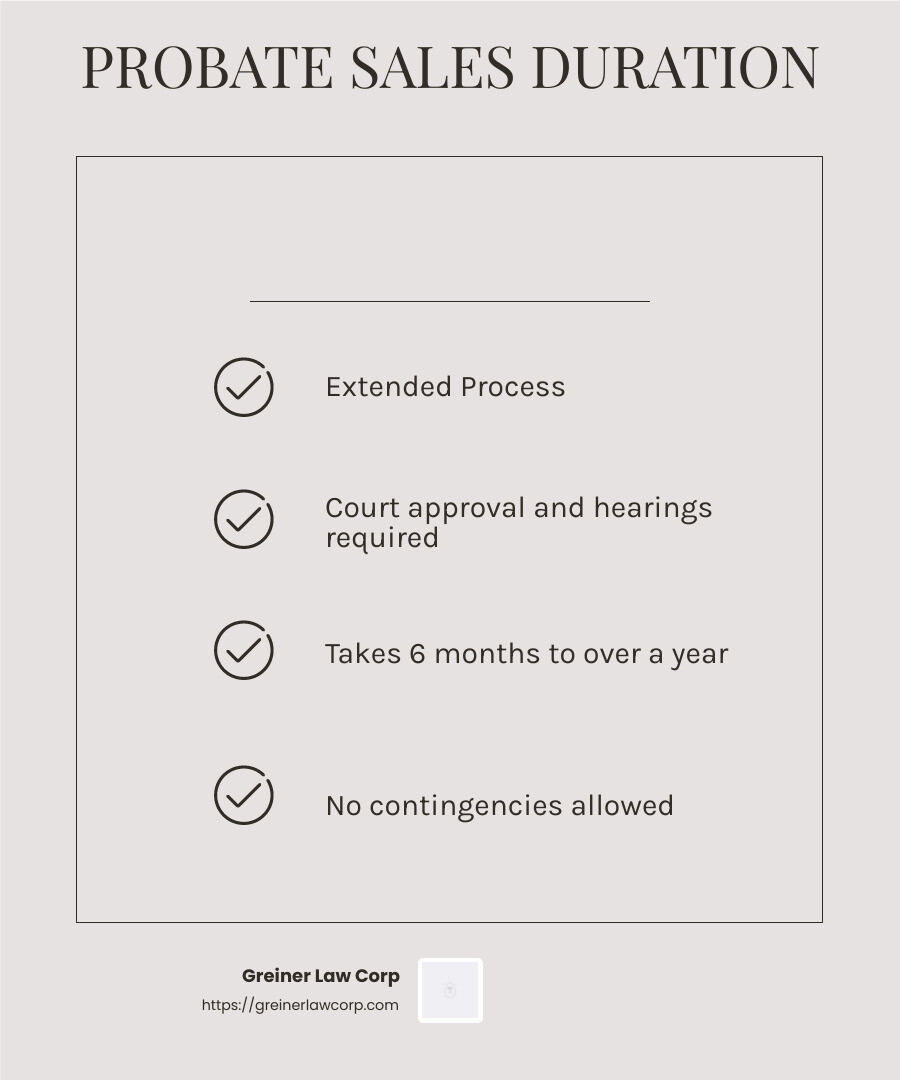
Probate properties are sold as-is, meaning the property is sold in its current condition without any repairs or upgrades by the seller. Unlike regular real estate transactions, where buyers can negotiate for repairs based on home inspections, probate properties come with no such contingencies.
Buyer’s Inspections: It’s crucial for buyers to get a home inspection to understand the property’s condition. This helps in estimating the cost of potential repairs and renovations, which can be significant.
No Contingencies
Another key difference is that probate sales come with no contingencies. This means:
- Buyers cannot request repairs or improvements.
- The sale is not contingent on the buyer securing financing.
- There are no escape clauses for the buyer if issues are found later.
This can make the buying process riskier for those who are not prepared.
Longer Process
The probate sale process can take much longer than a regular home sale. Here’s why:
- Extended Process: The involvement of the court and the need for legal approvals can significantly extend the duration of a probate sale. It’s not uncommon for these sales to take anywhere from six months to over a year to finalize.
- Probate Duration: The extended timeframe is mainly due to the legal and bureaucratic steps required. From appointing an executor to court hearings for bid approvals, each step adds to the overall duration.
Understanding these differences can help you steer the complexities of probate sales more effectively. Next, we’ll dig into the pros and cons of buying a house in probate.
Pros and Cons of Buying a House in Probate
When considering buying a house in probate, weigh the pros and cons. Let’s break it down.
Pros
Lower Price
One of the biggest attractions of probate sales is the potential for a lower price. Since these properties are often sold as-is, they can be priced below market value. This can be a great opportunity for buyers looking for a bargain.
Investment Opportunities
Probate sales can be a goldmine for real estate investors. The below-market pricing allows for significant profit margins, especially if the property only needs minor repairs. Many investors target probate sales for this reason, seeing them as a way to acquire properties that can yield high returns.
Less Competition
Probate sales can be intimidating due to their complexity and legal requirements. This often results in fewer buyers, making it easier for those who do participate to secure a property without facing intense bidding wars.
Cons
Court Delays
The probate process can be lengthy. It’s not unusual for it to take several months to over a year. Court approvals, creditor claims, and potential objections from heirs can cause delays. For example, if a bidding war happens or court procedures aren’t met, the timeline can extend even further.
As-Is Condition
Since probate properties are sold as-is, they can come with a host of issues. Buyers are not allowed to request repairs, so it’s crucial to conduct a thorough inspection before making an offer. Be prepared for potential hidden costs associated with fixing up the property.
State-Specific Rules
Each state has its own specific rules about probate sales, and these rules can be overwhelming for unsophisticated real estate buyers. It’s important to understand these regulations to avoid any legal pitfalls.
Understanding these pros and cons can help you make an informed decision about whether buying a house in probate is right for you. Next, we’ll provide some tips for successfully buying probate property.
Tips for Successfully Buying Probate Property
Working with Professionals
Work with probate-savvy professionals. Buying a house in probate can be complex, so you’ll want experts on your side. Start by hiring a real estate attorney who understands probate laws and can guide you through the legal maze. An attorney can help with paperwork, court appearances, and ensuring all legal requirements are met.
You’ll also need a probate-experienced REALTOR®. A knowledgeable agent can identify probate listings, steer the bidding process, and provide valuable insights into the property’s value and condition.
Home Inspection and State Laws
Conduct a thorough home inspection. Since probate properties are sold as-is, a detailed inspection is crucial. Hire a reliable home inspector to check for structural issues, outdated systems, and other potential problems. This will help you understand the true cost of the property and any necessary repairs.
Be aware of undisclosed issues. The previous owner may not have been able to maintain the property, so hidden problems could exist. Knowing these issues upfront can prevent costly surprises later.
Understand state laws. Probate rules vary by state, so know the specific regulations where the property is located. Some states require court approval for every step, while others have more streamlined processes. Research these laws or consult your attorney to avoid any legal pitfalls.
Ready Cash for Down Payment
Have cash ready for the down payment. Most probate sales require a 10% deposit, usually in the form of a cashier’s check. This deposit is often non-refundable, so be prepared to commit if your offer is accepted. Having cash on hand can also make your offer more attractive compared to financed offers, which can fall through.
Final Tips
Be prepared for delays. Court approvals, creditor claims, and heir objections can slow down the process. Patience is key.
Stay informed. Keep up with market trends and comparable properties to make a competitive yet fair offer.
Working with the right professionals, conducting a thorough inspection, and understanding state laws can make the process of buying a house in probate much smoother. Next, we’ll tackle some frequently asked questions about buying a house in probate.
Frequently Asked Questions about Buying a House in Probate
How long does a probate sale take?
Probate sales can be lengthy. The process can take several months to over a year. Why so long? Court approvals, creditor claims, and potential objections from heirs can cause delays. For instance, if a bidding war happens or court procedures aren’t met, the timeline can extend even further.
Tip: Be prepared for a long wait and factor this into your planning. Court approvals and objections from beneficiaries can slow things down considerably.
Are probate sales cash-only?
Not always, but often preferred. While probate court sales can be cash- or cashier’s check-only, making a cash offer can make your bid more attractive. Most of the sales confirmed in court must be completed in cash, similar to home auctions.
What you need: When making an offer, you usually need to put down a 10% deposit in the form of a cashier’s check. This is a non-refundable deposit, so be prepared to commit if your offer is accepted.
Can you sell a house during probate?
Yes, but with court approval. The personal representative (executor) of the estate can sell the property, but they must follow specific steps and get court approval. The court may need to approve the listing price and any offers received to ensure the property is sold at a fair price.
Steps involved:
– Listing and accepting offers: The court usually selects a realtor, orders a home appraisal, and sets the listing price. Once an offer is received, it must often be confirmed by the court.
– Court approval: The sale can only proceed after the court issues an order authorizing it. This ensures the sale maximizes the value for the heirs and beneficiaries.
Understanding these FAQs can help you steer the complexities of buying a house in probate. Next, we’ll explore the pros and cons of buying probate properties to help you make an informed decision.
Conclusion
Navigating probate real estate can be complex, but it offers unique opportunities for savvy buyers. At Greiner Law Corp, we specialize in guiding clients through this intricate process with a business-minded approach that prioritizes your goals.
Why Choose Greiner Law Corp?
Founded by David Greiner in 2003, our firm focuses on probate, real estate, business formation, and contract law. Our unique selling point is our ability to align legal strategies with your business objectives, ensuring you can manage your risk preferences effectively.
Client Goals First
We understand that buying a house in probate involves more than just legal problems. It’s about securing a valuable asset at a potentially lower price, making a smart investment, or finding a home with less competition. Our team is dedicated to understanding your specific goals and tailoring our approach to meet them.
Business-Minded Approach
Our expertise in both probate and real estate law sets us apart. We don’t just steer the legal maze; we also ensure that the transaction makes sense for you financially. By combining legal acumen with a keen understanding of the real estate market, we help you make informed decisions that align with your financial objectives.
Ready to Take the Next Step?
If you’re considering buying a house in probate, let us help you through every step of the process. From court authorizations to making offers and understanding state-specific rules, we’ve got you covered.
Contact Greiner Law Corp for expert advice and support in navigating the probate process. With our help, you can move forward with confidence and clarity.
By choosing Greiner Law Corp, you’re not just hiring a lawyer; you’re gaining a partner dedicated to achieving the best possible outcome for you. Ready to learn more about how we can assist you with probate and real estate? Visit our probate service page for more information.


