Why Proving a Seller Lied on Disclosure Protects Your Investment
How to prove seller lied on disclosure starts with gathering solid evidence and understanding California’s legal requirements. When you find your seller wasn’t truthful about property defects, you need to act quickly and strategically.
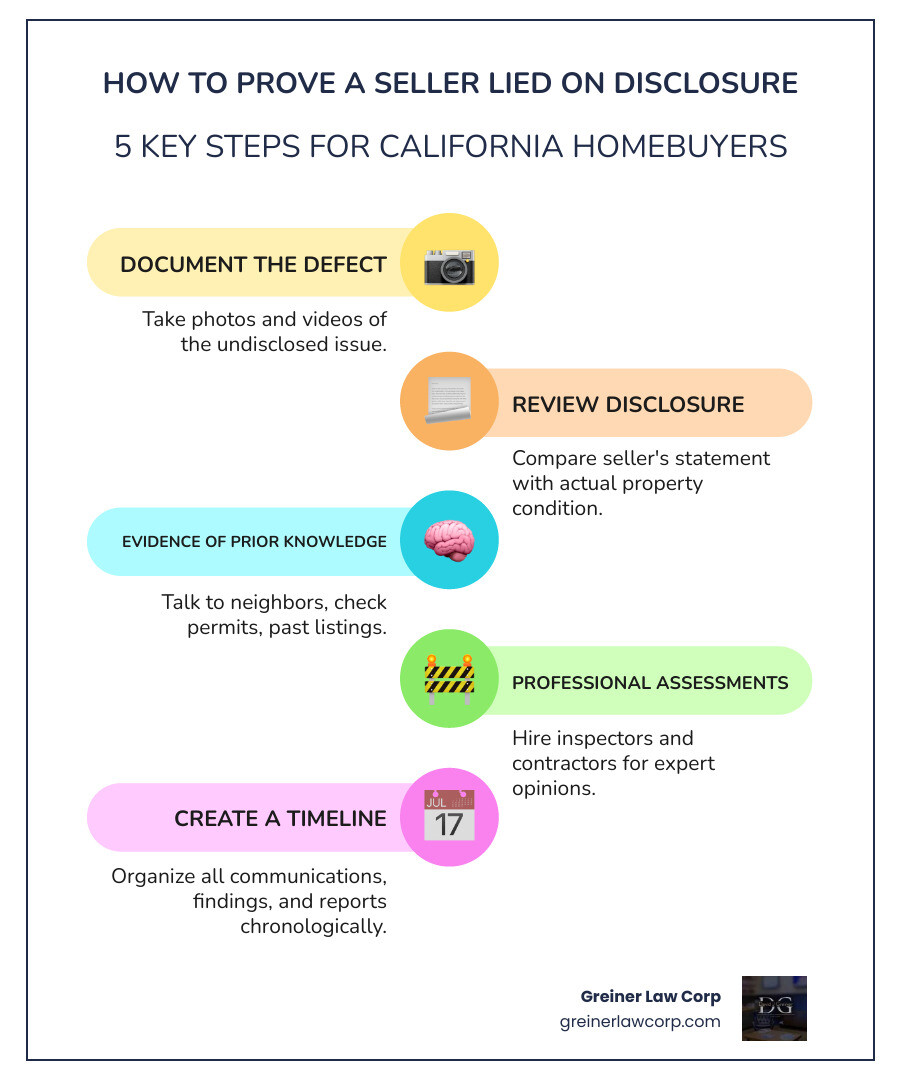
Quick Answer: Steps to Prove Seller Deception
- Document the defect – Take photos and videos of the undisclosed issue
- Review the Seller’s Disclosure Statement – Compare what was disclosed versus what you found
- Gather evidence of prior knowledge – Talk to neighbors, check permit records, review past listings
- Get professional assessments – Hire inspectors and contractors for expert opinions
- Build a timeline – Show when the seller knew about the defect and when you finded it
- Consult a real estate attorney – Understand your legal options and statute of limitations
When purchasing a home, the property condition report is a critical document that provides detailed information about the state of the property. This report helps buyers make informed decisions and protects them from potential issues that could arise after the sale. But what happens if the seller lies on this report?
In California, sellers have a legal duty to disclose any known material defects that could affect your property’s value or your decision to purchase. This isn’t just good practice—it’s the law under California Civil Code § 1102. When a seller intentionally hides problems like foundation cracks, water damage, or pest infestations, they’re committing fraud. The consequences can be devastating for buyers who face unexpected repair bills of tens or even hundreds of thousands of dollars.
The good news? California law provides strong protections for buyers. If you can prove the seller knew about a defect and intentionally failed to disclose it, you have legal remedies available. These include compensation for repairs, recovery of diminished property value, and in severe cases, even rescission of the entire sale.
Finding that your seller lied on their disclosure can feel overwhelming. You’re facing unexpected costs, potential safety issues, and the frustration of being deceived during what should have been an exciting purchase. The research shows that buyers have up to three years to sue for fraud claims, but gathering evidence and taking action quickly is crucial.
My name is David Greiner, Esq., and I’ve spent years helping clients steer complex real estate transactions and business law matters. Throughout my career, I’ve guided numerous buyers through the process of how to prove seller lied on disclosure, helping them recover damages and protect their investments when sellers have failed to meet their legal obligations.
This guide will walk you through the exact steps to prove a seller lied on their disclosure, the evidence you need to collect, and the legal options available to you under California law. Whether you’re dealing with hidden water damage, concealed foundation issues, or undisclosed pest problems, you’ll learn how to build a strong case and seek the compensation you deserve.
Understanding the Seller’s Disclosure Obligation in California
In California, the purchase of a home is one of the biggest investments most people will make. To protect buyers, our state has some of the most stringent disclosure laws in the country. A “property condition report” is a broad term, but in California, the primary document sellers use to fulfill their legal obligations is the Transfer Disclosure Statement (TDS). This pivotal document, often referred to as the “seller’s disclosure,” is a written account of a property’s condition, historical aspects, and known defects or problems.
California law mandates that most sellers of residential property (one to four units) provide buyers with written disclosures about the home or land that could affect a potential buyer’s decision or the amount they are willing to pay. This is enshrined in California Civil Code § 1102 and other related statutes.
The concept of “material facts” is central to these obligations. A material fact is anything that is important or determinative to a buyer’s decision to purchase the property. This means not just obvious structural problems, but also less visible issues that could impact value or desirability. Sellers are not expected to search for defects, but they absolutely must disclose any “known defects” – problems they are aware of.
Historically, real estate transactions operated under the principle of caveat emptor, or “buyer beware.” However, California was among the first states to abandon this rule in real estate, enacting numerous statutes to provide buyers with sufficient information. This evolution means that while buyers still have a responsibility for due diligence, sellers cannot simply remain silent about known problems.
Even in an “as-is” sale, a seller in California still has a duty to disclose known material defects. An “as-is” clause generally means the buyer accepts the property in its visible or observable condition, but it does not relieve the seller of liability for failing to disclose material facts unknown to the buyer, especially in cases of fraud. The significance of a seller’s knowledge of a defect is paramount; without proving the seller knew about the issue, it becomes much harder to hold them liable for non-disclosure.
What Information Must Be Disclosed?
California’s disclosure requirements are extensive and thorough. The TDS covers a broad range of topics, ensuring that buyers receive a comprehensive overview of the property’s condition. Sellers must disclose:
- Structural issues: Problems with the foundation, walls, ceilings, floors, and other load-bearing elements.
- Roof condition: Any past leaks, repairs, or known issues.
- Plumbing systems: Defects in pipes, water heaters, and drainage.
- Electrical systems: Problems with wiring, outlets, and panels.
- Pest infestations: Current or past issues with termites, rodents, or other pests.
- Environmental hazards: Presence of lead-based paint, asbestos, radon, or if the property is in a flood, fire, or earthquake zone (often covered by a separate Natural Hazard Disclosure Report).
- Neighborhood noise or nuisances: Significant noise from neighbors, traffic, or other sources.
- Building code violations: Any known instances where the property does not meet current building standards.
- Unpermitted additions or modifications: Any work done without proper permits, which can lead to future legal or structural problems for the buyer.
Sellers must also disclose if someone died on the property within the last three years, or if a prior occupant had Acquired Immune Deficiency Syndrome (AIDS). If a buyer specifically asks about deaths on the property, the seller must answer truthfully, regardless of the three-year limit.
Seller’s Disclosure vs. Seller’s Disclaimer
It’s important to understand the difference between a seller’s disclosure and a seller’s disclaimer, particularly as some states have different approaches. In California, the primary mechanism is disclosure.
| Feature | Seller’s Disclosure (e.g., California TDS) | Seller’s Disclaimer (“As-Is” Sale without Disclosure) |
|---|---|---|
| Purpose | To inform the buyer of known material defects and property conditions. | To sell the property in its current condition without making specific representations about defects, often shifting more risk to the buyer. (Not typically used in CA residential transactions in lieu of disclosure). |
| Seller’s Obligation | Legally required to disclose all known material defects. | In some states, allows seller to avoid disclosing defects if they genuinely don’t know, or if the state is “non-disclosure.” In California, an “as-is” sale does NOT eliminate the duty to disclose known material defects. |
| Buyer’s Protection | Strong legal protections if seller fails to disclose known defects. | Less protection for the buyer, relies more heavily on buyer’s own inspections. |
| Common Use | Standard for residential real estate transactions in California. | More common in commercial real estate or foreclosure sales, or in states with less stringent disclosure laws (e.g., Massachusetts is a non-disclosure state). |
| Legal Recourse | Buyer can sue for fraud, misrepresentation, or breach if seller lied or omitted. | Buyer’s recourse is more limited; generally must prove active concealment or fraud, even if sold “as-is.” |
How to Prove Seller Lied on Disclosure: A Step-by-Step Guide
Finding a hidden defect after purchasing your home can be disheartening, but we’re here to help you understand how to prove seller lied on disclosure. This process requires diligent evidence collection and strategic action. Look for “red flags” during your initial walkthroughs or inspections, such as fresh paint concealing water stains, vague answers to direct questions, or seller reluctance to allow thorough inspections. These can be early indicators of potential deception.

Step 1: Gather Your Initial Evidence
The moment you suspect a defect was undisclosed, immediate documentation is crucial. This initial evidence forms the backbone of your claim.
- Photographic documentation: Take clear, dated photographs of the defect from multiple angles. Capture close-ups and wider shots to show context.
- Video evidence: Videos can demonstrate dynamic issues like active leaks or structural instability. Narrate what you’re seeing and the date.
- Original Seller’s Disclosure Statement (TDS): This is your primary legal document. Review it carefully to pinpoint where the seller failed to disclose the defect or actively misrepresented its condition.
- Your pre-purchase home inspection report: Compare your inspector’s findings with the seller’s disclosure. Did your inspector miss something the seller knew about? Or did the seller fail to disclose something an inspector couldn’t reasonably find?
- Written repair estimates from licensed contractors: Obtain detailed estimates from reputable, licensed contractors in Victorville, Riverside, San Bernardino, or Los Angeles to quantify the cost of repairing the defect. These estimates are vital for calculating damages.
Step 2: How to prove seller lied on disclosure by showing prior knowledge
Proving the seller knew about the defect is often the most challenging but critical part of your case. It distinguishes an honest mistake from intentional misrepresentation or fraud.
- Talk to neighbors: Neighbors often have valuable historical knowledge about a property, including past issues like recurring leaks, foundation problems, or noisy nuisances that the seller may have tried to conceal.
- Check public records for permits: Unpermitted work is a common undisclosed issue. Visit your local city or county building department in Los Angeles, San Bernardino, or Riverside to check for permits related to any renovations, additions, or repairs. A lack of permits for significant work can indicate the seller was trying to avoid scrutiny.
- Seek contractor records: If the seller claimed a repair was made, try to find records from the contractor. A seller might have obtained repair quotes for the issue but decided not to proceed, which can prove their knowledge.
- Find previous property listings: Sometimes, older listings (from when the seller bought the property or listed it previously) might contain different disclosures or photos that contradict the current disclosure.
- Interview real estate agents involved: Your buyer’s agent and the seller’s agent may have information. In California, agents also have a duty to visually inspect and disclose material facts. If the seller’s agent knew about a defect and failed to disclose it, they could also be liable. The research suggests that the listing agent might have seen different disclosure forms over time, which can be useful evidence.
Step 3: Create a Detailed Timeline
A well-organized timeline helps to clearly demonstrate when the seller likely knew about the defect and when you finded it. This chronological narrative can be incredibly powerful in illustrating intent or negligence.
- Document all communications: Keep records of all emails, texts, and notes from phone calls with the seller, their agent, your agent, inspectors, and contractors.
- Log findy dates: Note the exact date you finded the defect, when you first noticed symptoms, and when you received expert opinions.
- Organize receipts and reports: Arrange all repair bills, inspection reports, and other documents chronologically.
- Create a chronological narrative of events: Write a clear story detailing the sequence of events, from your initial viewing of the property to the findy of the defect and your subsequent actions. This helps piece together the puzzle of the seller’s knowledge and actions.
Common Lies and Omissions on Disclosure Forms
Sellers, unfortunately, have various reasons to conceal property defects, from avoiding costly repairs to speeding up a sale. Understanding these common areas of deception can help you identify potential issues.

Here are some of the most frequent lies or omissions we see on disclosure forms in California:
- Water damage and mold concealment: This is a pervasive problem. Sellers might paint over water stains, replace damaged drywall, or use air fresheners to mask musty odors. Hidden water intrusion can lead to serious mold growth, which is a health hazard and expensive to remediate.
- Structural defects: Issues with the foundation, framing, or load-bearing walls are often covered up. These can range from minor cracks to severe instability, posing significant safety risks and requiring extensive, costly repairs.
- Termite and pest infestations: A seller might fail to disclose a history of termite activity, or ongoing infestations, leading to wood damage and the need for expensive extermination and repairs.
- Faulty wiring and plumbing problems: Electrical issues like overloaded circuits or outdated wiring, and plumbing problems like leaky pipes or slow drains, can be “cosmetically” fixed for a sale but reappear as serious issues for the new owner.
- Boundary disputes and zoning issues: Sellers may omit information about ongoing disputes with neighbors over property lines, or that the property has zoning violations or unpermitted additions that could lead to legal headaches and fines for the buyer.
- Unpermitted work: Many homeowners undertake renovations without obtaining the necessary permits. This can hide structural flaws, electrical hazards, or plumbing issues that don’t meet code, making the new owner liable for bringing the property up to code.
These issues are not just inconvenient; they can significantly impact your property’s value and your safety.
Your Legal Recourse: Options and Remedies
Once you’ve gathered evidence and built a strong case for how to prove seller lied on disclosure, it’s time to consider your legal options. Our firm, Greiner Law Corp, based in California, specializes in real estate litigation and can guide you through these remedies.
Initially, we might send a formal demand letter to the seller, outlining your findings and seeking a resolution. If direct negotiation isn’t successful, alternatives like mediation or arbitration (if stipulated in your purchase contract) can be explored to reach a settlement outside of court.
However, if these avenues fail, you may need to pursue legal action. The primary legal claims against a seller who lied on disclosure typically fall into these categories:
- Breach of contract: If the seller’s disclosure statement was incorporated into the purchase agreement, or if the agreement included representations about the property’s condition that proved false, you might have a claim for breach of contract.
- Negligent misrepresentation: This occurs when a seller makes a false statement about a material fact, believing it to be true, but without reasonable grounds for that belief.
- Fraudulent misrepresentation (or intentional misrepresentation/concealment): This is the strongest claim. It requires proving the seller knew the statement was false (or intentionally concealed a known defect) and made it with the intent to deceive you, and that you relied on that false statement when purchasing the property. Actively covering up a defect (e.g., painting over a leak) is strong evidence of intentional concealment.
How to prove seller lied on disclosure to claim damages
If you successfully prove the seller lied on their disclosure, California law provides several remedies to compensate you for your losses:
- Compensatory damages: These are designed to make you whole again. They typically include the cost of repairs to fix the undisclosed defect and the diminished property value (the difference between what you paid and the property’s actual value with the defect). The research highlights that the true test for damages is often the diminished value, requiring expert appraisal testimony.
- Punitive damages: In cases of egregious fraud or malice (intentional, malicious deception), a court may award punitive damages. These are not to compensate you but to punish the seller for their wrongful conduct and deter others from similar actions.
- Rescission of the sale: In severe cases where the fraud is substantial, the court may order rescission, meaning the sale is reversed. You would return the property to the seller, and they would return your purchase money. This is a rarer remedy but possible.
- Attorney’s fees: Depending on your purchase agreement or specific statutes, you may also be able to recover your legal fees.
The Role of Agents and Inspectors
Real estate transactions involve multiple parties, and their roles in disclosure are crucial:
- Real estate agent liability: In California, real estate brokers and agents have their own disclosure obligations. California Civil Code Section 2079.3 requires them to visually inspect all physically or visually accessible areas of the property in a “reasonable, competent, and diligent” manner. They then complete an “Agent Visual Inspection Disclosure” (AVID). If your agent or the seller’s agent failed to disclose a material fact they reasonably should have finded during their visual inspection, they could also be held liable. However, agents are not generally liable for seller omissions if they didn’t know about the defect themselves.
- Home inspector negligence: While a home inspector’s report is a critical tool for buyers, inspectors can sometimes be negligent. If your pre-purchase inspection failed to identify a defect that a reasonably competent inspector should have found, you might have a claim against the inspector for negligence or breach of contract. Their liability is usually limited by the terms of their contract, but it’s worth investigating.
Best Practices for Buyers to Prevent Deception
Prevention is always better than cure. While we’re here to help when deception occurs, taking proactive steps can significantly reduce your risk of encountering undisclosed defects.
- Thorough home inspection: Never skip a home inspection. Hire a reputable and experienced home inspector. Be present during the inspection and ask questions.
- Specialized inspectors: For older homes or properties with specific concerns (e.g., a history of water issues), consider specialized inspections for roofs, foundations, HVAC, or pests.
- Reviewing disclosures with an attorney: Have an attorney review the Seller’s Disclosure Statement (TDS) and other property documents before you finalize your purchase. Our team at Greiner Law Corp can help you identify red flags or inconsistencies.
- Asking specific questions in writing: Don’t rely solely on the disclosure form. Ask the seller and their agent specific, detailed questions about any concerns you have, and get their responses in writing. Untruthful answers can strengthen a fraud claim.
- Researching permit history: As discussed, check with your local city or county planning department for permit history. This can reveal unpermitted work that the seller failed to disclose.
- Strong contract contingencies: Ensure your purchase agreement includes contingencies that allow you to cancel the deal and get your earnest money back if inspections reveal significant undisclosed defects.
Frequently Asked Questions about Seller Disclosures
Navigating the complexities of seller disclosures can raise many questions. Here, we address some common concerns.
What if the seller claims they didn’t know about the defect?
This is a common defense, and it highlights why proving seller knowledge is so critical. If a seller genuinely didn’t know about a defect, it’s difficult to hold them liable for non-disclosure. However, “willful ignorance” isn’t a defense. If the seller should have known or deliberately avoided finding out about an obvious issue, it could still lead to liability.
We often rely on circumstantial evidence to prove knowledge. For example, if a seller painted over a visible water stain just before selling, it suggests they knew about the leak and tried to conceal it. Similarly, if they received repair estimates but chose not to act on them, that’s strong evidence of prior knowledge. The legal burden of proof is on you, the buyer, to show that the seller either knew or intentionally avoided knowing about the defect.
Does an “as-is” clause protect a seller who lied?
In California, an “as-is” clause does not protect a seller who lied or intentionally concealed a known material defect. While an “as-is” sale means you accept the property in its current visible condition, it does not relieve the seller of their legal duty to disclose known material defects. If you can prove fraud or intentional misrepresentation, the “as-is” clause will not shield the seller from liability under California law.
How long do I have to sue a seller for failure to disclose in California?
The statute of limitations for these types of claims in California varies depending on the nature of your claim:
- Fraud claims: You generally have three years from the date you find the fraud to file a lawsuit. This “findy rule” is crucial because defects are often not found immediately after closing.
- Breach of contract claims: For claims based on a written contract, the statute of limitations is typically four years from the date of the breach.
- Negligent misrepresentation: This also typically falls under a three-year statute of limitations from findy.
While these timeframes might seem generous, act quickly. The sooner you begin gathering evidence and consulting with an attorney, the stronger your case will be. Delays can make it harder to collect evidence and track down witnesses.
Conclusion
Finding that your seller lied on their disclosure can be a challenging experience, but you are not without recourse. By understanding California’s strict disclosure laws and taking the right steps to gather evidence, you can build a strong case to protect your investment.
Remember the key steps: carefully document the defect, gather evidence of the seller’s prior knowledge, create a detailed timeline of events, and understand the common types of defects that are often concealed.
At Greiner Law Corp, we pride ourselves on our business-minded approach, prioritizing our clients’ goals, and helping them manage their risk preferences effectively. With our offices in Victorville, Riverside, San Bernardino, and Los Angeles, we are well-positioned to assist you with California real estate litigation. We understand the nuances of how to prove seller lied on disclosure and are dedicated to guiding you through your legal options.
If you suspect your seller lied on their disclosure, don’t delay. Contact us today to discuss your situation and explore how we can help you seek the justice and compensation you deserve.


