Why Los Angeles Land Use Law Demands Expert Navigation
Finding the right land use attorney los angeles requires understanding the unique complexity of LA’s development landscape. Los Angeles presents one of the most challenging land use environments in the country. Between CEQA requirements, community opposition, and an ever-changing web of state housing laws like SB 35 and Transit Oriented Communities programs, even experienced developers can find themselves lost in the regulatory maze.
As one leading LA land use attorney notes: “Land development is subject to a complex array of federal, state, and local regulatory requirements and intense government scrutiny.” The stakes are high – with LA home to some of the most expensive real estate in the world, a single misstep in the entitlement process can cost millions in delays or kill a project entirely.
Whether you’re developing a mixed-use project, seeking adaptive reuse approvals, or navigating coastal overlays, success depends on having counsel who understands both the legal framework and the political realities of LA’s planning process.
I’m David Greiner, Esq., and I’ve spent years helping businesses steer complex real estate transactions and regulatory challenges. As a land use attorney los angeles business owners trust, I understand that achievement – not billable hours – should be the focus of effective legal representation.
Why Los Angeles Land Use Is a League of Its Own
Los Angeles isn’t just another city when it comes to development – it’s a completely different game. The combination of California’s housing crisis, aggressive state intervention, and local political realities creates a regulatory puzzle that would make even seasoned developers scratch their heads.
Here’s what makes LA so unique: California’s housing shortage has pushed Sacramento to essentially override local control. Laws like SB 35 now streamline approvals for qualifying affordable housing projects, whether cities like it or not. The State Density Bonus Law allows developers to exceed local height and density limits in exchange for affordable units. And the Transit Oriented Communities program sweetens the deal even more near major transit stops.
But here’s where things get interesting (and complicated). Community opposition remains as fierce as ever, and CEQA still applies to most projects. The California Environmental Quality Act requires environmental review that can stretch for months or years. When federal involvement enters the picture, you’re also dealing with NEPA requirements. As one experienced practitioner puts it: “CEQA pervades almost every aspect of California land use work.”
The result? You’re playing three-dimensional chess. Developers must simultaneously satisfy state housing mandates, local zoning requirements, environmental regulations, and community concerns. Success requires understanding not just the law, but the personalities and politics of each jurisdiction.
As a land use attorney los angeles developers rely on, I’ve seen how this complex web can either make or break a project. It’s not enough to know the rules – you need to understand how they interact and where the real pressure points lie.
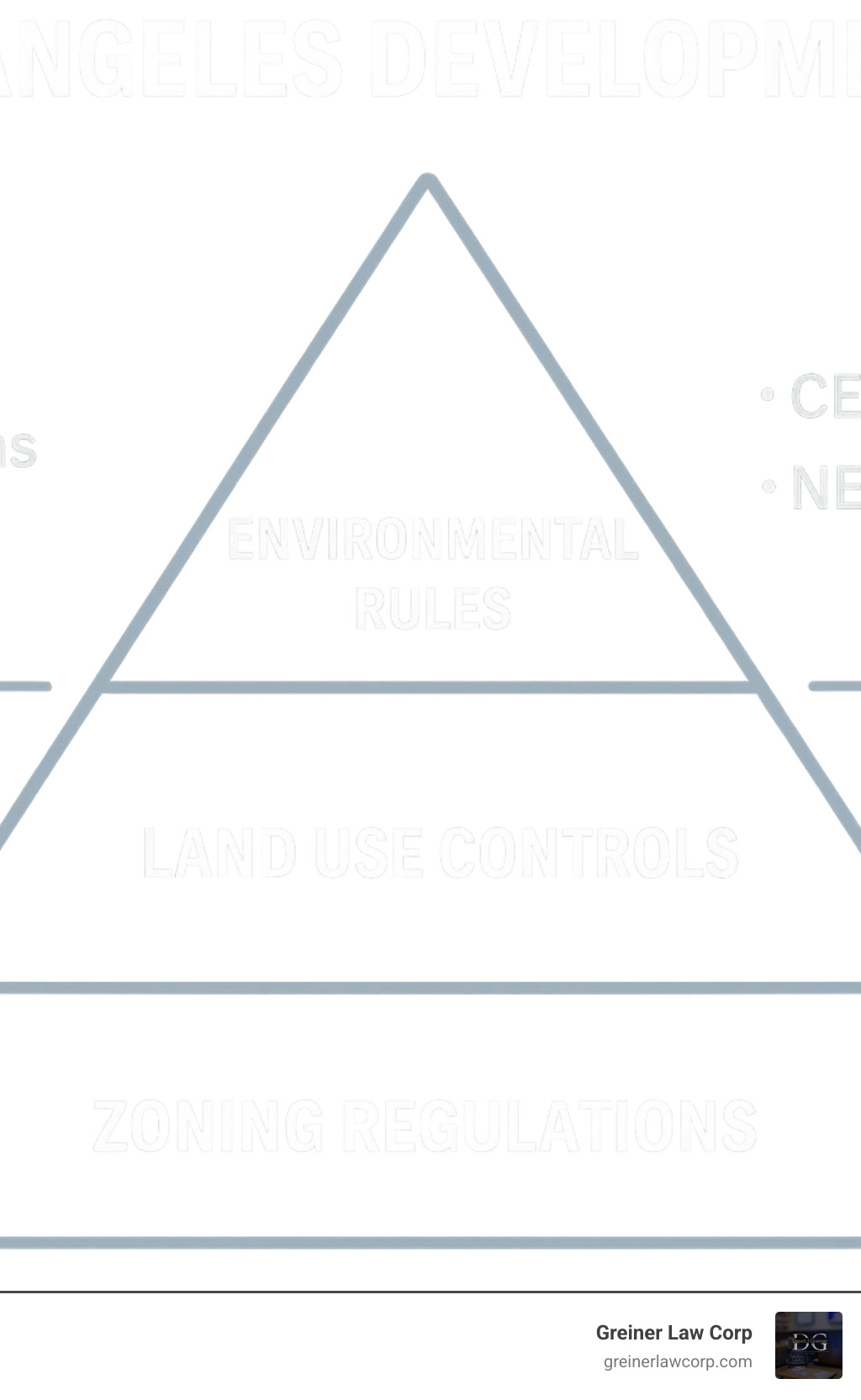
Most Common LA Zoning & Land-Use Pain Points
Some issues come up again and again in our practice. Adaptive reuse projects face particular headaches because they often involve historic buildings with existing non-conforming uses. The city wants to encourage these projects, but then struggles with parking requirements and accessibility compliance. It’s like trying to fit a square peg in a round hole.
Height limits create another frequent battleground. While state law now limits cities’ ability to impose minimum parking requirements, height restrictions remain largely intact. This forces developers into complex negotiations about bulk and massing that can drag on for months. Every foot matters when you’re talking about millions in potential revenue.
Coastal overlays add yet another layer of complexity. The California Coastal Act regulates development in coastal zones, requiring additional permits and often triggering improved environmental review. Projects near the coast must steer both city planning departments and the Coastal Commission – a process that can easily double approval timelines.
Parking reductions have become increasingly common as the state pushes cities to reduce vehicle dependence. AB 2097 now prohibits minimum parking requirements near transit, but implementation varies wildly across LA’s 87+ jurisdictions. What works downtown may not fly in the suburbs.
Recent Statutory Shifts You Need to Track
The legislative landscape changes constantly, and staying current isn’t optional. SB 4, dubbed “Yes In God’s Backyard,” allows religious institutions to develop affordable housing on their property with streamlined approvals. This represents a significant shift in how we think about institutional land use – suddenly, that church down the street might become your competition.
AB 2097’s parking reform goes beyond transit areas, fundamentally changing how cities can regulate parking. The law prohibits minimum parking requirements for most residential and commercial projects within half a mile of transit. For developers, this opens new possibilities but also creates uncertainty about how cities will respond.
The recent Sackett v. EPA Supreme Court decision has ripple effects for wetlands permitting in California. While the case involved federal Waters of the United States jurisdiction, it affects how we approach projects near streams, wetlands, and other water features throughout LA County. Environmental compliance just got a bit more complicated.
What a Land Use Attorney Does in Los Angeles
Think of a skilled land use attorney los angeles as your project quarterback – someone who sees the whole field and knows how to steer every player, rule, and potential obstacle between you and the end zone.
The journey starts with entitlement strategy. This isn’t just about reading zoning codes (though we do plenty of that). It’s about understanding the unwritten rules, knowing which city planner prefers certain approaches, and mapping out the smartest path through LA’s regulatory maze. Each of the region’s many jurisdictions has its own personality – what works in Beverly Hills might crash and burn in Santa Monica.
Due diligence forms the bedrock of everything we do. We dig deep into title histories, hunt down old permits, and uncover zoning mysteries that previous owners might have forgotten about. You’d be amazed how often we find issues lurking in property records that could derail a project months down the road. Catching these early saves our clients both time and money. More info about our title and real estate services.
Then comes the really complex stuff: environmental compliance. In California, CEQA (the California Environmental Quality Act) touches almost everything. We help clients figure out whether their project needs a simple exemption or a full-blown Environmental Impact Report that could take years. The trick is spotting potential environmental issues early and crafting solutions that keep regulators happy without killing project economics.
Litigation defense has become a bigger part of our practice as project opponents get more sophisticated. Every approval decision creates a paper trail that courts will eventually scrutinize. We make sure that trail tells a compelling story that supports your project.
For larger developments, development agreements provide crucial long-term protection. These detailed contracts lock in your entitlements and establish clear rules for moving forward. They require delicate negotiation – balancing what developers need with what cities can realistically deliver.

Navigating CEQA, NEPA & Related Environmental Gauntlets
CEQA is the 800-pound gorilla of California development law. Nearly every significant project in Los Angeles must wrestle with environmental review requirements. The process can range from straightforward categorical exemptions for smaller projects to massive Environmental Impact Reports that analyze everything from traffic patterns to bird migration routes.
EIR scoping happens early but shapes everything that follows. This is where we help determine what environmental issues actually need study. Good scoping keeps the analysis focused and manageable. Poor scoping leads to expensive do-overs and angry planning commissioners.
Smart developers love categorical exemptions because they fast-track approvals. But these exemptions have strict rules and vocal opponents often challenge them. We help clients understand when exemptions make sense and when they’re asking for trouble.
Mitigation monitoring extends far beyond approval day. Those environmental promises your project made? Someone needs to make sure they actually happen. This ongoing compliance work requires coordination with contractors, consultants, and city inspectors throughout construction.
When federal agencies get involved through funding or permits, NEPA (the National Environmental Policy Act) joins the party. Managing both CEQA and NEPA timelines simultaneously requires careful choreography to avoid costly delays. Insight on California environmental law demonstrates just how specialized this field has become.
Building the Administrative Record That Wins in Court
Every land use approval creates a permanent record that courts will examine with a magnifying glass if your project gets challenged. Think of it as building a legal fortress – every document, study, and comment becomes part of your defense.
Agency findings must rest on solid evidence. This means ensuring staff reports actually support their conclusions, that expert studies address all the right questions, and that decision-makers have everything they need to make defensible choices. Gaps in reasoning often prove fatal when judges start asking tough questions.
Expert reports provide the technical backbone for environmental and planning decisions. These studies need to meet professional standards while addressing every issue identified during the review process. Cutting corners on expert work usually backfires spectacularly in court.
Stakeholder comments – both supportive and critical – become permanent parts of the record. We help clients engage with community groups early, identifying concerns that can be addressed through project changes rather than courtroom battles. It’s amazing how much opposition melts away when people feel heard and respected.
The goal isn’t just getting approved – it’s getting approved in a way that sticks when the inevitable legal challenges arrive.
How to Secure Entitlements, Permits & Community Buy-In
Getting your project approved in Los Angeles isn’t just about checking regulatory boxes – it’s about building relationships and understanding the human side of the approval process. The most technically perfect application can get derailed by community opposition, while a well-supported project can often overcome minor technical problems.
Specific plans act like detailed roadmaps for development in many LA neighborhoods. These documents go way beyond basic zoning to spell out exactly what the community wants to see built. When your project aligns with an existing specific plan, you’re already speaking the same language as planners and community members. It’s like having a head start in a race where everyone else is still figuring out the rules.
Conditional use permits open doors to uses that aren’t automatically allowed in your zone. Think of restaurants in residential areas or mixed-use projects in commercial zones. These require public hearings, which means community input becomes crucial. The secret is showing how your project actually improves the neighborhood rather than just fitting within it.
Variances provide relief when zoning rules create genuine hardships for your specific property. But here’s the catch – California courts are notoriously strict about variance standards. You need to prove your property faces unique circumstances that neighbors don’t share. It’s not enough to show that following the rules would be expensive or inconvenient.
Community outreach should start before you even finalize your project design. Smart developers spend time walking the neighborhood, talking to business owners, and attending community meetings. This isn’t just good public relations – it’s practical intelligence gathering. You’ll learn about concerns you never considered and opportunities you might have missed.
Agency coordination becomes especially important for larger projects that need approvals from multiple departments. The building department, fire department, transportation authority, and environmental agencies all have their own priorities and timelines. A skilled land use attorney los angeles developers trust can help orchestrate these relationships so approvals happen in the right sequence.
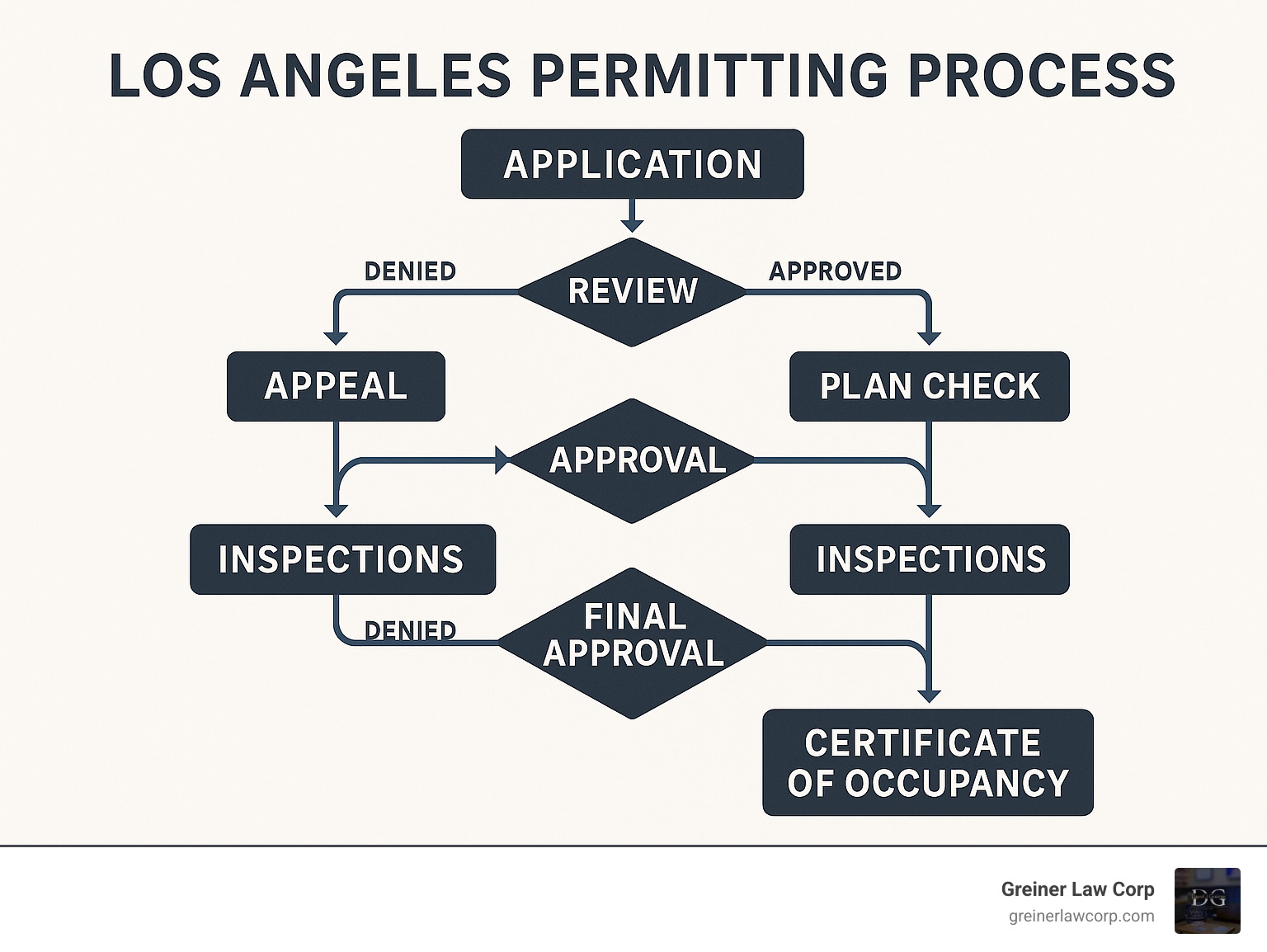
Pre-Application Due Diligence That Saves Months
The best time to solve problems is before they become problems. We’ve seen too many developers rush into applications only to find deal-killing issues months later when time and money are already invested.
Title review often reveals surprises that completely change project feasibility. That utility easement running through your proposed building footprint? The neighbor’s access rights across your parking area? The historic preservation covenant from 1987 that nobody mentioned? These issues are much easier to address during the design phase than after you’ve submitted plans. More info about our title and quiet title services.
Zoning history tells the story of how your property has been used and regulated over time. We dig through old permits, variance approvals, and enforcement actions to understand what development rights exist today. Sometimes we find valuable non-conforming use rights that expand development potential. Other times we find restrictions that require creative solutions.
Feasibility studies bring together all the legal, technical, and economic factors that determine whether your project makes sense. This isn’t just about current zoning – we analyze potential benefits from state housing laws, local planning initiatives, and upcoming regulatory changes. The goal is understanding your realistic options before committing to a specific approach.
Environmental constraints assessment helps identify CEQA issues while you can still modify your project to address them. We review hazardous materials databases, check for sensitive habitat, and analyze potential air quality and noise impacts. Finding these issues early often means simple design changes can avoid months of additional environmental review later.
In-Field Tips for Public Hearings & Comment Letters
Public hearings can feel intimidating, but they’re really conversations about how your project fits into the community’s vision for itself. Success comes from preparation and authenticity, not polished presentations that sound like marketing pitches.
Talking points should focus on community benefits rather than project features. Planning commissioners want to understand how your project helps solve neighborhood problems – whether that’s providing needed housing, creating local jobs, or improving walkability. They care less about your architectural awards and more about how you’re making their community better.
Coalition building means identifying natural allies early in the process. Labor unions interested in construction jobs, affordable housing advocates, environmental groups supporting transit-oriented development, and local business owners who see economic benefits can all provide crucial support. These relationships take time to develop, so start early.
Timing strategies can make the difference between approval and controversy. Understanding the political calendar, commission workloads, and other pending issues helps determine when to bring your project forward. Sometimes waiting a few months for a better political climate is the smartest move you can make.
The key is remembering that behind every approval process are real people trying to make good decisions for their community. When you approach the process with respect for those concerns and genuine solutions to offer, success becomes much more achievable.
Choosing the Right Land Use Attorney Los Angeles
Selecting the right land use attorney los angeles can make or break your project. The field requires a unique combination of legal expertise, political savvy, and project management skills that not all attorneys possess.
Start with a credential checklist that goes beyond basic bar admission. Look for attorneys with specific experience in CEQA compliance, zoning law, and administrative proceedings. Board certifications in real estate or environmental law provide additional credibility, though they’re not essential if the attorney has demonstrable experience.
Local agency relationships matter enormously in land use practice. Attorneys who regularly appear before planning commissions and city councils develop working relationships with staff and decision-makers that can facilitate smoother approvals. However, be wary of attorneys who promise outcomes based solely on their relationships rather than the merits of your project.
Fee models vary significantly in land use practice. Some attorneys work on hourly rates, others offer fixed fees for specific services, and some will consider success-based arrangements for larger projects. The key is finding a structure that aligns the attorney’s incentives with your project goals.
Project management style becomes critical for complex entitlements that may take years to complete. Some attorneys prefer to handle everything themselves, while others build teams that include planners, environmental consultants, and other specialists. Neither approach is inherently better, but you should understand how your attorney works and whether their style fits your needs.

Must-Ask Questions for Your Prospective Land Use Attorney Los Angeles
Before hiring any land use attorney los angeles, ask specific questions that reveal their experience and approach to your type of project.
Track record questions should focus on similar projects in similar jurisdictions. Ask for specific examples of projects they’ve shepherded through the approval process, including timelines and any challenges encountered. Be suspicious of attorneys who can’t provide concrete examples or who seem to exaggerate their role in successful projects.
Timeline estimates help set realistic expectations and budget accordingly. Experienced attorneys should be able to provide rough timelines based on project complexity and jurisdiction. However, be wary of attorneys who promise unrealistically fast approvals or who can’t explain the factors that might cause delays.
Litigation approach reveals how the attorney handles opposition and legal challenges. Some attorneys prefer to negotiate and compromise, while others take a more aggressive stance. Neither approach is inherently better, but you should understand their philosophy and how it aligns with your risk tolerance.
Billing structure questions should cover not just hourly rates but also how costs are managed and reported. Ask about budgeting for expert consultants, filing fees, and other project costs. Transparency in billing is essential for maintaining a good working relationship throughout a long entitlement process.
Red Flags When Hiring a Land Use Attorney Los Angeles
Certain warning signs should make you think twice about hiring a particular attorney, regardless of their credentials or reputation.
Over-promising represents the biggest red flag in land use practice. Any attorney who guarantees specific outcomes or promises unrealistically fast approvals either doesn’t understand the process or isn’t being honest about the challenges you’ll face. Good attorneys explain risks and provide realistic timelines.
Lack of CEQA depth can doom California projects before they start. Environmental compliance is so central to California land use that any attorney without substantial CEQA experience is likely to miss critical issues or make costly mistakes. Ask specific questions about their environmental law background.
Weak government contacts might indicate an attorney who doesn’t regularly practice in your jurisdiction. While relationships aren’t everything, attorneys who are unknown to planning staff and commissioners may face unnecessary skepticism or delays.
Poor communication habits often become apparent during initial consultations. If an attorney doesn’t return calls promptly, fails to explain complex issues clearly, or seems disorganized, these problems will likely worsen during a stressful entitlement process.
Litigation, Appeals & Staying Ahead of Legal Shifts
Even with perfect planning and community support, your project might face legal challenges. Opponents don’t need to win in court – they just need to delay your project long enough to make it financially unviable. Understanding how to handle these challenges can mean the difference between project success and failure.
Writ of mandate proceedings are the weapon of choice for project opponents in California. These lawsuits claim that city officials exceeded their authority, skipped required procedures, or made decisions without proper evidence. The good news? Courts give agencies substantial deference when the administrative record is solid. Scientific research on community engagement demonstrates how thorough preparation prevents most successful challenges.
Administrative appeals offer a less expensive first line of defense. Most cities allow appeals of planning commission decisions to the city council, and some have additional appeal layers. These proceedings move faster than court cases and cost a fraction of litigation expenses. More importantly, winning at the administrative level often discourages opponents from pursuing court challenges.
Settlement leverage depends heavily on how well you’ve built your case during the approval process. Opponents are more likely to negotiate reasonable settlements when they see a strong administrative record and experienced legal counsel. However, every settlement sets a precedent – giving in too easily on one project can encourage challenges to future developments.
Recent case studies reveal a clear pattern: projects with genuine community benefits and thorough environmental analysis survive legal challenges at much higher rates. Courts aren’t impressed by token gestures, but they do recognize projects that address real community needs while following proper procedures.
Leveraging Mediation & Alternative Resolutions
Not every dispute needs to become a courtroom battle. Smart developers often find that alternative dispute resolution saves both time and money while preserving relationships in the community.
Early neutral evaluation brings in an experienced mediator or retired judge to assess each side’s position objectively. This process helps everyone understand what would likely happen in court, which often encourages more realistic settlement discussions. It’s like getting a preview of trial without the expense and delay.
Tolling agreements pause the litigation clock while parties negotiate. These agreements prevent statute of limitations deadlines from expiring during settlement talks. This breathing room often leads to creative solutions that wouldn’t emerge under the pressure of impending court deadlines.
Mediation works best when everyone has something to gain. Successful mediations often involve project modifications that address legitimate community concerns while preserving the developer’s core objectives. The key is identifying win-win solutions that weren’t obvious during the adversarial approval process.
The beauty of alternative resolution is that it allows face-to-face conversations between developers and community members. These discussions often reveal that opposition stems from misunderstandings or concerns that can be addressed through project changes rather than litigation.
Post-Approval Defense Strategies
Getting your approvals is just the beginning. Protecting those approvals from legal challenge requires ongoing vigilance and smart planning throughout the development process.
Statute-of-limitations monitoring is critical because California law sets specific deadlines for different types of challenges. CEQA challenges generally must be filed within 30 days of project approval, while other challenges may have longer deadlines. Missing these deadlines can be fatal to an opponent’s case, but the rules are complex and vary by situation.
Record supplementation sometimes becomes necessary when new information emerges after approval or when litigation reveals gaps in the original record. This process must be handled carefully because adding new materials can create new grounds for challenge. The goal is strengthening your defense without opening new avenues of attack.
Escrow contingencies should account for potential litigation delays in your real estate transactions. Sophisticated buyers and lenders understand that land use approvals face challenge risks and want appropriate protections. Building realistic timelines and contingencies into your deals prevents financing problems when challenges arise.
The most effective defense strategy starts during the approval process itself. Building a bulletproof administrative record while maintaining positive community relationships creates the strongest possible foundation for defending your project. As a land use attorney los angeles developers trust, I’ve seen too many projects fail because developers treated approval as the finish line rather than the starting gate.
Frequently Asked Questions about LA Land Use Lawyers
Getting clear answers about LA land use law can feel impossible when you’re drowning in acronyms and legal jargon. Here are the questions we hear most often from clients, with straight answers that actually help.
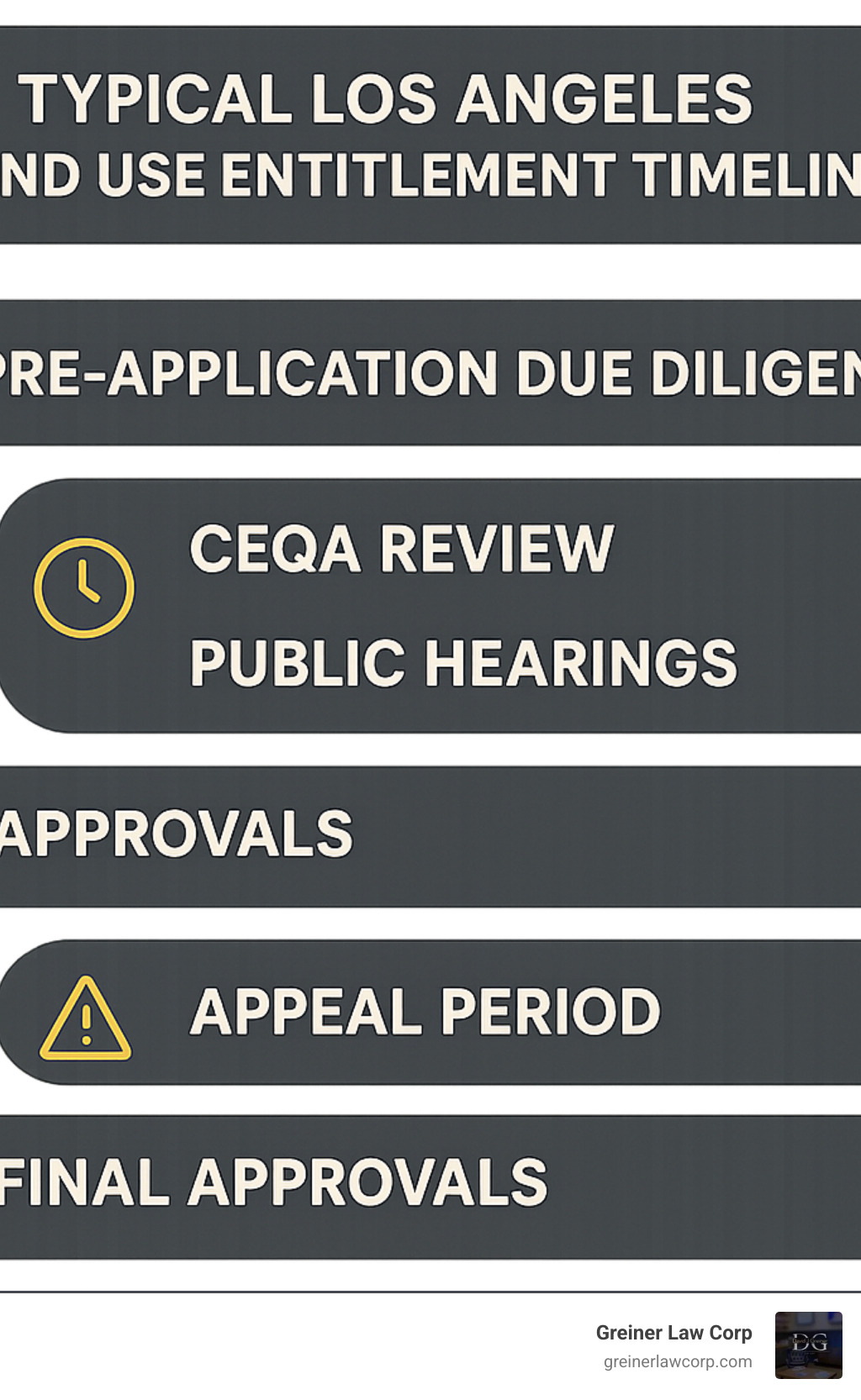
What’s the typical entitlement timeline in Los Angeles?
The honest answer? It depends on what you’re building and where you’re building it. But here’s what we typically see in practice.
Simple projects that only need basic approvals might take 3-6 months. Think small commercial tenant improvements or residential additions that don’t trigger major review. These are the lucky ones.
Complex developments are a different story entirely. Mixed-use projects, major commercial developments, or anything requiring significant environmental review can easily take 2-3 years or more. We’ve seen some projects stretch even longer when they hit unexpected snags.
The CEQA process alone can add 6-18 months to your timeline. Initial environmental studies typically take 2-3 months, but if you need a full Environmental Impact Report, plan on 12-18 months including all the public review periods and response to comments.
Here’s some good news: state housing laws like SB 35 can dramatically speed things up for qualifying affordable housing projects. These streamlined processes can potentially cut approval periods to 6-12 months. The catch? The requirements are strict, and not every project qualifies.
Our advice? Always plan for longer timelines than you initially expect. LA’s approval process has a way of surprising even experienced developers.
How do attorney fees work for land-use matters?
Land use attorney los angeles fees typically range from $300-800 per hour, depending on experience and case complexity. But the hourly rate only tells part of the story – what really matters is the total project cost.
For simple zoning matters like variances or minor use permits, you might spend $5,000-15,000 in legal fees. These are relatively straightforward cases that don’t require extensive environmental review.
Complex entitlements are where costs can really add up. Major developments requiring CEQA compliance, multiple discretionary approvals, and extensive community outreach can easily reach $50,000-200,000 or more in legal fees.
Environmental compliance represents a significant portion of most budgets. CEQA work alone often requires $25,000-100,000 in combined legal and consulting fees, depending on the level of review required.
Many experienced attorneys offer alternative fee arrangements for larger projects. This might include fixed fees for specific phases of work or success-based arrangements tied to project milestones. These structures can provide more predictability while maintaining quality representation.
The key is having an honest conversation upfront about budget expectations and fee structures. A good land use attorney los angeles will help you understand not just their fees, but the total cost of getting your project approved.
Can I challenge a neighbor’s project approval?
Yes, you can challenge a neighbor’s project approval, but success requires more than just disliking what they’re planning to build. California law provides specific grounds for challenging land use approvals, along with strict deadlines you must meet.
Most land use approvals can be challenged within 30 days of the final decision, though some environmental determinations have longer periods. Miss this deadline, and you’re generally out of luck regardless of how strong your case might be.
Successful challenges typically focus on legal violations rather than personal preferences. Common grounds include procedural violations (like inadequate public notice), inadequate environmental analysis under CEQA, or agency findings that aren’t supported by substantial evidence in the record.
Simply opposing a project’s size, design, or character usually isn’t enough. Courts give significant deference to local agencies’ planning decisions, so you need to show they made legal errors or failed to follow required procedures.
The cost of litigation can be substantial – often ranging from $50,000-200,000 or more for complex cases. California’s prevailing party attorney fee provisions add another layer of risk: if you lose, you might have to pay the developer’s legal costs in addition to your own.
Before filing any challenge, consider whether negotiation might achieve your goals more effectively. Sometimes developers are willing to modify projects to address legitimate neighbor concerns, avoiding the uncertainty and expense of litigation for everyone involved.
If you’re considering challenging a project approval, consult with an experienced land use attorney los angeles early in the process. We can help you understand whether you have viable legal grounds and what the likely costs and timeline would be.
Conclusion
Navigating Los Angeles land use law is like solving a puzzle where the pieces keep changing shape. You need more than just legal expertise – you need someone who understands the local politics, environmental regulations, and community dynamics that can transform a promising project into a costly nightmare.
The regulatory landscape shifts constantly. New state housing laws pop up every legislative session. Environmental regulations evolve with court decisions. Local ordinances change with political winds. What worked last year might not work today. Future-proof projects require attorneys who stay current with these changes and can pivot strategies when needed.
Risk management should drive every decision you make in the land use process. This means spotting potential roadblocks before they become expensive problems. It means building administrative records that will hold up in court. And it means staying flexible enough to address the curveballs that every project seems to throw.
Here’s the thing about land use work – it’s not just about knowing the law. It’s about understanding how Planning Commissioner Smith thinks differently than Planning Commissioner Jones. It’s about knowing which staff members can help expedite your application and which ones might slow it down. It’s about reading the room at public hearings and adjusting your approach accordingly.
At Greiner Law Corp, we’ve learned that successful land use attorney los angeles representation requires a business-minded approach. We don’t just tell you what the law says – we help you figure out how to achieve your goals while managing the regulatory and political risks that come with the territory.
Our experience across Los Angeles, Riverside, San Bernardino, and Victorville has taught us that each jurisdiction has its own personality. What flies in downtown LA might crash and burn in a suburban city council meeting. Local knowledge isn’t just helpful – it’s essential.
Whether you’re planning a small adaptive reuse project or a major mixed-use development, the right legal counsel makes all the difference. We’ve seen too many projects stumble because developers tried to cut corners on legal representation. The investment in experienced counsel pays for itself through faster approvals, reduced litigation risk, and better project outcomes.
More info about our comprehensive real estate legal services and how we can help protect your development investments while achieving your business objectives.
Remember this golden rule of Los Angeles land use: the best defense is a good offense. Start with experienced counsel. Plan thoroughly. Build the relationships and records that will carry your project through to successful completion. Because in this business, there are no do-overs – only expensive lessons.
The land use game in LA isn’t getting any easier. But with the right team and the right approach, even the most complex projects can succeed. That’s what we’re here for.


