Understanding Your Real Estate Closing Statement: The Final Step in Your Transaction
A closing statement is the detailed financial summary that reconciles all costs, credits, and payments between the buyer and seller in a real estate transaction. It serves as the final accounting document that shows exactly where every dollar goes—from the purchase price and loan amounts to prorated property taxes, escrow fees, title insurance, and real estate commissions.
Key facts about closing statements:
- Purpose: Records all financial details of buying or selling a property
- Who prepares it: Escrow companies, title companies, or real estate attorneys
- What it includes: Purchase price, deposits, loan costs, prorated expenses, fees, and commissions
- For buyers: Shows amounts due at closing, including down payment and closing costs
- For sellers: Calculates net proceeds after paying off mortgages and transaction costs
- Legal status: Becomes a binding document once signed by both parties
- Review period: The final Closing Disclosure must be provided at least three business days before closing
If you’re buying or selling commercial property or navigating a complex real estate transaction, this document represents the culmination of weeks or months of negotiation and due diligence. Every line item matters. A single error in proration calculations, an unexplained fee, or a missing credit can cost you thousands of dollars.
The closing statement differs from other documents you’ll encounter in the process. It’s not the same as a Closing Disclosure (which is specifically for residential mortgage loans) or a closing argument in court (though they share the same name). Understanding these distinctions helps you know what to expect and what to review.
As David Greiner, Esq., I’ve guided business owners through countless real estate transactions during my years practicing transactional law and serving as president of Greiner Buick GMC, where I personally managed commercial property acquisitions and sales. My business-focused approach means I prioritize your goals and ensure you understand every financial detail on your closing statement before you sign.
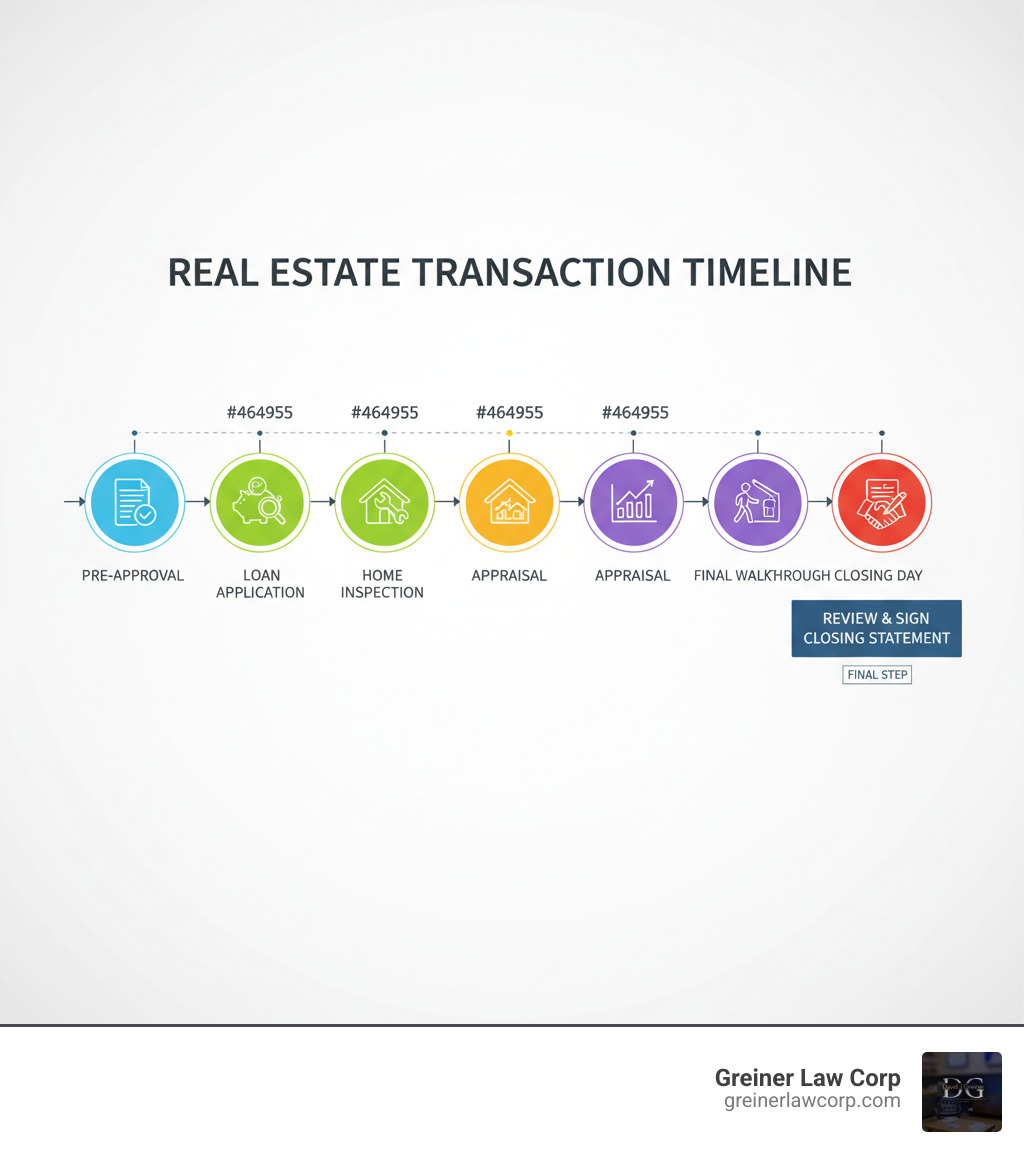
What is a Real Estate Closing Statement?
Think of your closing statement as the final scorecard for your property transaction. It’s the document that shows exactly where every dollar went—who paid what, who received what, and how all the numbers add up at the end.
The main job of a closing statement is financial reconciliation. It creates a complete picture of the money changing hands between buyer and seller. Whether you’re buying a small retail space or selling a commercial building, this document ensures everyone knows exactly what they’re paying for and what they’re receiving.
In most transactions, a neutral third party like an escrow company, a title company, or a real estate attorney prepares this document. In California, escrow companies typically handle this responsibility. They act as an impartial referee, making sure the transaction closes fairly for everyone involved.
Your closing statement includes the purchase price, deposits, loan amounts, and a detailed breakdown of every cost and credit. For buyers, it shows the total amount due at closing. For sellers, it calculates your net proceeds after paying off any existing mortgage and transaction costs.
Once both the buyer and seller sign it, this document becomes legally binding. That signature means both parties agree to every financial detail listed. It’s not just a summary—it’s proof that the transaction happened exactly as documented.
To learn more about what these documents contain, the Consumer Finance Protection Bureau offers a helpful guide on closing disclosures.
Let’s clear up some confusion by looking at how your closing statement differs from other documents you might encounter:
| Feature | Closing Statement | Closing Disclosure | ALTA Settlement Statement |
|---|---|---|---|
| Primary Purpose | Complete financial summary for the entire transaction | Shows loan terms and costs for the borrower | Standardized form listing all transaction costs |
| Issued By | Escrow, title company, or attorney | Your lender | Title company or settlement agent |
| Parties Involved | Buyer and seller (all financial aspects) | Borrower (loan-specific details) | Buyer and seller (itemized costs) |
| When Issued | At or just before closing | At least three business days before closing | Often used as the official closing statement |
| Legally Mandated | Yes, for final accounting | Yes, by CFPB for residential loans | Industry standard, not always legally required |
| Focus | All debits and credits, including non-loan items | Loan costs, interest, monthly payments | Itemizes all charges for both parties |
Closing Statement vs. Closing Disclosure
If you’re getting a mortgage for a residential property, you’ll receive a Closing Disclosure in addition to a closing statement. They are not the same thing.
The Closing Disclosure is a standardized five-page form from your lender, required by the TILA-RESPA Integrated Disclosure (TRID) rule. It focuses specifically on your loan: the final terms, projected monthly payments, and all closing costs tied to the mortgage.
By law, lenders must provide this form at least three business days before your closing date. This period gives you time to compare the final terms against your initial Loan Estimate and ask questions about any discrepancies. We always tell our clients to use those three days wisely.
The closing statement provides a broader summary of the entire transaction, not just the loan. It includes items that might not appear on your Closing Disclosure, like real estate commissions, specific prorations between the buyer and seller, and the complete distribution of funds.
Think of it this way: the Closing Disclosure is a close-up on your loan, while the closing statement is the wide-angle shot of the entire financial transaction.
For more detailed information about these forms, the Consumer Financial Protection Bureau has published a comprehensive Loan Estimate and Closing Disclosure guide that walks through both documents.
Closing Statement vs. Legal Argument
To avoid confusion, note that a “closing statement” in real estate is completely different from a “closing argument” in a courtroom. In a trial, a closing argument is an attorney’s final speech to the judge or jury, summarizing evidence to persuade them to rule in their client’s favor. In real estate, the closing statement is strictly a financial document that finalizes the transaction. We are focused on the financial document—the one with all the line items showing where your money went.
Anatomy of Your Closing Statement: A Detailed Breakdown
Let’s look at how your closing statement is put together. Think of it as a financial X-ray of your transaction—every dollar accounted for, every penny tracked.
Most closing statements follow a standardized format, often based on the ALTA (American Land Title Association) Settlement Statement. The document is organized like a balance sheet, with debits (amounts you owe) on one side and credits (amounts you’ve paid or are receiving) on the other.

For every entry, there’s usually a corresponding debit and credit that ensures everything balances. The purchase price, for example, is a credit to the seller (money they receive) and a debit to the buyer (money they owe). Your earnest money deposit is a credit to you as the buyer, reducing what you owe at closing.
One of the trickiest parts is prorated expenses. These are adjustments made to split costs like property taxes and HOA fees fairly between the buyer and seller based on the closing date. For example, if the seller prepaid property taxes for the full year, you will credit them for the portion of the year you will own the property. It’s all about making sure each party pays only for the time they actually own the property. If you want to dive deeper into the mechanics, reviewing an Anatomy of a Closing Statement can be helpful. While this resource is from Hawaii, the principles are consistent across California transactions.
Key Components of a Real Estate Closing Statement
Every closing statement is unique, but most include these common line items:
- Purchase Price: The agreed-upon sale price of the property.
- Earnest Money Deposit: A credit to the buyer for the deposit already paid.
- Loan Amount: A credit to the buyer, representing the funds from their lender.
- Prorated Property Taxes & HOA Fees: Adjustments that divide these costs fairly between the buyer and seller based on the closing date.
- Title Insurance: Fees for policies that protect the lender and new owner from future disputes over property ownership.
- Escrow Fees: Charges from the neutral third party that manages the closing process.
- Real Estate Commissions: The fees paid to the real estate agents, typically covered by the seller.
- Recording Fees: Costs paid to the county to officially record the new deed and mortgage.
- Lender Fees: For buyers with a mortgage, these include origination charges, appraisal fees, and credit report fees.
- Attorney Fees: If legal counsel is involved, their fees will be listed.
Understanding the Seller’s Closing Statement
If you’re selling property, your closing statement answers one crucial question: how much money will I actually walk away with? This is your net proceeds.
You start with the sale price as a credit. Then come the deductions (debits). The largest is often the mortgage payoff, which includes the principal balance and any accrued interest. Real estate commissions are also a significant debit, typically paid by the seller.
Next, the statement adjusts for prorated property taxes and HOA dues. If you’ve prepaid these, you’ll get a credit from the buyer. If they are due, you’ll be debited for your share. Any seller concessions you agreed to, like contributing to the buyer’s closing costs, also appear as debits.
You’ll also see debits for your share of title insurance, escrow fees, and any local transfer taxes. Finally, any outstanding liens or judgments against the property must be paid from your proceeds before the transaction can close.
After all these calculations, the bottom line shows your net proceeds—the actual check you’ll receive. This document is essential for calculating capital gains taxes, so keep it with your permanent records. Understanding your closing statement before closing day means no surprises when you sign.
How to Review Your Statement and Avoid Common Pitfalls
When you sit down to review your closing statement, you’re at the final, critical step. This review is where you protect yourself from costly mistakes. A single error in proration calculations, an unexplained fee, or a missing credit can cost you thousands of dollars.
Most of these errors are avoidable with a careful, methodical review. You don’t need to be a real estate attorney to spot them—you just need to know what to look for.
Start by gathering your purchase agreement, any addendums, your Loan Estimate (if you’re the buyer), and written agreements about credits. Your review is a cross-referencing exercise: does the purchase price on the closing statement match your contract? Are all negotiated terms reflected accurately?
Common errors include typos in names or addresses, which can delay closing, and incorrect proration calculations for property taxes or HOA fees. Missing credits are another frequent problem. If the seller agreed to contribute $5,000 toward your closing costs, that must appear as a credit on your statement. Also, watch for unexplained or duplicate fees that weren’t disclosed in earlier documents. If you see a charge you don’t recognize, ask about it. This is your money, and you have a right to understand where it’s going.
Actionable Steps for a Smooth Closing
When you receive your closing statement, set aside time to review it systematically. Don’t rush.
- Compare to Your Loan Estimate: For buyers, your final costs, interest rate, and loan amount should closely match the Loan Estimate you received from your lender. Major differences are a red flag.
- Check Personal Information: Verify that all names, addresses, and property details are spelled correctly to avoid recording issues with the county.
- Verify Loan Terms: Confirm the interest rate, loan type (fixed or adjustable), and loan amount are exactly what you agreed to.
- Confirm All Credits: Ensure any negotiated seller credits for repairs or closing costs are listed and correctly applied. We’ve seen deals where missing credits cost buyers thousands.
- Question Unfamiliar Charges: Ask your escrow officer or attorney to explain any fees you don’t recognize or that weren’t previously disclosed.
- Review Prorations: Double-check the calculations for property taxes and HOA fees to ensure they are split correctly based on the closing date. Errors here are surprisingly common.
- Conduct a Pre-Closing Walkthrough: Before signing, walk through the property one last time to ensure it’s in the agreed-upon condition. If not, you may need to negotiate last-minute adjustments to the statement.
We work with our clients to review these documents thoroughly, explaining every line item and catching potential issues before they become problems. Our business-minded approach means we’re focused on your bottom line.
If something doesn’t look right, don’t let anyone pressure you into signing. You have the right to delay closing until all your questions are answered and any errors are corrected. A few extra days of due diligence is always worth it.
Frequently Asked Questions about Closing Statements
Over the years, we’ve guided countless clients through their real estate transactions, and we’ve noticed the same questions come up time and again. Let’s tackle the most common ones we hear about closing statements.
Who prepares the closing statement?
A neutral third party prepares this important financial document. This is typically an escrow company, a title company, or a real estate attorney here in California.
Their job is to act as an impartial referee, ensuring every dollar is accounted for and distributed correctly to the seller, buyer, agents, lenders, and other service providers. This neutrality is crucial for protecting everyone involved and preventing disputes.
In our practice areas across Los Angeles, San Bernardino, Riverside, and Victorville, we typically see escrow companies handling this role.
Is a closing statement legally binding?
Yes. Once you and the other party sign the closing statement, it becomes a legally binding document. Your signature confirms that you agree to every line item—the final price, the distribution of funds, all fees and credits, and the final amounts being paid or received.
This legal weight is why we are so adamant about reviewing every detail before you sign. If something looks off, you must address it before putting pen to paper. Once the document is signed, correcting errors becomes significantly more complicated.
Can I negotiate the fees on my closing statement?
By the time you receive your final closing statement, most fees are already locked in. The time for negotiation is much earlier in the process.
- For buyers, this means negotiating lender fees (like origination fees) when you first apply for a loan and receive your Loan Estimate.
- For sellers, real estate commissions should be negotiated when signing the listing agreement with an agent.
At the closing table, the focus shifts from negotiation to verification. Your goal is to ensure the final numbers match what you previously agreed upon. However, if you spot a clear error or an unauthorized charge, you should absolutely demand a correction before signing.
Conclusion

You’ve made it to the finish line. The closing statement sitting in front of you represents more than columns of numbers and legal terminology—it’s the final chapter of your real estate journey, the moment where all your planning, negotiation, and due diligence come together in one comprehensive document.
We know this can feel overwhelming. After weeks or months of working toward this goal, you’re suddenly faced with pages of financial details that need your careful attention. But here’s the truth: understanding your closing statement is what transforms you from someone going through the motions into someone truly empowered in their real estate transaction. Whether you’re expanding your business with a new commercial property or selling an investment that’s served you well, this financial clarity matters.
At Greiner Law Corp, we’ve guided countless clients across California—from the busy streets of Los Angeles to the growing communities of Victorville, San Bernardino, and Riverside—through this exact moment. Our business-minded approach means we don’t just explain what’s on your closing statement; we help you understand why it matters for your specific goals and risk preferences. We turn what looks like an intimidating financial document into a clear, manageable roadmap.
The peace of mind that comes from knowing every line item is accurate, every credit is accounted for, and every fee is justified? That’s what we’re here to provide. Your real estate transaction deserves expert legal guidance, especially at this crucial final step.
Don’t sign off on the biggest transaction of your year—or maybe your life—without complete confidence in the numbers. We’re here to review your closing statement with you, answer your questions, and ensure your interests are fully protected.
Learn more about managing closing costs in your real estate transaction.


