Steer Your Land Purchase with Confidence
Looking for a blank California vacant land purchase agreement? Here’s a quick guide to help you find and use one:
- Where to Find It:
- California Association of REALTORS® (C.A.R.) Business Products
- Legal template websites (LawDistrict, DocHub)
- Your real estate agent or title company
County recorder’s offices
Key Components Required:
- Buyer and seller information
- Property legal description and APN
- Purchase price and deposit details
- Financing terms
- Contingencies and due diligence periods
Required disclosures
Essential California Disclosures:
- Natural Hazard Disclosure Statement
- Environmental hazards information
- Commercial Earthquake Safety booklet (for pre-1975 properties)
Purchasing vacant land in California involves specific legal requirements that differ from residential transactions. A properly executed agreement protects both parties while ensuring compliance with state laws.
I’m David Greiner, Esq., a business-focused attorney with experience in real estate transactions including the preparation and review of blank California vacant land purchase agreements.
What Is a California Vacant Land Purchase Agreement?
When buying undeveloped land in California, the blank California vacant land purchase agreement becomes your most important document. It’s the roadmap guiding both buyer and seller through the transaction.
This legally binding contract spells out how the vacant land will change hands. California’s Statute of Frauds requires these agreements to be in writing to be enforceable, protecting all parties by ensuring clarity about what was agreed upon.
Your agreement serves multiple purposes: identifying the specific property, establishing the purchase price, creating a timeline for contingencies, and spelling out responsibilities for costs and tasks. It also incorporates state-mandated disclosures that sellers must provide.
Depending on your situation, your blank California vacant land purchase agreement might take different forms:
- Standard purchase agreement for traditional bank financing
- Installment land contract for seller financing, where you gain equitable title while the seller retains legal ownership until full payment
- Streamlined agreement for simple all-cash deals
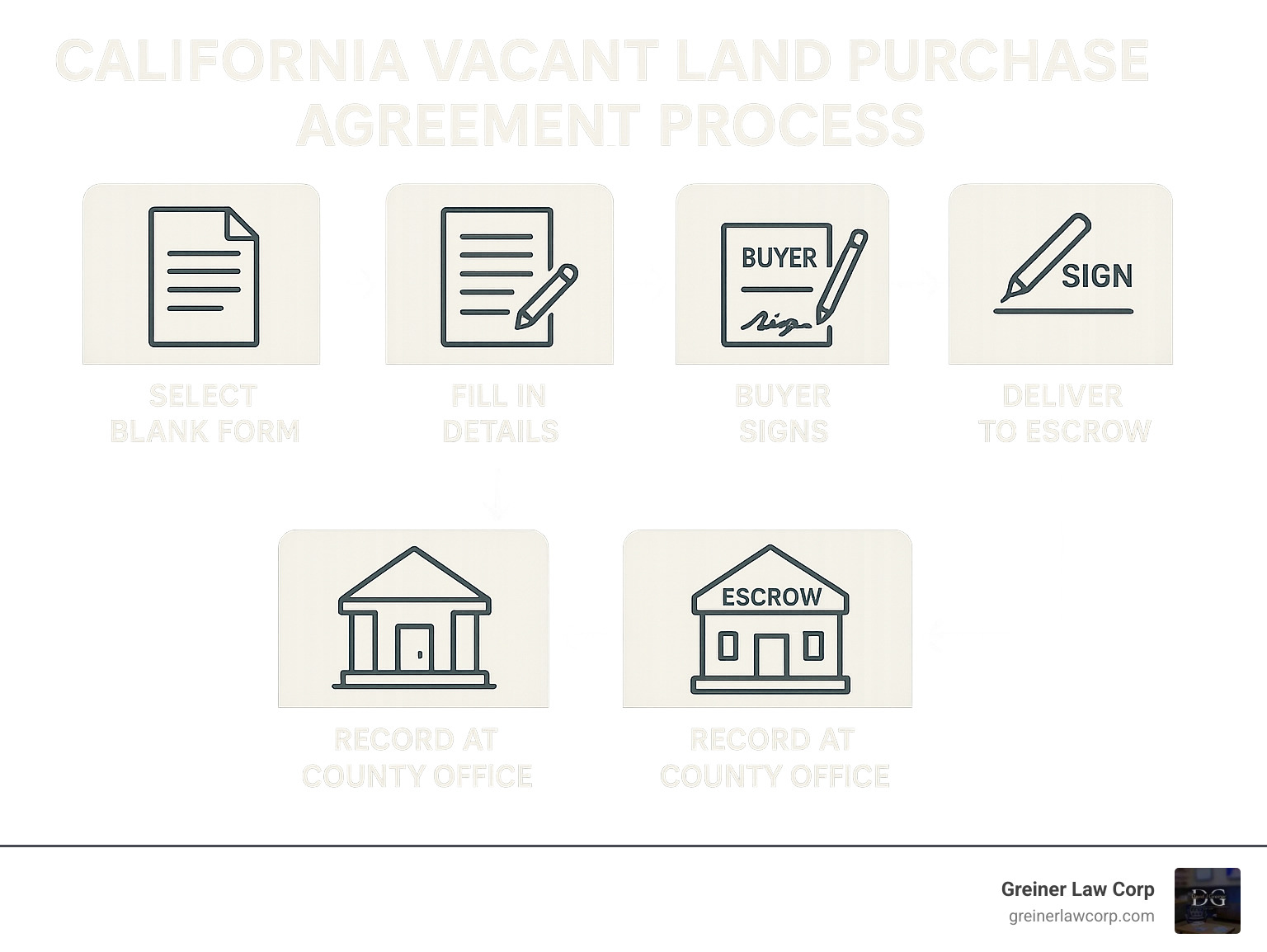
The typical escrow period for vacant land in California runs 30-60 days, though complex properties might need more time for thorough assessments. The final step is recording the deed at the County Recorder’s Office where your property is located.
Blank California Vacant Land Purchase Agreement: Essential Clauses & State-Mandated Disclosures
When purchasing undeveloped property in California, the blank California vacant land purchase agreement becomes your roadmap to a successful transaction. This document isn’t just paperwork—it’s your protection and the foundation of your land investment.
Essential Clauses
Your agreement must clearly identify what’s being bought and sold through a precise legal description of the property—whether that’s through metes and bounds, lot/block/tract numbers, or the Assessor’s Parcel Number (APN).
Unlike residential property agreements, vacant land deals assume nothing comes with the property unless specifically listed in the fixtures and exclusions section.
The financial details should include the total purchase price, initial deposit amount, and any financing terms. Your close of escrow date establishes when the property will officially change hands, typically with a “time is of the essence” clause making deadlines binding commitments.
Due diligence windows are particularly important for vacant land. While residential properties might have 17-30 day investigation periods, vacant land often requires up to 60 days to properly evaluate soil conditions, access issues, utility availability, and zoning restrictions.
State-Mandated Disclosures
California requires several specific disclosures to ensure buyers know what they’re getting into:
- The Natural Hazard Disclosure Statement (Civil Code §1103.1) reveals if the property sits in a flood zone, fire hazard area, earthquake fault zone, or special tax assessment district
- Environmental hazard disclosures alert you to toxic materials, groundwater issues, or endangered species habitats
- Commercial Earthquake Safety booklet for properties with pre-1975 structures
While vacant land is generally exempt from the Transfer Disclosure Statement (TDS) required for residential properties, sellers must still disclose any known material facts affecting the property’s value or desirability.
When to Use a Blank California Vacant Land Purchase Agreement
A blank California vacant land purchase agreement makes sense for private For-Sale-By-Owner (FSBO) transactions, straightforward cash sales with minimal contingencies, or during preliminary negotiations to establish basic terms.
Differences Between a Blank California Vacant Land Purchase Agreement and the C.A.R. VLPA
| Feature | Blank California Vacant Land Agreement | C.A.R. VLPA |
|---|---|---|
| Length | Typically 2-5 pages | 11 pages |
| Complexity | Simpler language, fewer clauses | Comprehensive legal language |
| Escrow Instructions | May require separate document | Includes joint escrow instructions |
| Environmental Clauses | Basic or minimal | Detailed environmental hazard consultation |
| Dispute Resolution | May be minimal | Detailed mediation and arbitration provisions |
The C.A.R. form offers robust protection but can be overwhelming for simple deals. A basic blank California vacant land purchase agreement might be sufficient for straightforward transactions between private parties, but requires careful attention to ensure all legal requirements are met.
For more detailed information about earthquake safety for commercial properties, you can review the Commercial Property Owner’s Guide to Earthquake Safety. And if you’d like to deepen your understanding of real estate contracts in general, check out our guide to Real Estate Contracts.
Step-by-Step: How to Fill Out the Blank Form Like a Pro
Completing a blank California vacant land purchase agreement requires attention to detail. Follow these steps to ensure your agreement is properly executed.
1. Complete Buyer and Seller Information
- Enter full legal names as they appear on identification documents
- Include marital status if relevant
- List complete contact information
- Specify if either party is a business entity
2. Identify the Property
- Insert the complete Assessor’s Parcel Number (APN)
- Include the full legal description exactly as it appears on the title report
- Specify the county where the property is located
- Include lot size and dimensions if known
3. Specify Purchase Price and Deposit
- Enter the total purchase price in both numbers and words
- Detail the initial deposit amount (typically 1-3% for vacant land)
- Specify when and how the deposit will be delivered
- Indicate who will hold the deposit
4. Select Financing Terms
- Check the appropriate box for all-cash or financed purchase
- If financed, specify loan amount, type, interest rate cap, and points
- Include loan contingency period
- Detail any seller financing terms if applicable
5. Establish Contingency Periods
- Set inspection contingency period (30-60 days recommended for vacant land)
- Establish title review timeline
- Include survey contingency if needed
- Add environmental review period if applicable
6. Allocate Closing Costs
- Determine who pays for title insurance
- Specify responsibility for escrow fees
- Allocate recording fees and transfer taxes
- Assign survey costs if applicable
7. List Required Disclosures
- Check boxes for all applicable disclosures
- Attach all required disclosure forms
- Note delivery deadlines for each disclosure
8. Add Special Provisions
- Insert any additional terms specific to your transaction
- Include access easements if relevant
- Note any deed restrictions or covenants
9. Sign and Date
- All buyers and sellers must sign
- Include printed names below signatures
- Date all signatures
- Initial each page of the agreement
Pro Tips for Avoiding Costly Mistakes
- Never Use White-Out or Cross-Outs Without Initials
- All changes must be initialed by all parties
Use addenda for significant changes
Be Precise About Funds
- Specify that the final payment must be in certified funds
Include wire transfer instructions if applicable
Remember “Time Is of the Essence”
- This legal phrase means deadlines are strict and enforceable
Calendar all deadlines immediately after agreement signing
Address Unique Vacant Land Concerns
- Include soil testing contingencies if building is planned
- Address access rights and easements
Include zoning verification if development is intended
Verify Signatures
- Ensure all parties with ownership interest sign
Verify authority for entity signatories
Document Everything
- Keep copies of all communications
- Save proof of disclosure delivery
- Maintain a timeline of all actions taken
Executing, Closing, and Recording Your California Land Deal
After completing your blank California vacant land purchase agreement, it’s time to bring your transaction to life through execution, closing, and recording.
The journey begins with opening escrow – a neutral zone where your transaction can safely unfold. Select an escrow company that specializes in vacant land deals, provide them with your signed agreement, and they’ll establish an escrow account with a unique number.
Within the timeframe specified (typically three business days after acceptance), deliver your initial deposit and complete your Statement of Information forms, which help distinguish you during the title search process.
The due diligence period is where vacant land transactions truly differ from improved property deals. Order a comprehensive title search to uncover any liens, easements, or restrictions. Consider arranging for a survey with boundary marking, especially important with vacant land where property lines may not be visually obvious. If you’re planning to build, testing the soil for percolation is crucial if septic systems will be needed.
Don’t skip the environmental assessment – finding protected species or hazardous conditions after closing could derail your development plans. Similarly, confirming that current zoning allows your intended use is absolutely essential.
As your due diligence period concludes, formally remove or waive contingencies in writing by the specified deadlines. In many cases, this is when your deposit becomes non-refundable.
The closing preparation phase brings everything together. Conduct a final verification of the property, confirm all contingencies have been properly addressed, and review the closing documents prepared by escrow.
The final step involves funding the transaction and recording the deed. The buyer delivers final funds to escrow (be vigilant about wire fraud – never use wire instructions received via email without verbal verification), and once all funds have cleared, escrow submits the deed to the County Recorder’s Office.

Here in California, your deed will need to be filed at the appropriate County Recorder’s Office. Major locations include San Bernardino (222 W. Hospitality Lane), Riverside (2720 Gateway Drive), and Los Angeles County (12400 Imperial Highway, Norwalk).
A critical warning: Be extraordinarily careful about wire fraud. Always verbally confirm wire details using a known, verified phone number.
Supplemental Documents the Escrow Holder Will Request
Beyond your blank California vacant land purchase agreement, your escrow holder will need several additional documents:
- Statement of Information to help clear title issues
- Preliminary Title Report revealing current ownership and encumbrances
- Natural Hazard Booklets and Disclosures for properties with environmental considerations
- Inspection reports for properties with wells or septic systems
- HOA documentation if applicable
- 1031 exchange documentation if relevant
For more detailed guidance on California real estate contracts, visit our California Real Estate Contract resource page.
Contingencies, Pitfalls, and Smart Legal Safeguards
When working with a blank California vacant land purchase agreement, understanding the right contingencies and potential pitfalls is essential for protecting your investment.
Critical Contingencies for Vacant Land
Financing vacant land differs from buying a home. Lenders typically require larger down payments (30-50%) and offer shorter loan terms (10-15 years) with higher interest rates. Make sure your agreement includes specific financing terms with adequate time to secure funding.
Physical inspections are crucial. Soil and perc tests are essential if you’re planning to build with a septic system. An environmental assessment can save you from buying contaminated land, while a professional survey confirms exact boundaries. Always verify legal access to the property and confirm the availability and costs for connecting utilities.
Verify that current zoning allows your intended use and that you can obtain necessary building permits. California’s protected species regulations can limit development rights, so an endangered species check is worth the investment. Water rights are particularly important in our drought-prone state.
Common Pitfalls to Avoid
The standard 17-day inspection period for residential properties is inadequate for vacant land. Request 30-60 days minimum for thorough investigations.
Property boundary issues can become expensive nightmares. Always get a professional survey and verify that any existing markers match the legal description.
Mineral rights deserve special attention in California, where surface and mineral rights can be separated. Verify whether mineral rights are included in your purchase. Similarly, confirm deeded access and check for seasonal limitations that might affect your ability to reach the property.

Smart Legal Safeguards
A well-crafted liquidated damages provision specifies the consequences if a buyer defaults. For this provision to be enforceable in California, both parties must separately initial it.
Consider including mediation and arbitration clauses to manage potential disputes. Default remedies should clearly specify options if either party fails to perform. Extension provisions are particularly important for vacant land transactions, where inspections often take longer than expected.
Legal Implications of Signing a Blank or Generic Form
Using a generic blank California vacant land purchase agreement without proper customization carries significant risks. Missing elements can render your agreement unenforceable, while vague terms create ambiguities.
Even if your agreement doesn’t mention them, California’s statutory disclosures are still required. Failure to provide these disclosures gives buyers rescission rights and may expose sellers to liability.
Should You Hire Counsel Before Signing?
At Greiner Law Corp, we believe in a business-minded approach to legal services. Not every transaction requires attorney review, but certain situations warrant professional guidance:
- Complex transactions involving large acreage, high-value properties, or unusual financing
- Land purchased for subdivision or with significant entitlement challenges
- Transactions with significant personal assets at stake
- Buyers or sellers with limited real estate experience
The cost of legal review is typically a small fraction of the transaction value—often less than 1%—and provides significant protection against costly disputes.
For more information about real estate contracts and their implications, visit our Real Estate Contracts Explained page.
Where to Find and Download a Blank California Vacant Land Purchase Agreement
Finding a reliable blank California vacant land purchase agreement is your first crucial step. Here are the best sources:
Official Sources
The California Association of REALTORS® (C.A.R.) offers the gold standard in land purchase agreements. Their forms are comprehensive, legally vetted, and regularly updated to reflect changing laws. The current version was last updated in December 2018, with mandatory changes that took effect January 1, 2019.
The downside? You’ll need either a membership or to purchase them directly (around $207.95 for a package of 10 forms). But consider this investment part of your overall risk management strategy.
Some County Recorder’s Offices provide basic templates. You’ll typically need to visit in person at locations like San Bernardino County (222 W. Hospitality Lane), Riverside County (2720 Gateway Drive), or Los Angeles County (12400 Imperial Highway in Norwalk).
Online Legal Template Services
LawDistrict provides templates that over 2,645 users have downloaded, available in PDF, Word, or ODT formats. They’re updated regularly with free basic versions and premium options for more features.
DocHub offers editable PDF templates with electronic signature capabilities. Their forms have earned a solid 4.8 out of 5 stars based on 101 user votes, and they provide a helpful audit trail for document changes.

Important Considerations When Downloading Templates
Be mindful of copyright issues. C.A.R. forms are protected by copyright, and unauthorized reproduction is prohibited. Always use legally obtained forms from authorized sources.
Format compatibility matters too. Before downloading, ensure the template works with your software. Check if electronic signature is supported if you plan to sign digitally.
Most importantly, verify the completeness of any template you choose. Some free options might omit critical California-specific provisions.
Verifying Your Template Is Up-to-Date
Using an outdated blank California vacant land purchase agreement can create serious legal complications. Always check the revision date, typically found in the footer as “Revised” or “Rev.” followed by a date. For C.A.R. forms, the current VLPA was revised in December 2018 (shown as 12/18), with important mandatory changes taking effect January 1, 2019.
California real estate laws evolve frequently, so forms older than 2-3 years may miss recent requirements. Pay special attention to disclosure requirements, which are often updated to provide greater consumer protection.
Don’t forget about county-specific addenda. Some counties have local disclosure requirements for special assessment districts or local transfer taxes.
Frequently Asked Questions about Blank California Vacant Land Purchase Agreements
Do I have to notarize the agreement?
No – notarization isn’t legally required for the agreement to be valid and enforceable. Once all parties sign the document, it becomes binding.
That said, I often recommend notarization as an extra layer of protection, especially if someone is signing via power of attorney.
While the purchase agreement doesn’t need notarization, the deed that transfers ownership at closing absolutely will. No county recorder in California will accept an unnotarized deed for recording.
Which disclosures are required for vacant land if TDS is exempt?
Vacant land transactions are exempt from the Transfer Disclosure Statement (TDS), but you’re still responsible for several mandatory disclosures:
- Natural Hazard Disclosure Statement covering flood zones, fire hazards, and earthquake risks
- Environmental Hazards Information about any known contamination or hazardous waste sites
- Commercial Earthquake Safety Booklet for properties with pre-1975 structures
- Megan’s Law Disclosure informing buyers about the sex offender database
- FIRPTA/California Withholding tax-related disclosures
Sellers must still disclose any known material facts affecting the property’s value or desirability – even without a formal TDS.
Where is the completed agreement recorded?
The blank California vacant land purchase agreement itself doesn’t get recorded. It remains a private contract between buyer and seller.
What actually gets recorded is the deed (typically a Grant Deed) that transfers ownership. This happens at the County Recorder’s Office in the county where your property is located, but only after escrow closes successfully.
After closing, your escrow or title company prepares the deed, which all sellers must sign with notarized signatures. The deed then goes to the County Recorder’s Office, where it receives an official recording number and date stamp, making it part of the public record.

Recording fees vary depending on your county and the document length, typically ranging from $20-$100. You may also need to pay transfer taxes based on the purchase price.
Conclusion
Navigating blank California vacant land purchase agreements doesn’t have to be overwhelming. With the right knowledge and resources, you can confidently handle your land transaction while protecting your interests.
At Greiner Law Corp, we believe in empowering our clients with practical knowledge while providing the legal support they need. Our approach isn’t about unnecessary complexity—it’s about understanding your goals first, then applying the right level of legal protection to help you achieve them.
The journey of purchasing vacant land in California brings unique challenges that differ from buying developed property. From soil testing to zoning verification, from access rights to environmental assessments—each element requires careful attention. Your agreement serves as the foundation for addressing these concerns while creating a clear path to ownership.
Successful land transactions typically share these common elements:
- A thoughtfully selected form that matches your transaction’s complexity
- Proper allocation of time for thorough due diligence
- Inclusion of all required California disclosures
- Verification of boundaries through professional surveys
- Careful attention to land-specific concerns like utility access
For simpler transactions between experienced parties, a basic blank California vacant land purchase agreement might suffice with minimal professional guidance. For more complex deals—particularly those involving significant investment or development plans—professional legal review can provide valuable protection.
Whether you’re a first-time land buyer or an experienced investor, we’re committed to providing practical, business-minded guidance that respects your time and resources. Because at the end of the day, a successful land purchase isn’t just about legal documents—it’s about helping you achieve your vision for the property.


