Why Appraisal Contingency California Protection Matters for Buyers
An appraisal contingency in California can save you from losing thousands on a property. It’s a contract clause allowing you to back out without losing your earnest money deposit if the home’s appraised value is less than the purchase price.
Quick Answer: What is an Appraisal Contingency in California?
- Purpose: Protects buyers from overpaying for property.
- How it works: If appraisal < purchase price, the buyer can cancel or renegotiate.
- Typical timeframe: 17 days (standard California contract).
- Your earnest money: Protected if you cancel due to a low appraisal.
- Your options: Renegotiate price, pay the difference, dispute the appraisal, or walk away.
In California’s competitive market, contingencies in the Residential Purchase Agreement are your legal exit ramps. The appraisal contingency confirms the property is worth what you agreed to pay. This is crucial because lenders won’t finance a home for more than its appraised value, which can derail your loan even if you’re pre-approved.
Earnest money deposits in California are typically 1% to 3% of the purchase price. On a $700,000 home, that’s $7,000 to $21,000 at risk if you back out without the proper contingencies in place.
I’m David Greiner, Esq., and I’ve spent years advising clients on California real estate transactions, business law, and contracts—helping them steer complex deals while protecting their interests. Understanding appraisal contingency California requirements is essential to managing risk in any real estate purchase, whether you’re a first-time buyer or an experienced business owner.
The Appraisal Contingency California Explained
A contingency is a condition that must be met for a real estate contract to become final. The appraisal contingency California clause, a key safety net in the standard California Residential Purchase Agreement (RPA), states that the sale depends on the property appraising for at least the purchase price. Without it, you could be legally obligated to buy a home for more than it’s worth.
The legal basis for contingencies is found in California Civil Code § 1436. You can learn more about what a “contingency” is in real estate and get more info about California Real Estate Purchase Agreements.
Your lender initiates the appraisal by hiring an independent professional to determine the property’s fair market value. This protects the lender from loaning more than the home is worth and protects you from overpaying.
How an Appraisal Contingency Protects the Buyer
The appraisal contingency California is your financial shield. Imagine you offer $850,000 for a home, but the appraisal comes back at $810,000. This $40,000 “appraisal gap” creates a problem. Your lender calculates a loan-to-value (LTV) ratio based on the appraised value, not the purchase price. If you have an 80% LTV, the lender will only finance 80% of $810,000, not $850,000, leaving you to cover a significant shortfall.
This contingency gives you a legal exit strategy. You can walk away from the deal and keep your earnest money deposit, which is typically 1-3% of the purchase price ($8,500 to $25,500 in this example). It prevents you from overpaying and ensures you make a sound investment.
What Happens When an Appraisal Comes in Low?

When an appraisal comes in low, your agent notifies the seller that you are invoking your appraisal contingency. This gives you contract termination rights, meaning you can walk away without penalty. While you can’t automatically demand a lower price, the contingency creates powerful negotiation leverage. The seller knows the home under-appraised and may face the same issue with the next buyer, motivating them to find a solution with you.
What Are a Buyer’s Options with an Appraisal Contingency in California?
When you receive a low appraisal, the appraisal contingency California gives you several strategic options:
- Renegotiate the purchase price: Ask the seller to lower the price to match the appraised value. They may agree fully or meet you halfway to avoid relisting the property.
- Pay the difference in cash: If you have the funds and love the home, you can cover the appraisal gap yourself, in addition to your down payment.
- Dispute the appraisal: You can submit a “Reconsideration of Value” to the lender with evidence of inaccuracies, such as missed comparable sales or uncounted property improvements. This path is challenging but sometimes successful.
- Cancel the contract: If no other option works, you can walk away without penalty and get your earnest money back. This is the ultimate protection the contingency provides.
Navigating a Low Appraisal and Other Key Contingencies
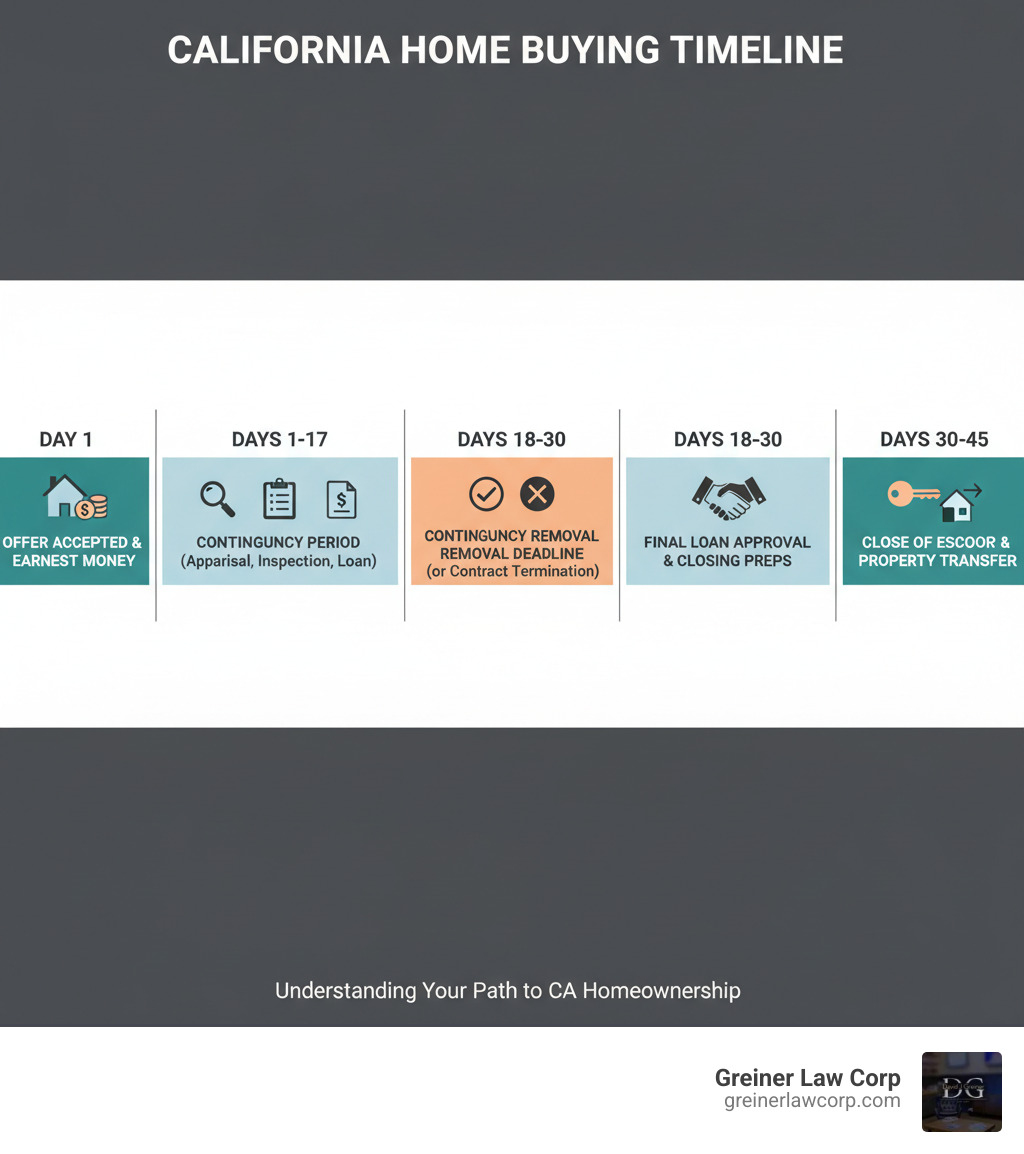
The appraisal contingency California is just one part of your safety net. In California, the standard Residential Purchase Agreement provides a 17-day due diligence period to conduct inspections, finalize financing, and get the appraisal. In a competitive seller’s market, this period can feel compressed, and buyers may be pressured to shorten or waive contingencies. Rushed decisions can lead to regret, so use this time wisely. To help guide you, learn more about due diligence in real estate.
The Loan Contingency vs. The Appraisal Contingency
Buyers often confuse the loan and appraisal contingencies. While related to financing, they protect you in different ways.
Loan Contingency: Protects you if you cannot secure a mortgage for any reason, such as a change in your financial situation or a lender denial. It’s about your ability to qualify for the loan.
Appraisal Contingency: Protects you when the property’s value doesn’t support the purchase price, even if you are fully approved for the loan amount. It’s about the property’s value.
Inspection Contingency: Allows you to assess the property’s physical condition and back out or negotiate repairs if significant defects are found.
These contingencies interact. For example, if you waive your appraisal contingency but the appraisal comes in low, your lender still won’t fund the gap. If you can’t cover it, your loan may be denied, and your loan contingency could be your only way out. Understanding how these pieces fit together helps you avoid common homebuyer mortgage mistakes.
The Inspection Contingency
Beyond finances, the inspection contingency protects you from a property’s physical unknowns. It gives you the right to hire a licensed inspector to examine the home for defects. In California, inspectors often find issues like outdated wiring, plumbing leaks, roof damage, foundation problems, or termite infestations.
It’s a smart move; according to the National Association of Realtors®, about 75% of buyers include a home inspection contingency in their contracts. The typical cost of $300-$500 is a small price to pay to avoid finding a $15,000 foundation problem after closing.
If the inspection reveals issues, you can:
- Request repairs from the seller.
- Ask for seller credits to handle repairs yourself.
- Renegotiate the purchase price.
- Terminate the contract and get your earnest money back.
This contingency empowers you to make an informed decision with your eyes wide open.
The High-Stakes Decision: Waiving Contingencies in California
In California’s competitive real estate markets like San Bernardino or Los Angeles, buyers often feel pressured to waive contingencies, including the appraisal contingency California, to make their offers more attractive. While this strategy can work, it carries significant financial risks.

Sellers prefer offers with fewer contingencies because they represent a cleaner, more certain deal. In a bidding war, a non-contingent offer often beats a contingent one, even at a slightly lower price. Cash offers are the gold standard as they typically waive both loan and appraisal contingencies.
However, what’s good for the seller can expose the buyer to risk. Waiving the appraisal contingency is a gamble that requires a clear understanding of your finances and the property’s true worth. In a seller’s market, this pressure is common, but it’s crucial to know when the risk is acceptable.
The Risks of Waiving an Appraisal Contingency in California
Waiving the appraisal contingency California means you commit to buying the home regardless of its appraised value. The risks are substantial:
- Forfeiting your earnest money: If the appraisal is low and you can’t close the deal, you could lose your 1-3% deposit—potentially tens of thousands of dollars.
- Covering the appraisal gap: You are legally obligated to pay the difference between the purchase price and the lower appraised value in cash. If you offered $800,000 and it appraises for $750,000, you must bring an extra $50,000 to closing.
- Overpaying for the property: You could end up with negative equity, owing more on the home than it’s worth. This is risky if you need to sell soon or if the market declines.
Without this contingency, you are on the hook for the entire appraisal gap. We advise clients to weigh these risks carefully before making a competitive offer that could jeopardize their financial stability.
When Might a Buyer Consider Waiving Contingencies?
While risky, waiving the appraisal contingency California might be a strategic choice in certain scenarios:
- In a hot seller’s market: During intense bidding wars, it may be the only way to get an offer accepted.
- With a large down payment or cash reserves: If you have substantial funds, you can comfortably cover a potential appraisal gap.
- As an all-cash buyer: Since no lender is involved, the appraisal is not required for financing, giving you more flexibility.
- With high confidence in the value: If your research on comparable sales suggests the price is fair or even low, you might feel comfortable with the risk.
Even in these cases, consider shortening the contingency period instead of waiving it entirely. This makes your offer more competitive while retaining some protection. This decision should always involve a thorough discussion with your real estate agent and legal counsel to assess all potential risks. Our firm, with offices in Victorville, Riverside, San Bernardino, and Los Angeles, helps clients manage these complex decisions effectively.
Frequently Asked Questions about California Real Estate Contingencies
Navigating real estate contingencies can be complex. Here are answers to common questions we hear about appraisal contingency California rules and other protections.
Can a seller refuse an offer with an appraisal contingency in California?
Yes. Sellers can reject any offer, and in competitive markets, they often refuse those with an appraisal contingency California clause. An appraisal contingency introduces uncertainty for the seller, as a low appraisal could kill the deal and force them to relist the property. An offer without contingencies appears cleaner and less risky.
This doesn’t mean you shouldn’t include one. Your agent can help you assess market conditions in areas like Riverside or Los Angeles to craft an offer that is both competitive and protective.
How long is the typical contingency period in California?
The standard contingency period in California’s Residential Purchase Agreement is 17 days. This is the default timeframe for completing your due diligence, including the appraisal, inspection, and loan approval.
However, this period is negotiable. In a competitive market, buyers might offer a shorter period (e.g., 10-14 days) to make their offer more attractive. For complex properties, you might negotiate a longer period (e.g., 21-30 days).
Be aware of the “Notice to Perform.” If you don’t act within the agreed timeframe, the seller can issue this notice, giving you a short window to remove contingencies or cancel. Failing to respond could lead to the seller canceling and keeping your deposit.
Can a buyer dispute a low appraisal in California?
Yes, you can dispute a low appraisal, but it’s challenging and success isn’t guaranteed. Overturning an appraiser’s professional valuation requires solid evidence.
The formal process is a Reconsideration of Value (ROV), submitted by your lender. To support your dispute, you can provide:
- New comparable sales (comps): Recent, similar property sales the appraiser may have missed.
- Documentation of improvements: Invoices or permits for significant upgrades not reflected in the appraisal.
- Factual errors: Mistakes in the report regarding square footage, room count, or other basic details.
The appraiser is not obligated to change their valuation, and the process can cause delays. This is why having an appraisal contingency California is so valuable—it gives you other options if the dispute fails. For more guidance, navigate your California real estate transaction with confidence with our support.
Conclusion
The key takeaway is that real estate contingencies are not red tape; they are your risk management toolkit. The appraisal contingency California clause, alongside loan and inspection contingencies, protects you from costly, long-term regrets. These provisions give you the breathing room to verify a property’s value and condition and ensure your financing is secure.
Throughout this guide, we’ve shown how contingencies safeguard your earnest money, prevent you from overpaying, and provide negotiation leverage. We’ve also highlighted the serious risks of waiving these protections in a competitive market.
Real estate decisions are high-stakes, especially in California’s dynamic market. Whether you’re buying a home in Riverside or an investment property in Los Angeles, experienced legal counsel is invaluable.
At Greiner Law Corp, we provide business-minded advice custom to your goals, financial situation, and risk tolerance. Since 2003, we’ve helped California buyers and sellers make informed choices that align with their long-term objectives. Our job is to ensure you have the information needed to act with confidence.
The California real estate market can be overwhelming, but with the right team, you can protect your interests every step of the way.
Ready to take the next step? Navigate your California real estate transaction with confidence with guidance from Greiner Law Corp. We’re here to help you make informed, strategic decisions.


