The Real Cost of Estate Disputes: Who Bears the Financial Burden?
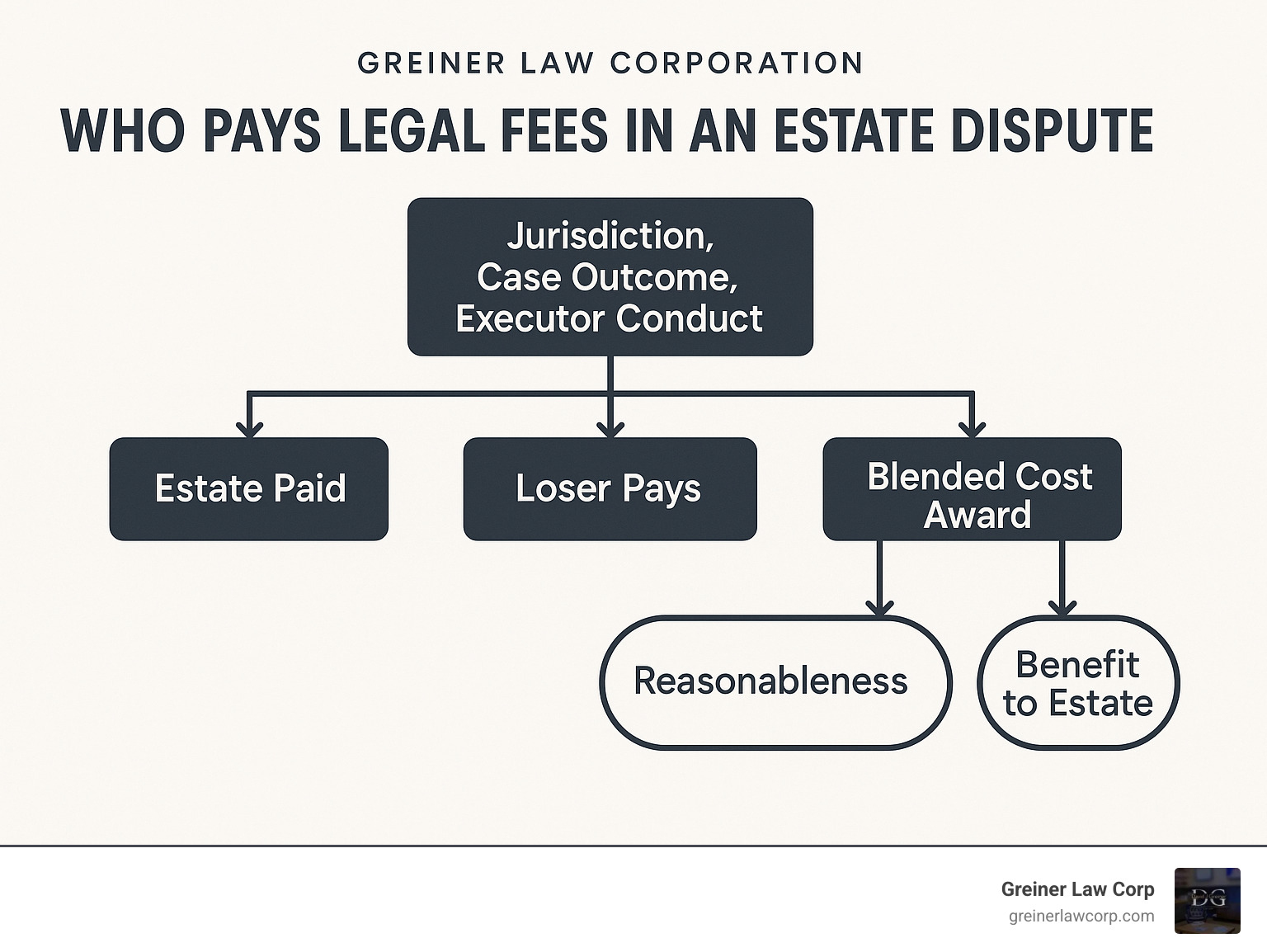
Who pays legal fees in an estate dispute depends primarily on the jurisdiction, case outcome, and court discretion. Here’s a quick answer:
| Who Typically Pays | Common Exceptions | Court Considerations |
|---|---|---|
| The estate’s assets | • Executors/trustees using position for personal gain • Parties making wholly meritless claims • Beneficiaries who unreasonably prolong litigation | • Benefit to the estate • Reasonableness of the claims • Settlement offers made/rejected • Parties’ conduct during proceedings |
When a loved one passes away, the last thing most families want to deal with is a legal battle over the estate. Yet estate disputes happen frequently, often leaving executors, beneficiaries, and other interested parties wondering who will foot the potentially substantial legal bills that follow.
The answer isn’t always straightforward. In many jurisdictions, the traditional approach was that the estate bore all parties’ costs because litigation was deemed the fault of the deceased for not leaving clear instructions. However, modern courts have largely shifted to a more nuanced approach where the unsuccessful party may bear costs, with notable exceptions for executors acting in good faith and beneficiaries with reasonable claims.
I’m David Greiner, Esq., a business-focused attorney with extensive experience helping clients steer complex estate matters, including disputes where who pays legal fees in an estate dispute can significantly impact the final inheritance amounts received by beneficiaries.
Who pays legal fees in an estate dispute terms to know:
– legal fees for administering an estate
– are estate legal fees tax deductible
– how much does it cost for a lawyer
Who Pays Legal Fees in an Estate Dispute?
When families face the emotional and financial stress of an estate dispute, understanding who will bear the legal costs becomes critically important. The answer varies significantly based on several factors, including the jurisdiction, the nature of the dispute, and the conduct of the parties involved.

Default Rule: Estate or Each Party?
In the United States, we typically follow what’s known as the “American Rule” – each party pays their own attorney’s fees regardless of who wins. But estate disputes often work differently.
For executors and personal representatives, their reasonable legal fees are usually considered legitimate estate expenses. This makes sense – they have a duty to protect the estate and carry out the deceased’s wishes. These costs come from the estate’s assets before any distribution to beneficiaries.
Here in California, our Probate Code allows for “reasonable” attorney’s fees from the estate when the services benefit the estate. These typically range from 3-7% of the estate’s value, depending on complexity.
But what about beneficiaries or others who contest a will? They generally pay their own legal costs upfront. Whether they can recover these costs later depends on whether their challenge succeeds, if their actions benefited the estate, the laws in their area, and ultimately, what the judge decides is fair.
For more details about how attorney fees work in estate settlements, check out our guide on Lawyer Fees for Estate Settlement.
Executor & Trustee Exceptions
Executors and trustees hold a special position in estate disputes with both rights and responsibilities when it comes to legal fees.
When executors defend a will in good faith, their reasonable legal fees typically come from the estate – even if they ultimately lose the case. This protection encourages qualified people to serve as executors without worrying about personal financial risk.
However, if an executor uses their position for personal gain rather than acting in the estate’s best interest, courts may deny payment of their legal fees from estate assets. In some cases, they might even be ordered to personally pay the opposing party’s costs!
A recent British Columbia Supreme Court case (2024 BCSC 213) illustrates this perfectly. The court refused to let an executor use estate funds for legal fees after finding they were primarily advancing their own interests, not the estate’s.
Executors also generally have the right to be reimbursed for reasonable expenses incurred while administering the estate. This includes legal consultation fees, even when a will is ultimately rejected, as long as the executor submitted it in good faith.
Jurisdictional Snapshots (US, UK, Canada, Australia)
Who pays legal fees in an estate dispute varies dramatically depending on where you live:
In the United States, we generally follow the American Rule where each party pays their own fees. Executors’ reasonable fees typically come from estate assets, though state laws may allow for fee-shifting in certain situations. Probate courts have considerable discretion in how they allocate these costs.
The United Kingdom follows the “English Rule” or “loser pays” principle – the unsuccessful party typically pays the winning party’s legal costs. Interestingly, only about 2% of will disputes go to trial there, with most settled through mediation. A full trial can cost over £50,000.
Canada has evolved from historically charging all parties’ costs to the estate to now generally following an adversarial model where the unsuccessful party pays. Executors typically recover fees from the estate unless they’ve abused their position, and courts may order “blended costs” that reflect the reasonableness of different stages of litigation.
In Australia, 80-90% of will disputes resolve during mediation. A 2015 University of Queensland study found that 74% of will contests challenged in court, and 87% of those that went before a mediator, resulted in the will being changed. Many attorneys offer “Deferred Payment Plans” where fees come from settlement proceeds.
Who Pays Legal Fees in an Estate Dispute if the Will Is Upheld?
When a will contest fails and the court upholds the will, the unsuccessful contestant generally pays their own legal fees. In “loser pays” jurisdictions like the UK, Canada, and Australia, they may also need to pay the winning party’s legal costs.
But there are important exceptions. Courts might order fees paid from the estate if:
– The contestant had “reasonable cause” to bring the challenge (like unclear will language)
– Their actions provided some benefit to the estate (such as clarifying ambiguous terms)
– The successful party unnecessarily dragged out proceedings or rejected reasonable settlements
In cases of particularly frivolous claims pursued recklessly, courts might award “substantial indemnity” or “special costs” against the unsuccessful party – which can be significantly higher than standard cost awards.
Who Pays Legal Fees in an Estate Dispute if the Will Is Set Aside?
When a will contest succeeds and the court sets aside the will, the successful challenger’s legal fees typically come from the estate. The reasoning makes sense – their challenge benefited the estate by ensuring proper distribution according to the deceased’s true intentions or applicable law.
In “loser pays” jurisdictions, the unsuccessful defending party (often the executor or named beneficiaries under the invalid will) may need to pay the successful challenger’s costs. However, if the executor was defending the will in good faith, their costs might still be covered by the estate.
To recover legal fees after winning a challenge, the prevailing party usually files a petition with the probate court requesting reimbursement from estate assets. The court considers whether the services were necessary, benefited the estate, charged reasonable fees, and followed applicable laws.
How Courts Decide Fee Allocation
Courts have considerable discretion in deciding who pays legal fees in an estate dispute. This flexibility allows judges to consider each case’s unique circumstances and allocate costs fairly while discouraging unnecessary litigation.

Key Factors Judges Weigh
When a judge determines who should shoulder the legal costs, they don’t simply follow a rigid formula. Instead, they carefully weigh several important factors that paint a complete picture of the dispute.
Success matters, of course. Whether you won your case is typically the starting point for any cost decision. But judges look beyond just the outcome.
They pay close attention to how everyone behaved during the case. Did you act reasonably and cooperate with court procedures? Or did you drag things out unnecessarily? These behaviors can significantly impact who pays the bills.
Settlement offers often play a crucial role too. If you turned down a reasonable settlement and then did worse at trial, you might face some uncomfortable cost consequences. I’ve seen this happen numerous times in my practice.
The complexity and necessity of the litigation also factor in. Was this a genuinely complicated case that required substantial legal work? Or was it relatively straightforward? And importantly, was the litigation truly necessary in the first place?
Judges also consider whether the case benefited the estate in some way. Even if you didn’t win completely, if your actions helped clarify ambiguous terms or ensure proper distribution, the court might view your legal expenses more favorably.
Finally, proportionality matters. Are the legal costs reasonable compared to the estate’s value or what was at stake? Courts generally frown upon spending $100,000 in legal fees fighting over a $50,000 inheritance.
In many cases, courts issue “blended awards” that allocate costs differently for various litigation stages based on how reasonably parties behaved throughout the process. You might recover costs for early stages but be denied costs for later parts if your conduct became unreasonable.
For more insights into the complexities of these proceedings, check out our guide on Probate Court Litigation.
Bad Faith, Misconduct & Penal Costs
Courts take a particularly dim view of bad behavior in estate disputes. When someone acts in bad faith or engages in misconduct, judges can impose what are often called “penal costs,” “special costs,” or “substantial indemnity costs.”
What might trigger these heightened costs? Making baseless allegations of undue influence without supporting evidence is a common example. So is pursuing claims with reckless disregard for their merit or deliberately prolonging litigation to drain estate assets.
Hiding relevant documents or using social media to disparage other parties during the legal process can also land you in hot water with the court.
A recent British Columbia Court of Appeal case (2024 BCCA 15) illustrates this perfectly. The court upheld special costs against someone who pursued meritless claims with “reckless indifference” to evidence, causing unnecessary expense and delay for everyone involved.
These improved cost awards serve two important purposes: they compensate the innocent party more fully while also discouraging similar bad behavior in future cases.
Statutory Guidance & Notable Rules
Many jurisdictions have specific laws governing who pays legal fees in estate disputes. These provisions often give courts significant flexibility in allocating costs based on each case’s unique circumstances.
In Florida, for example, Probate Code section 733.106 allows courts to award attorney’s fees from specific parts of the estate. A personal representative can recover fees from the estate even if probate is denied, as long as they submitted the will in good faith.
California’s Probate Code provides for “reasonable” attorney’s fees for services that benefit the estate, with fee schedules based on the estate’s value. This is something we at Greiner Law Corp steer regularly with our California clients.
New Jersey takes a different approach, allowing counsel fees to successful proponents or contestants who had reasonable cause to bring their case, regardless of the outcome.
For more details about attorney fees in estate administration, our guide on Attorney Fees for Estate Administration provides valuable insights.
Comparing Fee Allocation Models
Different approaches to allocating legal fees each have their strengths and weaknesses:
| Model | Advantages | Disadvantages | Best For |
|---|---|---|---|
| Estate-Paid Fees | • Reduces financial barriers to legitimate claims • Recognizes that disputes often arise from unclear estate planning | • Can deplete estate assets • May encourage frivolous litigation | • Small estates • Cases with genuine ambiguity |
| Loser-Pays | • Discourages meritless claims • Compensates successful parties | • May deter legitimate claims • Can be harsh on good-faith losers | • Large estates • Clear-cut cases |
| Blended Awards | • Allows nuanced responses to conduct • Encourages reasonable behavior throughout | • Less predictable • More complex to determine | • Complex cases • Mixed-merit claims |
The estate-paid model makes sense when the deceased’s unclear instructions created the problem in the first place. Meanwhile, the loser-pays approach can prevent frivolous claims but might also scare off people with legitimate concerns who can’t afford to risk paying everyone’s legal bills.
Blended awards offer a middle ground, allowing judges to craft solutions that respond to the specific behaviors and circumstances of each case. While less predictable, they often achieve the fairest results in complex situations.
At Greiner Law Corp, we help our clients understand these different models and develop strategies that manage their risk while pursuing their legitimate interests in estate disputes.
Funding Options & Risk Management Strategies
Understanding your funding options and implementing effective risk management strategies can significantly reduce the financial stress of estate disputes.

Contingency & Deferred Arrangements
When facing the potentially steep costs of estate litigation, you’re not limited to traditional hourly billing. Several alternative fee arrangements can make legal representation more accessible.
Contingency fee agreements operate on a simple premise: your attorney only gets paid if you win. These arrangements typically involve the lawyer receiving a percentage of your recovery—usually between 25% and 40%—if your case succeeds. If you don’t win, you don’t pay attorney fees.
However, it’s worth noting that contingency arrangements are more commonly available to beneficiaries making claims than to executors defending estates. Most probate attorneys will require some upfront retainer, as these cases often involve complex, time-intensive work with uncertain outcomes.
Deferred payment plans offer another helpful alternative. Unlike contingency arrangements, these plans don’t usually include a “success premium” or uplift fee. Instead, they simply allow you to postpone payment until your case concludes, with fees paid from settlement funds or estate proceeds.
In Australia, these deferred arrangements have gained significant popularity as alternatives to traditional “No Win, No Fee” structures. Many clients appreciate that they can keep more of their recovery by avoiding the uplift fees that can reach up to 25% in some jurisdictions.
If you’re considering a contingency arrangement, the Law Society of Ontario offers an excellent guide on contingency fees that clearly outlines what you should expect.
Advancing Costs When the Estate Lacks Cash
One of the most common challenges in estate disputes is that the estate itself may lack ready cash to pay legal fees. This is especially true when most assets are tied up in real estate, business interests, or investments that can’t be quickly liquidated.
When facing this cash flow dilemma, several options exist:
Beneficiaries sometimes choose to advance funds to cover initial legal costs, with the understanding they’ll be reimbursed once estate assets are liquidated. This approach can keep the process moving forward without delays.
With court approval, executors may liquidate certain estate assets specifically to cover necessary legal expenses. Courts typically permit this when the expenses are reasonable and necessary for proper estate administration.
Some financial institutions offer specialized estate loans using estate assets as collateral. These can provide immediate liquidity while avoiding rushed sales of valuable assets.
Many attorneys understand these cash flow challenges and offer flexible payment plans that accommodate the estate’s limitations.
For more insights on handling these liquidity challenges, our guide on Who Pays Probate Attorney Fees? provides valuable information.
Minimising Costs Through Mediation & Planning
Perhaps the most effective strategy for managing who pays legal fees in an estate dispute is avoiding a protracted court battle altogether. Alternative dispute resolution—particularly mediation—has proven remarkably successful in resolving estate conflicts:
In Australia, between 80-90% of will disputes find resolution through mediation. Similarly, in England and Wales, only about 2% of will dispute cases actually proceed all the way to trial. The numbers tell a compelling story: mediation works.
Beyond the impressive success rates, mediation typically costs a fraction of what parties would spend on full litigation. It also offers something money can’t buy—the chance to preserve family relationships that might otherwise be permanently damaged by contentious courtroom battles.
At Greiner Law Corp, we’ve seen how mediation provides families with creative solutions beyond what a court might order, greater privacy than public proceedings, and more control over the final outcome.
Of course, the very best strategy is preventing disputes entirely through thoughtful estate planning. Clear, professionally drafted documents that anticipate potential areas of conflict can save families tremendous emotional and financial stress down the road.
Tax & Deduction Considerations
The tax implications of legal fees in estate disputes add another important dimension to your financial planning.
Estate tax deductions are generally available for legal fees paid by the estate for administration purposes, including defending the will. These can be deducted as administration expenses on the estate’s tax return, potentially reducing the overall tax burden.
For beneficiaries, however, the picture is less favorable. Legal fees paid to secure your inheritance are typically not deductible on personal income tax returns. The IRS views these expenses as personal rather than business-related.
Interesting exceptions exist when the dispute involves business interests. In such cases, some legal fees might qualify as deductible business expenses, offering potential tax relief.
State tax treatment of legal fees may differ significantly from federal rules, making it essential to consult with a tax professional familiar with your specific jurisdiction.
For a deeper dive into these tax considerations, our guide on Are Estate Legal Fees Tax Deductible? provides comprehensive information custom to your situation.
Understanding these funding options and cost management strategies can help you approach estate disputes with greater confidence and financial clarity. While legal proceedings are never easy, having a plan to manage the costs can remove one significant source of stress during an already difficult time.
Frequently Asked Questions about Who Pays Legal Fees in an Estate Dispute

What happens if the estate has insufficient assets?
This is a common concern I hear from families facing estate disputes. When there simply isn’t enough money in the estate to cover legal expenses, several things typically happen.
First, you should know that in most places, attorney fees and administration expenses get paid before beneficiaries receive anything. This legal priority system sometimes means the estate gets completely depleted by these costs, leaving nothing for the intended beneficiaries – a truly unfortunate outcome that underscores why avoiding unnecessary litigation is so important.
The good news is that beneficiaries generally aren’t personally responsible for estate debts beyond what they inherit. However, executors need to be careful here. If you’re serving as an executor and distribute assets before paying legitimate expenses, you could find yourself personally liable for those unpaid bills.
When cash is tight, creative solutions often emerge. Sometimes beneficiaries pool resources to advance funds for legal costs, hoping to protect their eventual inheritance. Other times, attorneys agree to payment plans that accommodate the estate’s limited cash flow. In some cases, the estate might secure loans against property or other assets.
Many states also offer streamlined probate procedures for smaller estates that can significantly reduce legal costs. If you’re worried about insufficient assets, talking with an experienced probate attorney early can help you understand your specific options and risks.
Can a losing party be ordered to reimburse the winner’s fees?
Yes, absolutely – though how this works varies dramatically depending on where you live.
If you’re in the UK, Canada, or Australia, they follow what’s called the “loser pays” principle. The unsuccessful party typically has to pay the winner’s reasonable legal costs. It creates a natural incentive to think twice before pursuing weak claims.
Here in the United States, we generally follow the “American Rule” where everyone pays their own legal fees regardless of outcome. But don’t let that fool you – there are plenty of exceptions that might apply to your estate dispute:
- Special statutory provisions might allow for fee-shifting in your specific type of case
- If someone acts in bad faith or pursues claims the court deems frivolous
- When a will or trust contains specific language about attorney fees
- If court rules in your jurisdiction permit fee awards in certain circumstances
It’s worth noting that even when courts award fees, they rarely cover 100% of what was actually spent. Judges typically award only what they consider “reasonable” fees, which might be substantially less than the actual bills.
Many jurisdictions also have rules about settlement offers that can dramatically affect who pays what. If someone rejects a reasonable settlement offer and then does worse at trial, they might face significant financial consequences.
This potential for shifting fees creates real financial risk in estate litigation – something to carefully consider before deciding whether to pursue or defend a claim.
Are executors ever personally liable for lawyers’ bills?
Serving as an executor comes with significant responsibilities, and yes, there are several situations where executors can find themselves personally on the hook for legal fees.
If you initiate litigation without proper authority or contrary to your fiduciary duties, you might be personally responsible for those legal bills. This happens more often than you might think, especially when executors act hastily without proper legal guidance.
Courts take a particularly dim view of executors who use their position primarily for personal benefit rather than the estate’s interests. In these cases, judges may not only deny payment of legal fees from estate assets but might also hold the executor personally liable.
Poor estate management is another risk area. If you mishandle estate assets or distribute them before paying legitimate expenses, you could face personal liability for those unpaid bills.
Even the paperwork matters. When hiring attorneys, executors typically sign engagement agreements in their capacity as estate representatives. However, if you fail to clarify this representative capacity, you might inadvertently assume personal responsibility for those fees.
To protect yourself as an executor, I recommend:
– Clearly documenting the estate-related purpose of any legal services
– Getting court approval when appropriate before incurring significant legal expenses
– Making your representative capacity crystal clear in all contracts
– Acting in good faith and staying within the scope of your authority
At Greiner Law Corp, we’ve helped many executors steer these complex waters while minimizing their personal exposure to estate-related legal fees. With proper guidance, you can fulfill your duties while protecting yourself from unexpected personal liability.
Conclusion
Let’s face it – estate disputes are never just about the money. They’re emotionally charged situations where family dynamics, grief, and financial concerns collide. But understanding who pays legal fees in an estate dispute can help you steer these challenging waters with more confidence.
Throughout this article, we’ve seen that the old-school approach of simply charging everything to the estate has evolved. Today’s courts take a more thoughtful approach, considering the unique circumstances of each case. Sometimes the unsuccessful party bears the costs, but good-faith executors and those with reasonable claims often receive special consideration.
I’ve worked with many families who were surprised by how much discretion judges have in these matters. Courts weigh numerous factors – who won, how everyone behaved during the process, whether reasonable settlement offers were rejected, and whether the litigation actually benefited the estate in some way.
If you’re worried about financing a potential estate dispute, options exist. Contingency arrangements, deferred payment plans, and estate loans can all help manage the immediate financial burden. And don’t underestimate the power of mediation – with 80-90% success rates in some places, it’s often the smartest path forward financially and emotionally.
The truth is, the best strategy is prevention. Clear, professionally drafted estate documents that anticipate potential conflicts can save your family significant heartache and financial strain down the road. A small investment in proper planning now can prevent costly disputes later.
At Greiner Law Corp, we believe in taking a practical, business-minded approach to estate matters. We help clients throughout California understand their options and manage risks effectively. Whether you’re an executor defending a will or a beneficiary with concerns about its validity, we focus on what matters most – your specific goals and circumstances.
Estate disputes aren’t just legal problems; they’re human problems that need human solutions. By understanding the financial implications of different paths forward, you can make choices that protect both your inheritance and your family relationships.
For more information about our California probate services, please visit our probate services page.


