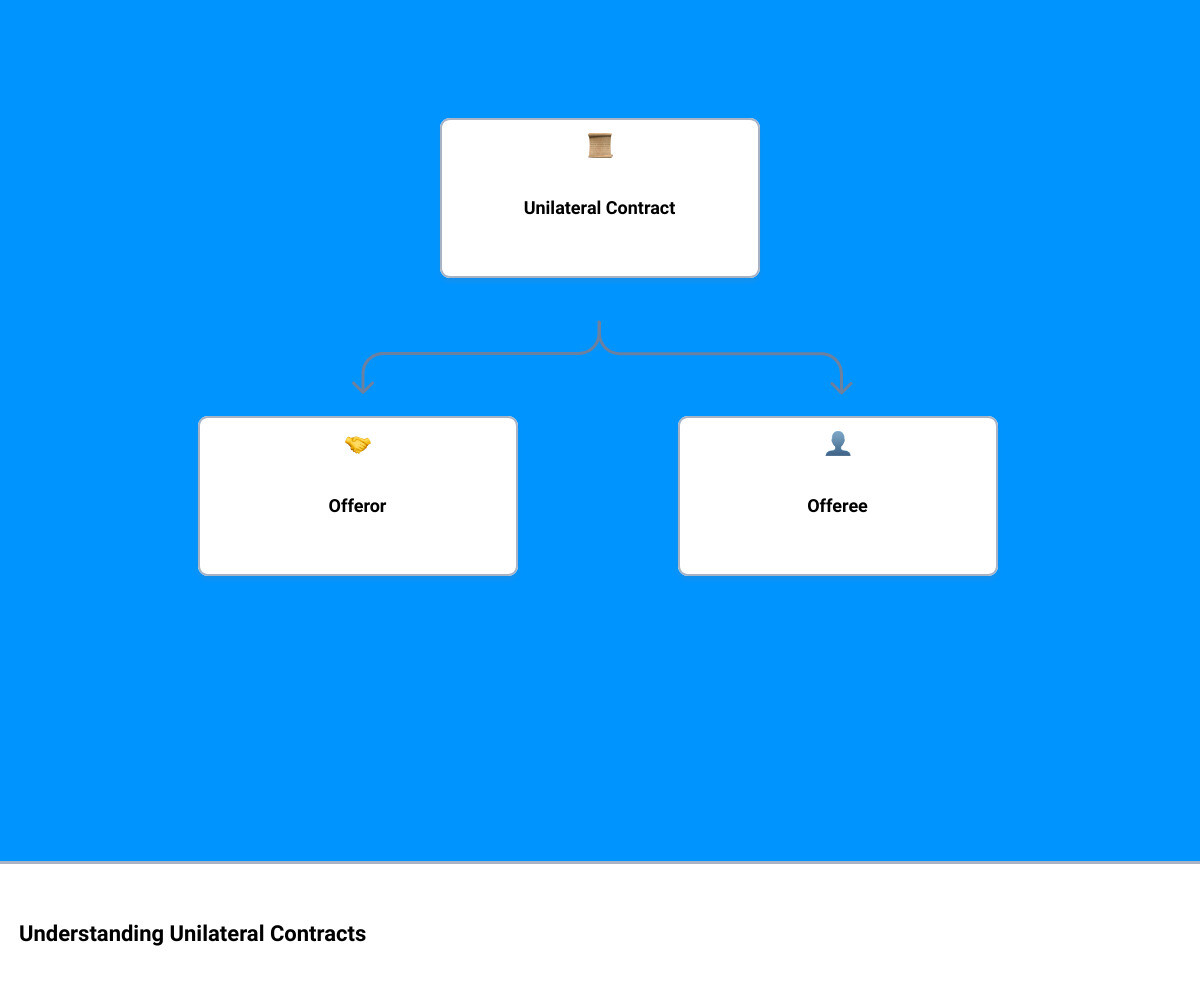
Unilateral contract definition is a term many business owners come across, especially when dealing with legal agreements and business operations. So, what exactly is a unilateral contract? In simple terms, it’s a promise made by one party (the offeror) to do something, usually paying money, if another party (the offeree) performs a specific task. Unlike bilateral contracts, where both parties make promises, unilateral contracts involve an obligation that rests solely with the offeror once the task is completed.
Legal agreements are vital in business operations, serving as the backbone of transactions and commitments. Contracts, whether unilateral or otherwise, are the rules that govern these dealings. They define expectations, obligations, and outcomes, ensuring everyone is on the same page.
I’m David Greiner, Esq. With experience in business law, real estate, and contractual agreements, I understand the intricacies of unilateral contracts definition and their application in real estate and other business transactions.
Unilateral Contract Definition
In contracts, a unilateral contract stands out as a one-sided agreement. Here’s how it works:
Imagine you’re an offeror. You make a promise to pay someone if they do something specific. This is your offer. The person you make this offer to is the offeree. They don’t have to do anything unless they choose to. If they decide to take on the task and complete it, you, the offeror, must fulfill your promise.
This type of contract is all about performance-based acceptance. The offeree accepts the offer not by promising to do the task, but by actually doing it.
For example, let’s say you offer a reward for finding your lost dog. You’re not asking people to promise to look for your dog. Instead, you promise to pay only if someone actually finds and returns your dog. Here, the performance—finding the dog—is what makes the contract binding.
Unilateral contracts can be tricky. The offeror is the only one who has a legal obligation once the task is done. The offeree, on the other hand, is free to decide whether or not to perform the task. This freedom makes unilateral contracts flexible and appealing in many situations, from simple reward offers to complex insurance agreements.
Understanding these contracts is crucial, especially in business, where clear terms and expectations can prevent disputes and ensure smooth operations. They offer a unique approach to legal agreements, highlighting the importance of clarity and intent in every offer made.
Next, we’ll explore how these contracts operate in practice and what makes them tick.
How Unilateral Contracts Work
Unilateral contracts operate on a simple yet powerful principle: offer and acceptance by performance. Let’s break down what this means.
Offer
In a unilateral contract, the offer is a promise made by the offeror. This promise is conditional on the offeree completing a specific task. The offeror is not asking for a promise in return, just the completion of the task. For example, a company might offer a reward for anyone who can provide information leading to the capture of a fugitive. Here, the offer is the promise of a reward.
Acceptance by Performance
Unlike bilateral contracts, where acceptance is through a mutual promise, unilateral contracts require acceptance by performance. The offeree accepts the offer by completing the task specified. Until the task is done, the offeree has no obligation. The contract becomes binding only upon completion of the task. Returning to our example, the contract is only accepted when someone provides the information that leads to the fugitive’s capture.
Consideration
Consideration is what each party brings to the table. In unilateral contracts, the consideration for the offeror is the completion of the task. For the offeree, it is the promise of a reward or payment. Consideration doesn’t always have to be money. It can be anything of value, like time or effort. This exchange is what gives the contract its legal weight.
Intent to Create Legal Relations
For any contract to be valid, there must be a clear intent to create legal relations. Both parties must understand that the offer and its acceptance will create a legally binding agreement. This intent is crucial, as it distinguishes serious offers from casual or social promises. In our reward example, the company’s public announcement of the reward indicates their intent to be legally bound by the promise.
Understanding how unilateral contracts work helps in crafting clear and enforceable agreements. These contracts are all about specificity and clarity. The offer must be clear, and the conditions for acceptance must be straightforward. This clarity ensures that both parties know exactly what is expected, reducing the risk of disputes.
Next, we’ll dive into real-world examples of unilateral contracts to see these principles in action.
Examples of Unilateral Contracts
Unilateral contracts are all around us, even if we don’t always notice them. Let’s explore some common examples, from reward offers to insurance policies, to understand how these one-sided agreements operate in everyday scenarios.
Reward Contracts
Reward contracts are classic examples of unilateral contracts. Here, a promise is made to pay a reward in exchange for performing a specific task. A typical scenario is a “lost pet” flyer offering a reward for the safe return of a missing dog. The pet owner (offeror) promises to pay the reward to anyone (offeree) who finds and returns the pet. There’s no obligation for anyone to look for the pet, but if someone does and succeeds, the owner must pay the reward.
Consider another example: a city government offers a reward for information leading to the arrest of a criminal. The offer is open to anyone, and the reward is paid only upon successful completion of the task—providing the crucial information.
Insurance Contracts
Insurance contracts are another form of unilateral contract. In these agreements, the insurance company (offeror) promises to pay a certain amount of money if a specified event occurs, like a car accident or house fire. The policyholder (offeree) is not required to take any specific action beyond paying the premium. However, if the event occurs, the insurance company is legally obligated to fulfill its promise and pay out under the terms of the policy.
For example, consider a life insurance policy. The insurer agrees to pay a set amount to the beneficiaries if the policyholder passes away. The payment is contingent on the occurrence of the insured event, making it a unilateral promise.
Labor Requests
Unilateral contracts are also used in labor requests. Imagine a situation where a homeowner posts an ad offering $100 to anyone who can mow their lawn by the weekend. The offer is open to the public, and the contract is only accepted when someone completes the task. The homeowner is obligated to pay once the lawn is mowed, but until then, there’s no obligation for anyone to take on the task.
These contracts are straightforward: the offeror sets the terms, and the offeree decides whether to perform the action. If they do, the offeror must fulfill their promise.
Understanding these examples helps clarify how unilateral contracts function in real life. They offer flexibility and simplicity, allowing one party to set the terms without binding the other party until the task is completed. This makes them a valuable tool in various situations, from everyday tasks to complex insurance agreements.
Next, we’ll explore the differences between unilateral and bilateral contracts to understand the unique roles they play in legal agreements.
Unilateral Contracts vs. Bilateral Contracts
Understanding the difference between unilateral and bilateral contracts is key to navigating legal agreements effectively. Let’s break it down.
One-Sided Promise vs. Mutual Promises
A unilateral contract involves a one-sided promise. Here, only the offeror makes a promise. The offeree is not required to act, but if they do, the offeror must fulfill their promise. Think of a reward for finding a lost pet—no one is forced to search, but if someone does and succeeds, they get the reward.
In contrast, a bilateral contract is built on mutual promises. Both parties agree to do something, creating obligations on both sides. For example, in a real estate sale, the buyer promises to pay, and the seller promises to transfer the property. Both parties are bound from the start.
Legal Obligations
Legal obligations differ significantly between these contracts. In a unilateral contract, the offeror is only obligated once the offeree performs the required action. Until then, the offeree can choose to act or not, offering flexibility.
Bilateral contracts, however, bind both parties from the moment the agreement is made. Each party must fulfill their part of the deal, or face potential legal consequences. This mutual obligation provides stability and predictability, which can be crucial in business transactions.
Comparing the Two
Here’s a quick comparison:
| Aspect | Unilateral Contract | Bilateral Contract |
|---|---|---|
| Promises | One-sided | Mutual |
| Obligations | Offeror only obligated upon performance | Both parties obligated from the start |
| Flexibility | High | Lower |
| Predictability | Lower | High |
Unilateral contracts offer flexibility, allowing the offeree to decide whether to act. Bilateral contracts, with mutual obligations, provide more predictability and security.
Understanding these differences helps in choosing the right type of contract for your needs. Whether it’s the simplicity of a unilateral contract or the mutual security of a bilateral contract, each has its place in legal agreements.
Next, we’ll dig into how to manage and potentially revoke unilateral contracts, ensuring smooth execution and compliance.
Revoking and Managing Unilateral Contracts
When it comes to unilateral contracts, understanding how to manage and potentially revoke them is crucial. Let’s explore some key concepts and tools that can help.
Promissory Estoppel and Detrimental Reliance
In a unilateral contract, the offeror may try to revoke their offer before the offeree starts performing the required action. However, legal principles like promissory estoppel can prevent this. If the offeree has relied on the offer and taken action based on the promise, the offeror might be legally bound to keep their promise. This is known as detrimental reliance.
For example, if someone promises a reward for finding their lost dog, and a person spends time and money searching, the offeror might be estopped from revoking the offer if the searcher relies on it to their detriment.
Contract Management Software
Managing unilateral contracts can be complex. That’s where contract management software comes into play. These tools offer a range of features that simplify the process:
- Centralized Repository: Store all your contracts in one place, making it easy to access and manage them.
- Automated Alerts: Receive notifications about key dates and deadlines to ensure you don’t miss anything important.
- Performance Tracking: Monitor the progress of contract fulfillment, ensuring both parties meet their obligations.
By using contract management software, businesses can reduce the risk of disputes and ensure compliance with contractual obligations. This is especially important for managing unilateral contracts, where performance is crucial.
Real-World Application
Imagine a company offering a reward for innovative ideas from employees. With contract management software, they can track submissions, set deadlines, and ensure timely rewards. This not only keeps the process organized but also motivates employees to participate.
In summary, managing unilateral contracts effectively requires a mix of legal understanding and practical tools. Promissory estoppel and detrimental reliance ensure fairness, while contract management software streamlines the process. This combination helps businesses steer the complexities of unilateral contracts with confidence.
Next, we’ll address some frequently asked questions about unilateral contracts, providing further clarity on this topic.
Frequently Asked Questions about Unilateral Contracts
What is meant by a unilateral contract?
A unilateral contract is a one-sided promise. In this type of contract, the offeror makes a promise that requires the offeree to perform a specific action to accept the offer. Unlike bilateral contracts, which involve mutual promises between two parties, unilateral contracts only obligate the offeror to fulfill the promise once the requested action is completed by the offeree.
What is a good example of a unilateral contract?
A classic example of a unilateral contract is a reward contract. Imagine you lose your pet and post flyers offering a $150 reward for its safe return. This is a unilateral contract because you are making a promise to pay the reward to anyone who finds and returns your pet. No specific person is obligated to find your pet, but if someone does, you must pay the promised reward. This scenario highlights how unilateral contracts work—through performance of a specific action.
What is the difference between a bilateral and unilateral contract?
The main difference between unilateral and bilateral contracts lies in the nature of the promises involved:
Unilateral Contract: Involves a one-sided promise. The offeror promises to pay or perform once the offeree completes a specific action. For example, a reward for finding a lost item.
Bilateral Contract: Involves mutual promises. Both parties are obligated to perform certain actions. For instance, in a sales contract, one party agrees to sell goods, while the other agrees to pay for them.
Unilateral contracts focus on performance-based acceptance, while bilateral contracts are built on mutual promises and legal obligations.
Understanding these distinctions helps in choosing the right contract type for different situations. This clarity can guide you in structuring agreements that align with your business goals and legal requirements.
Conclusion
At Greiner Law Corp, we understand that navigating contracts can be complex, especially when it comes to unilateral contracts. Our firm is dedicated to simplifying these complexities with a client-focused, business-minded approach.
Unilateral contracts, as we’ve explored, are unique in that they involve a one-sided promise. This means that the offeror is only obligated to fulfill their promise once the offeree completes the specified action. This type of contract is common in situations like reward offers or certain insurance agreements.
Our team at Greiner Law Corp is committed to helping you understand and leverage these contracts to meet your specific goals. Whether you’re dealing with a unilateral contract in real estate or any other field, we prioritize your objectives. We ensure that each contract aligns with your business strategy and risk preferences, providing peace of mind and confidence in your legal agreements.
By choosing Greiner Law Corp, you’re partnering with a team that not only understands the intricacies of contract law but also prioritizes your success. We offer custom legal solutions that support both your immediate needs and long-term aspirations.
For more information on how we can assist with your real estate needs, visit our Real Estate Law page. Our expertise is here to guide you through the complexities of unilateral contracts and beyond.