Why Selling a House in Probate Requires Expert Navigation
When you need to sell house in probate, you’re facing one of the most complex real estate transactions possible. Here’s what you need to know:
Key Steps to Sell House in Probate:
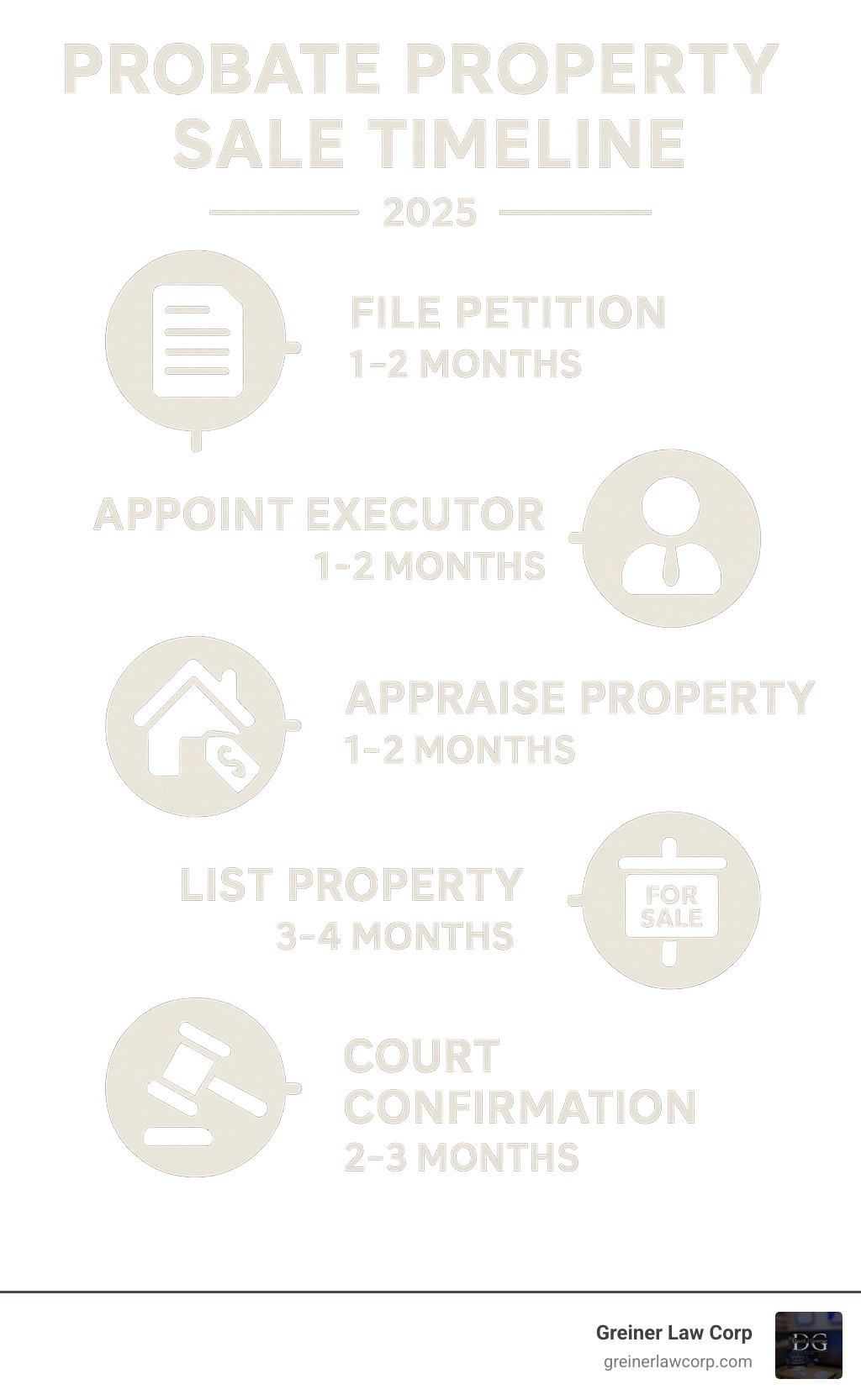
- Initiate probate and get appointed as executor/personal representative
- Obtain property appraisal (must sell for at least 90% of appraised value)
- Get court authority to sell (full vs. limited authority)
- List and market the property with probate disclosure
- Steer court confirmation and potential overbid process
The probate process exists to prevent fraud after someone dies, but it creates significant problems for property sales. Unlike a standard real estate transaction, selling during probate requires court oversight, beneficiary notifications, and strict legal procedures that can extend the timeline from 6 months to over a year.
The reality is stark: probate sales involve more bureaucracy than normal sales, with costs ranging from 6-10% of the estate value. You’ll need to maintain mortgage payments, property taxes, and insurance while navigating court schedules and potential family disputes.
As someone who has dealt with the sale of family businesses and complex real estate transactions, I understand the frustration of legal processes that seem designed to slow you down rather than help you move forward. The probate system, while necessary for protecting estates and heirs, creates a maze of requirements that can overwhelm even experienced business owners. I’m David Greiner, Esq., and through my years of transactional law practice, I’ve helped clients steer the complexities of selling properties during probate, ensuring they achieve their goals efficiently while meeting all legal requirements.
The Timing of a Probate Sale: Before, During, or After?
When a loved one passes away, the question of what happens to their property often comes to the forefront. Understanding when a house can be sold relative to the probate process is crucial. Probate is a legal process that ensures a deceased person’s assets are properly identified, debts are paid, and remaining assets are distributed to heirs or beneficiaries, either according to a will or state law if no will exists. This court-supervised process is designed to prevent fraud and ensure everything is handled correctly.

The authority to sell property typically rests with an appointed personal representative (often called an executor if there’s a will). This individual acts under the supervision of the probate court, especially when real estate is involved.
Selling Before Probate Begins
Can a house be sold before probate in California or any other state? The simple answer is generally no. Until the probate process has officially begun and a personal representative has been granted the legal right to manage the decedent’s assets, you do not technically own the house, and therefore, it is not yours to sell. The legal title must pass through the estate.
However, there are specific scenarios where a property might avoid probate altogether, allowing it to be sold without this process:
- Living Trust: If the property was transferred into a living trust before the owner’s death, it bypasses probate. The trustee of the trust can then sell the property according to the trust’s terms.
- Joint Ownership with Right of Survivorship: Properties held in joint tenancy with right of survivorship or tenancy by the entirety automatically pass to the surviving owner(s) upon death, avoiding probate. This means the surviving owner can then sell the property directly.
- Transfer-on-Death (TOD) Deed: In some states, a TOD deed allows real estate to transfer directly to a named beneficiary upon the owner’s death, bypassing probate.
- Payable-on-Death (POD) & Beneficiary Designations: While less common for real estate, these apply to accounts that transfer directly to beneficiaries.
- Small Estate Affidavit: In California, if the value of the estate is below a certain threshold (currently $184,500), a simplified process using a Small Estate Affidavit might be available, potentially avoiding formal probate for property.
If none of these apply, the property must go through probate to legally transfer ownership, preventing an early sale.
Selling a House During the Probate Process
Yes, a house can be sold during probate. In fact, this is a very common scenario. The personal representative (executor) of the estate has the authority to contact a realtor and list the property for sale. This often becomes necessary to:
- Settle outstanding debts of the estate, such as medical bills, credit card debts, or even the mortgage on the property itself.
- Pay legal fees and other administrative costs associated with the probate process.
- Distribute proceeds among multiple heirs, especially if the heirs do not wish to jointly own the property.
- Maintain the property, as holding onto an empty house can incur significant costs (mortgage payments, property taxes, insurance, utilities, and maintenance), which can quickly deplete the estate’s value.
The personal representative is able to sell the property with court oversight, meaning certain steps of the sale process may require court approval, as we’ll detail later. This ensures transparency and protects the interests of all beneficiaries and creditors.
Selling After Probate is Complete
Once probate has been wrapped up, the house has been legally transferred to a person or a group of people (the heirs or beneficiaries). At this point, they legally own the property and are free to sell it as they would any other piece of real estate, without any further court supervision. This becomes a standard real estate transaction.
While selling after probate offers the most freedom, waiting for the process to conclude can be lengthy. Probate sales, even in straightforward cases, can take anywhere from six months to over a year. For complex estates or those with disputes, it can extend to several years. Therefore, selling during probate, while more complex, is often the most practical and financially sound option for many estates.
The Step-by-Step Guide to Sell a House in Probate
When you need to sell house in probate, the process can feel overwhelming at first. But here’s the good news: thousands of families successfully steer this journey every year. We’ve guided many families through this process in California, from Victorville to Los Angeles, Riverside, and San Bernardino.
Think of it like following a recipe – each step builds on the last one, and while it takes patience, the end result is worth it. Let’s walk through exactly what you’ll need to do.
Step 1: Initiating Probate and Appointing an Executor
Everything starts with getting the legal process rolling. You’ll head to the probate court in the county where your loved one lived and file a petition to open the estate. This isn’t as intimidating as it sounds – you’re essentially telling the court “we need help sorting out this person’s affairs.”
You’ll need to bring the original death certificate and the last will and testament if one exists. Don’t worry if there’s no will – the court handles those situations too.
The court will then officially appoint someone as the personal representative. If there’s a will that names an executor, that person usually gets the job. If not, the court will appoint an administrator (often a close family member).
Here’s the crucial part: you’ll receive a document called Letters of Testamentary (or Letters of Administration). Think of these as your official “permission slip” to act on behalf of the estate. Without these Letters, you can’t legally sell house in probate or handle any other estate business.
Step 2: Property Valuation and Preparation
Now comes the detective work – figuring out what the property is actually worth. California requires you to hire a court-approved appraiser to determine the market value. This isn’t optional, and it serves an important purpose: protecting everyone involved from a property being sold too cheaply.
Here’s a key rule to remember: the property must sell for at least 90% of its appraised value. So if your house appraises for $500,000, you can’t accept an offer below $450,000.
What about repairs? This is where many families get stuck. Maybe the house has been sitting empty, or your loved one couldn’t keep up with maintenance in their final years. You have options here.
If the estate has funds, you can use those for necessary repairs to get a better sale price. If money’s tight, consider selling the property “as-is.” Cash buyers and investors often prefer this approach – they’ll handle the renovations themselves and usually close faster.
Step 3: Obtaining Authority to Sell (Full vs. Limited)
This step determines how much freedom you’ll have in the sale process. California’s Independent Administration of Estates Act (IAEA) gives personal representatives different levels of authority, and this dramatically affects your timeline.
With full authority under IAEA, you have much more control. You can sell the property without getting court approval first, but you must send a “Notice of Proposed Action” to all beneficiaries and creditors. If nobody objects within 15 days, you’re free to proceed. This route is faster and gives you more negotiating flexibility.
Limited authority means more court oversight. You’ll need court confirmation for the sale, which adds time but also includes an interesting twist – the overbid process. During the court hearing, other buyers can show up and bid on your property like an auction.
The minimum overbid rules are specific: the first competing bid must be at least 105% of your accepted offer plus $500. So if you accepted $400,000, the first overbid would need to be at least $420,500.
Step 4: Listing, Marketing, and Accepting an Offer
Time to find a buyer! Here’s where hiring the right probate real estate agent makes all the difference. These agents understand the unique aspects of probate sales and know how to market to buyers who aren’t scared off by the process.
Your agent will disclose the probate status to potential buyers upfront. Some buyers actually prefer probate properties because they know the seller is motivated and the price has been professionally established.
When offers start coming in, review them carefully with your agent. If you have limited authority, the highest offer might not win if someone shows up at the court hearing with a better bid.
Once you accept an offer, you’ll sign a purchase agreement that includes language about court approval if needed. The buyer typically understands they’re entering a somewhat different process than a standard home purchase.
Step 5: Court Confirmation and the Overbid Process
If your sale requires court confirmation, you’ll file a petition with the probate court and wait for your hearing date. This is where things can get exciting – or nerve-wracking, depending on your perspective.
The court hearing resembles a live auction. Your original buyer can attend and compete, and new buyers might show up hoping to snag the property. The judge oversees the bidding, ensuring everything follows the rules.
Here’s how the bidding works: that first overbid needs to be 105% of the original offer plus $500. After that, bids continue in set increments until nobody wants to go higher. The winning bidder must be prepared – they’ll need to provide a 10% deposit via cashier’s check right there in the courtroom.
Once the judge confirms the final sale, you’re almost at the finish line. The transaction proceeds to closing just like any other real estate sale, and the new owner gets their keys.
The entire process requires patience, but remember – you’re ensuring the estate gets fair value while protecting everyone’s interests. That’s exactly what the probate system is designed to do.
Navigating the Financial & Legal Complexities
When you sell house in probate, you’re not just handling a real estate transaction—you’re managing an entire estate’s financial obligations while navigating complex legal requirements. Think of it as juggling multiple balls while walking a tightrope. The good news? With the right guidance, it’s absolutely manageable.

The Financial Realities When You Sell a House in Probate
Let’s be honest about the costs upfront: probate can be expensive. According to the American Bar Association, probate and administration fees typically run between 6-10% of the estate’s total value. California, where we practice, is known for having some of the highest probate costs in the nation.
The major expenses include court filing fees (around $435 in California, though additional fees often apply), attorney fees based on statutory schedules (starting at 4% for the first $100,000 of the estate’s gross value), and executor compensation calculated using similar percentages. You’ll also face costs for professional appraisals, certified documents, and various administrative expenses.
But here’s what catches many families off guard: the ongoing costs of maintaining the property during probate. Mortgage payments don’t stop just because someone has passed away—the estate (or often the family) must keep these current to avoid foreclosure. Property taxes continue accumulating, insurance must be maintained to protect against damage or liability, and utilities and maintenance costs can add up quickly, especially if the house sits empty for months.
The silver lining? These expenses are generally paid from the estate itself, often from the proceeds when you sell house in probate, before any remaining assets go to the heirs.
Navigating Legal Problems When You Sell a House in Probate
Beyond the financial complexities, several legal problems can impact your property sale. The most significant is the creditor claims period. Probate exists partly to ensure the deceased’s creditors get paid, so the personal representative must publish a notice to creditors about the probate proceedings.
In states like Florida, creditors typically have three months from this publication to make their claims, and you can review the specific Rules for creditors in Florida Statute §733.702. This means proceeds from your property sale might be held in escrow for up to three months while these claims are resolved—creditor claims take priority over distributions to beneficiaries.
Title issues and liens present another common challenge. Before any sale can close, the property’s title must be completely clear. This might involve resolving old liens from unpaid taxes, mechanics’ liens, or judgment liens. There’s also a personal representative’s lien for probate expenses that attaches to the real estate, taking precedence over other creditor claims.
Beneficiary disputes can be particularly challenging when emotions run high during an already difficult time. Multiple heirs might disagree about the sale price, whether to sell at all, or how to divide the proceeds. These disputes can significantly delay both the sale and the entire probate process. Open communication and mediation work best, but sometimes court intervention becomes necessary.
Finally, tax implications require careful consideration. While inheritance taxes are uncommon at the federal level, estate taxes might apply depending on the estate’s value and state regulations. More commonly, capital gains tax can apply to any appreciation in the property’s value from the time of inheritance to the time of sale. Consulting with a tax professional is essential to understand these implications fully.
At Greiner Law Corp, we’ve helped families steer these complexities throughout California, from Victorville to Los Angeles, Riverside, and San Bernardino. Our business-minded approach focuses on your goals while helping you manage risk effectively throughout this intricate process.
Frequently Asked Questions about Selling a Probate Property
When families face the challenge to sell house in probate, they often have similar questions and concerns. Having guided countless clients through this process across California, from Victorville to San Bernardino, I’ve heard these questions time and again. Let me address the most common ones with straightforward answers.
How long does a probate sale typically take?
If you’re hoping for a quick sale, I have to be honest with you – probate sales require patience. The entire process typically takes six months to over a year, with some complex cases extending even longer. Think of it as a marathon rather than a sprint.
Several factors influence this timeline. Court schedules play a major role, as probate courts often have heavy caseloads that can delay hearings and approvals. The complexity of the estate matters too – estates with numerous assets, significant debts, or unclear ownership naturally require more time to sort through.
Beneficiary disputes can bring everything to a grinding halt. When family members disagree about the sale price, whether to sell at all, or how to divide proceeds, the process can stretch on for years until these conflicts are resolved. Creditor claims also add time, as the law typically allows three months for creditors to come forward after proper notice is published.
The good news? Working with experienced professionals who understand the probate process can help streamline things as much as legally possible. While we can’t eliminate all delays, we can certainly minimize unnecessary ones.
Can you avoid selling a house in probate?
This is one of my favorite questions because the answer is often yes – but it requires planning ahead. If certain legal structures were put in place before the owner’s death, the property can bypass probate entirely. This means you wouldn’t technically be selling a house “in probate” at all.
Living trusts are probably the most effective tool for this. When property is transferred into a living trust before death, it bypasses probate completely. The trustee can then sell the property according to the trust’s terms without court involvement.
Joint ownership with right of survivorship also works well, especially for married couples. If the property was owned jointly with another person, it automatically passes to the surviving owner upon death. No probate required.
Some states offer transfer-on-death deeds, which allow property to pass directly to a named beneficiary. California also provides small estate affidavits for estates valued below $184,500, which can simplify or eliminate formal probate requirements.
If none of these strategies were implemented before death, and the property was solely owned by the deceased, then formal probate will likely be necessary to legally transfer ownership.
What happens if the property needs significant repairs?
This scenario is more common than you might think. Properties entering probate are often in disrepair, especially if the deceased was elderly or the house sat vacant for months. It’s a challenge that requires careful consideration of your options.
If the estate has sufficient funds, you can use those assets to make necessary repairs. This approach often makes financial sense because improvements can increase the sale price enough to offset the repair costs. However, this decision should be made carefully, considering the beneficiaries’ best interests and local market conditions.
Selling the property “as-is” is often the more practical choice. This means the buyer accepts the property in its current condition, including any defects or needed repairs. While this might result in a lower sale price, it eliminates the time, hassle, and financial risk of managing renovations during an already complex probate process.
Properties sold “as-is” often attract cash buyers and real estate investors who specialize in purchasing homes that need work. These buyers typically move quickly, pay in cash, and don’t require traditional financing that might be complicated by the property’s condition. This can significantly speed up the sale process and provide a clean, straightforward transaction.
The decision between repairing and selling “as-is” should be made after getting a professional appraisal and understanding current market conditions in your area. Sometimes a few strategic repairs can make a big difference, while other times it’s better to let the buyer handle everything.
Conclusion
The journey to sell house in probate is rarely straightforward, but it doesn’t have to be overwhelming. What might initially feel like an impossible maze of legal requirements, court procedures, and financial obligations becomes much more manageable when you understand the process and have the right support.
Throughout this guide, we’ve walked through the essential steps together—from that initial court filing to obtain your Letters of Testamentary, through the property appraisal and court authority phases, all the way to listing your property and navigating the potential overbid process. Each stage has its challenges, but also its solutions.
The financial realities are significant. With probate costs potentially reaching 6-10% of the estate’s value, plus ongoing expenses like mortgage payments and property maintenance, the stakes are real. Add in the legal complexities of creditor claims, beneficiary disputes, and tax implications, and it’s clear why many families feel stuck.
But here’s what we’ve learned from helping families across California: complexity doesn’t mean impossibility. When you have experienced guidance, even the most intricate probate sale becomes a series of manageable steps rather than an impossible challenge.
At Greiner Law Corp, we’ve been walking alongside families through these exact situations since 2003. Whether you’re in Victorville dealing with a family ranch, in Los Angeles handling a complex estate, or anywhere across Riverside and San Bernardino counties, we understand that every probate sale is ultimately about people—not just property.
Our approach is different because we focus on your specific goals. Maybe you need to sell quickly to settle debts. Perhaps you’re managing family disagreements about the property’s future. Or you might be weighing whether to repair the house or sell it as-is. Whatever your situation, we help you steer the legal requirements while keeping your priorities front and center.
The probate process exists for good reasons—protecting estates from fraud and ensuring debts are properly handled. But that doesn’t mean it has to control your timeline or limit your options. With the right strategy and professional support, you can move through the process efficiently and achieve the outcome that works best for your family.


