Why Probate Real Estate Training Opens Doors to Untapped Opportunity
Probate training for realtors is one of the most overlooked yet profitable specializations in real estate. While most agents compete for traditional listings, probate specialists tap into a niche where over a million houses sell annually, often with less competition and higher commissions.
Quick Guide to Probate Training for Realtors:
- What it is: Specialized education for agents to manage probate real estate transactions.
- Time required: 10-15 hours for most online courses.
- Cost range: $125-$700 for certification, plus potential membership fees.
- Key certifications: Certified Probate Expert (CPE), Certified Probate Real Estate Specialist (CPRES), and state-specific options.
- ROI potential: Higher commissions, a recession-proof niche, and meaningful work.
- Core skills learned: Legal processes, marketing to executors, and compassionate client service.
The probate process, which occurs after a death to settle an estate, creates unique opportunities for agents trained in its legal requirements and emotional sensitivities. As one specialist noted, “Learning probate has been life changing and the niche is recession proof.”
Agents choose this specialization for its consistent lead source, higher transaction values, and the chance to help families during difficult times while building relationships with attorneys and estate professionals.
I’m David Greiner, Esq., and my background in transactional law gives me unique insight into how probate training for realtors builds legal knowledge and business opportunities. I’ve seen proper training transform agents into trusted advisors who can steer complex probate sales and build profitable, sustainable practices.
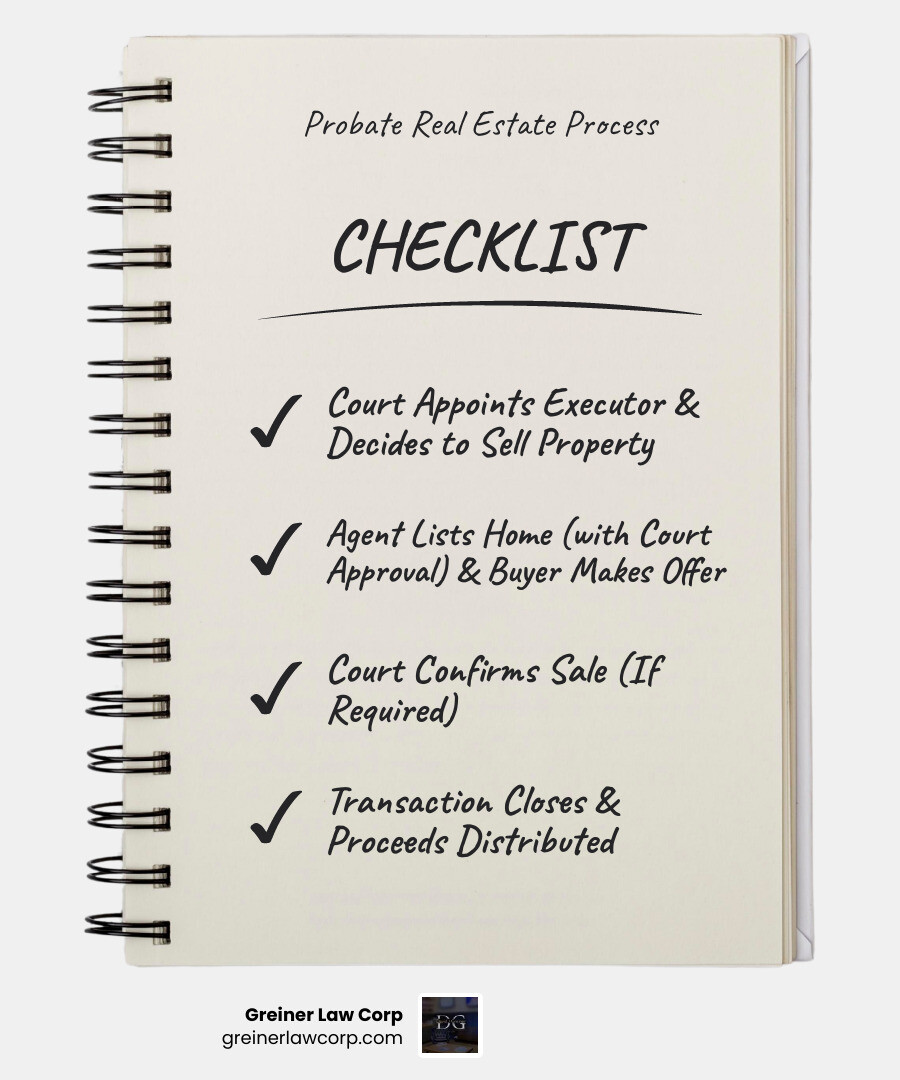
Probate training for realtors vocabulary:
The Untapped Potential: Why Specialize in Probate Real Estate?
Imagine a special lane on the crowded real estate highway with less traffic, a steady flow of leads, and bigger payoffs. Welcome to probate real estate. It’s a golden opportunity to become a valued expert in your community.

One of the best reasons to get probate training for realtors is the sheer volume of business. Over a million homes go through probate annually. This isn’t a fleeting trend; it’s a constant source of listings, regardless of the economic climate. While other market segments slow down, estates always need to be settled. This provides a reliable stream of potential clients, setting you apart from agents chasing traditional buyers and sellers.
Beyond lower competition, specializing in probate often leads to higher commissions. These properties can involve complex situations that require a skilled, trained hand, making your expertise incredibly valuable. You become the go-to person for families and their attorneys, positioning you for more significant earnings. This niche also provides a unique chance to build a powerful referral network with probate attorneys, financial planners, and estate liquidators. At Greiner Law Corp, we believe helping real estate professionals build these strong networks is vital for their long-term success.
Curious to see how this specialization can change your career? Learn more about becoming a Probate Realtor.
The Financial Advantages
The probate niche is often called “recession-proof” because life events continue regardless of the economy. When someone passes away, their estate, including real property, must be settled. This creates a consistent flow of motivated sellers who need to finalize the estate.
For agents, this means steady listing opportunities. Training programs teach you how to find listings from Personal Representatives and Executors. In California, for example, there’s a potential for over 1,000 off-market properties each month in just nine counties, including Los Angeles and Orange County. Tapping into that market is a huge advantage.
Quality probate training for realtors helps you maximize commissions. Understanding details like the difference between full and limited authority in probate cases allows you to manage the process more effectively, leading to clearer, more profitable transactions. The potential for building wealth and creating quick cash flow is undeniable.
This niche also opens doors for investors. Knowing the probate process can give you a significant edge when buying properties. Dive deeper into the details of How to Buy a Probate Sale House.
The Personal Fulfillment
Beyond the financial benefits, many agents find immense personal satisfaction in probate. This isn’t just about closing a deal; it’s about providing genuine help to families during one of their toughest times.
As a probate specialist, you become a compassionate, knowledgeable guide. Your training teaches you to offer support while handling sensitive client relationships. You learn to explain probate’s complexities clearly, helping clients make smart choices. This reduces stress for grieving families by helping them sell a loved one’s home quickly and for a fair price.
Staying neutral is crucial, especially if family disagreements arise. Your training prepares you to steer tricky situations and focus on the practical side of the sale while being empathetic. It’s purpose-driven work that makes a difference, protecting beneficiaries’ interests and ensuring the estate is settled efficiently.
Understanding the responsibilities of those managing an estate is key. For more details, explore Executor Duties Explained.
Building Your Expertise: Essential Skills for a Probate Specialist
Becoming a probate real estate specialist means acquiring a unique skill set that blends legal knowledge with exceptional emotional intelligence. It’s about being both a savvy business person and a compassionate guide.

At its core, probate training for realtors provides essential legal and procedural knowledge. You’ll learn the terminology, understand the court process, and recognize key timelines and paperwork. This foundation enables you to explain probate’s complexities with clarity.
Soft skills are just as important. You’ll develop empathy, learn to communicate with grieving families, and understand the importance of neutrality, especially when family dynamics are tense. At Greiner Law Corp, we know that mastering these skills is fundamental to prioritizing client goals and managing their risk preferences effectively.
To truly excel, you need to grasp the basics of What is Probate Law?.
Core Legal and Procedural Knowledge
You don’t need to be an attorney, but you must understand the landscape. This includes knowing the difference between a will and a trust, heirs and beneficiaries, and the role of the executor (or personal representative).
A key part of your training will focus on selling real property in probate. You’ll learn the critical distinction between “full authority” and “limited authority” under the Independent Administration of Estates Act (IAEA). Full authority allows for a faster sale, potentially without court confirmation, while limited authority typically requires it. Knowing this helps you set realistic client expectations.
You’ll also become familiar with necessary legal documents and factors affecting taxes, such as estate taxes, capital gains, and property tax reassessment exclusions. Understanding these nuances allows you to offer greater value and guide clients through the entire process.
For a deeper dive, check out The Ins and Outs of Probate Sales in Real Estate.
Essential Soft Skills for Client Success
In the probate niche, your ability to connect with clients is paramount. Families are often emotionally vulnerable, and this is where your soft skills shine.
- Active Listening and Empathy: Clients need to feel heard and understood. Listen for unspoken needs to offer compassionate support.
- Navigating Family Dynamics: You’ll often encounter complex family situations. Your training will provide strategies for maintaining neutrality and guiding the family toward a unified decision.
- Patience and Professionalism: Probate sales can be lengthy and emotionally charged. A calm, empathetic demeanor is essential for setting clear expectations and alleviating client anxiety, even during difficult conversations.
Understanding how legal disputes can arise is also part of being prepared. Learn more about Who Pays Legal Fees in an Estate Dispute?.
Your Path to Certification: A Guide to Probate Training for Realtors
Ready to dive into the probate niche? Choosing the right training program is your first step. Let’s walk through what you need to know about getting certified in probate training for realtors.
First, understand the terms. Designations often require annual dues and ongoing membership, while Certifications are typically a one-time fee, sometimes with periodic renewals.
Modern training offers flexibility. You can choose online, self-paced courses that fit your schedule or live instructor-led sessions for real-time interaction. Many programs blend both, offering on-demand modules plus live coaching calls. Course fees generally range from $125 to $700, an investment in your career that can pay dividends for years.
| Certification Type | Curriculum Focus | Cost Range | Renewal Requirements | Key Benefits |
|---|---|---|---|---|
| Association-Backed (e.g., C.A.R.) | Comprehensive legal & procedural knowledge, state-specific nuances, forms, tax implications | $125 – $300 | Typically every 2 years (retake course) | Official recognition, often includes state-specific legal details, good for compliance |
| Private Training Company (e.g., Probate Mastery, MTI Education) | Lead generation, marketing strategies, sales psychology, relationship building, business scaling, national scope | $97 – $700+ (plus potential monthly fees) | Lifetime or annual fees, sometimes requires practical application (e.g., closed deals) | Practical, action-oriented, strong community & ongoing support, focus on business growth |
| Specialized Council (e.g., Residential Real Estate Probate Specialist) | Empathetic client support, navigating disputes, neutrality, hands-on exercises | Varies (often tied to council membership) | Varies (often annual dues) | Focus on soft skills, client management, ethical considerations |
What to Look for in a Probate Training Program
Not all probate training programs are created equal. Here’s what separates the good from the great:
- Comprehensive Curriculum: Look for programs with 15+ hours of content covering everything from legal terms to marketing. The best courses explain the entire process, including the difference between full and limited authority.
- Experienced Instructors: Seek out programs taught by seasoned probate attorneys or agents who have closed hundreds of probate deals. Real-world insight is invaluable.
- Practical Tools: The best programs provide actionable resources like marketing letter templates, probate scripts, and marketing plans you can use immediately.
- Ongoing Support: Look for programs offering live coaching, private online communities, and alumni networks. Access to experts and peers is a game-changer. Consider joining communities like the All The Leads Mastermind group for networking.
- Positive Reviews: Programs with hundreds of five-star reviews and testimonials from successful agents are usually a safe bet.
Understanding Common Probate Certifications
The probate training landscape offers several respected certifications, all designed to equip you for success. While names differ, the goal is the same.
- Certified Probate Specialist (CPS) programs often focus on providing complete business systems for probate, including lead generation.
- Certified Probate Expert (CPE) designations may require both coursework and practical application, such as closing actual probate deals.
- C.A.R. Certified Probate Specialist is valuable for California agents, diving deep into state-specific laws and procedures.
- CPRE™ (Certified Probate Real Estate) and Residential Real Estate Probate Specialist certifications often emphasize the human side of probate, focusing on empathy and managing sensitive situations.
Most quality probate training for realtors programs cover the probate timeline, marketing to personal representatives, legal documentation, court confirmation, and basic tax implications.
The Costs and ROI of Probate Training for Realtors
Course fees typically range from $125 to $700+, with some programs charging monthly subscriptions for ongoing support or lead services. Factor in potential renewal costs, marketing expenses, and the time investment to learn and implement your new skills.
While most courses involve 6-15 hours of video content, the real investment is the time you spend prospecting and building your business. The potential return is substantial. This recession-proof niche offers consistent leads and higher commissions. Agents who apply what they learn often see a positive ROI quickly, some closing their first deal within 30 days. The long-term value comes from building a sustainable practice that provides financial freedom and personal satisfaction.
Understanding How Much Does Probate Cost? helps you frame the value you bring to clients.
From Certified to Successful: Marketing Your Probate Niche
Certification is your foundation, but effective marketing turns that knowledge into a thriving business. A successful probate specialist needs a smart, strategic approach to finding clients and building a brand, all while navigating the niche’s ethical considerations.

Your marketing plan will differ from a traditional agent’s. You’re advertising a specialized service to help people during a difficult time, which means focusing on building relationships and demonstrating unique value. At Greiner Law Corp, our business-minded approach helps you manage risk and reach the right audience.
For a comprehensive guide, explore How to Get Probate Listings.
Finding and Converting Probate Leads
A consistent stream of leads is key. Unlike traditional real estate, probate leads come from specific channels:
- Courthouse Records: Probate filings are public information. While manual searches are time-consuming, online lead services can gather and organize this data for you.
- Online Lead Services: Services like ProbateData.com or C.A.R.’s on-demand service provide direct access to probate cases in specific counties, including high-value California markets like Los Angeles, Orange, and Riverside.
- Attorney Referrals: Building relationships with probate attorneys is a goldmine. They are often the first point of contact for executors and need reliable agents.
- Direct Mail: Sending targeted, empathetic marketing letters to personal representatives remains a highly effective strategy. Many training courses provide proven templates.
- Digital Marketing: A professional website and social media presence that clearly highlight your probate expertise are essential for establishing credibility.
Converting these leads requires an empathetic approach and a strong Unique Selling Proposition (USP) that highlights your specialized knowledge and compassionate service.
First, understand What is a Probate Listing?.
Building Your Professional Probate Network
In probate, your network is your net worth. Building strong relationships with other professionals is essential for referrals and support.
- Probate Attorneys: They handle the legal complexities and need knowledgeable agents to help clients sell property. Your goal is to become their trusted, go-to resource.
- Estate Planners and CPAs: These professionals are deeply involved in estate settlement and can be a fantastic source of referrals for clients who need to sell property.
- Vendor Team: Build a list of trusted vendors for services like property clean-outs, appraisals, and repairs. This adds immense value for your clients and can lead to reciprocal referrals.
By cultivating these relationships, you generate a steady stream of leads and build a team of trusted professionals to support your clients through the entire process.
For insights into the legal side of this partnership, explore What is a Probate Lawyer?.
Ethical Considerations and Challenges in Probate
Working in probate demands the highest level of integrity. You are dealing with families in distress, which requires sensitivity and impartiality.
- Confidentiality and Neutrality: Maintain strict confidentiality of all client information. You must remain neutral, especially when navigating family disputes over the sale of a property. Your role is to guide the transaction, not mediate conflict.
- Avoiding Conflicts of Interest: Be transparent and avoid any potential conflicts, particularly if you are also an investor looking to purchase probate properties.
- Managing Emotional Situations: Grieving families experience a wide range of emotions. Your ability to offer compassionate support while maintaining professionalism is crucial.
- Adhering to a Code of Ethics: Many certifications require adherence to a rigorous code of ethics. This commitment protects you and your clients and is fundamental to building trust.
Understanding the potential for legal disputes is part of your preparedness. Learn more about Probate Court Litigation.
Frequently Asked Questions about Probate Real Estate Training
When agents first learn about the probate niche, they have questions. Here are answers to the most common ones.
How long does it take to get a probate certification?
Probate training for realtors is accessible. Most online courses offer 6 to 15+ hours of content that you can complete at your own pace, often in a single weekend or over a few weeks. Live courses are typically one or two full days.
However, certification is just the start. The real question is how quickly you can generate business. Dedicated agents have closed their first probate deal within 30 days of training. Your success timeline depends on your commitment to applying the strategies you learn, such as building relationships with attorneys and marketing to personal representatives.
Do I need to be a legal expert to sell probate homes?
Absolutely not. This is a common misconception. Your training provides foundational knowledge, but you are not expected to be a lawyer. Your role is to be the real estate expert who understands the unique aspects of probate sales.
You’ll learn the vocabulary and processes to communicate confidently with attorneys and executors, but you will always work alongside a qualified Probate Attorney who handles the legal complexities. Think of yourself as an effective translator between the legal world and the real estate transaction. This collaborative approach builds trust and ensures everyone stays in their lane of expertise.
Is probate real estate a good niche in California?
California is one of the best states for a probate real estate specialty. The combination of a large population and high property values creates a robust, consistent market. Our practice is built around supporting agents in this niche throughout Southern California.
State-specific data shows potential access to over 1,000 off-market probate properties monthly across just nine counties, including Los Angeles, Orange, and San Bernardino. California’s complex probate rules actually work in your favor, creating high demand for knowledgeable agents who can steer them efficiently. When you understand details like California Probate Fees, you become an invaluable resource for families and legal professionals.
Conclusion: Become the Go-To Probate Expert in Your Market
The path of probate training for realtors opens a remarkable opportunity. While others compete for the same listings, you can access a market with over a million homes selling annually, often with less competition and higher commissions.
You now have a roadmap to success. You understand the financial advantages of this recession-proof niche and the personal fulfillment that comes from helping families. You know the essential legal and soft skills required and have a clear path to certification and marketing your expertise.
Education empowers action. The agents who succeed in probate invest in proper training and consistently apply what they learn. They become the community experts that attorneys trust and families rely on.
For realtors in California who complete their training and need a trusted legal partner, the team at Greiner Law Corp offers business-minded legal support to help you and your clients steer the probate process. Our commitment to prioritizing client goals ensures you can manage risk effectively in Victorville, Riverside, San Bernardino, Los Angeles, and throughout California.
Ready to transform your real estate career? Become a Certified Probate Realtor and start building the specialized practice that sets you apart.


