Probate court lawyers are essential guides when navigating the complexities of the probate process. If you’re dealing with the legal aftermath of a loved one’s death, here’s what you need to know:
- Probate Court Lawyers: Specialists in managing and distributing an estate’s assets.
- Legal Guidance: They handle will validation, asset distribution, and ensure creditor claims are settled.
- Simplify the Process: Expertise in probate laws aids in making the process smooth and legally sound.
The probate process involves court supervision to ensure the deceased’s assets are distributed according to their will or state laws. Estate planning, including creating wills and trusts, is crucial in reducing probate’s duration and complexity, offering peace of mind for you and your heirs.
I’m David Greiner, Esq., and I’ve leveraged my years of legal experience to support families and businesses through estate planning and probate matters. As a probate court lawyers advocate, I ensure clients receive focused and effective legal solutions at Greiner Law Corp.
Probate court lawyers vocabulary:
– estates
– probate court
Understanding Probate Court
Probate court is where the legal process of managing a deceased person’s estate occurs. This court-supervised process ensures that the deceased’s assets are distributed correctly, debts are settled, and any disputes are resolved.
What Exactly is Probate?
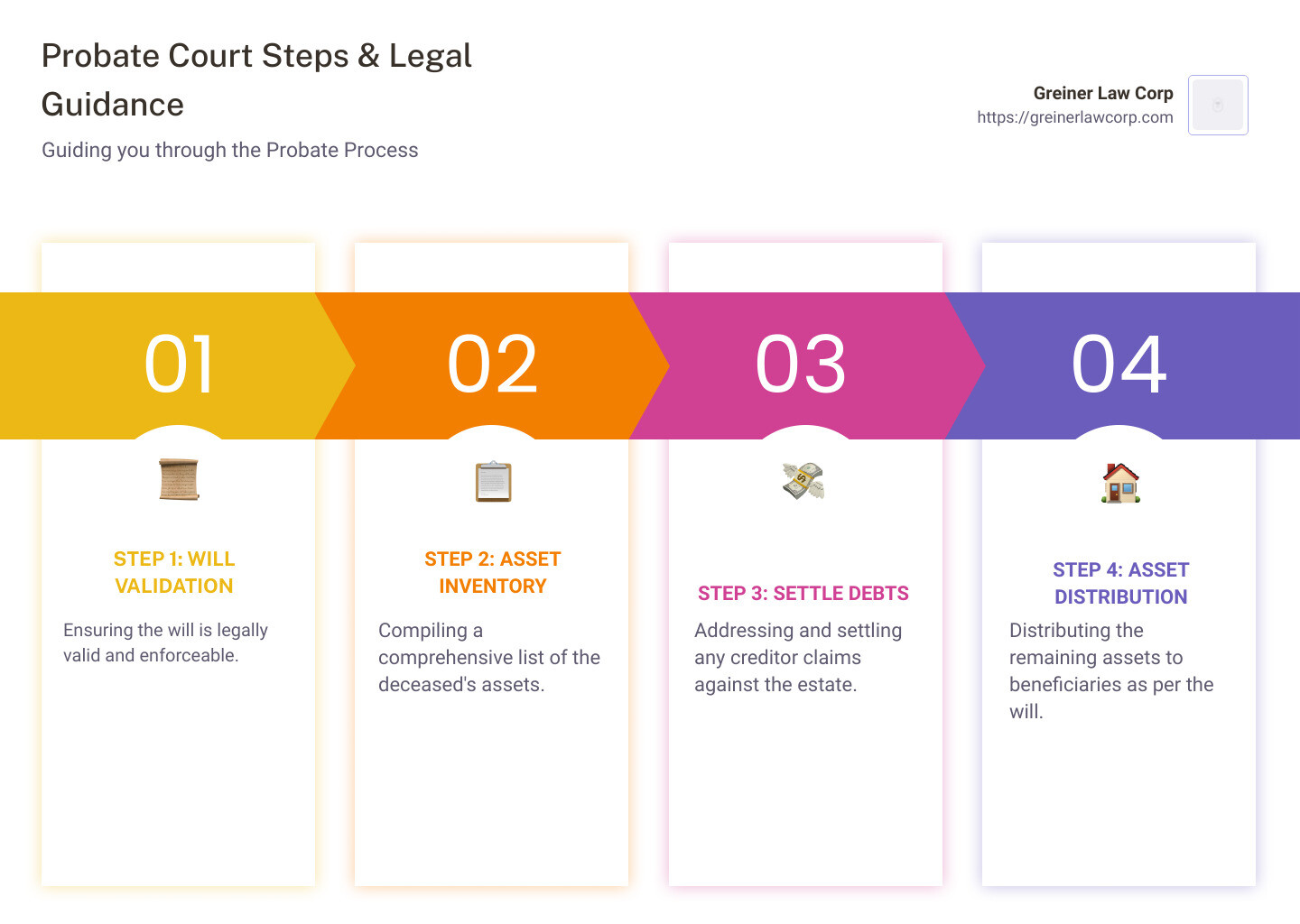
Probate is the legal process that authenticates a will, if one exists, and oversees the distribution of the deceased’s assets. It involves several key steps:
- Filing the Will: The executor submits the will to the probate court.
- Court Validation: The court checks the will’s legality.
- Asset Inventory: The executor lists and appraises all assets.
- Paying Debts: The estate pays off any debts and taxes.
- Distributing Assets: Remaining assets go to heirs as per the will or state law.
Why is Probate Court Supervised?
The supervision by probate court is crucial. It ensures that:
- Wills are Validated: The court confirms that the will is genuine and reflects the deceased’s wishes.
- Creditor Claims are Addressed: Creditors can file claims against the estate to recover debts.
- Fair Asset Distribution: Assets are distributed according to the will or, if no will exists, state intestacy laws.

Asset Distribution in Probate
One of the primary roles of probate is asset distribution. Here’s how it works:
- With a Will: Assets are distributed as per the deceased’s instructions in the will.
- Without a Will: Assets are distributed based on state intestacy laws, which typically favor close relatives.
Some assets bypass probate, including those with designated beneficiaries like life insurance policies and retirement accounts. These are known as non-probate assets.

Probate court is essential for ensuring that all aspects of the deceased’s estate are handled legally and fairly. It provides a structured way to manage an estate’s closure, protecting the interests of beneficiaries and creditors alike.
With a clear understanding of probate court’s role, you’re better equipped to steer the complexities of estate distribution. In the next section, we’ll dig into the specific roles of probate court lawyers and how they can assist you throughout this process.
The Role of Probate Court Lawyers
Probate court lawyers are your guides through the maze of estate administration. These legal experts ensure that everything runs smoothly and legally when managing a deceased person’s estate. Let’s explore the key roles they play.
Estate Administration
Estate administration involves overseeing the entire probate process. This means managing the deceased’s assets, paying off debts, and ensuring that what’s left is distributed to the rightful heirs. Probate court lawyers help executors, who are often overwhelmed with responsibilities, by providing expertise and support.
Asset Management: Lawyers help inventory and appraise the deceased’s assets. This step is crucial for determining the estate’s total value.
Debt Settlement: They ensure all valid debts and taxes are paid from the estate. This is vital to avoid legal issues down the line.
Distribution of Assets: Once debts are settled, the remaining assets are distributed according to the will or state law. Lawyers make sure this process is fair and legal.
Legal Representation
Probate court lawyers also offer legal representation. They act as the estate’s voice in court, handling any legal disputes or challenges. This can be invaluable, especially in complex cases where wills are contested or there are disagreements among heirs.
Court Proceedings: Lawyers handle all necessary court filings and appearances, ensuring that the estate complies with legal requirements.
Dispute Resolution: If conflicts arise, such as contested wills or claims from creditors, lawyers work to resolve these issues efficiently.
Executor Assistance
Being named an executor is a big responsibility. Probate court lawyers provide executor assistance, guiding executors through their duties and ensuring they fulfill their legal obligations.
Guidance and Support: Lawyers offer advice on fulfilling the executor’s duties, from filing the will to distributing assets.
Avoiding Liability: Executors can be held legally responsible for mistakes. Lawyers help avoid these pitfalls by ensuring all actions comply with the law.
Probate court lawyers are essential allies in the probate process. They ensure that the estate is managed correctly, debts are settled, and assets are distributed fairly. With their help, executors can steer this challenging process with confidence.
Understanding the role of probate court lawyers is just one piece of the puzzle. Next, we’ll explore the steps involved in the probate process, giving you a clearer picture of what to expect and how to prepare.
Steps in the Probate Process
Navigating the probate process can feel overwhelming, but breaking it down into steps makes it more manageable. Let’s explore the key stages: asset inventory, creditor claims, and estate distribution.
Asset Inventory
The first step in the probate process is creating an asset inventory. This involves listing all the deceased’s assets, such as real estate, bank accounts, and personal belongings.
Inventory Importance: An accurate inventory helps determine the estate’s value. This is crucial for fair distribution and settling debts.
Role of Executors: Executors, often with the help of probate court lawyers, gather and appraise these assets. They ensure nothing is overlooked, which could complicate the process later.
Creditor Claims
Once the assets are inventoried, the next step is addressing creditor claims. This involves notifying creditors and settling any outstanding debts.
Notification Process: Executors must inform all known creditors of the probate process. This allows creditors to file claims for what they are owed.
Debt Settlement: Valid debts must be paid before any estate distribution. This step protects the estate from future legal issues and ensures a smooth transition to the next phase.
Estate Distribution
After debts are settled, it’s time for estate distribution. This is where the remaining assets are passed on to the beneficiaries.
Following the Will: If there’s a will, it guides how the assets are divided. Executors must follow these instructions precisely.
State Intestacy Laws: If there’s no will, state laws determine who inherits the estate. Probate court lawyers ensure this process is followed correctly.
Final Accounting: Executors provide the court with a detailed accounting of the estate’s administration. This includes how assets were managed and distributed.
By understanding these steps, you can better prepare for the probate process. Whether you’re an executor or a beneficiary, knowing what to expect helps make this challenging time a little easier.
With the steps of the probate process clear, it’s important to know how to choose the right probate court lawyer to guide you through these stages. We’ll cover that next.
How to Choose the Right Probate Court Lawyer
Choosing the right probate court lawyer can make a big difference in navigating the probate process smoothly. Here are some key factors to consider:
Experience
Experience is crucial when selecting a probate court lawyer. You want someone who has handled similar cases and knows the ins and outs of probate law.
Track Record: Look for a lawyer with a solid record of successful probate cases. This shows they have the expertise needed to handle your specific situation.
Specialization: Ensure the lawyer specializes in probate law. Specialized knowledge means they are up-to-date with the latest legal statutes and can steer complex situations effectively.
Communication
Good communication is essential. You need a lawyer who listens to your concerns and explains the process clearly.
Accessibility: Make sure the lawyer is available when you need them. They should respond promptly to emails and phone calls, ensuring you’re always in the loop.
Clarity: Your lawyer should break down complex legal jargon into simple terms. This helps you understand each step of the process and make informed decisions.
Client-Focused Approach
A client-focused approach means the lawyer prioritizes your needs and works in your best interest.
Personalized Service: Choose a lawyer who tailors their services to fit your unique situation. They should provide personalized advice and strategies that align with your goals.
Empathy and Support: Probate can be a difficult time emotionally. A compassionate lawyer who treats you like family can help ease the stress and provide the support you need.
By considering these factors, you can find a probate court lawyer who will guide you confidently through the probate process, ensuring a smoother and less stressful experience.
Now that you know how to choose the right lawyer, let’s address some frequently asked questions about probate court lawyers.
Frequently Asked Questions about Probate Court Lawyers
What type of lawyer is best for wills?
When it comes to handling wills, a probate attorney is your go-to expert. These lawyers specialize in the legal processes involved in estate administration and can help ensure that a will is executed according to the decedent’s wishes. They are well-versed in navigating the complexities of probate court, making sure assets are distributed properly and debts are settled.
A will attorney, on the other hand, focuses on drafting and updating wills. They can help you create a comprehensive estate plan that includes not only a will but also trusts and other important documents. This ensures your assets are protected and your wishes are clearly outlined.
What is a probate lawyer in Texas?
In Texas, a probate lawyer assists with the legal process of transferring a deceased person’s assets to their heirs. They guide clients through probate navigation, which includes filing necessary documents, representing the estate in court, and resolving any disputes that may arise.
Additionally, Texas probate lawyers focus on asset protection. They help ensure that the decedent’s assets are safeguarded and distributed according to the will or state law if no will exists. By working with a probate lawyer, families can avoid unnecessary delays and complications during the probate process.
Do all assets need to go through probate?
Not all assets must pass through probate. Some assets are considered non-probate assets because they bypass the probate process and are transferred directly to beneficiaries. Examples include:
Beneficiary Designations: Assets like life insurance policies and retirement accounts often have designated beneficiaries. These assets are transferred directly to the named individuals without going through probate.
Jointly Owned Property: Property owned jointly with rights of survivorship, such as a house or bank account, automatically passes to the surviving owner.
Understanding which assets are non-probate can help simplify the estate administration process. A knowledgeable probate attorney can provide guidance on how to structure your estate to minimize probate and ensure a smoother transition for your heirs.
Now that we’ve addressed some common questions, let’s move on to the conclusion and explore how Greiner Law Corp can assist you in achieving your estate planning goals.
Conclusion
At Greiner Law Corp, we are committed to helping you steer the complexities of probate with ease and confidence. Our team understands that dealing with the legalities of estate planning and probate can be overwhelming, especially during times of grief. That’s why we prioritize your goals and approach every case with a business-minded strategy.
Client Goals First
We know that each client has unique needs and objectives. That’s why we take the time to listen and understand your specific situation. Whether you need help with estate administration, asset protection, or creating a comprehensive estate plan, our probate court lawyers are here to guide you every step of the way.
Business-Minded Approach
Our firm prides itself on offering solutions that not only address immediate legal challenges but also support your long-term goals. We focus on minimizing risk and ensuring that your estate plan is both effective and efficient. By leveraging our experience in probate law, we help you make informed decisions that align with your financial and personal objectives.
If you’re ready to take control of your estate planning or need assistance with probate matters, contact us today. Let Greiner Law Corp be your trusted partner in achieving peace of mind and protecting your legacy.


