Understanding Probate Court Costs
Probate court cost can be a significant concern for anyone dealing with the legal process of settling an estate after a loved one passes away. If you’re in a hurry, here are some quick answers:
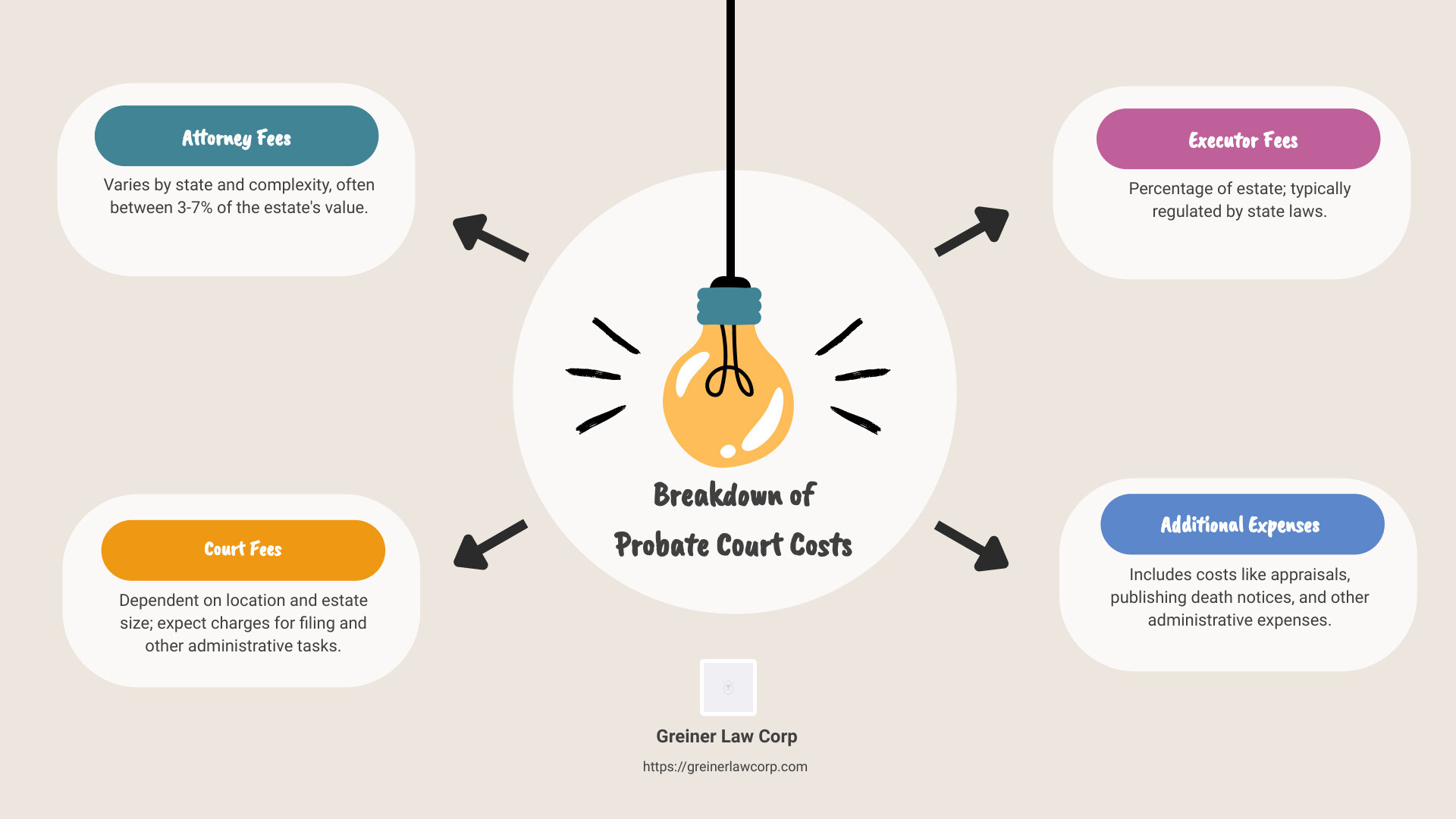
- Attorney fees: Varies by state and complexity, often between 3-7% of the estate’s value.
- Court fees: Dependent on location and estate size; expect charges for filing and other administrative tasks.
- Additional expenses: Includes costs like executor fees, appraisals, and publishing death notices.
Navigating probate can be daunting, especially when fees start to add up. The probate process involves settling debts and taxes before distributing the remaining assets according to the deceased’s wishes. This ensures that the estate is managed correctly, but it often comes with numerous fees that can eat into the estate’s value.
Attorney fees, court costs, and other administrative expenses are just a few of the costs that can accumulate during probate. These expenses can vary significantly based on factors like the state you live in, the size and complexity of the estate, and whether the will is contested.
Understanding these costs is crucial for anyone involved in estate planning or managing an estate. Being aware of the potential financial impact can help you take steps to simplify or even bypass the probate process altogether, ensuring that more of the estate goes to the intended beneficiaries.
I’m David Greiner, Esq., and with experience in estate planning and corporate governance, I prioritize helping clients steer probate court cost efficiently.
Now, let’s dig into the factors influencing probate court costs.
Important probate court cost terms:
– average cost for probate attorney
– how much does it cost to probate a will
– who pays probate attorney fees
Factors Influencing Probate Court Costs
When it comes to probate, the costs can add up quickly. Understanding the factors that influence these costs can help you plan better and potentially save money. Here are the key factors:
Estate Size
Estate size is one of the biggest determinants of probate costs. Larger estates generally mean more work. More assets need to be inventoried, valued, and distributed. For example, if the estate includes multiple properties or investments, the attorney will need more time to manage these assets.
- Larger estates = More assets to manage
- Smaller estates = Less work, potentially lower costs
Complexity
The complexity of the estate also plays a significant role. Complex estates often involve multiple assets, tax issues, and business interests. If the estate has complicated tax situations, the lawyer may need to work with tax professionals, adding to the overall time and expense.
- Multiple assets: More time required for inventory and valuation
- Tax issues: Additional collaboration with tax professionals
- Business interests: May require business valuations
State Laws
State laws can significantly impact probate costs. Each state has its own probate laws and fee structures. For instance, California has a statutory fee schedule based on the estate’s value, while other states might charge flat fees or hourly rates.
- California: Statutory fee schedule
- Texas: Costs vary depending on whether there’s a will
- Connecticut: Uniform fee structures but with additional charges for certain services
Attorney Fees
Attorney fees can vary widely. Some lawyers charge a flat rate, while others bill by the hour. In some states, attorneys can charge a percentage of the estate’s value. These fees are usually paid out of the estate, reducing the overall inheritance for beneficiaries.
- Hourly rates: Can add up quickly for complex estates
- Flat fees: More predictable but may still be significant
- Percentage of estate: Common in some states, can be costly for large estates
Court Fees
Court fees are another unavoidable cost. These include filing fees, fees for obtaining certified copies of documents, and other administrative costs. While these fees are generally not very high, they can add up.
- Filing fees: Vary by state and county
- Certified document fees: Additional cost for each document
- Administrative costs: Miscellaneous fees that accumulate

Understanding these factors influencing probate court costs can help you anticipate and manage the expenses involved. By planning ahead, you can take steps to simplify the process and reduce costs.
Next, we’ll explore the typical probate court costs by state, starting with California.
Typical Probate Court Costs by State
Probate costs can vary significantly depending on your state. Here’s a breakdown of what you can expect in California, Texas, Connecticut, and South Carolina.
California Probate Costs
In California, probate costs are largely driven by the estate’s value. The state has a statutory fee schedule that sets fees based on the gross value of the estate:
- 4% of the first $100,000
- 3% of the next $100,000
- 2% of the next $800,000
- 1% of the next $9 million
- 0.5% of the next $15 million
For example, an estate worth $500,000 could incur statutory fees around $13,000. Additional costs may include probate referee fees, court filing fees, and fees for extraordinary services.
The probate process in California typically takes 9 to 18 months, depending on the complexity of the estate and whether there are any disputes.
Texas Probate Costs
In Texas, the cost of probate can vary based on whether the deceased had a will.
Drawing Up a Will: Creating a simple will in Texas usually costs around $750 per person, or $1,000 if trust provisions are included.
Probate with a Will: If the deceased had a will, probate costs range from $750 to $1,500 in attorney fees, plus about $380 in court costs. For more complicated estates, fees can exceed $2,500.
Probate without a Will: If there is no will, costs start at $2,500 to $3,000 and can exceed $5,000 for more complicated estates. If heirs disagree, costs can reach $6,500 or more.
Connecticut Probate Costs
Connecticut has a uniform fee structure for probate, but additional charges can apply.
Minimum Duration: The probate process in Connecticut usually takes 9 to 12 months, but it can be longer if there are disputes or creditor claims.
Creditor Claims: Creditors must be notified and given an opportunity to file claims against the estate, which can add to the time and cost.
Fee Schedule: Fees are established by statute and are uniform throughout the state. You can use an online calculator to estimate probate fees.
South Carolina Probate Costs
In South Carolina, the cost of probate depends on the size of the estate and other factors.
Estate Size: Smaller estates may qualify for simplified procedures, while larger estates will incur higher costs.
Filing Fees: These can vary but generally range from $50 to $1,200, depending on the estate’s value.
Additional Costs: Other expenses may include appraisal fees, executor fees (usually a percentage of the estate), and attorney fees. Executors can also be reimbursed for travel, tax preparation, and other necessary expenses.
Understanding probate court costs in your state can help you plan better and avoid unexpected expenses. Next, we’ll dive into the common probate fees and expenses you should be aware of.
Common Probate Fees and Expenses
When dealing with probate, it’s important to understand the various fees and expenses that can arise. Here’s a breakdown of the most common costs you may encounter.
Court Filing Fees
Court filing fees are the initial costs you pay to petition the court and start the probate process. These fees vary by state and are typically based on the estimated size of the estate:
- Range: Filing fees can range from $50 to $1,200.
- Additional Charges: Some states may have additional charges for specific documents or actions within the probate process.
For example, in California, filing fees typically range from $300 to $400. In Connecticut, you can use an online calculator to estimate these fees.
Executor Fees
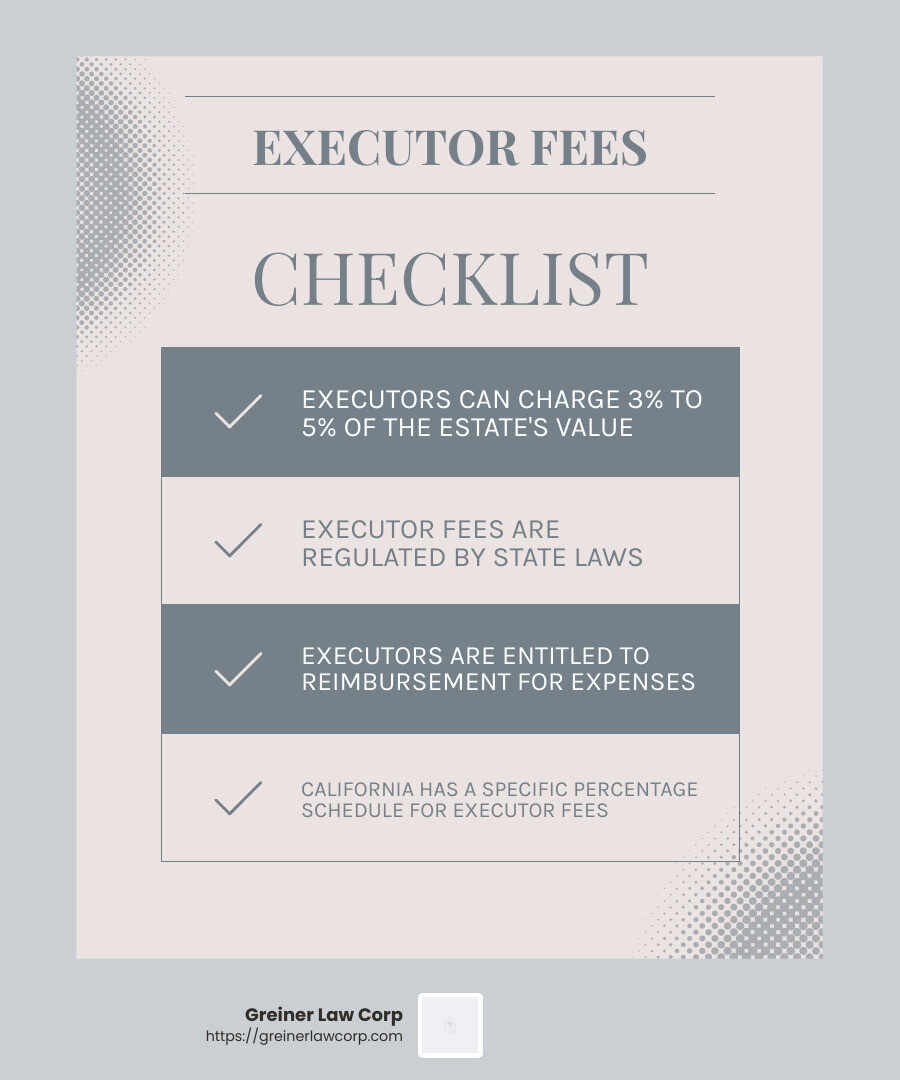
Executors, or personal representatives, are entitled to reimbursement for their work. This includes expenses like travel, tax preparation, and supplies. Executors can also charge a fee for their services, which is often a percentage of the estate’s value:
- Percentage of Estate: Generally, executors can charge between 3% to 5% of the estate’s value, depending on state regulations.
- State Regulations: Each state has different rules for executor fees. For instance, in California, the fee is set by statute and follows a specific percentage schedule.
Attorney Fees
Attorney fees are often the most significant cost in the probate process. These fees can be charged in two main ways:
- Hourly Rates: Attorneys may charge by the hour, with rates varying widely based on experience and location.
- Flat Fees: Some attorneys offer flat fee structures, especially for simpler estates. For example, in California, summary administration (for estates under $75,000) might cost between $1,500 to $3,000.
State-specific variations also play a role. In California, attorney fees are set by statute and follow a similar percentage schedule as executor fees.
Administrative Costs
Administrative costs cover various expenses needed to settle an estate. These can include:
- Publishing Death Notices: Required to notify creditors, typically costing around $100.
- Appraisals: Necessary for valuing non-cash assets. Costs can vary based on the number and type of assets.
- Miscellaneous Expenses: Other potential costs include notary fees, storage fees, and postage. For example, notifying beneficiaries through certified mail can cost between $10 to $300.
Understanding these common probate fees and expenses can help you prepare for the financial aspects of the probate process. Next, we’ll explore ways to minimize these costs and simplify the process.
How to Minimize Probate Court Costs
Estate Planning
Estate planning is the cornerstone of minimizing probate court costs. A well-prepared plan can save your loved ones both time and money.
Importance of a Will
A clear and comprehensive will is essential. It ensures your assets are distributed according to your wishes and can help avoid disputes among heirs. However, a will alone won’t avoid probate but can simplify the process.
Trusts
Creating a revocable living trust is a powerful way to bypass probate. You transfer ownership of your assets to the trust, and upon your death, the trustee distributes them according to your instructions. This avoids court involvement altogether.
Example: Imagine you own a home, a bank account, and some investments. By placing these assets in a trust, they pass directly to your heirs without probate.
Beneficiary Designations
Review and update your beneficiary designations regularly. Accounts like IRAs, 401(k)s, and life insurance policies can have named beneficiaries, allowing these assets to transfer directly without probate.
Avoiding Probate
Avoiding probate can save significant time and money. Here are some effective strategies:
Joint Ownership
Holding property in joint tenancy with rights of survivorship means it will automatically pass to the surviving owner(s) upon your death. This method is common for real estate and bank accounts.
Payable-on-Death (POD) Accounts
Register bank accounts as POD to ensure they transfer directly to a named beneficiary upon your death. This avoids probate and ensures quick access to funds.
Transfer-on-Death (TOD) Deeds
A TOD deed allows you to name a beneficiary to inherit your property upon your death. This is particularly useful for real estate and keeps the property out of probate.
Example: If you own a home and want it to go to your child after you die, a TOD deed ensures the property transfers directly to them without probate.
Simplifying the Process
Even if you can’t avoid probate entirely, you can still take steps to simplify the process and reduce costs.
Small Estate Procedures
Many states offer simplified probate processes for small estates. For example, in Texas, estates valued under $75,000 may be eligible for a simplified procedure. Check your state’s threshold to see if this applies.
Summary Administration
Some states have a summary administration process for smaller or less complex estates. This can significantly speed up the probate process and reduce costs.
Professional Advice
Consider consulting with a probate expert or attorney. They can offer invaluable guidance and ensure all paperwork is correctly filed, preventing delays and additional costs.
Quote: “Properly and strategically setting up your Estate Plan can protect your loved ones and simplify the process,” says estate planning expert Adair Buckner. “This means they can move towards closure more quickly after your loss.”
By taking these steps, you can minimize probate court costs and make the transition smoother for your loved ones.
Frequently Asked Questions about Probate Court Cost
What are probate fees in South Carolina?
In South Carolina, probate fees can vary based on the size and complexity of the estate. Here are some key points:
- Filing Fees: These range from $25 to $300, depending on the estate’s value.
- Executor Fees: Executors can charge up to 5% of the estate’s value for their services.
- Attorney Fees: These can be either a flat fee or an hourly rate, depending on the lawyer and the complexity of the estate.
Example: For an estate worth $200,000, the executor fee could be up to $10,000.
How much does probate cost in California?
California probate costs can be significant due to statutory fees based on the estate’s gross value:
- Statutory Fees:
- 4% of the first $100,000
- 3% of the next $100,000
- 2% of the next $800,000
- 1% of the next $9 million
- 0.5% of the next $15 million
Example: For an estate valued at $500,000, the statutory fees alone could be around $13,000.
- Additional Costs: Include court filing fees, probate referee fees, and fees for extraordinary services provided by the executor or attorney.
How long does probate take in Connecticut?
In Connecticut, the probate process can range from several months to a few years, depending on various factors:
- Minimum Duration: Even a straightforward probate case can take at least six months.
- Creditor Claims: Creditors have up to 150 days to file claims against the estate, which can extend the process.
- Complex Estates: Larger or more complicated estates may take longer, especially if there are disputes among heirs.
Fact: Interest at the rate of 0.5% per month accrues on all unpaid fees on decedents’ estates beginning 30 days after the date of the invoice, adding to the overall cost if the process is delayed.
By understanding these common questions, you can better prepare for the probate process and manage expectations regarding time and costs.
Conclusion
Navigating the probate court cost landscape can be challenging, but understanding the various fees and expenses involved can make the process smoother. As we’ve discussed, probate costs can vary widely based on factors like the estate’s size, complexity, and state-specific regulations. From court filing fees to executor and attorney fees, each element can impact the overall cost significantly.
Planning is Key
The importance of planning cannot be overstated. Proper estate planning can not only reduce the complexities involved but also minimize costs. Setting up a will, creating trusts, and using beneficiary designations are all effective strategies to avoid or streamline probate. Joint ownership and payable-on-death accounts also offer ways to bypass the probate process entirely, saving both time and money.
Greiner Law Corp Can Help
At Greiner Law Corp, we specialize in providing comprehensive probate services custom to your needs. Whether you need assistance with estate planning, trust creation, or navigating the probate process, our experienced team is here to help. We offer cost-effective solutions, including flat fees, free consultations, and payment plans, to ensure you receive the best support without breaking the bank.
Ready to take the next step? Contact us today to learn more about how we can assist you in managing probate court costs effectively. Our dedicated team is here to make the process as smooth and affordable as possible.
Understanding and managing probate court costs is crucial for a smooth and efficient estate administration. Proper planning and professional guidance can make a significant difference, ensuring that your loved ones are taken care of without unnecessary financial burdens.


