Navigating Assignment Contracts in Real Estate
Unlocking the potential of real estate through assignment contracts can feel like discovering a hidden opportunity. If you’re searching for how to assign a contract in real estate, here’s a concise guide:
- Identify a promising property.
- Negotiate a purchase agreement with the seller that includes assignment rights.
- Find a cash buyer interested in the property.
- Transfer your contract to this buyer, who then fulfills all the original terms.
- Earn a fee for facilitating the deal.
Assignment contracts are a gateway to profiting without the need for significant capital investments or full property ownership. They serve as a crucial tool in real estate wholesaling, allowing investors to act as intermediaries and earn from deals they orchestrate.
I’m David Greiner, Esq., and I’ve navigated the intricacies of contract law and real estate transactions for years, helping business owners like you make informed, profitable decisions. With my background in real estate and business law, I’m here to guide you on how to assign a contract in real estate effectively.
Understanding Assignment Contracts in Real Estate
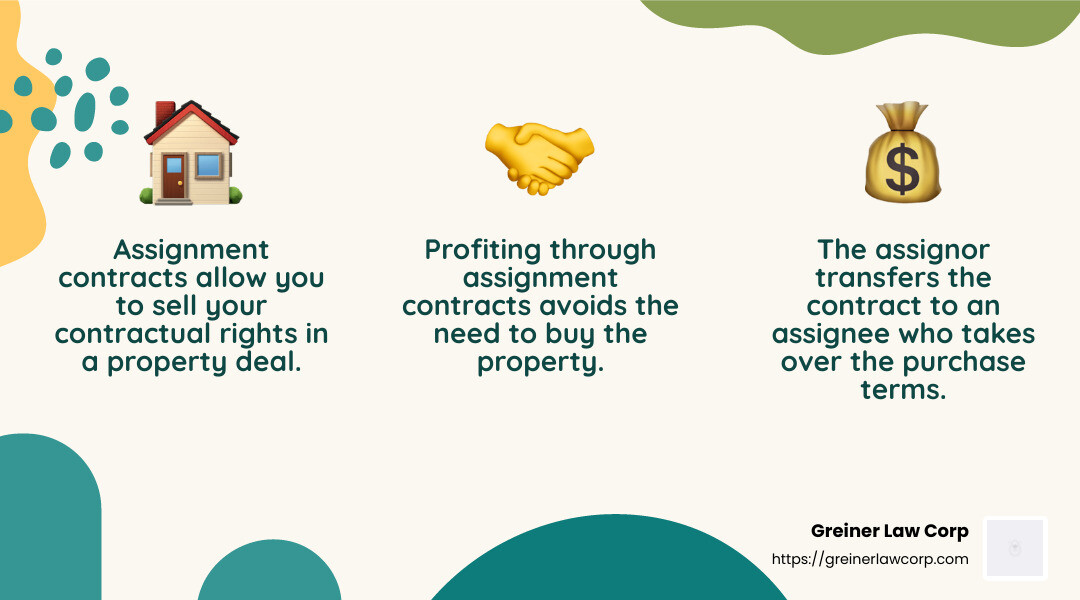
Assignment contracts in real estate can be a game-changer for investors. They allow you to transfer your rights and obligations in a property deal to another party. Here’s how it works:
Key Players: Assignor and Assignee
Assignor: This is you, the original contract holder. You’ve found a property and entered into a purchase agreement with the seller. Your role is to transfer your rights in this agreement to someone else.
Assignee: This is the person or entity you transfer your contract to. The assignee steps into your shoes, taking over your rights and obligations in the deal. They complete the purchase as per the original terms.
What Are Contractual Rights?
Contractual rights are the privileges you hold under a contract. In real estate, these rights often include the ability to purchase a property at a set price and terms. When you assign a contract, you’re transferring these rights to the assignee.
Why Use Assignment Contracts?
Assignment contracts are popular because they offer a way to profit without owning the property. You secure a property under contract, find a buyer willing to pay more, and assign the contract to them. The difference between your purchase price and the buyer’s price is your profit.
This strategy is particularly attractive due to its low-risk nature. You don’t need to finance the full purchase or deal with property management. Instead, you act as a middleman, facilitating the transaction.
For example, consider a scenario where an investor, Jane, secures a contract for a property at $150,000. She then finds an assignee willing to pay $160,000. By assigning the contract, Jane earns a $10,000 fee without ever owning the property.
Understanding these basics sets the stage for leveraging assignment contracts in your real estate endeavors. Next, we’ll explore the practical steps to assign a contract successfully.
How to Assign a Contract in Real Estate
Assigning a real estate contract involves a few key steps. It’s a process that allows you, the assignor, to transfer your contractual rights to an assignee. Let’s break it down.
Step 1: Secure an Assignable Contract
First, ensure the purchase agreement is assignable. This means it must include an assignment clause. Without this, you can’t legally transfer the contract. Always check the original contract for any non-assignable clauses. If it lacks an assignment clause, you might need to negotiate with the seller to modify the agreement.
Step 2: Enter the Purchase Agreement
Once the contract is assignable, enter into a purchase agreement with the property seller. This agreement outlines the terms, including the purchase price and closing date. It’s crucial that this document is clear, as it sets the foundation for the assignment.
Step 3: Find an Assignee
Next, find a buyer interested in taking over the contract. This is your assignee. They must agree to the terms of the original purchase agreement and be capable of fulfilling any obligations, such as financing the purchase.
Step 4: Determine the Assignment Fee
The assignment fee is your profit from the deal. It’s the difference between the price you secured in the original contract and the price the assignee is willing to pay. For example, if you contracted a property for $150,000 and the assignee agrees to pay $160,000, your assignment fee is $10,000.
Step 5: Draft the Assignment Agreement
Finally, draft an assignment agreement. This document formalizes the transfer of your rights to the assignee. It should clearly state the assignment fee and any other terms agreed upon. Both parties must sign this agreement to make it legally binding.
By following these steps, you can successfully assign a real estate contract and potentially earn a profit without ever owning the property. Next, we’ll discuss the legal considerations and best practices to ensure a smooth transaction.
Steps to Successfully Assign a Real Estate Contract
Assigning a real estate contract can be a lucrative strategy in the property market. Here’s a step-by-step guide to ensure you do it right.
Step 1: Find the Right Property
Start by identifying a property with potential. Look for homes that are below market value or those owned by motivated sellers. These could be properties facing foreclosure or with liens. Use resources like the Multiple Listing Service (MLS), networking groups, or online auction sites to find these deals.
Step 2: Enter the Contract
Once you find a suitable property, negotiate a purchase agreement with the seller. Ensure the contract includes an assignment clause, allowing you to transfer your rights to another party. This is crucial, as it makes the contract assignable. If the contract is non-assignable, you may need to negotiate with the seller to modify it.
Step 3: Find a Buyer
With the property under contract, the next step is to locate an end buyer, also known as the assignee. They should be interested in purchasing the property at a higher price than your original contract. Use your network, market online, or contact real estate agents to find potential buyers.
Step 4: Receive Your Assignment Fee
The assignment fee is your profit from the transaction. It’s the difference between the original purchase price and what the assignee agrees to pay. For instance, if you contracted the property for $150,000 and the assignee pays $160,000, your fee is $10,000. Make sure this fee is clearly stated in the assignment agreement.
Step 5: Complete the Assignment Agreement
Finally, draft an assignment agreement to formalize the transfer of your rights to the assignee. This document should include the assignment fee and any other agreed terms. Both parties must sign it to make it legally binding.

By carefully following these steps, you can successfully assign a real estate contract and earn a profit without taking on the risks of owning the property. Up next, let’s explore the legal considerations and best practices to ensure a seamless transaction.
Legal Considerations and Best Practices
When assigning a real estate contract, understanding the legal landscape is crucial. Let’s explore some key considerations and best practices to keep your transactions smooth and compliant.
Consent is Key
Before you assign a contract, ensure that all parties involved give their written consent. This includes the original seller and the buyer (assignee). Without consent, the assignment might not be legally enforceable, leading to potential disputes.
Watch Out for Non-Assignable Clauses
Not all contracts are assignable. Some have non-assignable clauses that explicitly prohibit the transfer of rights. If your contract includes such a clause, you’ll need to negotiate with the seller to modify it. Contracts are assignable by default unless stated otherwise, so always read the fine print.
Seek Legal Advice
Navigating the complexities of real estate contracts can be challenging. It’s wise to consult with a real estate attorney to ensure your contract is worded correctly and complies with local laws. They can help you understand any potential pitfalls and advise on modifications if needed.
Best Practices for a Smooth Assignment
Clear Communication: Keep all parties informed throughout the process. This builds trust and reduces misunderstandings.
Detailed Documentation: Ensure that every aspect of the assignment is documented. This includes the assignment fee, terms, and conditions. Proper documentation can prevent legal issues later.
Due Diligence: Conduct thorough due diligence on the property and the assignee. Verify that the buyer is serious and has the means to complete the purchase.
By following these legal considerations and best practices, you can confidently steer the assignment process. Up next, we’ll tackle some frequently asked questions about assigning real estate contracts to further clarify this strategy.
Frequently Asked Questions about Assigning Real Estate Contracts
How do you assign a contract?
Assigning a real estate contract involves transferring your rights as the assignor to another party, known as the assignee. Here’s a simple breakdown of the process:
Secure a Contract: First, you need to have a property under contract. This means you’ve agreed with the seller on a purchase price and terms.
Ensure Assignability: Check the contract for any non-assignable clauses. If the contract is non-assignable, you may need to negotiate with the seller to allow for assignment.
Get Consent: Obtain written consent from all parties involved, including the seller. This is crucial to ensure the assignment is legally enforceable.
Find an Assignee: Locate a buyer who is interested in purchasing the property. This is often done through networking or marketing strategies.
Draft an Assignment Agreement: This document transfers your rights in the original contract to the assignee. It should clearly outline the assignment fee you will receive.
Complete the Assignment: Once the assignee agrees to the terms, they take over your obligations, and you collect your assignment fee.
Why use a real estate assignment contract?
A real estate assignment contract offers several advantages:
Profit Potential: You can earn a profit without actually purchasing the property. The difference between your contract price and the price the assignee pays is your profit.
Low Risk: Since you don’t have to close on the property yourself, your financial risk is minimized. This makes it an attractive option for those looking to invest with limited capital.
Wholesaling: Assigning contracts is a key strategy in real estate wholesaling. It allows investors to quickly flip contracts and generate income without the need for extensive renovations or holding costs.
Is it legal to assign a real estate contract?
Yes, assigning real estate contracts is legal, but there are important considerations:
Consent: Always obtain the consent of all parties involved. Lack of consent can lead to disputes and the assignment being unenforceable.
Non-Assignable Contracts: Some contracts specifically prohibit assignment. If your contract has such a clause, it cannot be assigned without modifying the agreement.
Legal Advice: It’s advisable to seek legal advice to ensure compliance with local laws and to verify that the contract is assignable. A real estate attorney can help steer any legal complexities and ensure the assignment is properly executed.
By understanding these aspects, you can effectively use assignment contracts in your real estate investing strategy.
Conclusion
At Greiner Law Corp, we understand that real estate can be complex, especially when it comes to assigning contracts. Our mission is to simplify this process for you, ensuring that your real estate endeavors are successful and stress-free.
Client Goals are at the forefront of everything we do. Whether you’re looking to profit from real estate wholesaling or simply want to explore new investment opportunities, we’re here to tailor our services to meet your unique needs. We take the time to understand your objectives, ensuring that every step of the process aligns with your desired outcomes.
Our business-minded approach sets us apart. We don’t just provide legal advice; we offer strategic insights that consider the broader implications of your real estate decisions. By focusing on practical solutions and efficient processes, we aim to make your real estate transactions as straightforward as possible. This means you’ll not only be legally protected but also positioned for success in the market.
Navigating the intricacies of real estate contracts requires expertise and attention to detail. At Greiner Law Corp, we excel in identifying and mitigating risks, ensuring that your interests are well-guarded. From scrutinizing contract clauses to managing potential pitfalls, our team is dedicated to providing you with peace of mind.
Ready to open up new opportunities in real estate? Contact us today to learn how we can help you achieve your goals with confidence. Partnering with Greiner Law Corp means having a strategic ally by your side, committed to guiding you through the complexities of real estate with ease.


