How much should probate cost? This question often looms large for those dealing with estate distribution and the probate process. Probate costs can vary greatly depending on factors like estate complexity, location, and any disputes over the will. In general, you can expect probate costs to range from 3% to 7% of the estate’s total value. This includes legal fees, court fees, and other administrative expenses that can add up quickly.
Understanding these factors is crucial for anyone involved in probate, as it impacts not only the financial aspect but also the time it takes for assets to be distributed to their rightful beneficiaries. An efficient probate process ensures that your loved ones receive what they are entitled to with minimal hassle.
I’m David Greiner, Esq., an experienced attorney in probate and estate transactions. I have a wealth of experience navigating complex legal landscapes, including “how much should probate cost.” Let’s dive into what affects these costs and how to best manage them.
Understanding Probate Costs
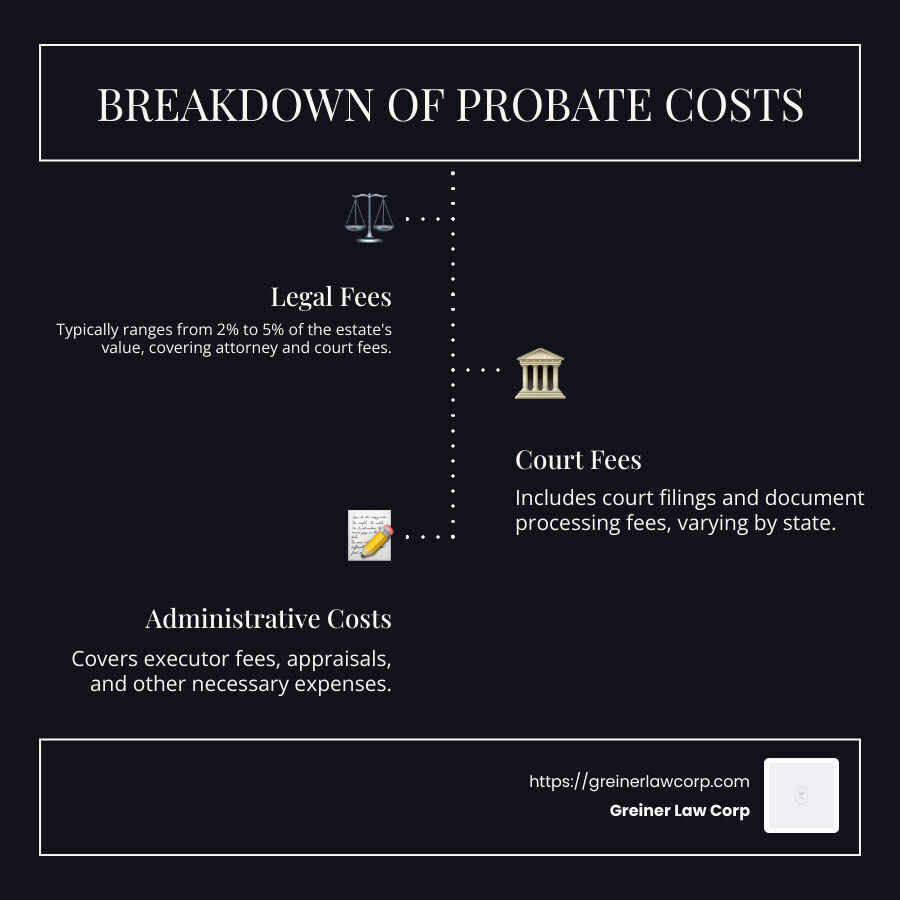
When diving into the probate process, grasp how various costs can add up. These costs typically fall into three main categories: legal fees, administrative costs, and the estate’s value. Understanding each of these can help you prepare for the potential financial impact.
Legal Fees
Legal fees are often the most significant part of probate expenses. They cover the attorney’s work in guiding the estate through probate. The fees can vary widely depending on the complexity of the estate and the state in which probate takes place. For instance, in Ohio, attorney fees are expected to be reasonable, with some counties setting a percentage fee schedule for settling an estate. However, these fees can range from 1% to 6% of the estate’s value, depending on the county.
Administrative Costs
These costs cover the necessary paperwork and tasks to transfer property after someone passes away. They include executor fees, court filing fees, and publication fees for legal notices. In Ohio, executor fees are typically a percentage of the estate’s value—4% for the first $100,000, 3% for the next $300,000, and 2% for amounts over $400,000. These costs can add up, especially if the estate involves real estate or other significant assets.
Example:
- If Joe’s estate is worth $500,000, the executor could potentially receive $11,000 just for managing the estate.
Estate Value
The value of the estate directly influences the overall cost of probate. Generally, the higher the estate’s value, the higher the probate cost. This is because more assets require valuation, management, and distribution. For example, probate costs can range from 3% to 7% of the estate’s total value, meaning a $500,000 estate might incur costs between $15,000 and $35,000.
It’s essential to note that while larger estates might incur higher costs, they also tend to have more resources to cover these expenses. However, even smaller estates can face significant costs relative to their size.
By understanding these elements of probate costs, you can better anticipate and manage the financial implications during what can be a challenging time. In the next section, we’ll explore the factors that can influence these costs and how they might be minimized.
How Much Should Probate Cost?
When considering how much should probate cost, it’s crucial to look at the average costs, the percentage of the estate involved, and the nationwide averages. These factors can give you a clearer picture of what to expect financially when navigating the probate process.
Average Cost
The average cost of probate can vary significantly, often depending on the complexity of the estate and the state-specific regulations. Nationwide, probate costs typically range from 3% to 7% of the estate’s total value. This means that for an estate valued at $500,000, probate expenses could fall between $15,000 and $35,000.
Percentage of Estate
Probate costs are often calculated as a percentage of the estate’s value. This percentage can include legal fees, court costs, and other administrative expenses. For example, in Ohio, attorney fees can be anywhere from 1% to 6% of the estate’s value, depending on the county and the complexity of the case. Similarly, executor fees might be structured as a percentage, often starting at 4% for the first $100,000 of the estate value.
Example:
- If an estate is worth $1,000,000, the total probate cost could range from $30,000 to $70,000, depending on the specific percentages applied.
Nationwide Average
Across the United States, the cost of probate can vary widely due to differences in state laws and the complexity of each individual estate. While some states have more streamlined and cost-effective processes, others might involve more intricate legal and administrative procedures, resulting in higher costs. On average, you can expect probate to consume about 3% to 7% of an estate’s value.
Understanding these costs and percentages can help you plan more effectively for the probate process. This knowledge allows you to anticipate expenses and explore strategies to potentially minimize them. Next, we’ll dive into the factors that influence these costs and explore ways to manage them effectively.
Factors Influencing Probate Costs
Probate costs can vary widely, influenced by several key factors. Understanding these can help you anticipate expenses and plan accordingly.
Estate Complexity
The more complex an estate, the higher the probate costs. Complex estates typically include multiple assets, such as real estate, investments, and business interests. Each asset requires careful management, valuation, and distribution, which increases the time and effort involved.
For instance, if an estate includes several properties and a business, legal and administrative fees can rise significantly. The lawyer might need to work with appraisers and accountants to determine the accurate value of these assets. This extra work can drive up costs.
Contested Wills
Disputes among heirs can significantly impact probate costs. When a will is contested, it often leads to additional legal proceedings, mediation, and sometimes court appearances. These disputes can make the probate process longer and more expensive.
For example, if family members disagree on the interpretation of a will, mediation sessions or court dates might be necessary to resolve the conflict. Each of these steps requires time and legal expertise, contributing to higher overall costs.
Estate Plans
A well-crafted estate plan can help minimize probate costs. By planning ahead, you can use tools like living trusts or transfer-on-death deeds to bypass some aspects of probate altogether.
A living trust allows assets to pass directly to beneficiaries without going through probate, saving time and money. Similarly, transfer-on-death deeds enable property to transfer without probate, reducing costs and simplifying the process for heirs.
In summary, the complexity of the estate, potential disputes among heirs, and the presence of a comprehensive estate plan are significant factors that influence probate costs. By understanding these elements, you can better manage and potentially reduce the costs associated with probate. Next, we’ll explore strategies to minimize these costs effectively.
How to Minimize Probate Costs
Probate can be expensive, but there are smart strategies to keep costs down. Let’s explore some effective ways to minimize probate costs using living trusts, joint tenancy, and TOD/POD accounts.
Living Trust
A living trust is like a magic tool for avoiding probate. When you create a living trust, you transfer ownership of your assets to the trust. You can still control these assets during your lifetime. But upon your death, the assets go directly to the beneficiaries you’ve named in the trust, skipping the probate process entirely.
This not only saves time but also reduces legal fees and other costs associated with probate. Setting up a trust can involve upfront costs for legal advice, but it often pays off by bypassing the lengthy and costly probate process.
Joint Tenancy
Joint tenancy is a simple way to avoid probate for certain assets. When you own property jointly with someone else, it automatically transfers to the surviving owner(s) when you pass away. This is known as the right of survivorship.
For example, if you own a house with your spouse as joint tenants, the house will automatically become your spouse’s property upon your death. This means no probate is needed for that asset, saving on potential court and attorney fees.
TOD/POD Accounts
Transfer-on-Death (TOD) and Payable-on-Death (POD) accounts are another effective way to avoid probate. These accounts allow you to name a beneficiary who will receive the assets directly upon your death.
Many financial institutions offer TOD and POD options for bank accounts, investment accounts, and securities. This setup ensures that the designated beneficiary can access the funds without going through probate, making the transfer quick and cost-effective.
By using these strategies, you can significantly reduce the costs associated with probate. Setting up a living trust, holding property in joint tenancy, and utilizing TOD/POD accounts are all excellent ways to ensure your assets are transferred smoothly to your heirs without unnecessary expenses.
Next, let’s tackle some common questions about probate costs.
Frequently Asked Questions about Probate Costs
What is the average cost of probate in the US?
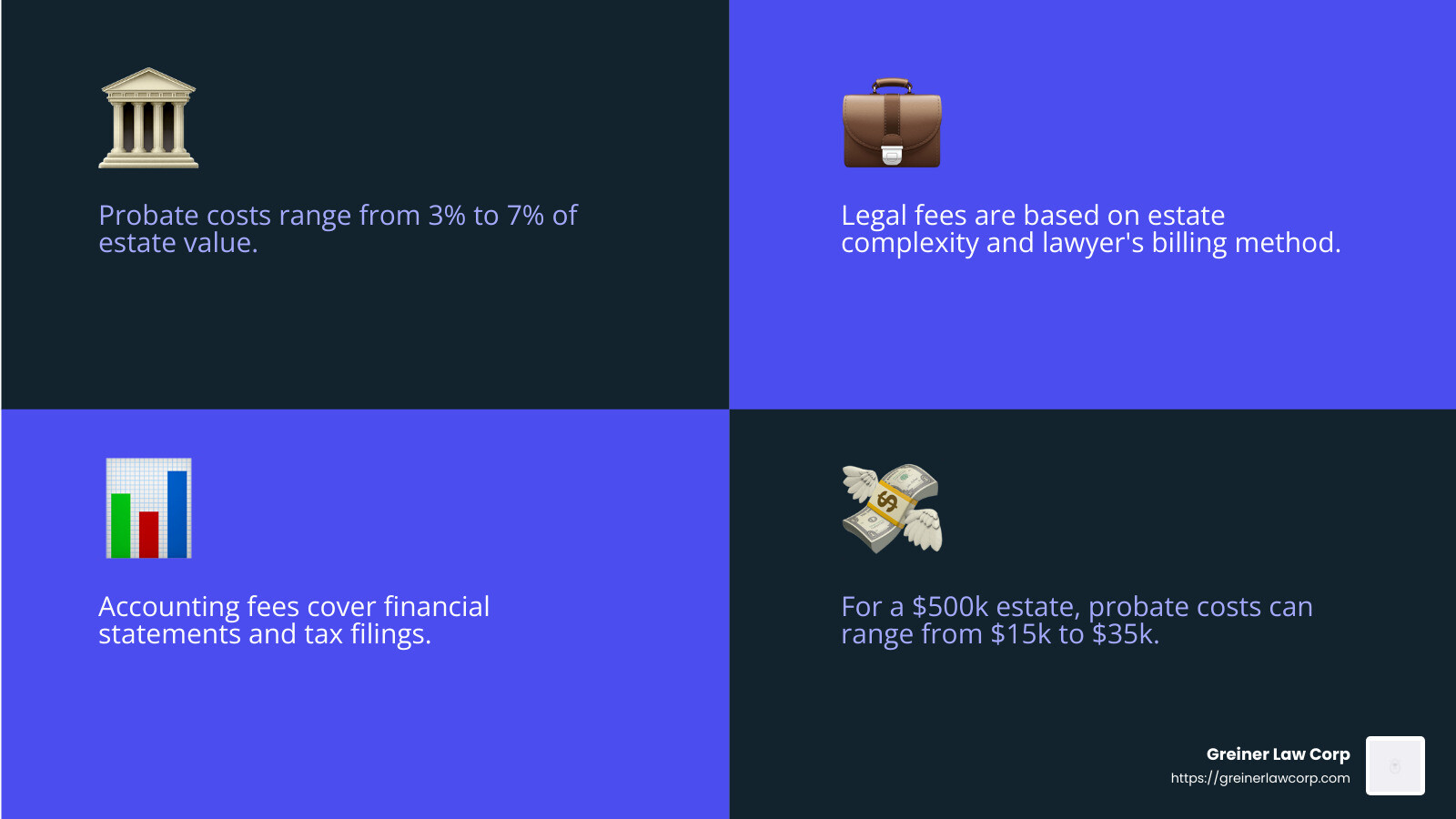
The cost of probate can vary significantly across the United States. On average, probate costs range from 3% to 7% of the estate’s total value. This includes various fees such as legal and accounting fees, which can quickly add up, especially for larger estates. For example, if an estate is valued at $500,000, probate could cost between $15,000 and $35,000.
Legal fees often depend on the complexity of the estate and whether the lawyer charges a flat fee, hourly rate, or a percentage of the estate. Accounting fees are another common expense, as they cover the preparation of required financial statements and tax filings during probate.
Is probate expensive in California?
California’s probate costs can be burdensome, especially with the addition of specific state-related fees. Court filing fees are a given and can vary depending on the county. Publication fees for legal notices, which are required during the probate process, can cost between $50 and $150.
Another cost to consider is the bond premium. California courts often require a bond to protect the estate from mismanagement by the executor, costing anywhere from $100 to $300 annually, depending on the estate size.
In California, attorney fees are set by statute and are based on a percentage of the estate’s value. This means the cost can vary widely based on the complexity of the estate and the attorney’s billing method.
How long does probate take in California?
The probate process in California typically takes about nine months to complete. However, the duration can be longer if the estate is particularly complex or if there are contested wills.
Creditor claims can also extend the process. Creditors have a four-month window to make claims against the estate, which can delay the distribution of assets to heirs. Additionally, if there are disputes among heirs or challenges to the will, the process can stretch out even further.
Understanding the timeline and costs associated with probate in California can help in planning and managing expectations, ultimately easing the burden on those involved.
Conclusion
At Greiner Law Corp, we understand that navigating the probate process can be daunting. Our approach is designed to prioritize your goals while managing risks effectively, ensuring that the probate experience is as smooth and stress-free as possible.
Our business-minded approach means that we don’t just focus on legalities; we also consider the financial implications of every decision. This ensures that your assets are protected and your estate is managed efficiently. By working closely with you, we tailor our strategies to meet your specific needs and preferences.
We believe in empowering our clients with knowledge and options. Whether it’s understanding how much probate should cost or finding ways to reduce expenses, our team is here to guide you every step of the way. We offer transparent pricing and clear communication, so you always know what to expect.
If you’re ready to learn more about how we can assist with probate in California, visit our California Probate Fees page. Let us help you steer the complexities of probate with confidence and clarity.
We are committed to putting your goals first and providing comprehensive solutions that align with your long-term objectives. With Greiner Law Corp by your side, you can focus on what matters most while we handle the rest.


