Commercial real estate contracts play a crucial role in real estate transactions. They provide a framework that legally binds buyers and sellers, ensuring a smooth process. Here are the essentials:
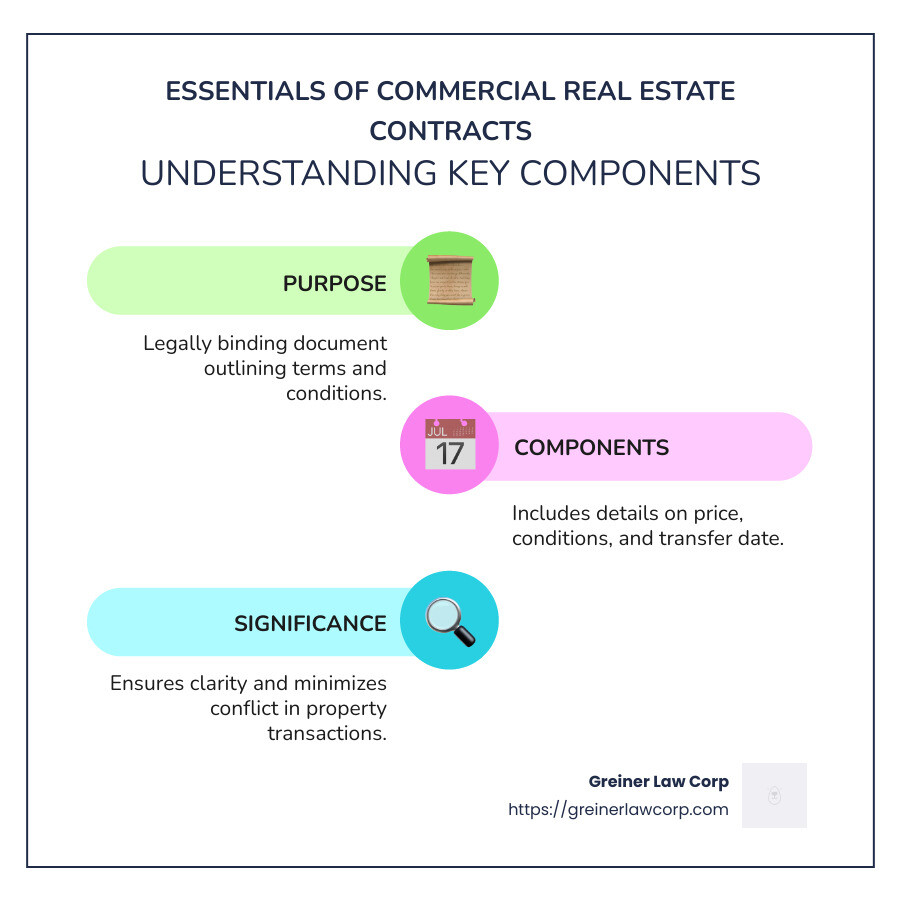
- Purpose: Legally binding document outlining terms and conditions.
- Components: Includes details on price, conditions, and transfer date.
- Significance: Ensures clarity and minimizes conflict in property transactions.
Navigating the complexities of commercial real estate can feel like a daunting maze, with its myriad documents and layers of legal stipulations. A well-crafted commercial real estate contract is the cornerstone of successful property transactions. It defines the transactional dynamics, aligning buyer and seller expectations while unwaveringly holding both parties to their commitments.
The intricacies of these contracts stem from their multifaceted nature, designed to cater to diverse needs like the buyer’s intended property use, financing methods, and market trends. Legal documents like term sheets and letters of intent form the backbone of these transactions, setting the stage for a series of negotiations that dictate the flow and outcome of the process.
My name is David Greiner, Esq., an expert in commercial real estate contracts and business-oriented legal practices. With over a decade of experience in transactional law, my approach centers on achieving client objectives efficiently. Now, let’s dig deeper into understanding this intriguing world of commercial real estate.
Types of Commercial Real Estate Contracts
When dealing with commercial real estate contracts, understanding the different types is essential. Each serves a unique purpose and comes with its own set of terms and conditions. Let’s break them down:
Purchase Agreements
A purchase agreement is the cornerstone of any property sale. It outlines the terms between the buyer and seller, including the purchase price, closing date, and any contingencies. This contract ensures both parties are on the same page and helps prevent misunderstandings down the line.
For instance, in a busy market like Los Angeles, a well-drafted purchase agreement can make or break a deal. It might include clauses on financing contingencies, which allow a buyer to back out if they can’t secure funding.
Lease Agreements
Lease agreements are vital for renting commercial properties. They detail the rights and responsibilities of landlords and tenants. There are different types of lease agreements, such as gross leases and net leases.
In a gross lease, the tenant pays a fixed rent, while the landlord covers property taxes and maintenance. Conversely, a net lease shifts more financial responsibility to the tenant, who may pay for taxes, insurance, and maintenance.
For multi-tenant buildings, lease agreements often include clauses about common area maintenance charges, ensuring shared spaces like lobbies and parking lots are well-kept.
Assignment Contracts
Assignment contracts are popular among real estate investors. They allow one party to transfer their rights to purchase a property to another party before closing. The original buyer, or assignor, often receives a fee from the new buyer, or assignee.
This type of contract is common in wholesale real estate deals, where investors find properties at a discount and quickly pass them to other buyers for a profit.
Power of Attorney Agreements
A power of attorney (POA) agreement grants someone the authority to act on another’s behalf in real estate transactions. This is particularly useful if the property owner is unavailable or unable to sign documents due to being overseas or incapacitated.
For example, a military member stationed abroad might use a POA to allow a family member to sell their property back home.
Understanding these types of contracts is crucial for anyone involved in commercial real estate. They provide the framework needed for successful transactions and protect the interests of all parties involved.

Next, we’ll explore the key provisions in these contracts, which play a vital role in risk allocation and due diligence.
Key Provisions in Commercial Real Estate Contracts
When diving into commercial real estate contracts, it’s important to grasp the key provisions that shape these agreements. These provisions are the backbone, ensuring clarity and fairness for all parties involved. Let’s explore them:
Risk Allocation
In any contract, understanding how risk is allocated is crucial. Risk allocation defines who is responsible for what, especially when things don’t go as planned.
For instance, if a property has an unforeseen environmental issue, the contract should specify whether the buyer or seller bears the cost of remediation. This is often a point of negotiation, as each party aims to minimize their own risk. It’s like a careful balancing act, where decreasing one party’s risk may increase the other’s.
Due Diligence
The due diligence period is a critical phase in any commercial real estate transaction. It allows the buyer to thoroughly investigate the property before finalizing the deal. This can include reviewing title and survey matters, examining leases and service contracts, and assessing environmental and zoning compliance.
Buyers should take this time seriously. If they find any issues, they can either renegotiate the terms or walk away from the deal. In hot markets like Los Angeles, due diligence can make or break a transaction.
Representations and Warranties
Representations and warranties are statements of fact and promises made by both parties. They help ensure that each side is entering the contract based on accurate information.
For example, a seller might represent that there are no pending legal disputes involving the property. If this turns out to be false, the buyer may have grounds for legal recourse. These provisions protect parties from surprises and help build trust in the transaction.

In summary, risk allocation, due diligence, and representations and warranties are foundational elements in commercial real estate contracts. They set the stage for a smooth transaction by clarifying responsibilities and ensuring all parties are informed.
Next, we’ll dig into the negotiation process, exploring how term sheets, letters of intent, and closing conditions come into play.
Negotiating Commercial Real Estate Contracts
When it comes to commercial real estate contracts, negotiation is where the magic happens. This is the stage where both parties hammer out the details to ensure a fair and mutually beneficial agreement. Let’s break it down into three key areas: term sheets, letters of intent, and closing conditions.
Term Sheets
A term sheet is like a roadmap for your contract. Think of it as the first draft that outlines the main terms of the deal. It includes things like the purchase price, payment schedule, and any special conditions.
While not legally binding, a term sheet sets the tone for the entire negotiation process. It’s crucial to get these details right because they form the basis of the final contract. A well-crafted term sheet can save time and reduce misunderstandings later in the process.
Letters of Intent
A letter of intent (LOI) is another preliminary document, similar to a term sheet but often more detailed. It’s a written statement indicating the parties’ intention to enter into a contract.
Though LOIs are generally not binding, they hold significant weight. Once signed, the key terms are typically treated as non-negotiable. This means trying to change these points later can damage your reputation. So, it’s essential to negotiate these terms carefully upfront.
Closing Conditions
Closing conditions are the final problems to clear before a deal is completed. They are specific requirements that must be met for the transaction to close. These can include obtaining financing, completing due diligence, or resolving any legal issues.
For example, if a buyer needs to secure a loan, this is a closing condition. If they fail, the deal might fall through. It’s like a checklist that ensures everything is in order before the property changes hands. Both parties must agree on these conditions, as they can significantly impact the timeline and success of the transaction.
In commercial real estate, understanding and mastering these elements—term sheets, letters of intent, and closing conditions—can make all the difference. They shape the negotiation process and ultimately determine whether a deal moves forward smoothly or hits a snag.
Next, we’ll explore how financing plays a crucial role in these contracts, from terms of financing to security deposits and contingencies.
Commercial Real Estate Contracts and Financing
Financing is a big part of commercial real estate contracts. It’s not just about having the money; it’s about how you get it, how you protect it, and what happens if things go off track. Let’s explore three key aspects: terms of financing, security deposits, and financing contingencies.
Terms of Financing
In commercial real estate, buying property is often a hefty investment. Most deals aren’t made with cash. Instead, buyers usually seek financing through loans. The terms of financing in a contract define how this will happen. This includes details like the loan amount, interest rate, and payment schedule.
Fact: Without a financing contingency, if a buyer fails to secure a loan, they might face a breach of contract. This makes it crucial to negotiate these terms carefully.
Security Deposit
A security deposit is like a safety net for the seller. It’s typically about 3% of the property’s purchase price. This deposit shows the buyer is serious and has some skin in the game.
But here’s the catch: Is it refundable or not? Contracts usually spell this out. For instance, if the buyer backs out after the due diligence period, the seller might keep the deposit. Always check the terms to avoid surprises.
Financing Contingency
A financing contingency is a buyer’s best friend. It allows them to back out of the deal if they can’t secure financing. Think of it as a get-out-of-jail-free card if their loan falls through.
Example: Imagine a buyer can’t get a satisfactory loan. With a financing contingency, they can walk away without losing their deposit. Without it, they could be stuck paying for a property they can’t afford.
In commercial real estate, understanding these financing elements is crucial. They can significantly affect your risk and financial exposure. We’ll tackle some frequently asked questions about these contracts and what makes them tick.
Frequently Asked Questions about Commercial Real Estate Contracts
What are the 4 types of real estate contracts?
In commercial real estate contracts, there are four main types you should know about:
Purchase Agreements: These are the most common. They spell out the terms when a buyer and seller agree to transfer ownership of a property. Key details include the purchase price, property description, and closing date.
Assignment Contracts: These are often used by investors. They allow one party (the assignor) to transfer their rights to another party (the assignee) before the deal closes. This is popular in wholesale real estate deals.
Lease Agreements: A lease agreement is between a landlord and a tenant. It outlines terms for renting property, like rent amount and lease duration. In commercial leases, terms can be more complex, covering aspects like maintenance responsibilities and rent adjustments.
Power of Attorney Agreements: This allows someone else to act on your behalf in real estate transactions. It’s useful if you’re unable to be present or need someone to make decisions for you.
What is a commercial real estate contract?
A commercial real estate contract is a legal document that lays out the details of a property transaction. It’s a binding agreement that includes everything from the purchase price to the closing date. These contracts are essential for ensuring both parties understand their rights and responsibilities.
Key Point: Unlike residential contracts, commercial contracts often include more complex terms, like zoning laws and environmental regulations. It’s crucial to read and understand these agreements fully.
What is the biggest problem in commercial real estate?
The commercial real estate market faces several challenges, but one of the biggest issues is high financing costs. Securing funding for large properties can be expensive, with high interest rates and stringent loan terms.
Massive debt is another concern. Many businesses take on significant loans to purchase properties, and if the market shifts, they might struggle to keep up with payments.
Soaring insurance costs also add to the financial burden. As property values rise, so do insurance premiums, which can strain a company’s budget.
These financial pressures mean that navigating commercial real estate requires careful planning and a solid understanding of the market. We’ll explore how Greiner Law Corp can help you tackle these challenges effectively.
Conclusion
Navigating the maze of commercial real estate contracts can be daunting, but at Greiner Law Corp, we’re here to guide you every step of the way. Our primary focus is on understanding your unique goals and tailoring our services to meet them. Whether you’re looking to buy, sell, or lease commercial property, we prioritize your objectives and work diligently to help you achieve them.
Our business-minded approach sets us apart. We don’t just provide legal advice; we offer strategic insights that consider the broader implications of your real estate decisions. By focusing on market trends, financial impacts, and legal requirements, we ensure that you’re not only legally protected but also strategically positioned for success.
At Greiner Law Corp, we excel at managing risks. Real estate transactions come with inherent challenges, from legal pitfalls to unexpected property issues. We scrutinize every detail, from zoning laws to contract clauses, to preempt potential problems and ensure a smoother journey for you.
Choosing Greiner Law Corp means having a dedicated team that stands by your side through every step of your real estate transaction. We negotiate fiercely, draft contracts with your best interests in mind, and keep you fully informed. With our expertise, you can steer the complexities of commercial real estate with confidence, knowing your interests are well-protected.
Ready to take the next step in your real estate journey? Contact us today to learn how we can help you achieve your goals and manage risks effectively. By partnering with Greiner Law Corp, you’re not just getting legal advice; you’re gaining a strategic ally committed to your success. Let us help you steer the complexities of real estate with ease and confidence.


