Why Probate Leads Represent a Goldmine for Real Estate Professionals
Marketing probate leads successfully means understanding a fundamental truth: you're helping families during difficult times while building a profitable niche. When a person passes away, their property often must be sold to settle the estate, creating motivated sellers who need professional solutions.
Quick Answer: How Realtors Market Probate Leads
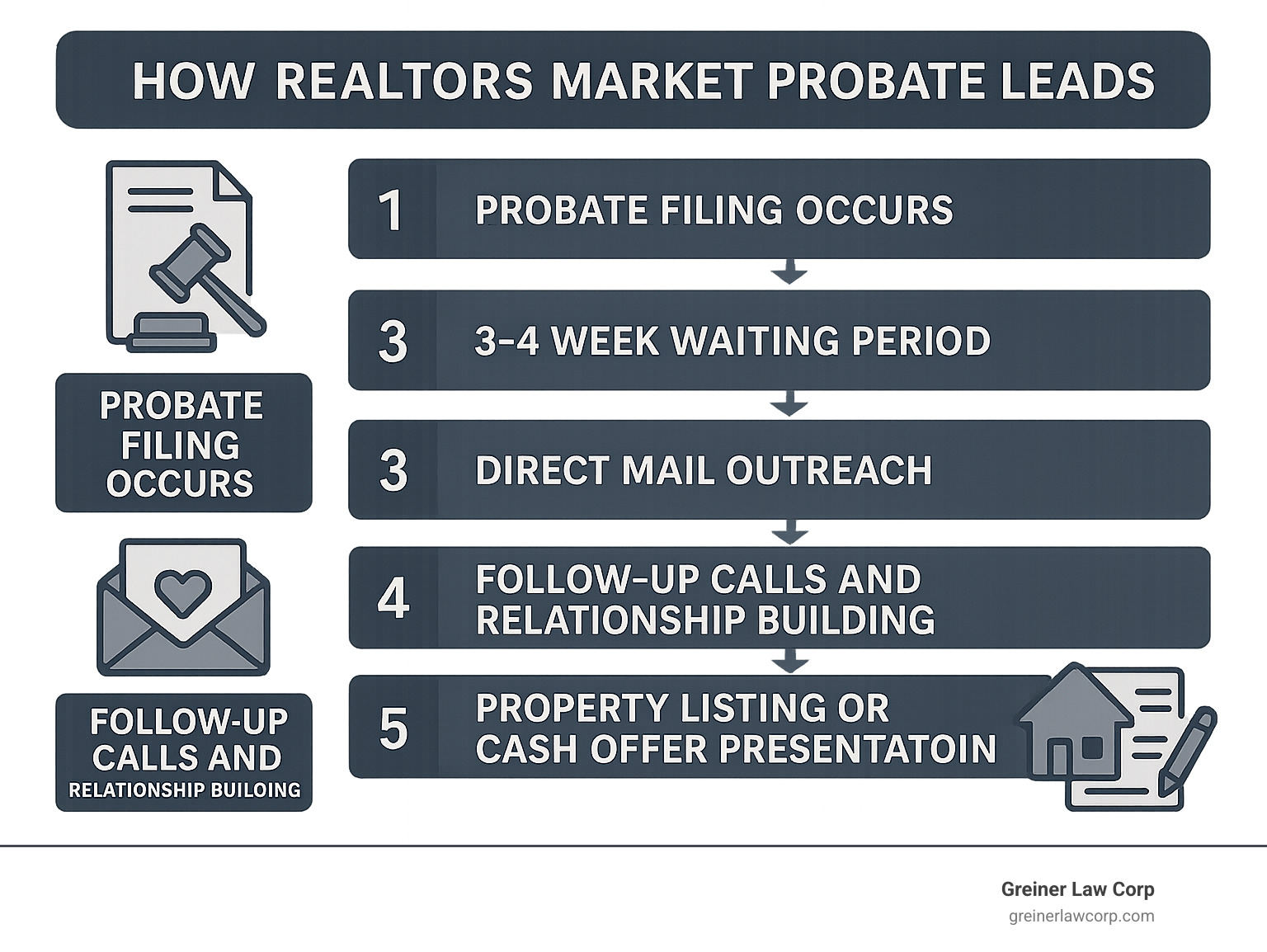
- Direct Mail - Send empathetic letters 3-4 weeks after probate filing
- Build Referral Networks - Connect with probate attorneys and estate planners
- Educational Content - Create helpful resources about the probate process
- Professional Outreach - Make compassionate phone calls with proper scripts
- Digital Presence - Develop SEO-optimized content targeting probate keywords
The probate market offers unique advantages that traditional real estate often lacks:
- Motivated sellers who need to liquidate assets quickly
- Less competition from agents unfamiliar with the process
- Off-market opportunities before properties hit the MLS
- Built-in equity from properties owned for decades
- Consistent market regardless of economic conditions
For example, one Dallas-Fort Worth agent went "all-in on probates" and built a system generating over 60 deals annually, becoming the go-to expert in his market.
This specialized niche requires more than standard marketing; it demands empathy, expertise, and patience. These qualities separate successful probate agents from the rest.
I'm David Greiner, Esq. With years of experience in transactional law and as general counsel, I've seen the complexities families face during probate. I understand how realtors can market probate leads effectively and ethically. My legal and business background offers unique insights into building referral networks and navigating the challenges of probate real estate.
How realtors market probate leads definitions:
Understanding the Probate Landscape: Why These Leads Are a Goldmine
When someone passes away, their property enters probate, a court-supervised process to pay debts and distribute assets according to the deceased's will or state law. For real estate professionals, this is a key opportunity, as property often must be sold to settle the estate.
Understanding how realtors market probate leads begins with recognizing their value. Unlike typical homeowners, probate sellers are highly motivated. Heirs and executors often need to sell quickly to pay estate debts, distribute inheritances, or avoid the burden of maintaining an unexpected property.
This motivation creates less competition. Many agents avoid probate due to its perceived complexity, which becomes your opportunity. You'll often encounter off-market properties before they reach the MLS, giving you and your clients a significant advantage.
Probate properties are also attractive for their built-in equity. These homes were often owned for decades, with mortgages paid off or significantly reduced. This equity can lead to better deals and smoother transactions.
Finally, the probate market offers consistency. People pass away regardless of economic conditions, creating a stable lead source that can anchor your business through any market cycle.
Helping families through probate also builds long-term relationships based on trust. Guiding someone through a challenging life event with empathy and expertise often leads to referrals and repeat business for years to come.
For more detailed information about this process, explore our comprehensive guide on What is a Probate Sale?.

The Value Proposition for Realtors
The financial benefits of specializing in probate are significant. You'll find higher commission potential from properties with substantial equity and motivated sellers. This work also positions you as a specialized problem-solver, helping families steer a complex legal and emotional process. This expertise is a powerful differentiator that builds an invaluable community reputation, leading to a self-reinforcing cycle of referrals.
Differentiating Probate from Traditional Listings
Probate sales differ greatly from traditional transactions. The key distinction is seller motivation; probate representatives need to sell to settle the estate, creating a more straightforward dynamic than homeowners with flexible timelines.
Property condition is another major difference. Homes are typically sold "as is," as heirs are often unable or unwilling to invest in repairs. This creates excellent opportunities for investors and buyers looking for a fixer-upper.
The sales timeline requires patience. Due to court involvement, probate sales can take six months to a year or more. This extended timeline filters out impatient agents, reducing competition for those willing to steer the process.
Your expertise in these unique aspects of probate sales becomes a lifeline for grieving families and a competitive advantage for you.
To deepen your understanding of these complexities, read our detailed article on The Ins and Outs of Probate Sales in Real Estate.
Sourcing Your Leads: How to Find and Acquire Probate Opportunities
To successfully market probate leads, you first need a quality source. Probate opportunities are readily available if you know where to find them.
A successful probate business requires consistency and organization. Use CRM software to track leads, follow-ups, and the status of each prospect. This systematic approach is key to converting data into closed deals.

Generating Leads Organically
The most reliable way to find probate leads is by going to the source: courthouse records. Since probate is a public legal process, you can review active files to identify estates that include real estate. Once you find a property, you can contact the executor or administrator.
In California—whether in Victorville, Riverside, San Bernardino, or Los Angeles—your county courthouse is a goldmine. Some counties offer online records, while others require a physical visit. Be friendly and consistent with courthouse staff; they can become helpful allies.
Don't overlook newspaper monitoring. Executors sometimes advertise properties in local papers, offering a chance to find opportunities before they are widely marketed. Once you have names from public records, use skip tracing tools to find current contact information for executors and heirs, allowing you to connect directly.
For a deeper understanding of what happens in court, check out our guide on the Probate Court Process.
Building a Powerful Referral Network
While courthouse research is vital, building relationships is where the real magic happens. The best opportunities often come from referrals.
Probate attorneys are your most valuable connections, as they work directly with families who need real estate guidance. Estate planners are another key source, as they often maintain long-term relationships with families and assist them through the probate process.
The secret to networking is to provide value first. Share educational resources, offer to answer questions about property valuations, and be genuinely helpful without expecting immediate returns.
Funeral homes are also a potential referral source. Building respectful relationships with funeral directors can lead to introductions when families begin managing estate matters.
To learn more about working with legal professionals, explore our information on What is a Probate Attorney?.
The Pros and Cons of Purchasing Leads
Purchasing leads from specialized providers can be a fast way to scale your business. These companies gather and organize courthouse data, saving you significant time.
The main benefit is time savings, which helps keep your pipeline full. However, quality and accuracy vary by provider. You also give up control over the lead selection process.
Cost is another factor. Subscriptions can be expensive, but the higher profit margins on probate deals (often 15-25% above standard rates) can justify the investment if your conversion rate is strong. Remember the extended sales cycle (6-12 months) when planning your cash flow. You may pay for leads today but not see a commission for many months.
Aspect DIY Lead Generation Purchasing Leads Time Very time-consuming research and data entry Saves significant time and effort Cost Primarily your labor, lower direct costs Monthly fees and per-lead charges Quality High control over accuracy and relevance Varies by provider quality Control Full control over the entire process Less control, depends on provider methodsMany successful agents use a hybrid approach, supplementing their own research with purchased leads.
How Realtors Market Probate Leads with Empathy and Expertise
Marketing to probate leads requires a different approach than traditional real estate. You are contacting families navigating a difficult transition, so success depends on a balance of sensitivity, compassion, and professionalism.
Building trust is the primary objective. Position yourself as a helpful problem-solver, not a pushy salesperson. Offer genuine value by helping executors fulfill their duties and heirs receive their inheritance promptly. This service-first mentality creates a sustainable, referral-based business.
Your emotional intelligence is your greatest asset. Patience is a business necessity, as families may need time to make decisions. Understanding and respecting this process is what separates successful probate agents.

Direct Mail Mastery: The Foundation of How Realtors Market Probate Leads
Direct mail remains highly effective for marketing to probate leads. A thoughtful letter feels more personal than an email, but timing is critical.
The ideal time for initial contact is 3-4 weeks after the probate filing. This respects the immediate grieving period while reaching families as they begin to think about estate settlement. Too early appears insensitive; too late, and you may miss the opportunity.
Your letter must have the right tone. Acknowledge their situation with sympathy and offer practical solutions. The most effective letters provide two clear options: listing the property for maximum market value or a quick cash offer to avoid repairs and showings. This empowers families to choose the best path for them.
Personalization is key. Address the executor by name and reference the property address to show you've done your research. A follow-up sequence of respectful calls and helpful resources creates multiple touchpoints without being overbearing. The goal is persistence without pressure.
Digital Marketing for a Sensitive Niche
While direct mail is foundational, digital marketing builds credibility. When a family researches you online, they should find a professional website demonstrating your expertise.
Educational content is your most powerful tool. Create blog posts and guides that answer common questions, such as "What happens to inherited property during probate?" This positions you as a knowledgeable advisor.
SEO helps families find you when they are actively searching for help. Target keywords related to probate real estate to attract motivated inbound leads.
Social media, especially LinkedIn, is excellent for networking with probate attorneys and estate planners. Share your content to build referral relationships.
Email newsletters keep you connected with your network. Consistently provide valuable information to stay top-of-mind without being pushy.
For more insights into the probate process, our guide on Probate Real Estate Sales 101 provides valuable background information.
Essential Communication: How Realtors Market Probate Leads Through Trust
Successful marketing to probate leads hinges on your communication. Every interaction must prioritize empathetic listening over selling.
Effective phone scripts start softly. Begin with, "I understand you may be dealing with decisions about inherited property. I wanted to see if I could help make that process easier for you." This opens the door for a meaningful conversation.
Active listening is crucial. Let families talk through their concerns and ask thoughtful questions to help them make informed decisions.
Ethical considerations must guide every interaction. Comply with Do Not Call regulations, be transparent about your role, and offer fair pricing. Prioritizing the family's best interests builds the trust that leads to successful transactions and valuable referrals. Patience remains essential, as probate timelines are often long.
For general information on probate laws and processes, Nolo's Probate FAQ provides a helpful overview of the legal framework we're working within.
Navigating the Nuances: Legal and Procedural Essentials
Successful probate marketing requires mastering the legal landscape. Probate regulations vary significantly between states and even counties, so understanding local rules is essential.
For instance, California's community property laws differ from those in common law states, affecting which assets enter probate. Some states have streamlined processes for small estates, while others require comprehensive court supervision.
As a realtor, your role is to guide families through these local legal frameworks, minimizing delays and serving your clients effectively during a difficult time.
For a deeper dive into these legal aspects, refer to our comprehensive guide on Probate Law.
Understanding the Probate Sale Process
The probate sale process involves several key stages and typically takes six to twelve months or longer. Here's a typical breakdown:
- The Offer: A buyer makes a written offer, usually with a 10% deposit.
- Petition for Approval: If the estate representative accepts, they file a petition with the court to approve the sale.
- The Court Hearing: Other buyers can attend the hearing and overbid the original offer. The judge facilitates this bidding process. The final price must be at least 90% of the appraised value.
- Finalizing the Sale: If your client is the top bidder, they complete the final paperwork. Most probate sales do not have a loan contingency, making all-cash offers highly preferred.
- Closing: Once the judge or representative signs the contract, the sale is confirmed, though the full probate process may continue for up to 12 more months.
Crucially, probate properties are sold "as is," meaning the buyer is responsible for all defects. This is vital information to share with clients upfront.
For a more detailed explanation of the process, visit How Do Probate Real Estate Sales Work?. Understanding the Uniform Probate Code can also provide broader context.
Overcoming Common Obstacles
Probate real estate comes with unique challenges. Title complications can arise from outdated or missing wills, requiring extra time to resolve.
Family disagreements over the sale price or timing are common and can derail a deal. Patience and strong communication skills are essential.
The court approval process introduces unpredictable timelines that can frustrate buyers. Properties often have deferred maintenance, requiring buyers to budget for renovations.
Other issues like tax liens and judgments must be cleared before closing.
Your role is to anticipate these challenges and structure offers that address them. This might include provisions for personal property removal or cleanup. By positioning yourself as a solution provider, you build a reputation that makes your probate niche sustainable and profitable.
Frequently Asked Questions about Marketing to Probate Leads
How soon should I contact a probate lead after a filing?
Timing your outreach is a delicate but critical part of marketing to probate leads. Experience shows that waiting 3-4 weeks after the probate filing is ideal. This respects the initial grieving period but reaches families as they start considering the practical steps of estate settlement.
Waiting too long can mean missing the opportunity, as the family may have already found another agent. Every family's timeline is different, so listen carefully to their tone and responses to gauge their readiness to discuss business.
Do I need a special certification to sell probate properties?
No, a special certification is not mandatory to sell probate properties; your existing real estate license is sufficient.
However, specialized knowledge is a significant advantage. Pursuing a designation like the Certified Probate Real Estate Specialist (CPRES) demonstrates a deeper understanding of the legal procedures, timelines, and roles involved. This expertise builds trust quickly with families and their attorneys, positioning you as a knowledgeable guide rather than just another agent. This credibility often leads to more referrals and a stronger business.
What is the biggest mistake realtors make when marketing to probate leads?
The biggest mistake is treating probate leads like any other prospect by using aggressive sales tactics. This approach shows a complete lack of empathy for families who are grieving and overwhelmed.
Another major error is not understanding the probate process. Agents who can't explain court confirmation, overbidding, or "as-is" sales lose credibility instantly with both families and their attorneys.
Finally, impatience is incredibly damaging. Probate sales move slowly, often taking 6-12 months. Pushing for quick decisions will sabotage relationships. The solution is to lead with compassion, education, and patience. Focus on solving their problems, and you will build the trust needed for long-term success.
Conclusion: Building a Sustainable Probate Niche
A successful probate real estate business is about creating a lasting specialty that serves families and grows your career. When you master how realtors market probate leads, you develop an expertise that can transform your practice.
The probate niche offers consistency. Unlike other markets that fluctuate, the need to settle estates provides a steady foundation for your business, regardless of economic conditions.
Success requires a balance of empathy and expertise. The families you help during difficult times often become your greatest advocates, leading to future referrals.
Persistence pays off. The slow probate process gives you time to build trust and demonstrate your value. While many agents give up, those who remain patient build a strong pipeline that often sustains itself through referrals.
The long-term value of this niche comes from the network you build with probate attorneys and estate planners. These professional partnerships become more valuable as your reputation grows.
At Greiner Law Corp, we understand how critical the right legal guidance is for probate real estate transactions. Since our founding in 2003, we have helped families and realtors steer the complexities of probate law across California, with offices serving Victorville, Riverside, San Bernardino, and Los Angeles.
Our business-minded approach focuses on helping clients manage risk while achieving their goals. We provide the legal expertise to help transactions move forward smoothly.
If you're ready to build your probate expertise with the right legal partnership, we'd love to help you succeed. Partner with a probate real estate expert and find how the right legal support can lift your probate real estate business.