Estate planning is more than just figuring out who gets your belongings after you're gone. It’s a strategic approach to managing your assets and responsibilities in case of incapacitation or death. Here's what you should know right away:
-
Definition: Estate planning involves preparing tasks to manage an individual’s estate in the event of incapacitation or death.
-
Importance: Safeguards your assets, minimizes estate taxes, and ensures your wishes are honored.
-
Key Elements: Includes wills, trusts, guardianship, and designating powers of attorney and healthcare directives.
Starting on estate planning ensures that your legacy unfolds as you wish, protecting both your finances and your family's future. It’s not just for the wealthy; everyone can benefit from having a solid plan in place.
As David Greiner, Esq., I've specialized in transactional and estate planning law and understand the nuances involved. With experience in business law and real estate, I've guided many through the intricate estate planning process, focusing on achieving tangible goals.

Understanding Estate Planning
Estate planning is a crucial process that extends beyond merely deciding who inherits your assets. It encompasses comprehensive financial management, planning for incapacitation, and ensuring smooth asset transfer. Let's break down these core aspects:
Financial Management
At its heart, estate planning is about effective financial management. This means organizing your assets—like homes, vehicles, stocks, and collectibles—so they are handled according to your wishes. The goal is to preserve your wealth, minimize taxes, and ensure your beneficiaries are well taken care of.
For instance, creating trusts can help reduce estate taxes. Trusts can be set up to benefit your heirs while also supporting charitable causes, which can further limit tax liabilities. This strategic financial management ensures that more of your estate goes to your loved ones instead of taxes.
Planning for Incapacitation
Estate planning also prepares for the possibility of incapacitation. This involves setting up directives to manage your affairs if you're unable to do so.
-
Durable Power of Attorney (POA): This allows someone you trust to handle your financial matters if you're incapacitated. They can pay bills, manage investments, and handle other financial tasks on your behalf.
-
Healthcare Directives: Also known as living wills, these documents specify your medical care preferences if you can't communicate them yourself. You can also assign a medical power of attorney to make healthcare decisions for you.
Such preparations ensure your life and finances continue smoothly, even if you're unable to oversee them.

Asset Transfer
Finally, estate planning is about the seamless transfer of your assets. This includes writing a will, which is a fundamental step. A will outlines who should receive your assets and can designate guardians for minor children.
Moreover, beneficiary designations on accounts like life insurance and retirement plans are crucial. These designations often take precedence over what’s stated in a will, so keeping them updated is essential.
Another tool is a revocable living trust, which can help bypass probate—a legal process that can be time-consuming and costly. Upon your death, assets in the trust transfer directly to your beneficiaries, ensuring a quicker and more private distribution.
Estate planning is about ensuring that your financial affairs are managed and your assets are distributed according to your wishes, even if you can't oversee the process yourself.
Next, we'll dive into the key components of estate planning, where we'll explore wills, trusts, powers of attorney, and more.
Key Components of Estate Planning
When it comes to estate planning, there are several key components you should be familiar with. Each plays a vital role in ensuring your assets are managed and distributed according to your wishes. Let's explore these components:
Wills
A will is a legal document that outlines how your property should be distributed after your death. It also allows you to name a guardian for your minor children and pets. Without a will, the distribution of your assets will be determined by state laws, which might not align with your wishes.
Creating a will is one of the most important steps in estate planning. It helps avoid confusion and ensures your loved ones are taken care of as you intended.
Trusts
Trusts are versatile tools in estate planning. They allow you to specify how and when your assets will be distributed to your beneficiaries. There are different types of trusts, such as:
-
Revocable Trusts: These can be altered or revoked during your lifetime. They help avoid probate and provide flexibility in managing your assets.
-
Irrevocable Trusts: Once established, these cannot be changed. They offer tax advantages and protection from creditors.
Trusts can be particularly useful if you want to set conditions on the inheritance, like funding a grandchild's education or supporting a charity.
Power of Attorney
A Power of Attorney (POA) is a document that grants someone you trust the authority to make decisions on your behalf. There are two main types:
-
Financial POA: This allows your chosen agent to handle your financial matters, such as managing bank accounts and investments.
-
Healthcare POA: Also known as a healthcare proxy, this allows your agent to make medical decisions for you if you’re unable to do so yourself.
Having a POA ensures that someone can step in and manage your affairs if you're incapacitated.
Healthcare Directives
Healthcare directives, or living wills, specify your medical treatment preferences in case you can't communicate them yourself. They can include instructions about life-sustaining treatments and other critical medical interventions.
These directives ensure your healthcare decisions are respected, and they relieve your family from making tough choices during difficult times.
Beneficiary Designations
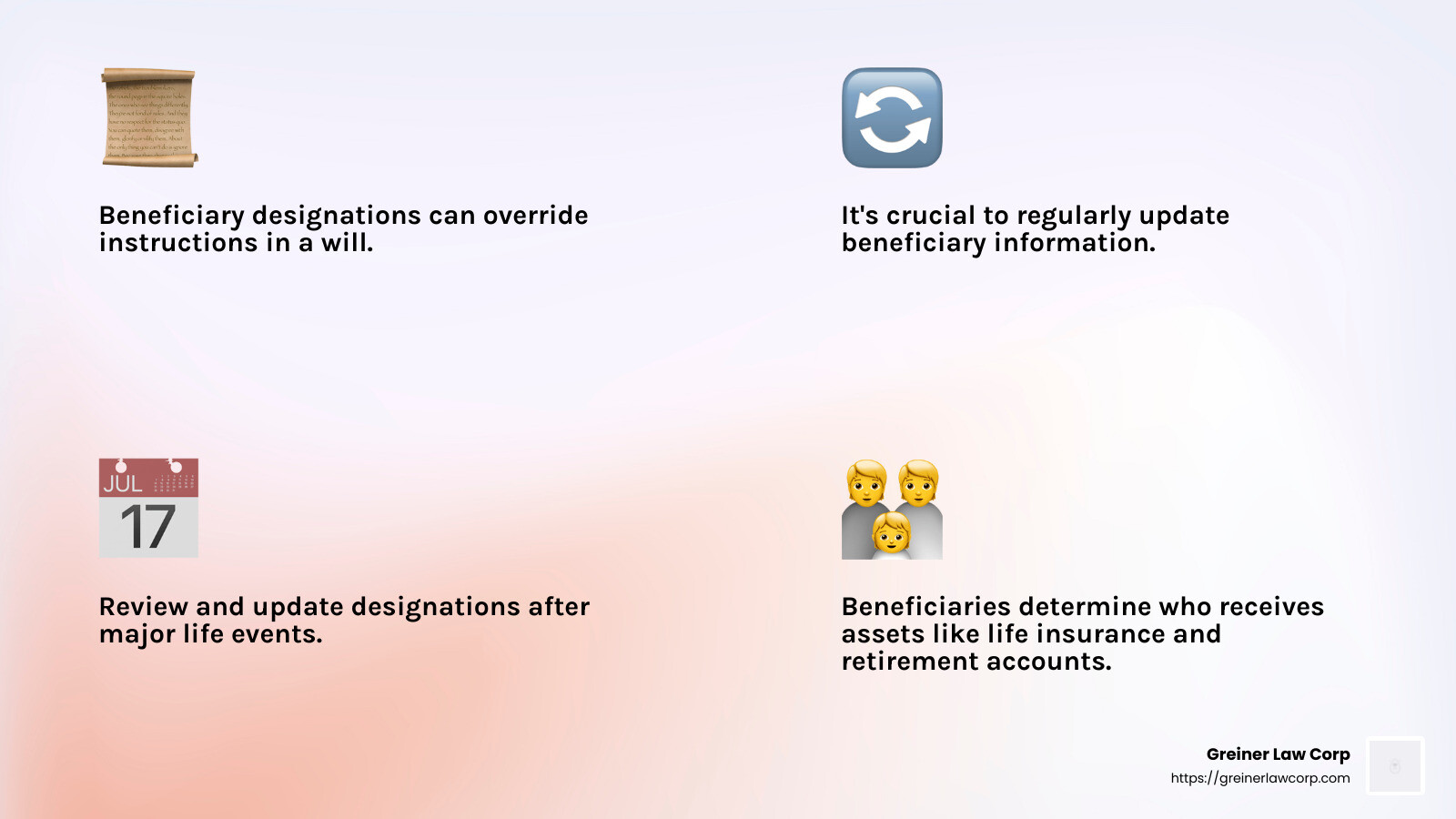
Beneficiary designations are crucial in estate planning. They specify who will receive assets like life insurance policies and retirement accounts. These designations often override instructions in a will, making it essential to keep them updated.
Ensuring your beneficiary designations are current helps prevent disputes and ensures your assets go to the intended recipients.
Understanding these key components is vital for effective estate planning. Each element works together to secure your financial legacy and provide peace of mind. Next, we'll discuss the steps to create a comprehensive estate plan.
Steps to Create an Estate Plan
Creating an estate plan might seem daunting, but breaking it down into manageable steps can make the process much easier. Let's walk through the essential steps to ensure your estate plan is thorough and effective.
1. Asset Inventory
Start by listing all your assets. This includes both tangible assets like your home, vehicles, and collectibles, and intangible assets such as bank accounts, investments, and life insurance policies. Don't forget to list any liabilities, like mortgages or loans. This comprehensive inventory is the foundation of your estate plan and helps ensure nothing is overlooked.
2. Family Protection
Think about how you can protect your family financially after you're gone. Life insurance is a key component here. It can provide a financial safety net for your loved ones, covering expenses like mortgages, education, and daily living costs. Consider how much coverage you need based on your family's lifestyle and future needs.
3. Guardian Selection
If you have minor children, selecting a guardian is crucial. This person will take care of your children if something happens to you. Choose someone you trust and discuss your decision with them to ensure they're willing and able to take on this responsibility. It's also wise to name a backup guardian in case your first choice is unable to serve.
4. Directives
Directives are legal documents that outline your wishes if you become incapacitated. Healthcare directives specify your medical preferences, while a Power of Attorney (POA) allows someone you trust to make financial or medical decisions on your behalf. These documents ensure your wishes are respected and provide guidance to your loved ones during difficult times.
5. Beneficiary Naming
Ensure you have named beneficiaries for assets like life insurance policies and retirement accounts. These designations determine who will receive these assets and often take precedence over your will. Regularly review and update your beneficiary designations, especially after major life events like marriage, divorce, or the birth of a child.
By following these steps, you can create a comprehensive estate plan that protects your assets and provides for your loved ones. Each step is crucial to ensuring your wishes are honored and that your family is well taken care of. Next, we'll explore common estate planning mistakes to avoid.
Common Estate Planning Mistakes to Avoid
Even with the best intentions, estate planning can go awry if you're not careful. Here are some common pitfalls to sidestep:
Plan Updates
A major mistake is failing to update your estate plan. Life changes, and so should your plan. Births, deaths, marriages, and divorces can all impact your wishes. Aim to review your plan every 3-5 years or after any significant life event to ensure it still aligns with your current circumstances and desires.
Incapacity Arrangements
Another oversight is not preparing for incapacity. Imagine being unable to make decisions due to illness or injury. Without a Power of Attorney or healthcare directive, your loved ones might struggle to manage your affairs. Make sure these documents are in place and designate someone you trust to make decisions on your behalf.
Tax Implications
Underestimating tax implications can cost your heirs dearly. Estate taxes and other levies can significantly reduce what your beneficiaries receive. Work with a knowledgeable advisor to understand potential tax liabilities and explore strategies to minimize them, like gifting assets during your lifetime or setting up trusts.
Asset Liquidity
Finally, don't overlook asset liquidity. Some assets, like real estate or collectibles, can be difficult to convert to cash quickly. If your estate lacks liquidity, your heirs might face challenges covering taxes or other immediate expenses. Ensure there's enough liquid cash or easily sellable assets in your estate to meet these needs.
Avoiding these common mistakes can help make your estate planning process smoother and more effective. Next, we'll dive into frequently asked questions about estate planning to clarify any lingering doubts.
Frequently Asked Questions about Estate Planning
What are the 7 steps in the estate planning process?
1. Qualified Attorney: First, consult a qualified attorney who specializes in estate planning. They can help you steer the complexities and ensure your plan meets legal requirements.
2. Asset Inventory: Take stock of your assets. List everything you own, including property, investments, and personal items, to get a clear picture of your estate.
3. Key Individuals: Identify key individuals who will play roles in your estate plan. This includes selecting an executor, trustees, and guardians for minor children.
4. Key Documents: Prepare essential documents like wills, trusts, and powers of attorney. These form the backbone of your estate plan.
5. Document Management: Store your estate planning documents in a safe place. Make sure your executor and trusted family members know where to find them.
6. Softer Side: Consider the emotional and personal aspects of your plan. Communicate your wishes to your family to avoid misunderstandings and conflicts.
7. Plan Updates: Regularly update your plan to reflect changes in your life, such as marriage, divorce, or the birth of a child.
What are the 5 components of estate planning?
1. Will: A will outlines how you want your assets distributed after your death. It's a fundamental part of any estate plan.
2. Trust: Trusts can help manage your assets during your lifetime and after death, often providing tax advantages and avoiding probate.
3. Beneficiary Designations: Ensure your beneficiary designations on accounts like life insurance and retirement plans are current and align with your overall estate plan.
4. Healthcare Directive: A healthcare directive outlines your medical wishes if you're unable to communicate them, ensuring your healthcare preferences are respected.
5. Financial Power of Attorney: This document allows someone you trust to manage your financial affairs if you're incapacitated.
What is the difference between a will and estate planning?
A will is a legal document that specifies how you want your assets distributed after your death. It's just one part of a broader estate plan, which includes various documents and strategies to manage your financial affairs and protect your family.
Estate planning encompasses more than just writing a will. It involves setting up trusts, designating beneficiaries, and preparing for incapacity with documents like powers of attorney and healthcare directives. Estate planning is about creating a comprehensive strategy to ensure your wishes are followed and your loved ones are protected.
These frequently asked questions should give you a clearer understanding of estate planning and its essential elements. Next, we'll conclude with the benefits of estate planning and how Greiner Law Corp can assist you in securing your future.
Conclusion
Estate planning is crucial for ensuring your assets are distributed according to your wishes and your loved ones are protected. It's not just for the wealthy—everyone can benefit from a well-thought-out plan. By organizing your financial affairs, you can minimize taxes, avoid probate, and ensure a smooth transition of your assets to your heirs.
At Greiner Law Corp, we specialize in guiding you through this essential process. Our business-minded approach prioritizes your goals, helping you manage risks effectively. We understand the intricacies of estate planning, from setting up trusts to crafting healthcare directives, and we're here to make the process as straightforward as possible.
The benefits of estate planning extend beyond financial management. It provides peace of mind, knowing your family is taken care of and your wishes will be honored. With a solid plan, you can avoid conflicts and confusion, ensuring your legacy is preserved.
Let us help you secure your future. Whether you're starting from scratch or updating an existing plan, Greiner Law Corp is your partner in crafting a comprehensive estate strategy. Together, we can steer the complexities and create a plan that reflects your unique needs and aspirations. Reach out to us today to begin your estate planning journey.