Understanding What You’ll Pay: The True Cost of Settling an Estate

Average attorney fees for estate settlement typically range from $2,000 to $15,000 or more, depending on the complexity of the estate and the fee structure used. Here’s what you need to know:
Quick Cost Breakdown:
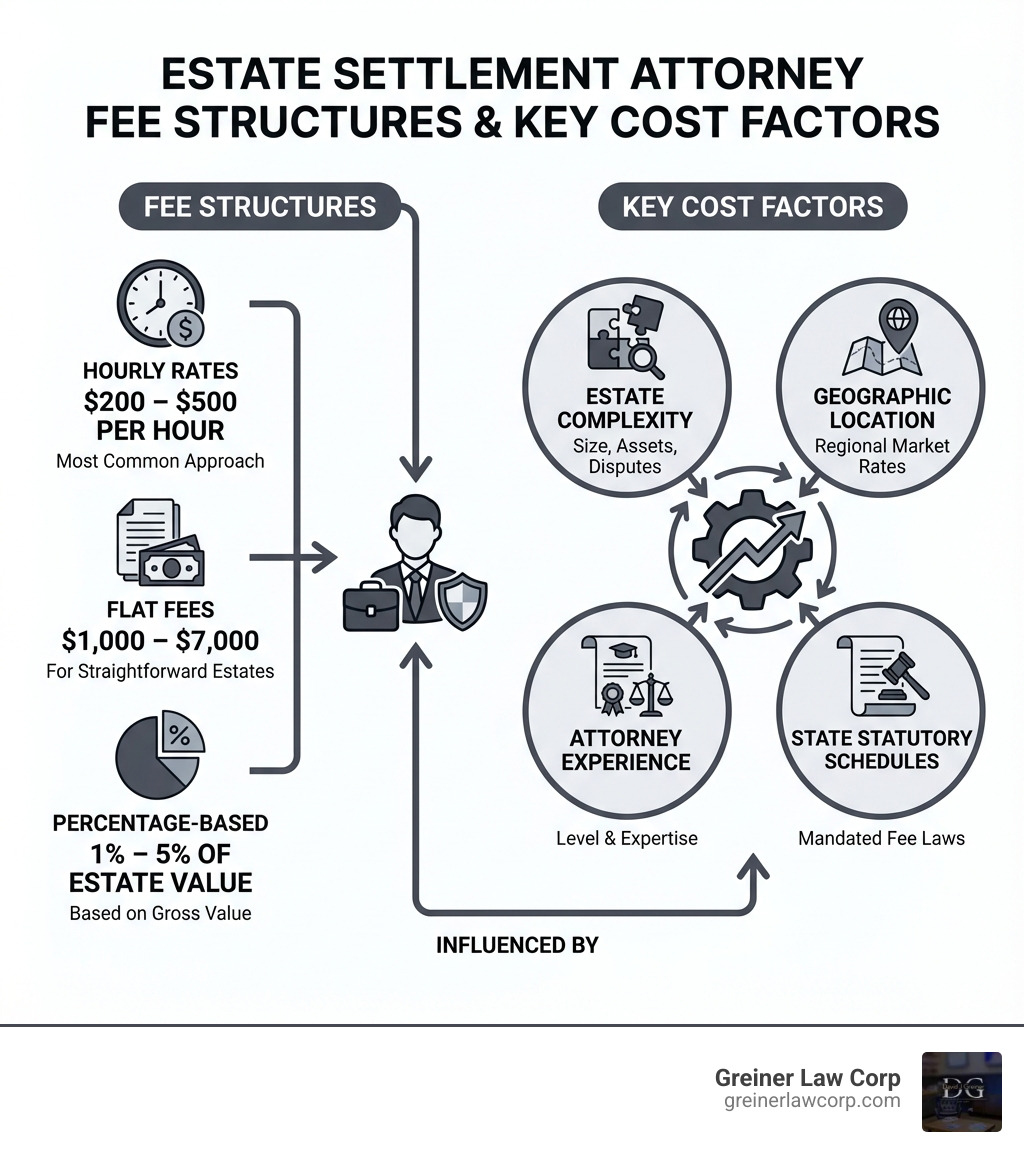
- Hourly Rates: $200 to $500 per hour (most common approach)
- Flat Fees: $1,000 to $7,000 for straightforward estates
- Percentage-Based: 1% to 5% of the estate’s gross value
- Total Costs: 34% of estates pay under $2,500, while 23% pay over $10,000
Key Cost Factors:
- Estate size and complexity
- Geographic location
- Attorney experience level
- Whether disputes arise among beneficiaries
- State-specific statutory fee schedules
When a loved one passes away, dealing with legal fees is probably the last thing you want to think about. Yet understanding what attorneys typically charge for estate settlement is crucial for executors and beneficiaries alike. The costs can vary dramatically—from a few thousand dollars for a simple estate to well over $10,000 for complex situations involving multiple assets, beneficiaries, or disputes.
The reality is that legal fees are paid directly from the estate itself, not out of pocket. But that doesn’t mean you should simply accept whatever an attorney charges. Every dollar spent on legal fees is one less dollar going to beneficiaries. Whether you’re serving as an executor trying to manage estate funds responsibly, or a beneficiary concerned about preservation of assets, knowing the typical fee structures and what drives costs up or down gives you power.
Different attorneys charge in different ways. Some bill by the hour in six-minute increments. Others offer flat fees for routine probate matters. In states like California and Florida, statutory fee schedules based on a percentage of the estate’s value are common—and can be surprisingly expensive. The size of the estate matters, but so does its complexity. An estate with a clear will, cooperative beneficiaries, and straightforward assets will cost far less to settle than one involving disputes, business interests, or assets scattered across multiple states.
I’m David Greiner, Esq., and I’ve spent years helping clients steer complex business and estate matters with a focus on achieving their goals efficiently, not maximizing billable hours. My experience settling estates has shown me that understanding average attorney fees for estate settlement upfront allows executors to negotiate better terms and make informed decisions that protect the estate’s value.
Understanding the Common Fee Structures for Estate Settlement
When an individual passes away, their estate must go through a process of settlement. This often involves probate, a court-supervised process that validates the will (if one exists), identifies and inventories assets, pays debts and taxes, and finally distributes the remaining assets to the beneficiaries. This is where an estate attorney steps in.
The role of an estate attorney is comprehensive, guiding the executor or personal representative through these often intricate steps. This includes everything from helping with the initial asset inventory and valuation, to managing debt settlement with creditors, filing necessary tax returns (both income and estate taxes), and ensuring the proper distribution of assets according to the will or state law. We also handle all communication with the court, preparing and filing petitions, orders, and other required documents. Essentially, we serve as your legal compass through what can be a bewildering legal landscape during an emotional time.
Hourly, Flat Fee, and Percentage: How Attorneys Charge
Understanding how attorneys structure their fees is the first step to managing the cost of estate settlement. There are generally three main approaches:
- Hourly Rates: This is arguably the most common billing method for probate attorneys, with approximately 60% using it. Attorneys track their time in small increments, often six minutes (one-tenth of an hour), and bill for every minute spent on your case. Hourly rates for estate attorneys typically range from $200 to $500 per hour. While a higher hourly rate might seem daunting, an experienced attorney who works efficiently could end up costing less overall than a less experienced one who takes more time. Retainer fees, an upfront payment held in a special trust account, are often required with hourly billing to cover initial work.
- Flat Fees: For straightforward estate matters, some attorneys offer flat fees. This means a single, predetermined price for a specific set of services. About 32% of probate attorneys offer flat fees, which can range from $1,000 to $7,000 for simple estates. The advantage here is predictability: you know the cost upfront, making budgeting easier. However, it’s crucial to get a written agreement detailing exactly what services are included and what might trigger additional charges.
- Percentage-Based Fees: In some states, including California, attorneys are permitted to charge a percentage of the estate’s value. This can range from 1% to 5% of the gross estate value. While only about 8% of estates in general use this method, it’s particularly prevalent in states with statutory fee schedules. As we’ll discuss, this method can be very expensive for the estate, as the fee is calculated on the gross value, not the net value or equity, of assets.
Here’s a quick comparison:
| Fee Structure | Pros | Cons | Typical Use Cases |
|---|---|---|---|
| Hourly Rate | Flexible for complex or unpredictable cases | Cost can be uncertain; Incentivizes more hours | Complex estates, litigation, disputes, lengthy probate |
| Flat Fee | Predictable cost; Budgeting ease | May not cover all eventualities; Less flexible for unforeseen issues | Simple wills, uncontested probate, basic estate planning |
| Percentage | Simple to calculate (for attorney) | Can be very expensive; Based on gross value, not equity | Statutory fees in certain states (e.g., California, Florida) |
National Benchmarks and Cost Ranges
The average attorney fees for estate settlement can vary widely across the country, but we can look at some national trends to set expectations. Overall, the total cost for estate lawyers often ranges from $2,000 to $15,000 or more.
Looking at general statistics, about 34% of estates pay under $2,500 in total legal fees. Another 20% pay between $2,500 and $5,000. For more substantial estates, 23% incur fees between $5,000 and $10,000, and another 23% pay over $10,000. These figures highlight that over half of all estates manage to settle with legal fees under $5,000, particularly smaller, straightforward ones.
For hourly rates, the national average typically falls between $250-$310 per hour. However, this can fluctuate significantly by region. For instance, a 2023 report indicated average hourly rates for wills and estate attorneys ranging from a low of $201 in Indiana to a high of $448 in the District of Columbia. In California, particularly in metropolitan areas like Los Angeles, Riverside, and San Bernardino, we often see rates on the higher end of the national average, reflecting the higher cost of living and specialized legal expertise.
Flat fees for simple estate planning can range from $1,000 to $5,000, and percentage-based fees usually start around 1% to 5% of the estate’s value.
To get the most current research on attorney rates, you might want to check out the Latest research on attorney rates from Clio’s legal trends report.
What Factors Influence the Average Attorney Fees for Estate Settlement?
Many elements can push the cost of settling an estate up or down. Think of it like a legal recipe: some ingredients are standard, but others add complexity and, inevitably, expense.

- Estate Complexity: This is perhaps the biggest driver of costs. A sprawling estate with numerous assets (e.g., multiple properties, businesses, complex investments, intellectual property), assets located in various jurisdictions, or significant debts will require more legal work. The absence of a will can also make the probate process more intricate and costly, as the court must determine heirs according to state intestacy laws.
- Estate Size and Value: Generally, the larger the estate’s value, the higher the fees, especially in states with statutory percentage-based fees. For estates over $1 million, 36% paid more than $10,000 in legal fees, compared to 18% for estates under $1 million.
- Will Contests and Beneficiary Disputes: If beneficiaries are not seeing eye-to-eye, or if there’s a challenge to the will’s validity, legal fees can skyrocket. Litigation is inherently expensive, with contested motions easily running into many thousands of dollars. We believe open communication and early conflict resolution are key to avoiding these costly battles.
- Type and Location of Assets: Dealing with real estate, especially if it needs to be sold, or business interests requires additional legal expertise and time. Assets located out of state will often necessitate ancillary probate proceedings, increasing complexity and cost.
- Attorney Experience: While a more experienced attorney might charge a higher hourly rate, their efficiency and expertise can often lead to a lower total bill. They steer the process more smoothly, anticipate issues, and resolve them faster. Our firm, Greiner Law Corp, focuses on leveraging our experience to provide efficient solutions, even if our hourly rates reflect that experience.
- Geographic Location: The cost of living and prevailing legal market rates in a specific area directly impact attorney fees. In California, particularly in our locations like Los Angeles, Riverside, Victorville, and San Bernardino, attorney fees tend to be higher than the national average due to the state’s economic landscape.
Additional Expenses Beyond the Attorney’s Bill
Beyond the attorney’s fees, several other expenses are typically incurred during the estate settlement process. These are usually paid directly from the estate’s assets:
- Court Filing Fees: These are mandatory fees paid to the court to initiate and process the probate case. In California, the court filing fee to open a probate case is about $435.
- Executor Compensation: The executor (or personal representative) is entitled to compensation for their work in administering the estate. In California, executor fees are determined by the same statutory schedule as attorney fees.
- Appraisal Fees: If the estate includes real estate, valuable personal property, or business interests, professional appraisers may be needed to determine their fair market value. Appraisal fees are typically around 0.1% of the asset’s value.
- Accountant Fees: Estates, especially larger or more complex ones, often require the services of an accountant to prepare final tax returns (including the deceased’s final income tax return, Form 1041 for the estate, and potentially federal estate tax returns).
- Surety Bonds: In many cases, the court requires the executor to obtain a surety bond, which acts as an insurance policy to protect the estate from potential mismanagement by the executor. The cost varies based on the estate’s value and the executor’s creditworthiness.
- Publication Notices: State law often requires that notice of the probate proceedings be published in a local newspaper to inform potential creditors and interested parties. These publication fees typically range from $100 to $200.
“Extraordinary” Fees vs. Ordinary Services
It’s important to distinguish between “ordinary” services covered by standard fees (hourly, flat, or statutory percentage) and “extraordinary” services, which incur additional charges.
Ordinary services generally include the routine tasks of probate administration: filing initial petitions, inventorying basic assets, paying debts, communicating with beneficiaries, and distributing straightforward assets.
Extraordinary services are those that fall outside the typical scope and require additional time, effort, and specialized expertise. These can significantly increase the total cost of estate settlement. Examples often include:
- Litigation: Contesting a will, defending against claims, or resolving beneficiary disputes.
- Real Estate Sales: Managing the sale of estate properties, especially if complex or contested.
- Business Management: Operating or selling a business owned by the deceased.
- Tax Audits: Representing the estate in a tax audit by the IRS or state tax authorities.
- Complex Tax Planning: Handling intricate federal estate tax issues or postmortem tax strategies.
- Specialized Asset Management: Dealing with unique assets like intellectual property, foreign investments, or significant digital assets.
When discussing fees with your attorney, we recommend asking upfront about what constitutes “extraordinary” services for your specific situation. This helps avoid surprises down the line.
How State Laws and Statutory Schedules Impact Costs
The state in which the estate is being settled plays a pivotal role in determining attorney fees. Laws vary significantly, with some states imposing statutory fee schedules and others relying solely on “reasonable” compensation standards.
Case Study: California’s Statutory Fee Schedule
California is one of the states that has a statutory fee schedule for probate attorneys, outlined in Cal. Prob. Code § 10810. This schedule sets forth what is presumed to be “reasonable” compensation for ordinary services based on a tiered percentage of the gross estate value.
The calculation works like this:
- 4% on the first $100,000 of the gross estate value
- 3% on the next $100,000
- 2% on the next $800,000
- 1% on the next $9 million
- 0.5% on the next $15 million
- A “reasonable amount” for estates over $25 million
Let’s look at an example. For a $500,000 estate in California, the attorney fees based on this statutory percentage would be approximately $13,000:
- 4% of $100,000 = $4,000
- 3% of $100,000 = $3,000
- 2% of $300,000 = $6,000
- Total = $13,000
These fees are calculated on the gross value of the probate estate, not its net value or equity. For instance, if an estate includes a house valued at $500,000 with a $400,000 mortgage, the fee would still be based on the $500,000 gross value, not the $100,000 equity. This can make the statutory fees appear disproportionately high compared to the actual work involved, especially for estates with significant debt.
A key insight for our clients in Victorville, Riverside, San Bernardino, and Los Angeles is that while these fees are considered a “reasonable” benchmark, they are not mandatory. You can and should negotiate these fees, especially if the estate is relatively straightforward. We often advise clients to explore hourly arrangements, flat fees, or a reduced percentage, particularly if the estate doesn’t involve significant complexities.
A Look at Other States: Florida, Pennsylvania, and Oregon
While our practice is rooted in California, understanding how other states approach attorney fees for estate settlement can provide valuable context.
- Florida: Like California, Florida also has a statutory schedule for attorney fees, outlined in § 733.6171 of its statutes. For a $500,000 estate, the attorney fees based on Florida’s statutory percentages would be approximately $15,000. This is slightly higher than California’s benchmark for the same estate value, demonstrating state-specific differences. Florida’s statute also details specific disclosures attorneys must make to personal representatives regarding the non-mandatory nature of these fees and the right to negotiate.
- Pennsylvania: Pennsylvania does not have a statutory fee schedule. Instead, courts rely on what are known as the “Johnson Estate” guidelines, which are a series of factors used to determine the reasonableness of fees. These factors include the amount of work performed, the complexity of the estate, the attorney’s experience, and the results obtained.
- Oregon: Oregon is another state without a statutory schedule for probate fees. Attorneys typically charge hourly rates or flat fees based on the complexity and size of the estate. Oregon also offers a streamlined small-estate affidavit process for estates under $275,000, which can significantly reduce legal fees by avoiding formal probate.
It’s worth noting that California also offers a streamlined small-estate procedure for estates valued under $166,250 (as of 2023), allowing some estates to bypass full probate and its associated costs. This highlights the importance of understanding all available options for your specific estate.
Strategies to Minimize Legal Fees and Avoid Probate
At Greiner Law Corp, we believe in a business-minded approach that prioritizes client goals and risk management. This means empowering you with strategies to minimize legal fees and, where possible, avoid the often costly and time-consuming probate process altogether. Proactive planning is your best friend here!
Negotiating Fees and Managing Your Legal Budget
Even when legal services are necessary, there are ways to manage costs effectively:
- Use Free Consultations: Most probate attorneys, including us, offer free initial consultations. This is your opportunity to interview several attorneys, assess their expertise, discuss their fee structures, and get a good-faith estimate of costs.
- Request Different Fee Options: Don’t be afraid to ask for alternatives. If a statutory percentage is quoted, inquire about an hourly arrangement or a flat fee for specific services. Sometimes a blended approach—a flat fee for routine matters and an hourly rate for complications—can be a cost-effective solution.
- Set Hourly Caps or “Not-to-Exceed” Amounts: If you opt for hourly billing, discuss setting a cap on hours for specific tasks or a “not-to-exceed” amount for standard services.
- Define Scope of Work: Clearly outline what legal services are needed and identify tasks the executor can handle independently (e.g., gathering documents, basic communication, administrative tasks). This “unbundled” approach can reduce billable hours.
- Request Itemized Billing Statements: Always ask for detailed, itemized billing statements. This allows you to track expenses, understand where your money is going, and question any charges that seem unclear or excessive.
- Negotiate Statutory Fees: As mentioned, statutory fees in California are negotiable. If the estate is straightforward, we can advocate for a reduced percentage or an alternative fee structure.
How Probate-Avoidance Strategies Impact the average attorney fees for estate settlement
The most effective way to minimize average attorney fees for estate settlement is often to avoid probate entirely. Thoughtfully structured estate plans are, in our opinion, a final gift to your loved ones, ensuring a smooth transition without unnecessary costs.
Here are some key probate-avoidance strategies:
- Revocable Living Trusts: This is one of the most powerful tools. Assets placed into a living trust bypass probate because they are legally owned by the trust, not the deceased individual, and can be distributed by the successor trustee without court involvement. Establishing a trust requires upfront legal fees, but these are typically far less than the cost of probate.
- Joint Ownership with Right of Survivorship: Property held in joint tenancy automatically passes to the surviving owner upon the death of the other, outside of probate. This is common for married couples with homes or bank accounts.
- Payable-on-Death (POD) Accounts: Bank accounts can be designated as POD, meaning the funds automatically transfer to the named beneficiary upon your death.
- Transfer-on-Death (TOD) Deeds: In California, you can use a TOD deed for real estate, allowing property to pass directly to a named beneficiary without probate.
- Beneficiary Designations: Life insurance policies, retirement accounts (like IRAs and 401(k)s), and annuities all allow you to name beneficiaries. These assets pass directly to the named individuals, bypassing probate. It’s crucial to review and update these designations regularly, especially after major life events like marriage, divorce, or the birth of children.
By implementing these strategies, you can significantly reduce the complexity of estate settlement, lowering the need for extensive attorney involvement and the associated fees.
Frequently Asked Questions about Estate Settlement Fees
We understand that you likely have many questions about the financial aspects of estate settlement. Here are some of the most common inquiries we receive:
Are attorney fees for estate settlement tax-deductible?
Yes, attorney fees for estate administration are generally tax-deductible. These fees are considered administrative expenses of the estate. They can typically be deducted on the estate’s income tax return (Form 1041). For estates subject to federal estate tax, these fees can also reduce the taxable value of the estate, potentially leading to significant tax savings. However, the specifics can be complex, and we always recommend consulting with a tax professional to understand the particular tax implications for your estate.
Who pays for the probate lawyer?
The estate itself pays for the probate lawyer. The legal fees, court costs, and other administrative expenses are typically paid directly from the deceased person’s assets. While the executor or personal representative might initially advance some costs, they are entitled to be reimbursed by the estate. Attorneys and executors usually don’t receive their full fees until the court approves them and confirms that there are sufficient assets in the estate to cover all expenses. If an estate has insufficient assets, securing payment can become a challenge.
How does the length of probate affect the final cost?
Probate typically takes anywhere from 6 to 24 months, though complex cases or those with disputes can last even longer. The length of the probate process can significantly impact the final cost of average attorney fees for estate settlement, especially if the attorney is billing hourly. Longer probates mean more attorney time spent on the case. Factors that extend the timeline—such as will contests, beneficiary disputes, complex asset sales (like real estate or businesses), or intricate tax issues—will inevitably lead to higher legal fees. Our goal at Greiner Law Corp is always to streamline the process as much as possible, minimizing unnecessary delays and costs for our clients in California.
Conclusion
Navigating the estate settlement process can be a challenging journey, both emotionally and financially. Understanding the average attorney fees for estate settlement—including the various fee structures, the factors that influence costs, and the state-specific regulations like California’s statutory fees—is crucial for making informed decisions.
We’ve explored how hourly rates, flat fees, and percentage-based charges each have their pros and cons, and how complexities like disputes or diverse assets can drive up costs. We’ve also highlighted the critical role of proactive estate planning in minimizing these expenses, particularly through strategies like revocable living trusts and proper beneficiary designations.
At Greiner Law Corp, we believe in empowering our clients with knowledge and practical solutions. Our business-minded approach prioritizes your goals, helps you manage risk, and ensures transparency throughout the legal process. By understanding these financial aspects upfront, you can make strategic choices that protect the estate’s value and honor the legacy of your loved one.
For personalized guidance on your estate settlement needs, or to create a plan that minimizes future probate costs, we invite you to Get personalized guidance on your estate settlement needs. We’re committed to providing practical solutions custom to your specific situation, priorities, and yes—your budget too.


