An advance on inheritance can be a game-changer when you’re navigating the often lengthy and complex probate process. If you’re facing a financial need and wish to access your future wealth sooner, understanding how this advance works might be key. Here’s a quick overview to help you get started:
What is an advance on inheritance?
It’s a way to get a portion of your inheritance before the probate process is complete.Why consider it?
To quickly meet urgent financial needs without waiting for the potentially long probate process.How does it work?
You receive funds based on your expected share of the estate, usually without incurring debt like with a conventional loan.
The probate process, meant to ensure orderly asset distribution, can take months or even years. This can be frustrating if you’re waiting for funds you need now. That’s where an advance on inheritance comes in—it offers a practical solution, speeding up access to your assets by bypassing some of the wait.
As David Greiner, Esq., with years of legal experience, primarily in transactional law and estate matters, I understand the challenges that come with waiting for inheritance distribution. My goal is to provide clear, effective legal strategies that address such needs promptly and efficiently.
Understanding the Probate Process
The probate process is like a long road trip with multiple stops—each necessary but often time-consuming. It’s the legal procedure that ensures a deceased person’s assets are distributed fairly and according to their will, or state law if no will exists. Here’s what you need to know about this journey:
Probate Timeline
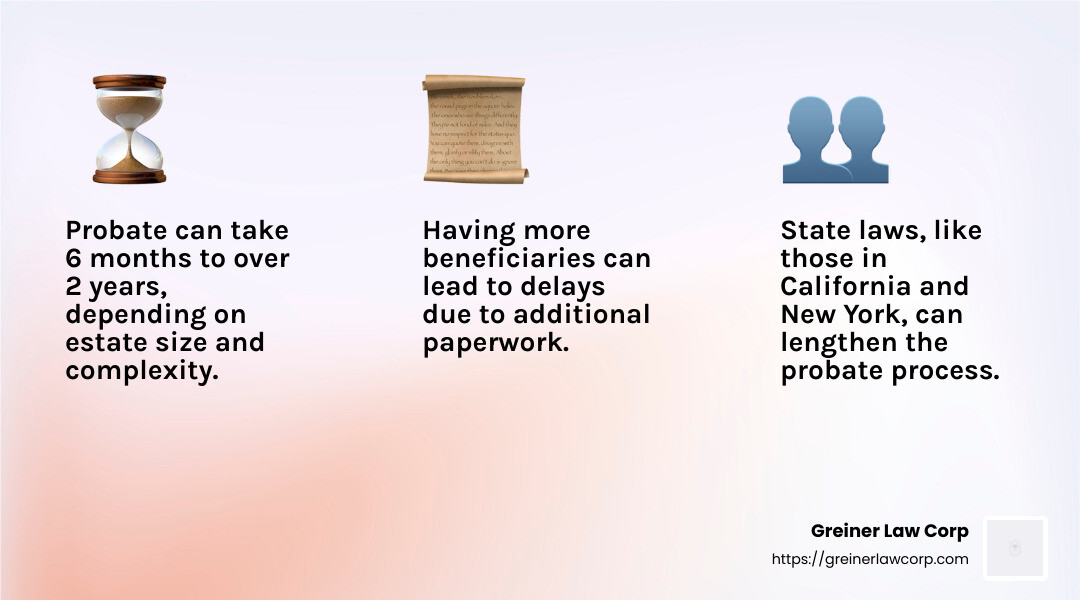
The length of the probate process can vary greatly, typically ranging from six months to over two years. Several factors influence this timeline:
- Size and Complexity of the Estate: Larger estates with numerous assets or properties, especially those involving businesses or investments, take longer to evaluate and distribute.
- State Laws: Some states, like California and New York, are known for longer probate processes due to complex legal requirements.
- Number of Beneficiaries: More beneficiaries mean more paperwork, signatures, and potential delays.
Estate Distribution
Once all necessary steps in probate are completed, the estate’s assets can be distributed to the heirs. This involves several key stages:
- Collection of Assets: The estate administrator gathers all assets, including real estate, investments, and personal belongings.
- Payment of Debts and Taxes: Before any distribution, the estate must settle outstanding debts and taxes. This can take several months, depending on the estate’s complexity.
- Distribution to Beneficiaries: Finally, the remaining assets are distributed according to the will or state law. This step can also be delayed by disputes or complications in the estate.
Creditor Claims
During probate, creditors have a specific period to claim debts owed by the deceased. The estate administrator must notify all potential creditors and allow them to submit claims. This is a crucial step, as it ensures all debts are addressed before distributing assets to heirs.
- Notification Requirements: State laws mandate notifying creditors, who then have a limited time to file claims. Failure to do so can complicate the probate process.
- Claims Period: This period usually starts from the probate filing date and can last several months. All valid claims must be settled before asset distribution.
Understanding these steps can help you steer the probate process more effectively. When you’re aware of what to expect, you can better plan for any financial needs that might arise during this time. An advance on inheritance can be particularly helpful here, providing quick access to funds while the probate process unfolds.
What is an Advance on Inheritance?
An advance on inheritance is like getting a sneak peek at your future wealth. It’s a way to access a portion of your expected inheritance before the probate process is complete. This can be a lifesaver if you need cash fast but are stuck in the lengthy probate process.
Inheritance Advance
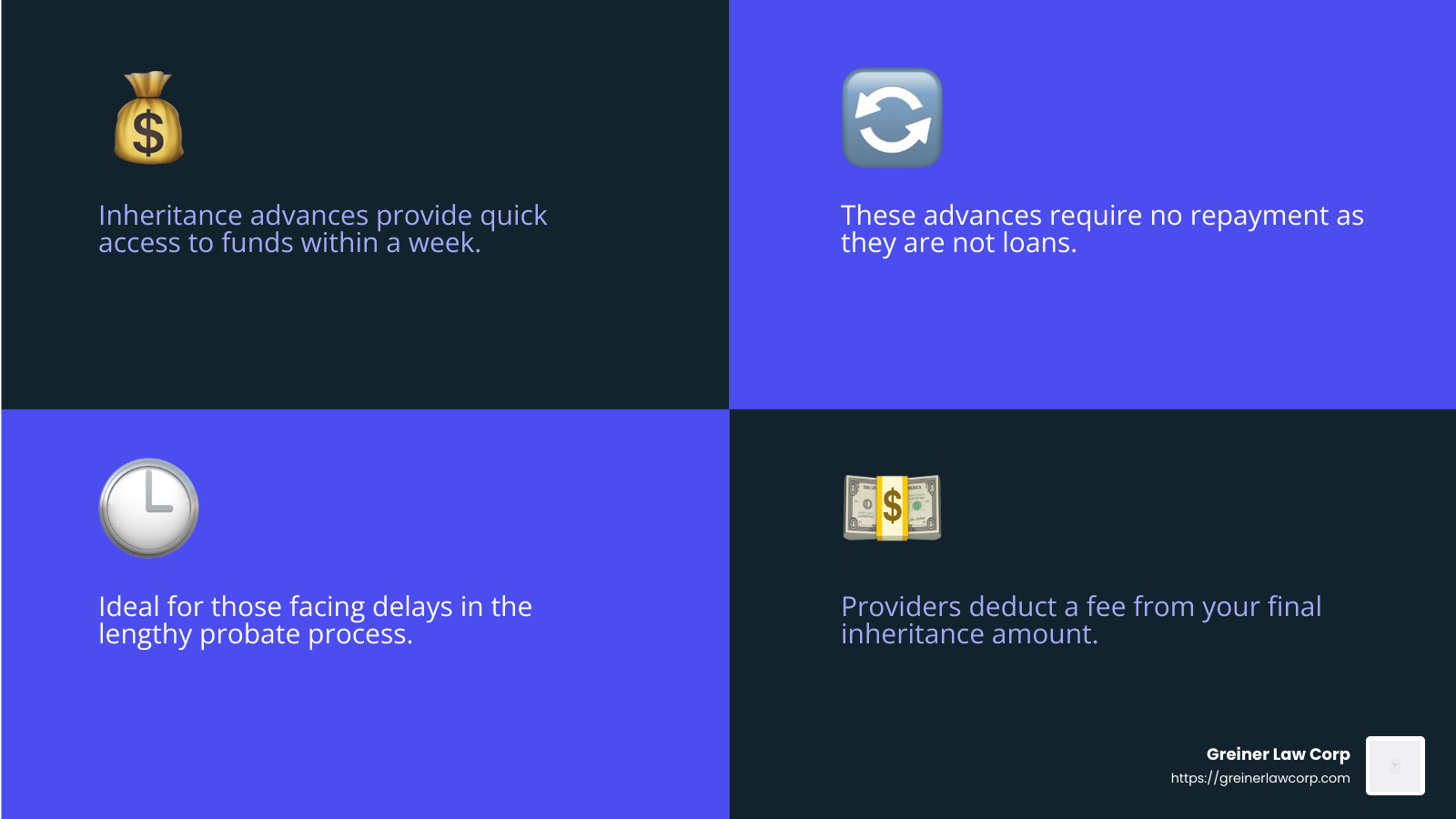
An inheritance advance allows heirs to receive money quickly, often within a week. It’s not a loan, so you don’t have to worry about interest or repayment. Instead, the company providing the advance takes a fee from your inheritance when it’s finally distributed.
- Quick Access: Get funds in about a week.
- No Repayment: You don’t pay back the advance.
- Fee Deduction: The provider takes a fee from your inheritance.
Probate Advance
A probate advance is specifically designed to help during the probate process. Probate can be slow, sometimes taking over a year. This delay can be frustrating, especially if you need money now.
- For Probate Delays: Helps when probate is taking too long.
- Ideal for Heirs in Need: Useful for those who need immediate cash for bills, debts, or emergencies.
Estate Advance
An estate advance is another term for an inheritance advance. It’s a way to get part of your inheritance early, without waiting for the estate to settle.
- Same Concept: Just another name for inheritance advance.
- Early Access: Provides funds before the estate is fully settled.
These advances can be a smart choice if you’re facing financial challenges while waiting for probate to wrap up. They provide immediate relief without the stress of repayment, making them a popular option for many heirs. However, it’s important to understand the fees involved and how they impact your final inheritance amount.
In the next section, we’ll explore how you can obtain an inheritance advance, including the documentation and application process.
How to Obtain an Inheritance Advance
Getting an advance on inheritance can be straightforward if you know the steps involved. Here’s a simple guide to help you through the process.
Documentation
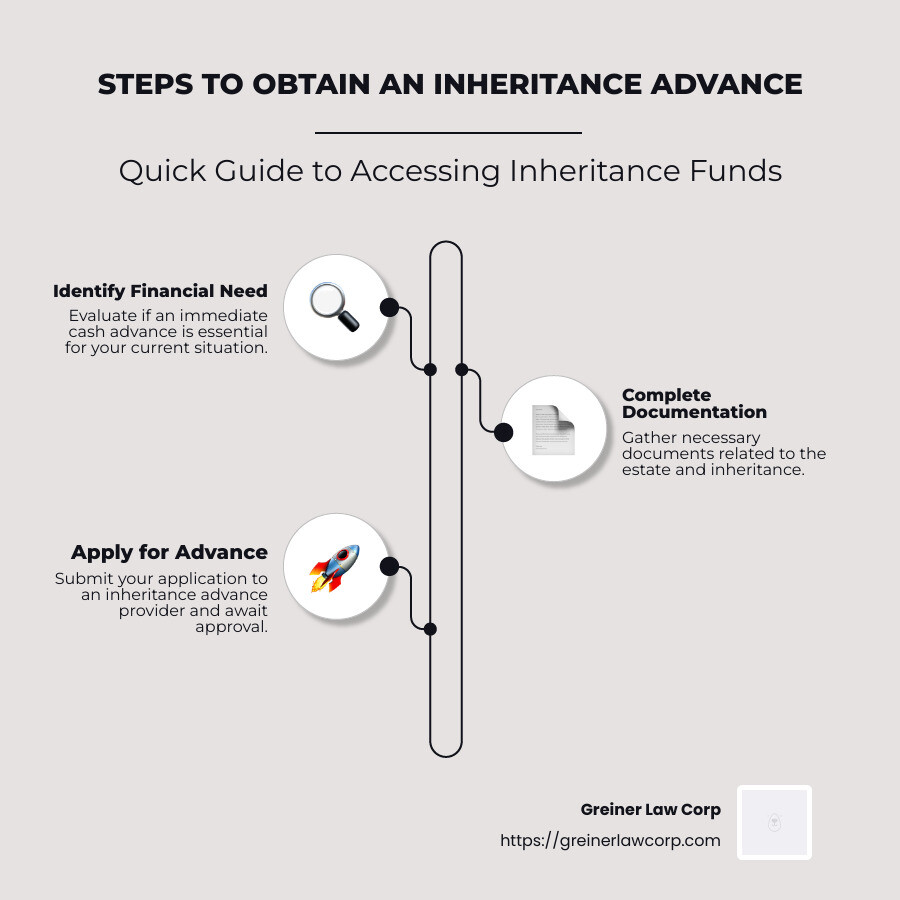
Before applying for an inheritance advance, gather the necessary documents. This typically includes:
- Copy of the Will: Shows your entitlement to the inheritance.
- Death Certificate: Confirms the passing of the estate owner.
- Probate Court Documents: Prove that the estate is in probate.
- Identification: Valid ID for verification purposes.
Having these documents ready will speed up the process and prevent delays.
Application Process
Applying for an inheritance advance is usually simple and quick. Here’s how it typically works:
Submit Application: Fill out an online or paper application with your details and the required documents.
Verification: The company will verify your information and confirm your entitlement to the inheritance.
Offer Presentation: Once verified, you’ll receive an offer outlining the advance amount and associated fees.
Acceptance: Review the offer carefully. If you agree, sign the contract to accept the terms.
Receive Funds: After acceptance, the funds are transferred to your bank account, often within a few days.
This process is designed to be fast and efficient, minimizing the wait time for your advance.
Eligibility
Eligibility for an inheritance advance depends on several factors:
- Heir Status: You must be a named heir in the will.
- Probate Status: The estate should be in probate.
- Estate Value: The estate must have enough assets to cover the advance.
Even if you have bad credit or no employment history, you might still qualify, as the decision is based on your inheritance, not your personal financial standing.
By understanding the documentation, application process, and eligibility requirements, you can steer the path to obtaining an inheritance advance with ease. This option can provide quick financial relief, especially when the probate process is dragging on longer than expected.
Next, we’ll look at the benefits and drawbacks of choosing an inheritance advance.
Benefits and Drawbacks of Inheritance Advances
Inheritance advances can be a quick solution if you’re waiting on funds tied up in probate. However, they come with both benefits and drawbacks. Let’s break them down.
Benefits
Immediate Cash
An advance on inheritance provides immediate access to cash. This can be a lifesaver if you’re facing urgent expenses or financial stress. Instead of waiting months or even years for probate to finish, you get a portion of your inheritance right away.
No Repayment
One of the biggest advantages is that you don’t have to repay the advance. Unlike a traditional loan, there’s no monthly payment or interest to worry about. The company simply takes a portion of your inheritance as their fee once the estate is settled.
Drawbacks
Fees
While not having to repay the advance sounds great, it does come at a cost. The company will take a fee, which can be a significant percentage of your inheritance. This means you won’t receive the full amount you were originally entitled to.
Financial Risks
There are also some risks involved. If the estate’s value turns out to be lower than expected, you might not get as much as you anticipated. Plus, if probate resolves quickly, you might end up paying a high fee for a short-term benefit.
Considerations
Before deciding on an inheritance advance, weigh these benefits and drawbacks carefully. If your financial need is pressing and probate looks lengthy, an advance might be a good option. But if you can afford to wait, it might be better to receive your full inheritance later.
These insights help you understand the trade-offs involved. In the next section, we’ll address some frequently asked questions to further clarify the inheritance advance process.
Frequently Asked Questions about Advance on Inheritance
Is an inheritance advance a good idea?
An advance on inheritance can be a good idea if you need immediate cash and probate is taking a long time. Probate can stretch from several months to even years, tying up funds that might be crucial for urgent expenses. If you’re facing a financial crunch, getting part of your inheritance now can be a lifesaver.
However, weigh this against the costs. You won’t get the full inheritance amount. Instead, the company providing the advance will charge a fee, which can be a significant portion of your inheritance. So, if your financial need isn’t pressing, waiting for the full amount might be wiser.
How does an inheritance advance differ from a loan?
An inheritance advance is quite different from a loan. With a loan, you borrow money and are obligated to pay it back with interest. This means monthly payments and potentially high-interest rates, depending on your credit score and other factors.
In contrast, an inheritance advance involves no repayment. Instead, you receive a portion of your expected inheritance upfront, and the company takes their fee from the final distribution. This means no monthly payments and no interest. It’s a straightforward transaction but comes with the trade-off of a reduced inheritance payout.
What are the costs associated with an inheritance advance?
The primary cost of an inheritance advance is the fee charged by the company. This fee is usually a percentage of your inheritance. While this means you get cash quickly, it also means you receive less than the full amount you are entitled to once the estate is settled.
It’s crucial to understand these fees upfront. Always read the agreement carefully to know exactly how much you’ll be giving up. This will help you decide if the immediate cash is worth the cost in terms of your reduced inheritance.
These questions help clarify the mechanics of inheritance advances. In the following section, we’ll explore more about how to steer the process with the help of Greiner Law Corp.
Conclusion
Navigating the complexities of inheritance and probate can be daunting. That’s where Greiner Law Corp comes in. Based in California, with offices in Victorville, Riverside, San Bernardino, and Los Angeles, we specialize in probate, real estate, business formation, and contract law. Our focus is ensuring your goals are met with a business-minded approach.
When considering an advance on inheritance, it’s crucial to have a team that prioritizes your financial well-being. At Greiner Law Corp, we help you weigh the benefits and drawbacks of inheritance advances. Our expertise ensures that you understand all aspects of the process, so you can make informed decisions.
Our unique selling point is our commitment to aligning with your goals. Whether you need immediate cash flow or want to manage estate risks effectively, we tailor our services to your needs. Our approach is straightforward and client-focused, ensuring you have the information and support you need.
With our guidance, you can steer the probate process confidently. We offer strategic advice that considers both legal and financial implications, ensuring you’re not just legally protected but also financially secure.
If you’re ready to explore how an inheritance advance could fit into your financial strategy, contact us today. Let Greiner Law Corp be your partner in securing your future wealth.


