Understanding Your Path to Homeownership Through Lease Options
A real estate lease option to purchase agreement is a contractual arrangement where a tenant leases a property with the exclusive right—but not the obligation—to buy it at a predetermined price within a specified timeframe. This alternative financing method combines a traditional rental agreement with an option to purchase, offering a pathway to homeownership for those who may not currently qualify for conventional mortgages.
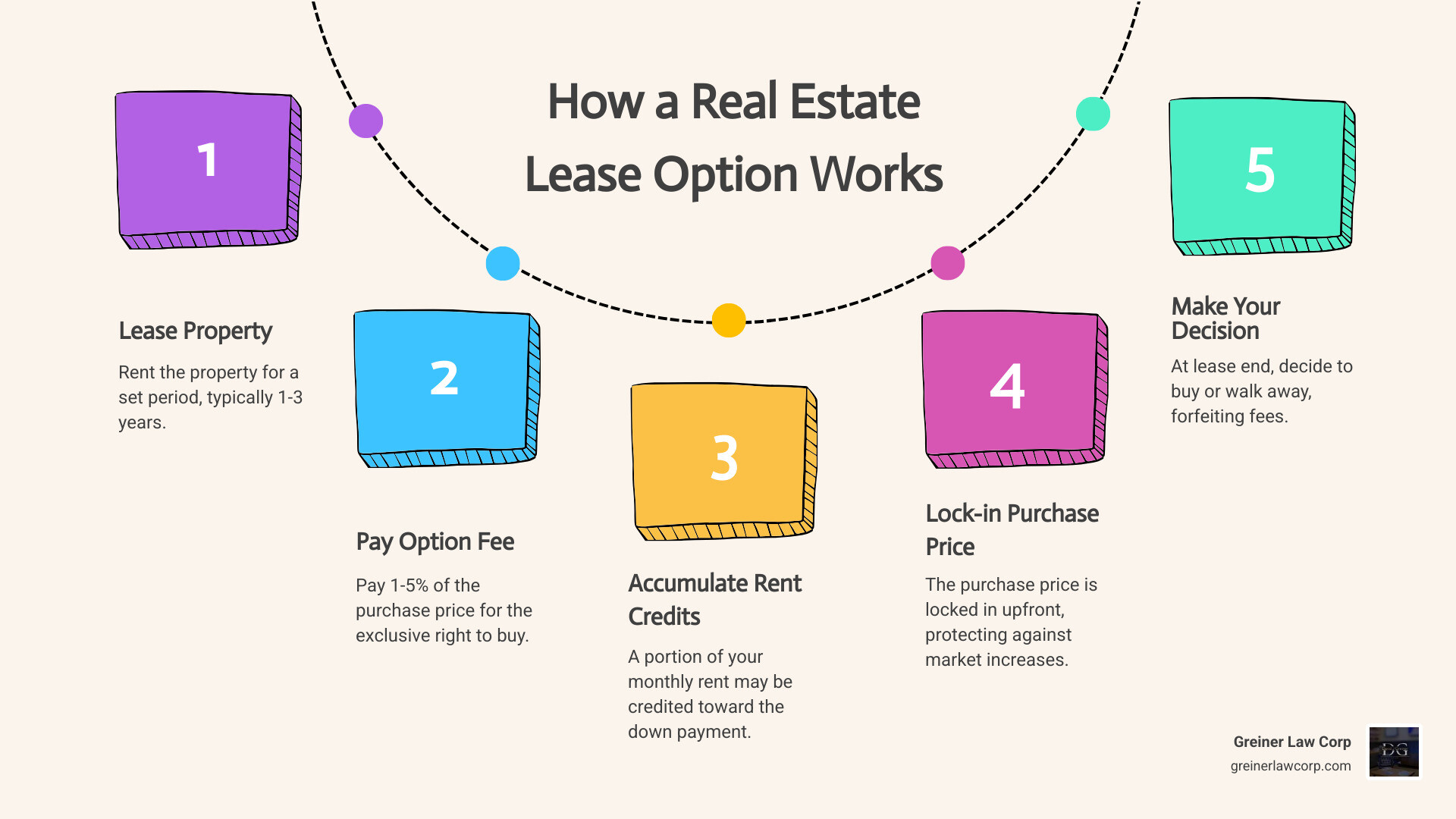
Here’s how it works:
- You rent the property for a set period (typically 1-3 years)
- You pay an option fee (usually 1-5% of the purchase price) for the exclusive right to buy
- A portion of your rent may be credited toward the eventual down payment
- You lock in the purchase price upfront, protecting against market increases
- You decide whether to buy at the end of the lease term—it’s your choice, not an obligation
Unlike a lease-purchase agreement (which obligates you to buy), a lease option gives you flexibility. If you can’t secure financing or simply change your mind, you can walk away—though you’ll typically forfeit your option fee and any rent credits.
For many Ontarians and Americans alike, rent-to-own agreements offer a pathway to homeownership, particularly for those who face challenges securing traditional financing. However, these arrangements come with significant risks for both buyers and sellers, making legal guidance essential.
As David Greiner, Esq., I’ve spent years guiding clients through complex real estate lease option to purchase agreements, ensuring their goals are achieved while managing risk. My business-focused approach prioritizes what you’re trying to accomplish, not just billable hours.
Quick real estate lease option to purchase agreement definitions:
What is a Lease Option and How Does it Differ from a Lease-Purchase?
When we talk about rent-to-own arrangements, two main types often come up: the lease option and the lease-purchase agreement. While they both combine elements of renting and buying a home, understanding their fundamental differences is crucial for anyone considering this path in California.
A lease option is an agreement that gives a renter the choice to purchase the rented property during or at the end of the rental period. This choice is key. The owner is precluded from selling the property to anyone else during the option term, but the renter is not obligated to buy it. It’s like having a VIP pass to buy the house, but you don’t have to use it if you don’t want to. As Investopedia notes, this flexibility is a major draw.
A lease-purchase agreement, on the other hand, is a more binding contract. It obligates the tenant to buy the property at the end of the lease term. This means if you enter into a lease-purchase, you’re making a firm commitment to buy the home, often with a future closing date set one to three years after signing.
The primary distinction boils down to commitment. A lease option offers flexibility, while a lease-purchase demands obligation. This difference significantly impacts the risks and responsibilities for both the tenant (who is also the potential buyer) and the landlord (who is also the potential seller).
Here’s a quick comparison to help clarify:
| Feature | Lease Option | Lease-Purchase |
|---|---|---|
| Buyer’s Obligation | Option to buy, but not obligated | Obligated to buy |
| Risk for Buyer | Lower; can walk away (forfeiting option fee/credits) | Higher; legal consequences if not purchased |
| Forfeiture | Option fee and rent credits typically forfeited | Down payment and other fees typically forfeited, potential legal action |
| Flexibility | High; more adaptable to changing circumstances | Low; binding commitment |
| Contract Type | Lease agreement with an option contract | Lease agreement combined with a purchase contract |
Lease Option: The Right, Not the Obligation
With a lease option, you, as the tenant-buyer, gain the exclusive right to purchase the property. This means the landlord cannot sell it to anyone else during the agreed-upon lease term. This exclusive right comes at a price: an option fee. This fee, typically a percentage of the home’s value (often 1% to 5%), is paid upfront and is generally non-refundable.
One of the biggest advantages for tenant-buyers in California is the time it provides. It allows us to “try before we buy,” ensuring the neighborhood and home are the right fit. It also gives us valuable time to improve our credit score, save for a larger down payment, or address any financial problems that might prevent us from securing a traditional mortgage today. We can lock in a purchase price now, protecting us if property values in places like Los Angeles or San Bernardino rise significantly during our lease term.
However, if we choose not to exercise the option—perhaps our financial situation doesn’t improve, or we simply change our minds—we typically forfeit the non-refundable option fee and any rent credits accumulated. This is the trade-off for the flexibility it provides. While it’s a lower risk than a lease-purchase, it’s still a financial commitment that we need to consider carefully.
Lease-Purchase: The Obligation to Buy
A lease-purchase agreement is a much more serious commitment. Unlike a lease option, this is a binding contract where the tenant is obligated to purchase the property at the end of the lease term. This means that once you sign, you’re on the hook to buy, assuming all conditions are met.
For buyers, this arrangement carries a higher risk because failing to complete the purchase can lead to significant financial penalties, including the loss of your down payment and any rent credits. In some cases, the seller might even pursue legal action for breach of contract. This is why it’s crucial for us to understand the terms thoroughly and be confident in our ability to secure financing by the agreed-upon purchase date.
While less flexible, a lease-purchase can be a good fit if we are certain about buying the home and just need a defined period to get our finances in order. However, given the stringent nature, we always recommend careful consideration and legal review. For more detailed information on binding agreements, you might find our insights on Business Lease Agreements helpful, as many of the contractual principles apply.
The Anatomy of a Real Estate Lease Option to Purchase Agreement
A real estate lease option to purchase agreement is a multifaceted legal document, blending the terms of a standard residential lease with the complexities of a future property sale. Understanding its structure and key components is vital for anyone in California navigating these arrangements.

This type of agreement is governed by California contract law, which means precision and clarity in drafting are paramount. It’s not just a handshake; it’s a legally binding document that outlines the rights and responsibilities of both parties. For a deeper dive into contract specifics, we often refer to resources like our own on Commercial Real Estate Lease Contract, as the foundational principles of drafting and enforcement are similar.
Key Components of a Real Estate Lease Option to Purchase Agreement
When we’re reviewing or drafting a real estate lease option to purchase agreement for our clients in Victorville, Riverside, San Bernardino, or Los Angeles, we ensure these essential elements are clearly defined:
- Option Fee (Consideration): This is the upfront, non-refundable payment the tenant-buyer makes to the landlord-seller for the exclusive right to purchase the property. It’s the “price” for the option. This fee typically ranges from 1% to 5% of the agreed-upon purchase price and is usually credited towards the purchase price if the option is exercised. If the tenant-buyer doesn’t buy, the seller keeps this fee.
- Purchase Price: The agreement must clearly state the price at which the tenant-buyer can purchase the property. This price is often set at the beginning of the agreement and remains fixed throughout the option term, offering protection against market appreciation for the buyer.
- Lease Term (Option Period): This specifies the duration of the rental period, during which the tenant-buyer has the option to purchase. Common terms are one to three years. This period gives the tenant-buyer time to improve their financial standing or secure a mortgage.
- Rent Credits: Often, a portion of the monthly rent paid by the tenant-buyer is credited towards the eventual down payment or purchase price. This “premium” rent is usually higher than market rent, with the excess amount earmarked for the purchase. It’s crucial for the agreement to explicitly state how much of the rent, if any, will be credited.
- Maintenance & Repair Responsibilities: Unlike traditional leases where landlords handle most major repairs, in a lease option, the tenant-buyer often assumes responsibility for maintenance and repairs. This should be explicitly detailed in the agreement, outlining what falls to the tenant-buyer versus the landlord-seller.
- Default Clauses: These clauses specify what happens if either party fails to uphold their end of the agreement. For the tenant-buyer, this could mean losing the option fee and rent credits. For the landlord-seller, it could involve legal remedies if they renege on the option.
- Exercise Period: This defines the timeframe and method by which the tenant-buyer must formally notify the landlord-seller of their intent to exercise the option to purchase. Typically, it requires written notice within a specific window before the lease term ends.
How Market Fluctuations Impact the Agreement
One of the most fascinating aspects of a real estate lease option to purchase agreement is how it interacts with the dynamic California real estate market. The agreement typically locks in the purchase price at the outset.
- Rising Market Benefits: If property values in, say, Riverside or Los Angeles increase significantly during the lease term, the tenant-buyer benefits immensely. They get to purchase the home at the lower, agreed-upon price, effectively gaining instant equity. The landlord-seller, however, might feel they missed out on a higher sale price.
- Falling Market Risks: Conversely, if the market declines, the tenant-buyer might find themselves obligated to purchase a home for more than its current market value (in a lease-purchase scenario). Even with a lease option, they might choose not to exercise the option, forfeiting their investment, because buying at the locked-in price no longer makes financial sense.
- Appraisal Contingency: To mitigate risks, especially for the buyer, an appraisal contingency can be included. This allows the buyer to back out or renegotiate if the property appraises for less than the agreed-upon purchase price, especially important in fluctuating markets.
- Negotiating Terms: The impact of market fluctuations underscores the importance of careful negotiation. Both parties need to consider potential market changes when setting the purchase price, option fee, and rent credits.
Pros, Cons, and Common Pitfalls for Buyers and Sellers
A real estate lease option to purchase agreement can be a fantastic tool, but like any powerful tool, it comes with its own set of instructions, benefits, and potential hazards. Let’s explore the ups and downs for both sides of the fence.
These agreements are often sought by those who find traditional home financing challenging. As research on alternative home financing in the U.S. has shown, they can provide pathways that meet needs not met by conventional credit transactions, such as assisting buyers with poor credit scores or lower down payment savings.
For the Tenant-Buyer: A Pathway with Potential Risks
For many of our clients in California, a lease option offers a compelling path to homeownership.
Pros for Tenant-Buyers:
- Test-Driving a Home: We get to live in the home before committing to buying it. This is invaluable for assessing the neighborhood, local schools, and the property’s true suitability for our needs.
- Time to Improve Credit: This arrangement provides a crucial window to work on our credit score, resolve outstanding debts, or save more for a down payment, making us more attractive to lenders.
- Locking in a Price: We can agree on a purchase price today, shielding us from potential market appreciation, which can be a huge advantage in areas like Los Angeles or San Bernardino where values can climb rapidly.
- Building Savings: The rent credits we accumulate help build our down payment savings over time, making the eventual purchase more attainable.
Cons for Tenant-Buyers:
- Higher Rent: Monthly rent payments are often higher than standard market rates because they typically include a premium that goes towards the purchase price.
- Non-Refundable Fees: The option fee and any accumulated rent credits are usually forfeited if we don’t exercise the option, which can be a significant loss.
- Maintenance Costs: We might be responsible for property maintenance and repairs, which can add unexpected expenses.
- Risk of Forfeiture: If we cannot secure financing or decide not to buy, all our upfront investment (option fee, rent credits) is gone.
Pitfalls for Tenant-Buyers:
- Failing to Secure Financing: This is the most common pitfall. We might lose our investment if we can’t qualify for a mortgage by the end of the lease term.
- Unclear Terms: Ambiguous contracts can lead to disputes over purchase price, maintenance responsibilities, or rent credit application.
- Seller Default: While rare, a seller could default, refusing to sell the property even after we’ve met all conditions, leading to costly legal battles.
For the Landlord-Seller: A Secure Deal with Caveats
Sellers, too, can find compelling reasons to enter into these agreements.
Pros for Landlord-Sellers:
- Steady Income & Higher Rent: We secure a consistent rental income, often above market rates, for the lease term.
- Non-Refundable Fees: The option fee and forfeited rent credits provide a financial cushion and compensation if the tenant-buyer doesn’t purchase.
- Committed Tenant: Tenant-buyers are often more motivated to care for the property, as they see it as their future home.
- Larger Buyer Pool: This arrangement attracts a wider range of potential buyers, including those who aren’t ready for an immediate traditional purchase.
Cons for Landlord-Sellers:
- Property Value Skyrockets: If the market in places like Riverside or Victorville sees a dramatic increase, we might end up selling the property for less than its current market value due to the locked-in price.
- Tenant Default: If the tenant-buyer defaults on rent or chooses not to purchase, we face the hassle of finding a new tenant or buyer.
- Delayed Sale: The sale process is extended, tying up our property for the duration of the lease term.
Pitfalls for Landlord-Sellers:
- Inadequate Tenant Screening: Failing to properly vet tenant-buyers can lead to missed rent payments, property damage, or a failed sale.
- Property Maintenance Disputes: Unclear clauses regarding who is responsible for what can lead to arguments and unexpected costs.
- Legal Challenges: Poorly drafted agreements can expose us to legal risks if the tenant-buyer disputes terms or claims they were misled.
Legal Protections and the Role of a Real Estate Attorney
Navigating a real estate lease option to purchase agreement in California is not like buying a carton of milk; it’s a significant financial and legal undertaking. Both tenant-buyers and landlord-sellers need robust legal protections to ensure a smooth and fair process.
The legal framework for these agreements in California is primarily based on contract law. Unlike some jurisdictions with specific “rent-to-own” legislation, our agreements rely heavily on the clarity and enforceability of the written contract. This means that every single clause, every responsibility, and every contingency must be carefully detailed.
Protecting Yourself in a Real Estate Lease Option to Purchase Agreement
Whether you’re looking to buy or sell using a lease option, proactive steps are essential for safeguarding your interests.
For Tenant-Buyers:
- Thorough Property Inspections: Before signing anything, we always advise a comprehensive property inspection by a qualified professional. This helps us understand the true condition of the home and avoid unexpected repair costs down the line.
- Clear Title Search: A title search is crucial. It ensures the landlord-seller has clear ownership and that there are no hidden liens or encumbrances that could complicate the eventual purchase.
- Financing Pre-Qualification: Even with a lease option, we encourage our clients to start working with lenders early. Understanding our borrowing capacity and what it takes to get a mortgage by the end of the term is vital.
- Understanding the Contract: We must read and understand every single clause. What happens if rent is late? Who pays for major repairs? What are the exact steps to exercise the option? These details matter.
For Landlord-Sellers:
- Thorough Tenant Screening: This goes beyond a credit check. We recommend comprehensive background checks, employment verification, and references to ensure we have a reliable and financially capable tenant-buyer.
- Legally Sound Contracts: A boilerplate agreement simply won’t cut it. We ensure our contracts are carefully drafted, clearly outlining all terms, responsibilities, default clauses, and dispute resolution mechanisms, custom to California law.
- Clear Maintenance Clauses: Explicitly defining who is responsible for what type of maintenance and repairs helps prevent disagreements and protects the property’s value.
- Escrow Account: Consider holding the option fee and rent credits in an escrow account. This adds a layer of security and transparency for both parties.
When is a Lease Option Considered a Sale for Tax Purposes?
For our clients in California, it’s important to understand that the detailed GST implications discussed in some resources relate specifically to Canadian tax law and are not directly applicable to real estate transactions in California. In the U.S., the IRS and California tax authorities look at the “substance over form” of the transaction. If the arrangement truly functions as an installment sale from the outset, it could be treated as such for tax purposes, even if labeled a lease option. This means that factors like a very large, non-refundable option fee, rent payments significantly above market value that are all credited towards the purchase price, and the tenant-buyer assuming all ownership responsibilities (like property taxes and major repairs) could lead the IRS to recharacterize the transaction as a sale for tax purposes.
However, this is a complex area and specific to each individual agreement, requiring custom advice. The implications can affect capital gains treatment for sellers and deductions for buyers. Therefore, we emphasize that any such arrangement needs careful consideration of its tax consequences under U.S. federal and California state laws. For more information on commercial property transactions that might involve similar complexities, you can refer to our insights on Lease to Own Commercial Property.
Why You Need a Lawyer for Your Agreement
This is where we at Greiner Law Corp come in. The complexities of a real estate lease option to purchase agreement make legal counsel not just advisable, but essential.
- Contract Review: We carefully review every clause to ensure it aligns with your goals and protects your interests under California law. We spot potential pitfalls, ambiguous language, and unfavorable terms.
- Negotiation: We can skillfully negotiate terms on your behalf, whether it’s the option fee, purchase price, rent credit percentage, or maintenance responsibilities, ensuring you get the best possible deal.
- Ensuring Legal Compliance: California has specific disclosure requirements and landlord-tenant laws. We ensure your agreement complies with all state and local regulations in areas like Los Angeles, Riverside, San Bernardino, and Victorville, preventing future legal headaches.
- Protecting Your Rights: We clearly define your rights and remedies in case of default or dispute, providing a roadmap for resolution and minimizing potential losses.
- Explaining Risks: We translate complex legal jargon into plain English, ensuring you fully understand the risks and rewards before committing.
- Structuring the Deal: We help structure the agreement to best suit your unique financial situation and long-term objectives, whether you’re a first-time buyer or a seasoned investor.
We believe that a well-drafted and understood agreement is the foundation of a successful real estate lease option to purchase agreement. Don’t leave your future to chance; invest in expert legal guidance.
Conclusion
A real estate lease option to purchase agreement offers a unique and flexible pathway to homeownership for tenant-buyers and an attractive sales strategy for landlord-sellers. It can bridge the gap for those who need time to build credit or save a down payment, while providing sellers with a steady income and a committed buyer.
However, as we’ve explored, these agreements are far from simple. They involve significant financial commitments and contractual intricacies that demand meticulous attention to detail. The distinction between a lease option and a lease-purchase, the careful crafting of terms like option fees and rent credits, and the impact of market fluctuations all underscore the need for an informed approach.
For our clients in California, navigating these waters without expert legal guidance can expose them to substantial risks, including financial loss and legal disputes. At Greiner Law Corp, we pride ourselves on our business-minded approach, prioritizing your goals and ensuring you can manage your risk preferences effectively. We’re here to help you understand every facet of your agreement, ensuring it’s fair, legally sound, and strategically aligned with your best interests.
Don’t let the complexities deter you from a potentially rewarding opportunity. Let us help you steer your option contract in real estate with confidence.


