Inheritance loans offer a unique financial solution for those who want to access their inheritance funds before the probate process is finished. When considering an inheritance loan, it’s crucial to understand the following key points:
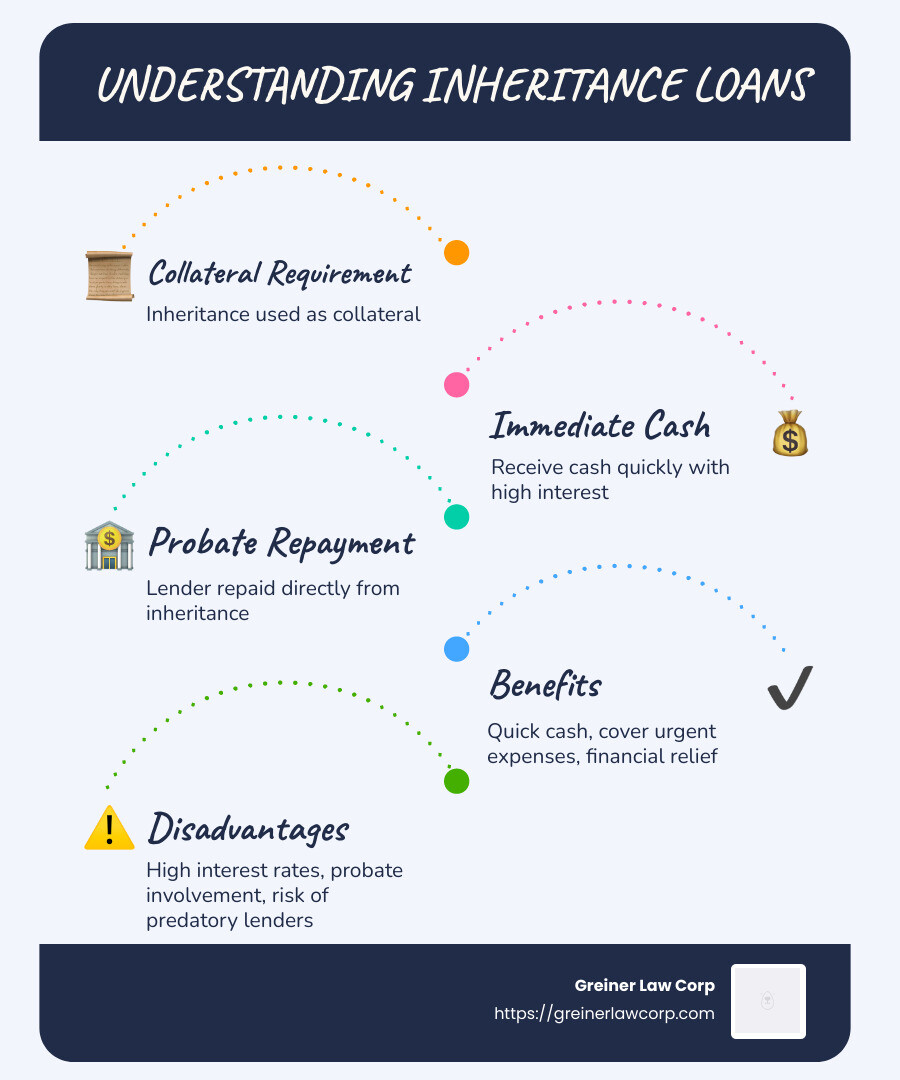
- Inheritance loans use your expected inheritance as collateral.
- Immediate cash is provided, but typically this comes with high interest rates.
- The lender is repaid directly from your inheritance once probate is completed.
For many individuals, navigating the probate process can be time-consuming and costly. An inheritance loan can provide the financial flexibility needed to cover urgent expenses such as funeral costs or outstanding debts, without waiting months or even years for the estate’s settlement. But this convenience comes at a cost and potential legal mess in the probate process itself.
As David Greiner, Esq., with years of experience in estate and business law, I understand the complexities and emotions tied to inheritance loans. My focus has always been to achieve client goals in the most efficient and effective manner possible. Moving forward, we’ll explore this topic in more detail, so you can better assess if an inheritance loan is right for your situation.
Inheritance loan terms at a glance:
– advance on inheritance
– probate loan
Understanding Inheritance Loans
Inheritance loans, sometimes called estate loans or probate advance loans, offer a way to access funds from an inheritance before the probate process is complete. Here’s how they work and what you need to know.
How Inheritance Loans Work
An inheritance loan allows you to borrow money using your expected inheritance as collateral. This means the lender evaluates the estate to determine how much you are likely to inherit. Based on this assessment, they provide you with a loan amount, usually less than your full inheritance.
Once probate is finalized, the lender is repaid directly from your inheritance. This means you assign the rights to your inheritance to the lender in exchange for the immediate cash.

Benefits of Inheritance Loans
Quick Cash: One of the main advantages of an inheritance loan is that you receive money quickly. This can be crucial for covering urgent expenses like funeral costs or paying off debts.
Financial Relief: An inheritance loan can provide financial relief during a stressful time by easing the financial burden while you wait for the probate process to conclude.
Disadvantages of Inheritance Loans
High Interest Rates: Inheritance loans often come with high interest rates. This means that the amount you repay could be significantly higher than the amount you borrowed.
Probate Involvement: Introducing a lender into the probate process can complicate matters. It may lead to delays and potential conflicts with family members.
Predatory Lenders: Be cautious of predatory lenders. The probate lending industry is not heavily regulated, which can leave borrowers vulnerable to unfair practices.
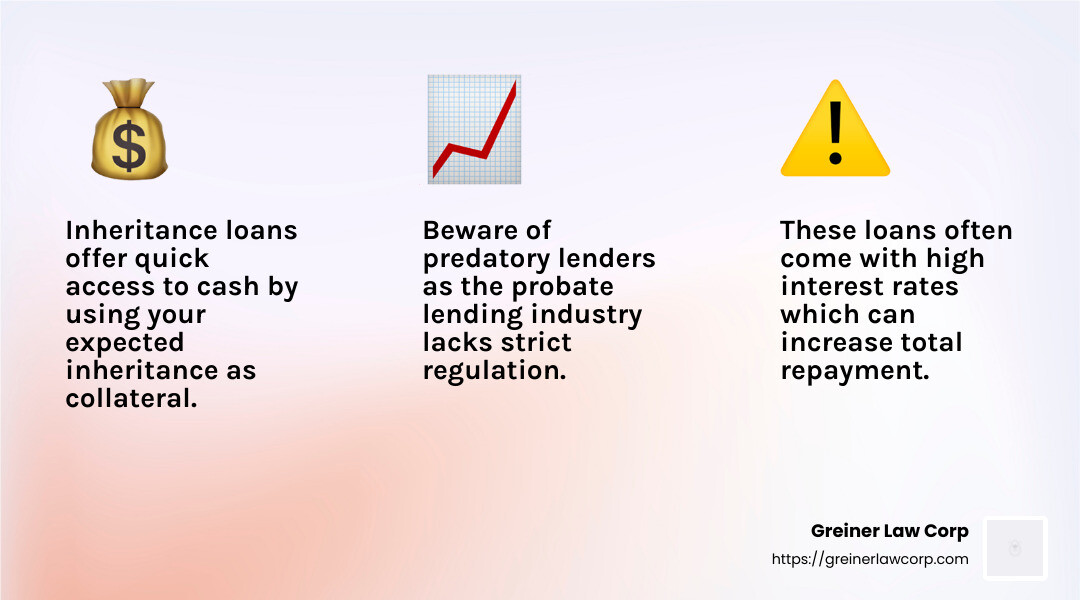
Understanding these pros and cons is essential as you consider whether an inheritance loan is the right choice for you. We’ll dig deeper into how inheritance loans compare to other options, like inheritance advances, to help you make a well-informed decision.
Inheritance Loan vs. Inheritance Advance
When you’re waiting on your inheritance, you might consider getting an inheritance loan or an inheritance advance. These options can help you access funds before the lengthy probate process ends. But they aren’t the same thing. Let’s explore their key differences.
Key Differences
Interest Rates and Fees
An inheritance loan typically involves interest. You borrow money using your inheritance as collateral, and you pay back the loan with interest once probate concludes. This can make it costly, especially if probate drags on.
On the other hand, an inheritance advance doesn’t charge interest. Instead, the company takes a flat fee from your inheritance. This means you know upfront how much you’ll receive and won’t face surprise costs later.
Repayment Obligations
With an inheritance loan, you have to repay the loan amount plus interest. This involves a formal agreement, and you may need to provide personal financial information to qualify.
An inheritance advance doesn’t require repayment in the traditional sense. You receive a portion of your inheritance early, and the advance company gets their fee when the estate is settled. This means there’s no personal liability if the inheritance doesn’t come through as expected.
Collateral Requirements
In an inheritance loan, your expected inheritance serves as collateral. This means if something goes awry, you could end up owing money.
For an inheritance advance, no collateral is needed. You simply receive part of your inheritance early, and the company takes their fee directly from the estate later.
Which Option is Better?
Choosing between an inheritance loan and an inheritance advance depends on your situation. If you’re concerned about high interest rates and personal liability, an inheritance advance might be the safer choice. It offers a straightforward fee structure and no interest, which can be less risky.
However, if you need a larger sum and are comfortable with the potential costs, an inheritance loan might be more suitable. Just be sure to thoroughly review the terms and understand the financial implications.
In the next section, we’ll guide you through the application process for an inheritance loan, including what documents you’ll need and how to choose the right lender.
How to Apply for an Inheritance Loan
Applying for an inheritance loan can be a straightforward process if you know what to expect. Here’s a simple guide to help you through it.
Steps to Secure a Loan
Gather Required Documents
Before you start, make sure you have all the necessary paperwork. You’ll need a certified copy of the will, a grant of probate if available, and any documents detailing the estate’s assets and liabilities. Also, have your identification ready.Submit a Probate Petition
Filing a probate petition is crucial. This is a formal request to the court to start the probate process and appoint an executor or administrator for the estate. This document is often needed by lenders to evaluate your inheritance.Complete the Application
Fill out the lender’s application form. This typically involves providing details about the estate, your relationship to the deceased, and your contact information. Some lenders might conduct a credit check, so be prepared for that.Review and Sign the Agreement
Once your application is approved, you’ll receive a loan agreement. Read it carefully. Check the interest rate, repayment terms, and any fees. If everything looks good, sign the agreement.Receive Your Funds
After signing, the lender will transfer the funds to your account. This can happen quickly, sometimes within a day or two.
Choosing the Right Lender
Selecting the right lender is crucial for a smooth experience. Consider these factors:
Reputation
Look for lenders with positive reviews and a good track record. You want a company known for transparency and fair practices.Terms and Conditions
Pay attention to the loan terms. What is the interest rate? Are there any hidden fees? Make sure you understand the repayment schedule and any penalties for late payment.Fees
Some lenders charge additional fees, like application or processing fees. Compare these across different lenders to ensure you’re getting a fair deal.
By following these steps and choosing a reputable lender, you can secure an inheritance loan without unnecessary hassle. Next, we’ll address some frequently asked questions about inheritance loans to help clarify any remaining doubts.
Frequently Asked Questions about Inheritance Loans
How does an inheritance loan work?
An inheritance loan allows you to access your inheritance money before the probate process is complete. Here’s how it typically works:
Inheritance Evaluation
When you apply for an inheritance loan, the lender evaluates the estate to determine how much you stand to inherit. This evaluation helps the lender decide how much money they can offer you upfront.Immediate Payment
Once approved, you receive an immediate payment. This is a portion of your expected inheritance. It’s like getting a cash advance on what you will eventually inherit.Collateral and Repayment
Your inheritance acts as collateral for the loan. When the probate process concludes, the lender receives the full amount of your inheritance to repay the loan.
Are inheritance loans a good idea?
Inheritance loans can be beneficial, but they come with considerations:
Cash Up-Front
The primary advantage is that you get cash upfront. This can help cover urgent expenses like funeral costs or debts.Probate Process
However, involving a lender in the probate process can complicate things. It might extend the probate timeline or create tensions among family members.Interest Rates
Inheritance loans often have high interest rates. You might end up paying more than what you receive if the probate process resolves quickly.
What is the interest rate on an inheritance loan?
Interest rates on inheritance loans can vary widely:
Interest Rate Range
Typically, the rates can be high. For instance, a representative example might show a fixed interest rate of around 20%.Loan Percentage
The loan amount is usually a fraction of your expected inheritance. Lenders might offer between 50-70% of the inheritance value, depending on when in the probate process you apply.
Understanding these factors can help you decide if an inheritance loan is right for your situation. If you have more questions, consult with a financial advisor to explore your options.
Conclusion
At Greiner Law Corp, our primary focus is on helping you achieve your financial goals with a business-minded approach. We understand that navigating the probate process can be overwhelming, especially when financial flexibility is needed. That’s why we offer expert guidance on inheritance loans, ensuring you can make informed decisions that align with your personal and financial objectives.
Client Goals are at the heart of what we do. We listen to your needs and tailor our advice to help you make the best choices for your unique situation. Whether you’re considering an inheritance loan to cover immediate expenses or looking for long-term financial solutions, our team is here to support you every step of the way.
Our business-minded approach means that we don’t just focus on the legal aspects; we also consider the broader financial implications of your decisions. We aim to provide strategies that not only address your current needs but also position you for future success.
If you’re thinking about an inheritance loan or need help with any aspect of probate, contact us today to learn how Greiner Law Corp can assist you. Our experienced team is dedicated to offering client-centric solutions that prioritize your goals and ensure you have the financial flexibility you need.


