Why Understanding Your Purchase Agreement Matters
A contract for selling a house—also called a purchase and sale agreement—is the legally binding document that outlines the terms between a buyer and seller for transferring property ownership. Here’s what it typically includes:
- Parties and Property: Full names, addresses, legal property description
- Purchase Price: Total price, payment method, earnest money deposit (typically 1-3%)
- Timelines: Offer date, acceptance deadline, closing date, possession date
- Contingencies: Financing, inspection, appraisal, title conditions
- Disclosures: Property condition, lead-based paint (pre-1978 homes), natural hazards
- Closing Details: Who pays what costs, how taxes/fees are prorated
This document protects both parties and creates an enforceable contract that can be upheld in court. Without it, you cannot secure financing, and you have no legal framework if something goes wrong.
According to research from the real estate industry, 51% of home sales now begin online, but the transaction still hinges on this crucial contract. The stakes are high—each state has unique disclosure requirements, and missing even one clause can cost you thousands or derail the entire sale. In Texas, the standard contract is 11 pages. In Colorado, it addresses everything from water rights to foreclosure protections. The complexity varies, but the importance never does.
Time is of the essence in these contracts. Deadlines for earnest money (often 3 days), inspections (typically 10 days), and objections to title defects are strict. Miss one, and you may lose your rights or your deposit.
As David Greiner, Esq., I’ve spent years advising clients on business law, real estate transactions, and contracts—ensuring every contract for selling a house protects my clients’ goals while managing legal and financial risk. My practice focuses on achievement, not billable hours, which means getting your transaction done right the first time.
Glossary for contract for selling a house:
The Anatomy of a House Purchase Agreement
When you’re ready to sell your home, the contract for selling a house serves as the blueprint for the entire transaction. It’s a legally binding agreement that defines the terms of the property sale between you (the seller) and the buyer. Understanding its essential elements is crucial for a smooth and secure process. This section breaks down the core components of a standard house sale contract, ensuring you know what to look for and what to include.
Identifying the Parties and the Property
The first step in any house purchase agreement is clearly identifying who is buying and who is selling. This includes the full legal names of all buyers and sellers, along with their current addresses. Accuracy here is paramount to ensure the contract is legally enforceable.
Next, the agreement must precisely describe the property being sold. This isn’t just the street address; it involves the property’s legal description. The legal description of real property is a detailed, unambiguous identification of the land, often found on the property’s deed, mortgage documents, or title insurance policy. It might follow a format like “[Lot Numbers][Additional Description][Subdivision][City][County][State].” This ensures there’s no confusion about which specific piece of land is being transferred.
Beyond the land itself, the contract must specify what else is included in the sale. This is where “fixtures” and “personal property” come into play. Fixtures are items permanently attached to the home, such as built-in cabinets, light fixtures, and plumbing. These are generally included in the sale unless explicitly stated otherwise. Personal property, on the other hand, refers to movable items like freestanding appliances (washer, dryer, refrigerator), curtains, or even outdoor furniture. If the buyer wants these items to be part of the sale, they must be specifically listed in the contract. Conversely, if you, as the seller, wish to take a fixture (like a beloved chandelier), you must explicitly list it as an exclusion. Ambiguity here can lead to disputes, so clarity is key.

The Financials: Price, Earnest Money, and Payment
Naturally, a central part of any contract for selling a house is the money. This section will clearly state the total purchase price agreed upon by both parties. It will also detail the method of payment, which typically involves a combination of the buyer’s financing (a mortgage) and their down payment.
A critical component of the financial terms is the earnest money deposit. This is a sum of money the buyer puts down to show their serious commitment to the purchase. It’s not part of the down payment initially but typically goes towards it at closing. Earnest money deposits commonly range from 1% to 3% of the purchase price. This deposit is usually held in an escrow account by a neutral third party (like a title company or escrow officer in California) until the sale closes. If the buyer backs out without a valid contractual reason, they risk losing this deposit.
The contract will also outline who is responsible for various closing costs. These can include fees for title insurance, escrow services, loan origination, and recording the deed. In California, it’s common for these costs to be negotiated between buyer and seller. Additionally, the agreement will cover prorations, which involve dividing expenses like property taxes, homeowner association dues, and utilities up to the closing date. For example, if you’ve paid property taxes for the entire year, and the closing is halfway through, you’d be credited for the unused portion.
Timelines and Closing Details
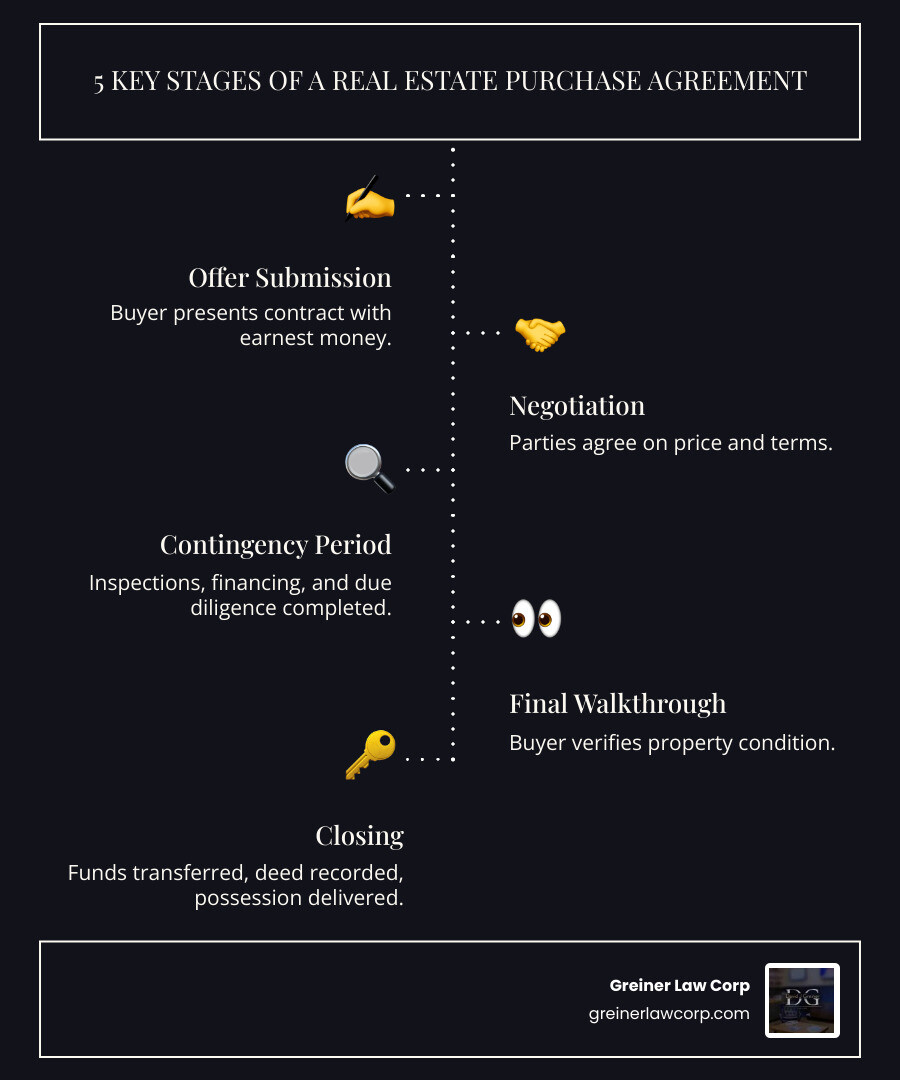
Real estate transactions operate on strict timelines, and the contract for selling a house carefully lays them out. Key dates include:
- Offer Date: When the buyer formally submits their proposal.
- Acceptance Date: When you, as the seller, agree to the terms, making the contract legally binding.
- Irrevocable Period: The timeframe during which the offer remains valid and cannot be withdrawn by the buyer. For you, this means you can’t accept another offer during this period without risking a breach of contract.
- Closing Date: The target date for finalizing the sale, typically 30-60 days after the offer is accepted. This is when all documents are signed, funds are transferred, and ownership officially changes hands.
- Closing Location: Where the final signing will take place, often at the office of the escrow company or title company.
- Possession Date: When the buyer officially takes physical possession of the property. This might be on the closing date or a few days later, depending on what’s negotiated.
These dates are often considered “time is of the essence,” meaning strict adherence is required. Missing a deadline can have significant consequences, potentially leading to the contract’s termination or even legal action. Our experience in California real estate transactions has taught us that managing these timelines effectively is critical to a successful sale.

Key Clauses: Contingencies, Disclosures, and Special Conditions
Beyond the basics of who, what, and how much, your contract for selling a house will contain critical clauses that manage risk and outline legal obligations for both parties. These provisions are designed to protect both you and the buyer from unforeseen circumstances that could derail the sale.
Common Contingencies That Protect You
Contingencies are conditions that must be met for the sale to proceed. If a contingency is not satisfied within the specified timeframe, the buyer typically has the right to back out of the agreement without losing their earnest money deposit. Here are some of the most common ones we see in California:
- Financing Contingency: This clause protects the buyer if they are unable to secure a mortgage loan for the property. It specifies a period during which the buyer must obtain loan approval. If they can’t, they can usually terminate the contract.
- Inspection Contingency: This is a big one! It allows the buyer to have the home professionally inspected for any structural issues, necessary repairs, or safety concerns. If the inspection reveals significant problems, the buyer can often negotiate repairs, request a price reduction, or, in some cases, cancel the contract. We always advise our clients that even with seller disclosures, a thorough inspection is paramount.
- Appraisal Contingency: Lenders typically require an appraisal to ensure the property’s value justifies the loan amount. If the appraisal comes in lower than the agreed-upon purchase price, this contingency allows the buyer to renegotiate the price or withdraw from the sale.
- Home Sale Contingency: Less common in a hot market, but it protects a buyer who needs to sell their current home before they can afford to purchase yours. This can make your property harder to sell, as it introduces an additional layer of uncertainty.
- Title Contingency: This protects the buyer by ensuring the property’s title is clear of any undisclosed liens, encumbrances, or ownership disputes. A title search is performed, and if issues arise, the seller is typically given time to resolve them. If not, the buyer can terminate.
These contingencies are vital for the buyer, but they also define the conditions under which you, as the seller, are bound. Understanding them helps you anticipate potential problems and negotiate effectively.
Required Disclosures: What You Must Reveal
In California, sellers are generally required to provide extensive disclosures about the property’s condition and history. Unlike some “buyer beware” states, California law places a significant burden on sellers to inform buyers of known material facts.
- Property Condition Disclosure: This is a comprehensive document where you, as the seller, detail known defects, past repairs, and any other issues with the home, its systems, and the property itself. This might include information about the roof, plumbing, electrical, foundation, and any past damage.
- Federal Lead-Based Paint Disclosure: For any residential property built before 1978, federal law mandates that sellers disclose any known lead-based paint or hazards and provide buyers with an EPA-approved lead hazard information pamphlet. This is a crucial federal requirement.
- Natural Hazard Disclosures (California): California has specific requirements due to its geography. Sellers must disclose if the property is located in special flood hazard areas, very high fire hazard severity zones, earthquake fault zones, or seismic hazard zones. These disclosures are often bundled into a Natural Hazard Disclosure Statement.
- FIRPTA: The Foreign Investment in Real Property Tax Act requires buyers to withhold up to 15% of the purchase price if the seller is a “foreign person” for U.S. income tax purposes. The contract will typically include language for the seller to certify their U.S. person status, or for the buyer to be prepared for this withholding.
Failing to provide required disclosures can have serious legal consequences for sellers, including lawsuits for misrepresentation or fraud. It’s always best to be transparent.
Understanding ‘Buyer Beware’ and Other Clauses
The phrase “caveat emptor,” Latin for “buyer beware,” implies that the buyer is solely responsible for verifying the quality and suitability of goods before a purchase. While some states operate under a strict “buyer beware” principle, California is not one of them. Our state’s laws require extensive seller disclosures, meaning sellers cannot simply remain silent about known defects. However, buyers in California still have a strong duty of due diligence to inspect the property thoroughly. The concept still encourages buyers to investigate, even if sellers have a disclosure obligation.
An ‘As-Is’ Clause in a contract for selling a house means the buyer agrees to purchase the property in its current condition, with all its defects. While this sounds like a seller’s dream, in California, an ‘as-is’ clause does not relieve a seller of their legal obligation to disclose known material defects. It primarily shifts the burden of inspection onto the buyer for unknown defects.
Other important clauses include:
- Title Insurance: This protects both the buyer and the lender against financial loss due to defects in the property’s title, such as unpaid liens or claims of ownership. The contract will specify who pays for the owner’s and lender’s title insurance policies.
- Dispute Resolution Methods: Many contracts include clauses for how disagreements will be handled. Common methods include mediation (a neutral third party helps facilitate a resolution) or arbitration (a neutral third party makes a binding decision). These are often preferred alternatives to costly litigation.
- Governing Law: This clause specifies which state’s laws will govern the contract. For our clients in Victorville, Riverside, San Bernardino, and Los Angeles, this will always be California law.
Creating and Managing the Contract for Selling a House
A purchase agreement isn’t a static document; it’s a living blueprint for your transaction that can be managed, renegotiated, and even terminated under specific conditions. Understanding this dynamic nature is key.
Who Writes the Contract for Selling a House?
In most real estate transactions in California, the initial contract for selling a house is drafted by a licensed real estate agent. They use standard, state-approved forms, such as those provided by the California Association of Realtors (CAR). These forms are comprehensive and designed to comply with California real estate law. While agents are trained to fill out these forms, they cannot provide legal advice.
For complex transactions, unique property situations, or when specific legal concerns arise, a real estate attorney often steps in. Attorneys can draft custom clauses, review the entire agreement for potential pitfalls, and ensure that your specific interests and risk preferences are adequately addressed. For instance, if you’re selling a property with unusual easements, environmental concerns, or if you’re engaging in seller financing, having an attorney involved is highly advisable. Our firm, Greiner Law Corp, regularly reviews and drafts these critical documents to protect our clients’ goals and manage their risk effectively.
Renegotiation and Termination
Even after initial signing, a contract for selling a house can undergo changes.
- Amendments: These are formal changes made to existing terms of the contract after it has been signed. For example, if an inspection reveals an issue and you agree to a price reduction or a credit, an amendment would be drafted and signed by both parties to reflect this change.
- Addendums: These are additional documents attached to the original contract that add new terms or conditions not originally included. For instance, a lead-based paint disclosure is typically an addendum.
- Mutual Agreement to Terminate: Sometimes, both parties decide for various reasons that it’s best to walk away from the deal. If they mutually agree, they can sign a termination agreement, often releasing the earnest money back to the buyer.
- Termination due to Contingency Failure: As discussed, if a buyer’s contingency (like financing or inspection) is not met, they can typically terminate the contract without penalty, and their earnest money is returned.
- Default: This occurs when one party fails to uphold their obligations as outlined in the contract. If a party defaults, the other party may have legal remedies available.
If a party defaults on a contract for selling a house, the consequences can vary. If a buyer defaults (e.g., fails to secure financing when the financing contingency has already been removed, or simply backs out without a valid reason), the seller may be entitled to keep the earnest money deposit as liquidated damages. If a seller defaults (e.g., refuses to sell after signing the agreement), the buyer may be able to sue for “specific performance” (forcing the seller to complete the sale) or for monetary damages to cover their losses. These situations are why clear contractual language and legal guidance are so important.
Differentiating Key Real Estate Agreements
The world of real estate has many similar-sounding documents, which can lead to confusion. We’ll clarify the most common ones to ensure you understand their distinct purposes in your real estate journey.
Purchase Agreement vs. Other Documents
While we’ve focused on the contract for selling a house (also known as a purchase and sale agreement), it’s important to distinguish it from other related documents:
- Sales Agreement vs. Bill of Sale: A sales agreement (or purchase agreement) is a comprehensive, legally binding contract that outlines the terms for transferring ownership of real property. It covers everything from price and contingencies to disclosures and closing dates. A Bill of Sale, on the other hand, is a much simpler document used to transfer ownership of personal property (like a car or furniture). It typically records the item, price, and parties involved, often without extensive warranties or contingencies. If you’re selling your home “as-is” with no warranties on condition, you might use a Bill of Sale for personal property included in the sale, but never for the house itself.
- Purchase Agreement vs. Letter of Intent (LOI): A Letter of Intent is a preliminary, non-binding document that outlines the basic proposed terms of a deal. It’s often used in commercial real estate or complex transactions to signal serious interest before investing time and money in drafting a full, legally binding purchase agreement. The LOI sets the stage, but the purchase agreement seals the deal.
- What’s Not Typically Covered: While a contract for selling a house is extensive, it doesn’t usually include the fine print of all actual closing costs. It will outline who pays for what types of costs, but the exact dollar amounts for every fee and proration are typically detailed in a separate document called the Final Closing Statement (also known as a HUD-1 or Closing Disclosure). This statement is provided closer to the closing date and gives a comprehensive breakdown of all financial aspects of the transaction.
Understanding Your Representation Agreement
Before a contract for selling a house is even drafted, you’ll likely enter into a different type of agreement with your real estate agent: a representation agreement.
- Representation Agreement vs. Purchase Agreement: A representation agreement (often called a Listing Agreement for sellers or a Buyer Representation Agreement for buyers) is a contract between you and a real estate brokerage. It defines the terms of your working relationship with your agent, including their duties, responsibilities, and how they will be compensated. The purchase agreement, conversely, is between the buyer and seller for the property itself.
- Key Elements: A good representation agreement should clearly spell out:
- Scope of Services: What specific services the agent will provide (e.g., marketing, showings, negotiation, paperwork assistance).
- Agent Compensation: How your agent will be paid (typically a percentage of the sale price), when it’s due, and any conditions.
- Term and Expiration: The duration of the agreement.
- Holdover Clause: This clause, common in listing agreements, states that if you sell your home to a buyer introduced by your agent within a certain period after the agreement expires, you may still owe the agent their commission. This protects the agent’s efforts.
- Termination provisions, and details on what happens in cases of multiple representation (e.g., if one agent represents both buyer and seller, which is highly regulated in California).
A representation agreement ensures that you and your agent are on the same page regarding expectations and obligations. It’s a foundational contract that enables the agent to help you steer the process of eventually securing a contract for selling a house.
Frequently Asked Questions about House Sale Contracts
Can a buyer or seller back out of a house purchase agreement?
Yes, but only under specific conditions outlined in the contract, such as a contingency not being met. Backing out for reasons not covered in the contract can lead to legal and financial penalties, including the loss of the earnest money deposit. For example, a buyer can typically back out without penalty if their inspection contingency reveals significant issues and they follow the contract’s procedures. However, if a buyer simply changes their mind after all contingencies are removed, they would likely forfeit their earnest money. Similarly, a seller cannot typically back out unless a specific seller contingency is in place or the buyer defaults. If a seller tries to back out without a valid reason, the buyer could sue for specific performance or damages.
What happens if a party defaults on the contract for selling a house?
If a buyer defaults, the seller may be entitled to keep the earnest money as liquidated damages. This is a common remedy specified in most California purchase agreements. If a seller defaults, the buyer may be able to sue for specific performance (forcing the sale to go through) or for monetary damages to compensate for their losses (e.g., inspection costs, temporary housing, increased mortgage interest rates). The specific remedies available to each party will be clearly outlined in the contract for selling a house. These situations underscore the importance of understanding every clause and seeking legal counsel when a default occurs.
Conclusion: Your Blueprint for a Successful Sale
A well-drafted contract for selling a house is the blueprint for a successful and secure transaction. It protects your interests, clarifies obligations, and provides a clear path to closing day. Given the financial and legal stakes, ensuring every detail is correct is paramount. For complex transactions or legal guidance on real estate contracts in California, a firm like Greiner Law Corp can provide the business-minded approach needed to manage risk effectively. To ensure your real estate transaction is secure, learn more about our real estate law services.


